

Singapore Grand Prix: Who Gained and Lost from Their Safety Car Pit Strategy?
It was inevitable. Each of the first six Singapore grands prix featured at least one safety car period. The seventh, last Sunday, was no exception.
When a safety car is deployed in Formula One, there is usually a rush to the pits, as a stop while travelling at the reduced speed of the safety car does not cost nearly as much time as it would at race speed.
However, what if you have just made a stop and are already running on fresh tyres? Or what if the safety car comes several laps before your planned pit stop window? Those types of scenarios are when the team strategists earn their pay cheques, as they often must make split-second decisions with their drivers' races hanging in the balance.


.jpg?w=2560 "Rams Eagles Football")
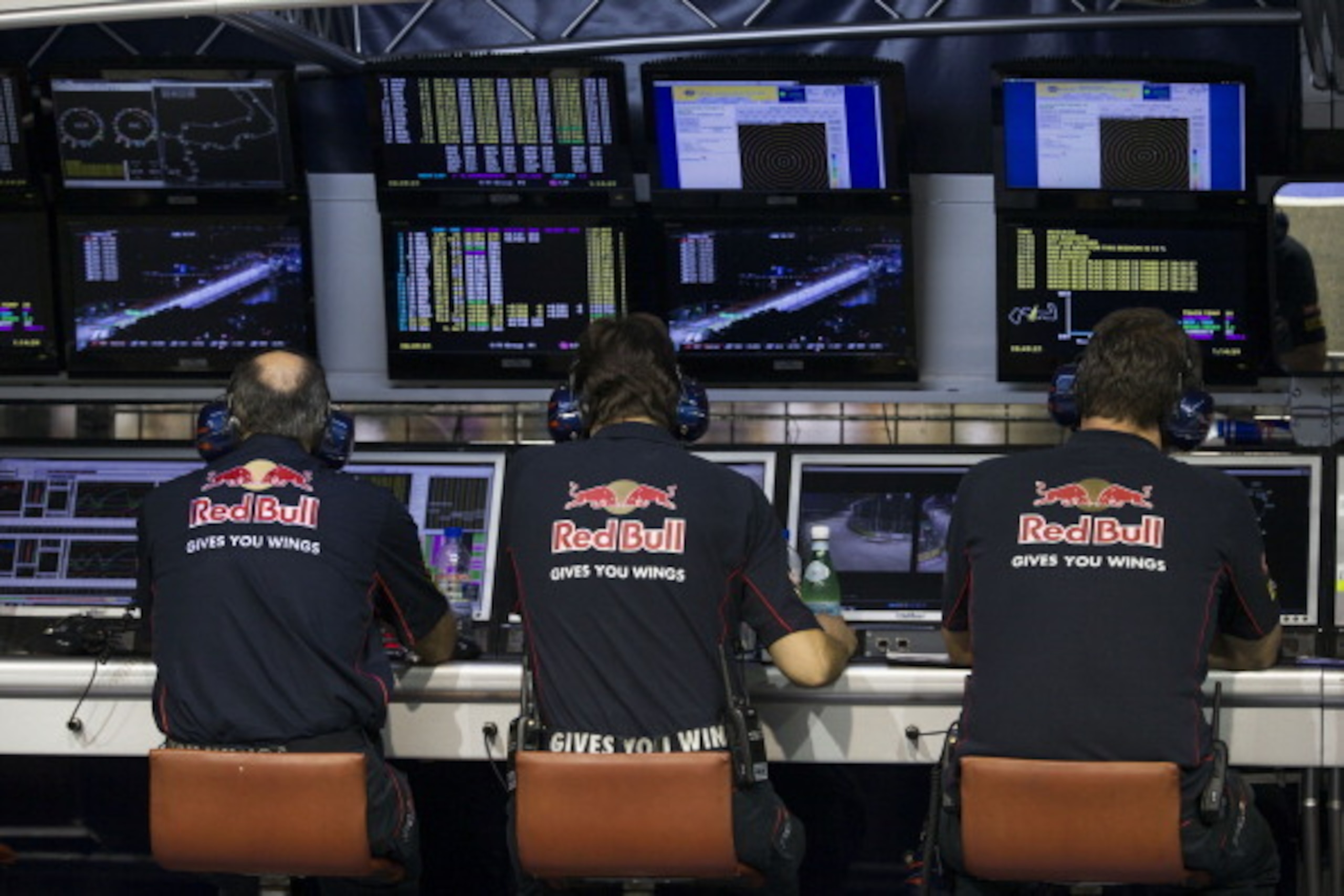
In Singapore, we saw those situations—and more—played out up and down the field. In some cases, such as Fernando Alonso's, the strategists and drivers were helpless. The safety car arrived at the wrong time and ruined their races. In other cases, like Lewis Hamilton's, the teams were able to make their strategies work, even though the safety car complicated matters (of course, it is much easier to devise strategies when your car is one or two seconds quicker than anyone else's).
To help determine the winners and losers from the Singapore safety car and the subsequent strategy calls, let's first take a look at the running order just before Sergio Perez's shattered front wing necessitated a call to Bernd Maylander with the finishing order.
| Lewis Hamilton | 1 | 1 | – |
| Sebastian Vettel | 3 | 2 | +1 |
| Daniel Ricciardo | 4 | 3 | +1 |
| Fernando Alonso | 2 | 4 | -2 |
| Felipe Massa | 6 | 5 | +1 |
| Jean-Eric Vergne | 9 | 6 | +3 |
| Sergio Perez | 16 | 7 | +9 |
| Kimi Raikkonen | 7 | 8 | -1 |
| Nico Hulkenberg | 11 | 9 | +2 |
| Kevin Magnussen | 10 | 10 | – |
| Valtteri Bottas | 8 | 11 | -3 |
| Pastor Maldonado | 14 | 12 | +2 |
| Romain Grosjean | 12 | 13 | -1 |
| Daniil Kvyat | 13 | 14 | -1 |
| Marcus Ericsson | 18 | 15 | +3 |
| Jules Bianchi | 17 | 16 | +1 |
| Max Chilton | 19 | 17 | +2 |
Clearly, Perez and Jean-Eric Vergne improved their positions the most from Lap 31, when the safety car appeared, to the end of the race. They each used very different strategies, though.
Perez had just pitted on Lap 29 and came out in 15th place, behind the Sauber of Adrian Sutil. As he tried to make his way past the slower car into Turn 8, Sutil squeezed him towards the wall and clipped the Mexican's front wing, which soon fell off and exploded all over the track. Perez quickly pitted again.
When the safety car came in at the end of Lap 37, he began to move back up the order before pitting again, on Lap 44. With fresh tyres, Perez scythed his way through the field in the closing laps, benefitting in particular from Valtteri Bottas' fading tyres (which he had been using since Lap 23), as the Williams driver held up a train of cars and allowed Perez to move in for the kill.
Perez said, per the Force India website:
"Those in front of me at the end had big tyre degradation, but this affected me as well. When I caught the train ahead I didn’t have much grip either and this made each one of the overtakes a bit more difficult. We managed our tyres perfectly and to go from P15 to P7 was the reward we deserved. It was a great result for the team; they did a fantastic job with the strategy.
"
Team principal Vijay Mallya echoed his driver's thoughts, saying, in the same press release:
"It was an eventful race, especially for Checo [Perez], and it was only in the closing laps that the race came back to us. We had to make some difficult decisions on the pit wall today, but I think on the whole we made the right ones. There was a bit of luck, too, but we made the most of our opportunities and Checo and Nico [Hulkenberg] drove extremely well.
"
Hulkenberg, on older tyres, was passed by his teammate near the end of the race. This provided a great demonstration of the effects of the strategists' decisions, as Hulkenberg lamented, again via the team website, that, "With hindsight it would have been better to pit again for fresh tyres and we probably could have finished even higher up, but it’s always a difficult decision for the team with the information we had at the time."
Meanwhile, Vergne was also on fresh tyres at the end of the race and was able to pass the same cars as Perez in the final laps: Kimi Raikkonen, Hulkenberg, Bottas and Kevin Magnussen.
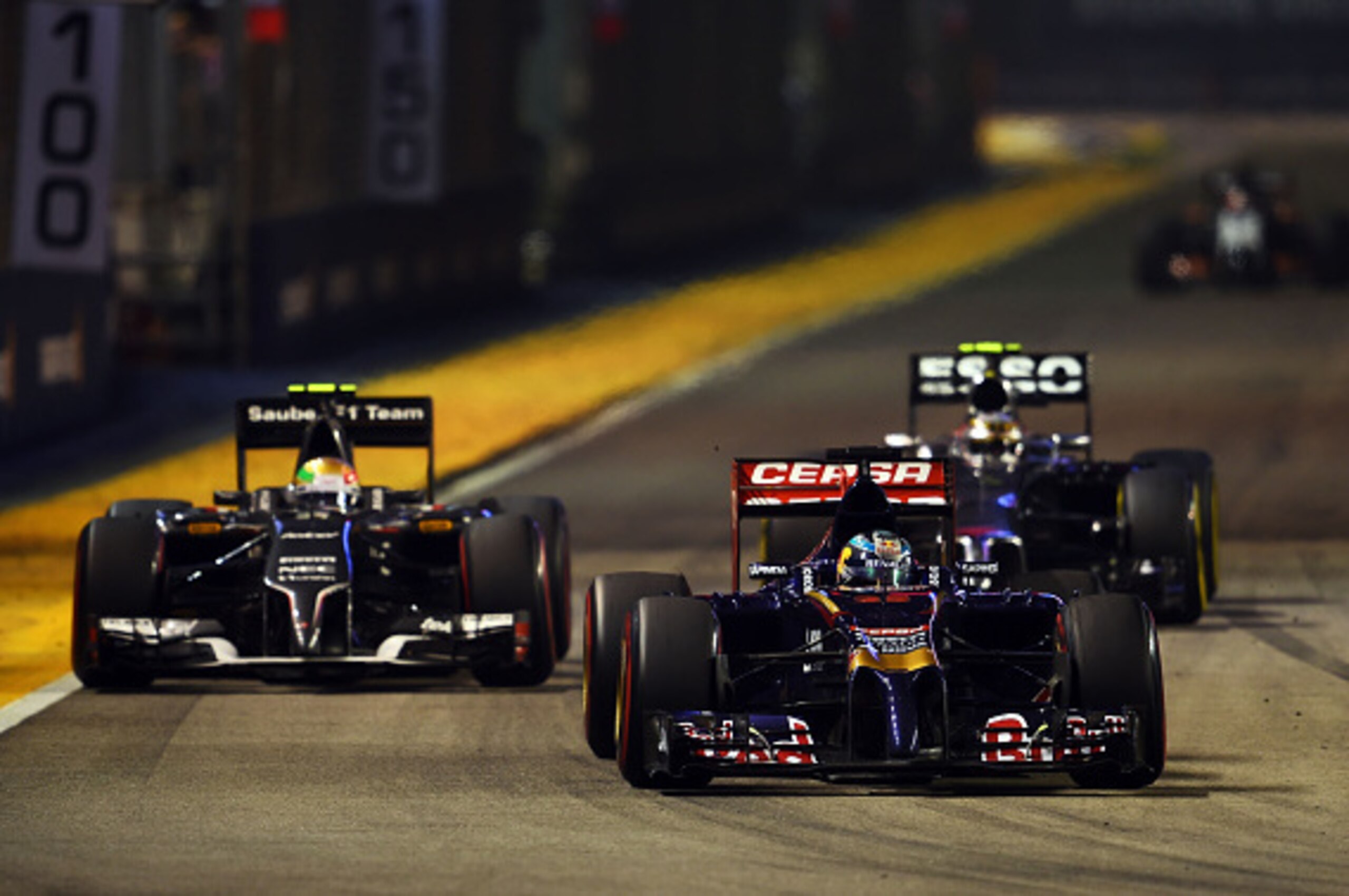
Vergne, though, did not stop when the safety car was called out. He had pitted for new super-soft tyres on Lap 24 and the team elected to leave him on those until Lap 44 (he was in the pits at the same time as Perez for their final stops).
Perez was already near the back of the field when the safety car came on track, so he had nothing to lose by making an extra stop. Vergne, though, was running ninth and would have lost several places had he pitted at that time.
In the end, Vergne finished just ahead of Perez—two very different strategies to achieve virtually the same result.
On Lap 31, Hamilton was leading from Alonso and the two Red Bulls of Sebastian Vettel and Daniel Ricciardo. Although Hamilton did not gain any places after the safety car period (as he was already in the lead), Mercedes' decision to leave him out paid off.
BBC Radio commentator James Allen explained the reason for that decision on his website.
"[Mercedes] knew that with fresh Soft tyres, Hamilton would be able to pass one Red Bull car on worn Softs relatively easily—as it proved. But they feared that if they came out behind both Red Bulls, they could play a team game and hold him up while the lead car build a cushion for victory.
"
Ferrari, meanwhile, chose to call Alonso into the pits under the safety car. Although his tyres were slightly fresher than the Red Bulls' (four laps newer than Ricciardo's, six laps newer than Vettel's), he was unable to pass either car during the remainder of the race.

Alonso said, per a Ferrari press release.
"Sometimes, a Safety Car can help but I think that today on this front, we were a bit unlucky, because at that moment, we were trying to make sure of second place and our strategy was good. We didn’t have much of an alternative, because if we had stayed out, the probability was that the stop for the Softs would have cost us more places.
"
The other big loser from the safety car period was Bottas. He had stopped on Lap 23 and tried to make those tyres last until the end of the race. It did not work (although his teammate, Felipe Massa, stopped on Lap 22 and made his tyres work until the end).
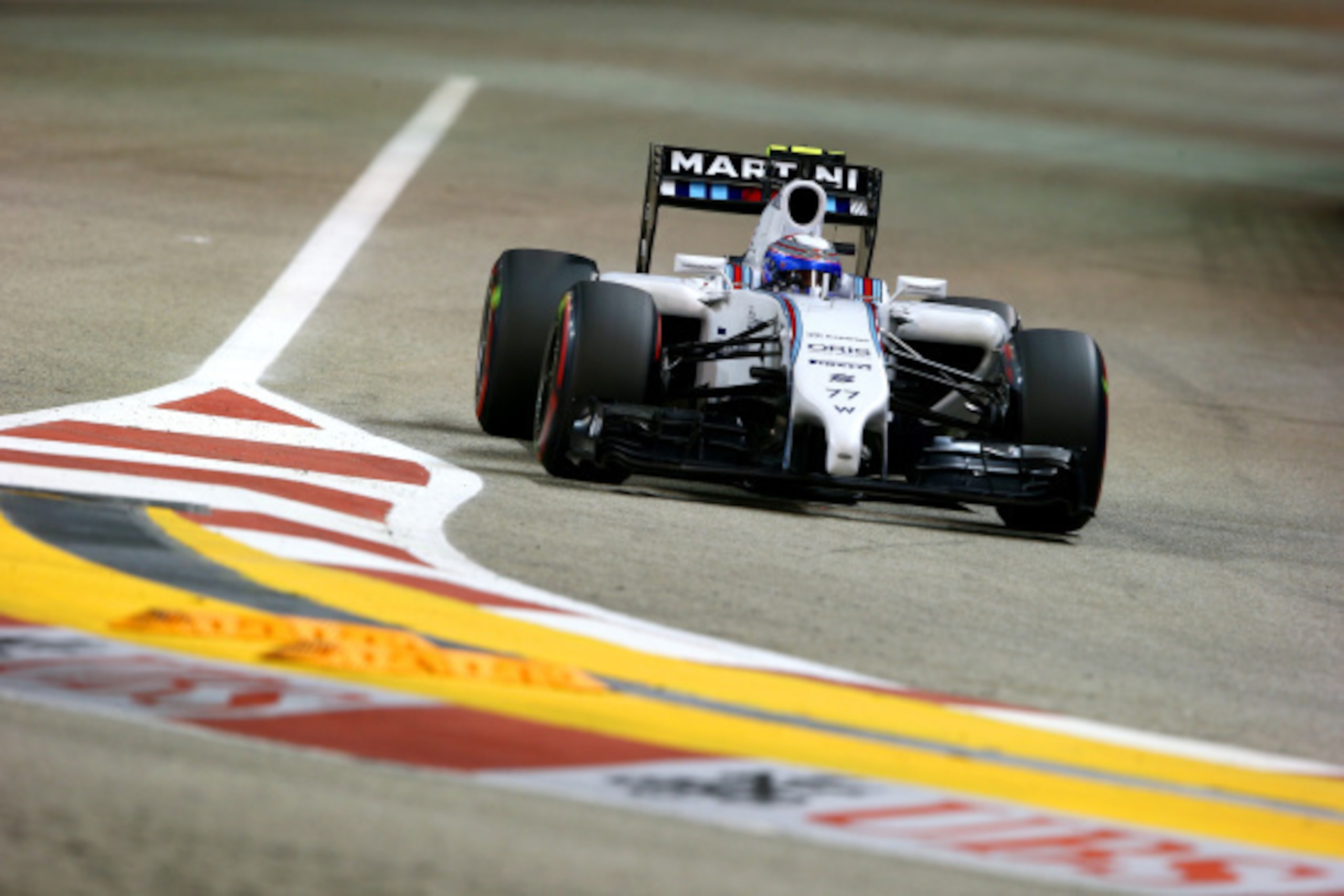
The Finn was in sixth place on the second-to-last lap, but he had no grip left in his tyres and was passed by Vergne, Perez, Raikkonen, Hulkenberg and Magnussen before limping across the finish line in 11th place.
Bottas told the Williams website, "After the safety car we moved to a two-stop strategy and in the end the tyres just weren’t able to hold on. In the final lap I had a big lock up in the rear tyres when I was defending and after that I had no grip and cars could easily sweep past."
"We took a calculated risk with the strategy and this succeeded for Felipe as it kept him ahead of Raikonnen who had a faster car, but with Valtteri it didn't pay off as he ran out of tyres on the final lap which cost him sixth place," said head of vehicle performance Rob Smedley in the same press release.
The following chart shows the lap times over the final three, crucial, laps for some of the key drivers. In particular, compare Vergne's times on relatively fresh tyres to Bottas', as his grip slips away.
| 58 | 1m 57.569s | 1m 55.315s | 1m 58.077s | 1m 56.182s |
| 59 | 1m 55.409s | 1m 57.816s | 1m 59.826s | 1m 56.129s |
| 60 | 1m 54.330s | 1m 57.022s | 2m 04.055s | 1m 56.016s |
Other drivers gained or lost a place or two as all the teams made quick decisions in reaction to the safety car. By examining these examples, though, we can see how difficult the strategists' jobs are. Not only do they need to determine the optimal strategy for their own cars, but they must also guess their rivals' strategies and react to them.
Looking at the remainder of the calendar, there are not really any other "guaranteed" safety car races, but no doubt, we have not seen the last of it.
Follow me on Twitter for updates when I publish a new article and for other (mostly) F1-related news and banter: @MatthewWalthert
.jpg?w=2560 "Texans-Mixon Released Football")
.jpg?w=2560 "Commanders Eagles Football")

.jpg?w=2560 "Grading WWE Raw 🔠")
.jpg?w=2560 "Mahomes' Wife Trolls Kubiak 💀")

