

New York Jets Offense Too Dependent on Eric Decker to Find Success
Injuries in the NFL are like taxes—everyone has them, but no one wants to deal with them.
However, for the New York Jets, injuries are not just an annoyance or a bump in the road—they will be one of the primary factors in whether or not they have a successful season in 2014. Wide receiver Eric Decker only had one catch for 19 yards in Monday night's loss to the Chicago Bears, but he had as much impact on the game as anyone wearing green and white.
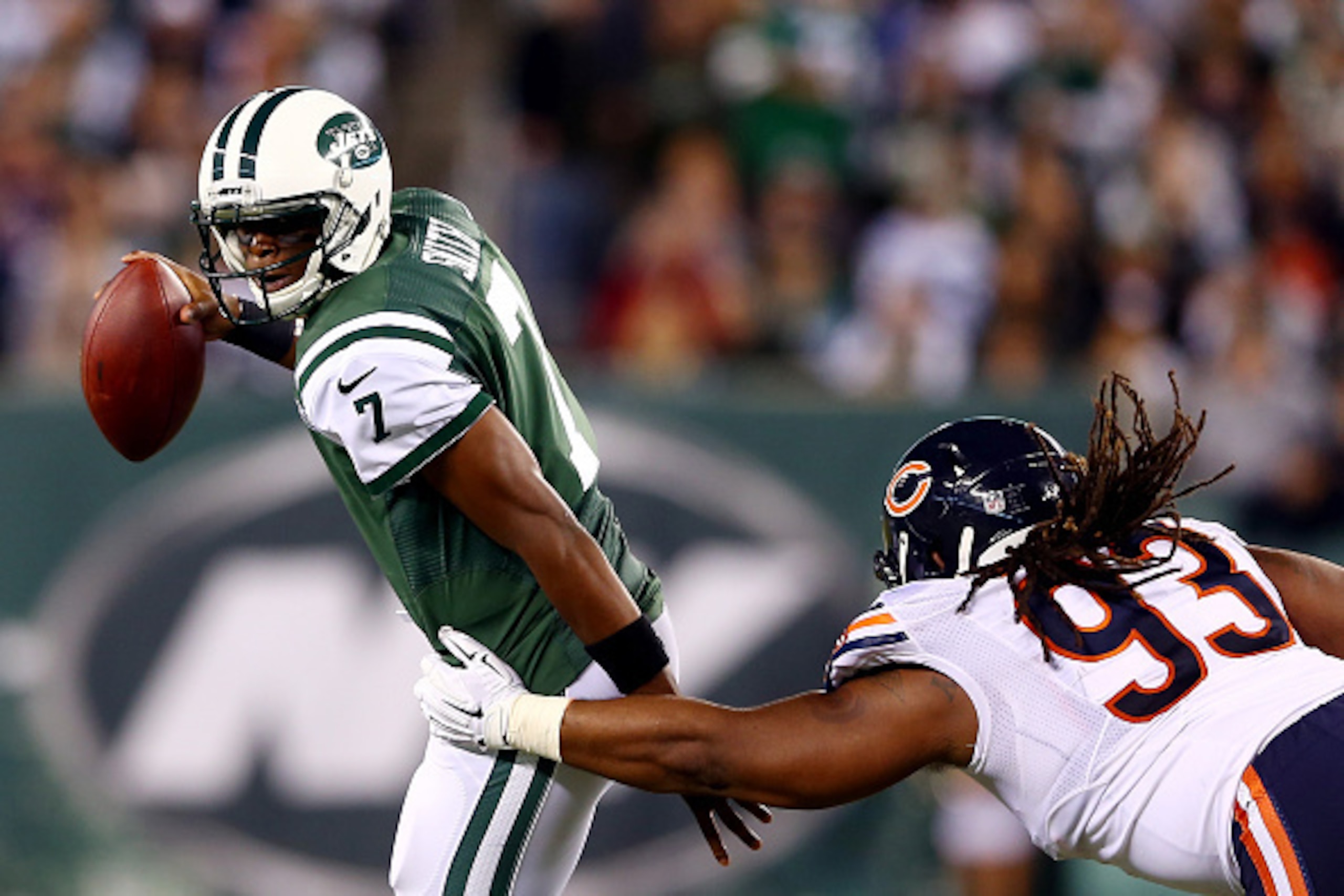
Without their top receiver, the Jets offense labored to move the ball, putting up the most unimpressive 19-point performance possible. Quarterback Geno Smith topped 316 yards in the effort, but the team's remarkable inefficiency in the red zone (1-of-6) makes those numbers ring hallow.

.jpg?w=2560 "Falcons Saints Football")
.jpg?w=2560 "Rams Eagles Football")
Prior to this game, it was abundantly clear that, although far from a finished product, Smith was making real progress as a quarterback. His interception rate was plummeting (two in two games), while his completion percentage ballooned to 65 percent. For the first time in the Rex Ryan era, the offense began to transform into an area of the game where, for once, the Jets were at least respectable.
Smith was improving, but it was not just because of time and experience. For the first time in his professional career, he was given a proven, No. 1-caliber receiver in Decker, fresh off a 1,288-yard season. Decker's rippling effects on the offense were not fully appreciated until the loss to the Green Bay Packers.
Decker was a productive player while the Jets were outpacing the high-flying Packers offense for the majority of the game. However, Decker's impact was not fully realized until he left the game with a hamstring injury, reverting to the sidelines while he watched his teammates sputter away what was once an 18-point lead.
After Decker teased his own team with an early reception prior to his departure, the Jets that lost to the Bears on Monday night looked more like their 2013 selves than the new-and-improved 2014 group, which makes plenty of sense. After all, the Jets offense without Decker is almost identical to last year's ineffective offense from a personnel standpoint.
Every team in the NFL has players they cannot replace without seeing a significant decline in production. However, those teams properly stocked with talent in the cupboard are able to sustain injuries to key players and still find ways to win.
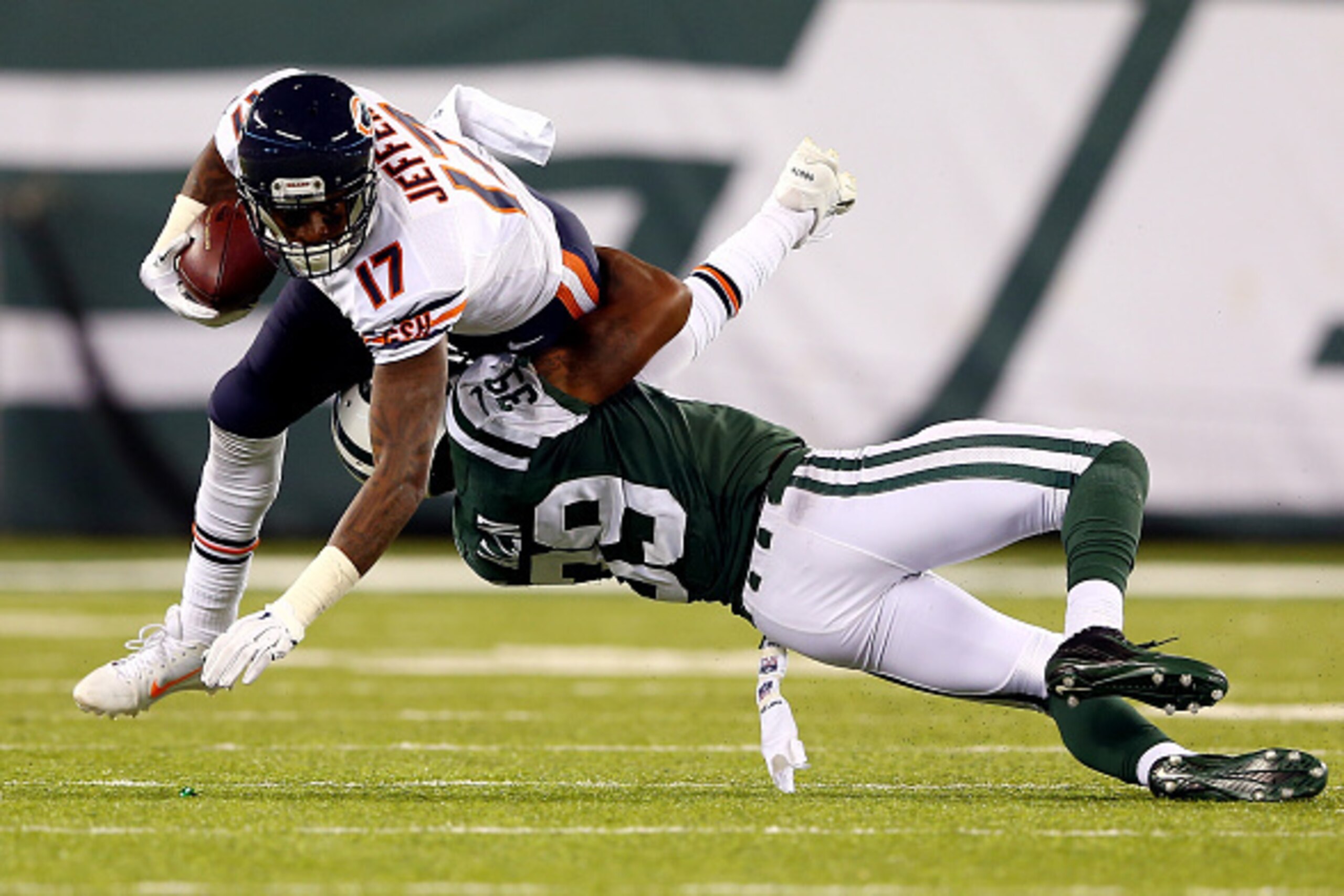
The Bears themselves are perfect examples of overcoming injuries. They too lost their top receiver in Brandon Marshall halfway through the game to injury. Their win was far from a display of brilliant, clean offensive production, but Alshon Jeffery was able to step into his shoes and put up a 100-yard game in his place.
Meanwhile, the Jets—their quarterback in particular—proceeded as if completing passes was as difficult as a senior-level calculus equation.
Decker's absence was more pronounced the closer the Jets got to the end zone. Converting just one of six trips in the red zone into a touchdown, the lack of size and talent was an obvious problem for Smith and Co. Unable to get more than a few inches away from cornerback Kyle Fuller all night, settling for field goals and committing inexcusable turnovers just a few feet away from paydirt, flipped the Jets' season upside-down. ESPN Stats & Info shared a significant Jets stat regarding their red-zone performance:
ESPN Stats & Info (via ESPN.com's Jane McManus) also states just how much Smith's performance varies depending on Decker's attendance:
"According to ESPN Stats & Info, Geno Smith's completion rate is 73.5 percent with Decker in the play, and 27.3 percent when he's on the sideline through the first two games."
These are the type of throws desperate quarterbacks make when they have nowhere else to go with the ball—essentially no play is available:
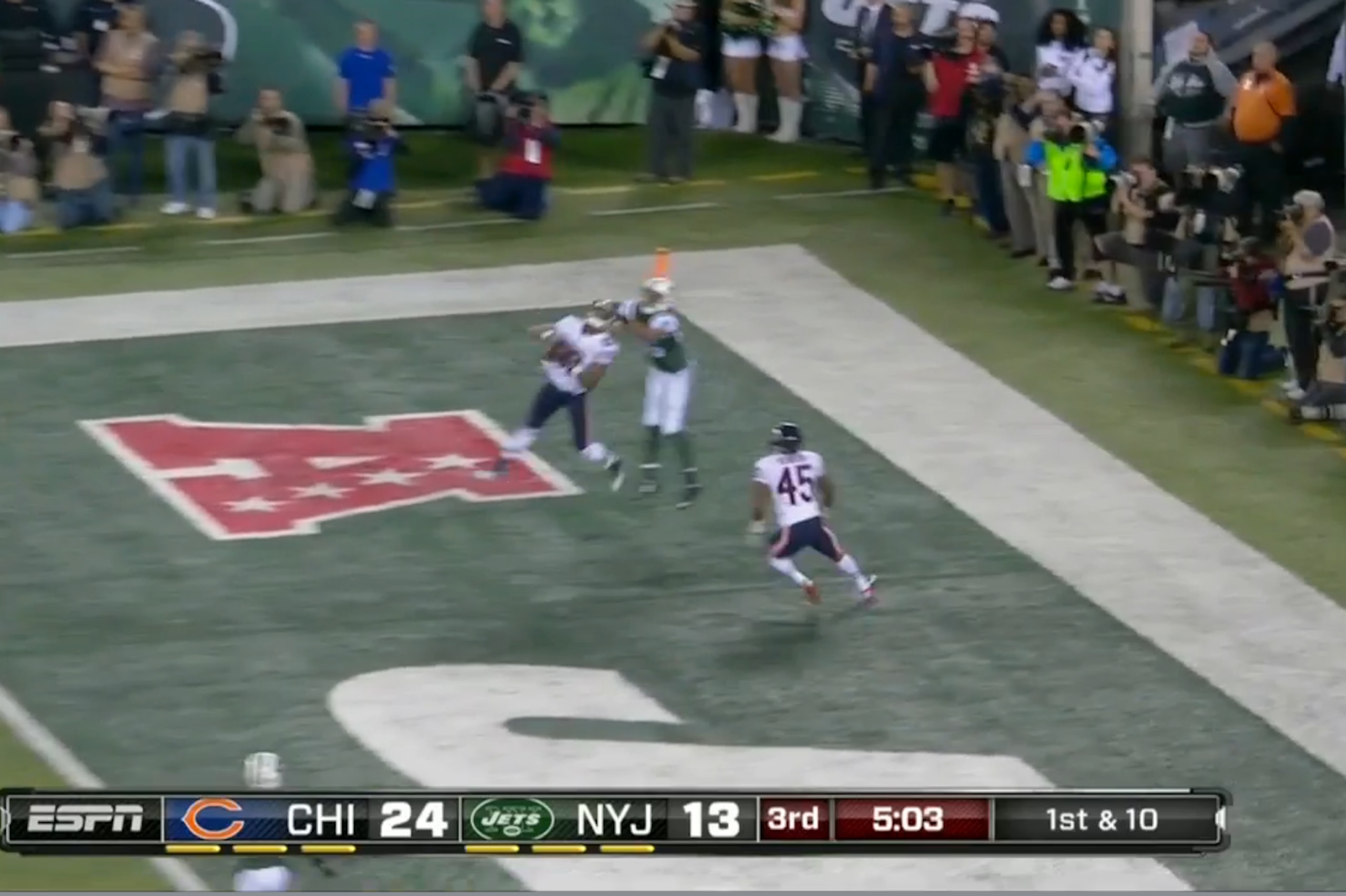
Outside of Decker, the Jets have other players on offense who can produce in the right situations. Jeremy Kerley had an impressive eight-reception night. Tight end Jace Amaro has a ton of talent as a former second-round pick. Greg Salas made a huge play at the end of the game to set the Jets up with—you guessed it—a red-zone trip that they would fail to convert.
However, without Decker, the Jets are void of any pass-catchers whom they can just line up in any situation and rely on to win their one-on-one matchups. Whether it be experience, size, talent or all of the above, the other members of the Jets' tight end and receiving corps need to be manufactured production, which is not the case for Decker.
When it's 3rd-and-10, who else can the Jets depend on to win their matchup without any help? Piling on blame aimed at the offensive coordinator is always a trendy course of action among fans, but at some point, players need to produce on their own.

Without Decker, the Jets have to scheme to overthink their opponents for every inch they can get out of the passing game—an unsustainable way to run an offense in the long term. Scheming-out yards is not an overly difficult task in-between the 20s, but untalented teams have nowhere to hide in the red zone.
It was hardly a secret that offensive firepower was not an area where the Jets were going to overwhelm teams. Outside of a responsible splurge for Decker in the offseason, general manager John Idzik was gun-shy when it came to bringing in receiver talent in the offseason.
While he certainly saved the Jets from potential cap trouble down the line, he is paying a dear price in the present while he watches his team drop winnable games.
The harsh reality for the Jets is that they will be at the mercy of Decker's health for the remainder of the season. Based on the results of Monday's loss, they had better hope that Decker's hamstring does not become a weekly crystal ball of the Jets' offensive fate.
Idzik may have given his team plenty of cap space to work with for next season, but his approach could be the reason the Jets might spend another January at home if Decker's injury continues to linger.
.jpg?w=2560 "Texans-Mixon Released Football")

.jpg?w=2560 "Grading WWE Raw 🔠")


.jpg?w=2560 "2 NFL Officials Suspended")
