

Nico Rosberg Can't Rebound from Retirement in 2014 Singapore Grand Prix
For the first 10 and a bit races of the 2014 Formula One season, things couldn't have gone better for Nico Rosberg.
The German kicked off the campaign with a dominant win in Australia, before hanging onto the coattails of Lewis Hamilton, his world championship rival, throughout the British driver's career-best winning streak of four races between the Malaysian and Spanish grands prix.

TOP NEWS
NFL Rookies with Most to Gain 📈
MLB owners, players open to missing games over labor dispute
Brutal Golf Putt Miss 😭
Although he showed slight signs of strain during his Mercedes teammate's winning run, Rosberg regained the initiative in qualifying in Monaco, which sparked a streak of his own: four podium finishes—including three wins—over the next five grands prix.
The last of which, in Hockenheim, was his first victory on home soil and completed a perfect week for the 29-year-old which included Germany's win over Argentina in the FIFA World Cup final, the confirmation of a new long-term contract with Mercedes and his marriage to his long-term girlfriend.
Life, at that point, was pretty good for Rosberg, who left the German Grand Prix with a 14-point advantage over Hamilton in the drivers' championship.
The feel-good factor was carried into the next round, the Hungarian Grand Prix, where Rosberg set another comfortable pole position before marching into the distance, seemingly on his way to yet another comfortable win.
And then the safety car came out.
Since then, the campaign has never quite been the same for Rosberg.
He was visibly and audibly upset by Hamilton's refusal of Mercedes instructions to let the recovering German through at the Hungaroring.
Despite a month away from the action—in the form of the traditional summer break—presenting an opportunity for Rosberg to flush away any ill-feeling, he returned to the paddock at Spa with the persona of an angry young man, making the mistake of hitting Hamilton at Les Combes before—according to his teammate's comments passed on by Crash.net—admitting that he did it "to prove a point."
His hostile reception on the podium in Belgium appeared to unsettle Rosberg more than any other driver to have been targeted by the boo-boys in recent years, while his mistake at Monza gifted the race win to Hamilton, freeing the 2008 world champion to begin the process of eroding the German's 29-point advantage.
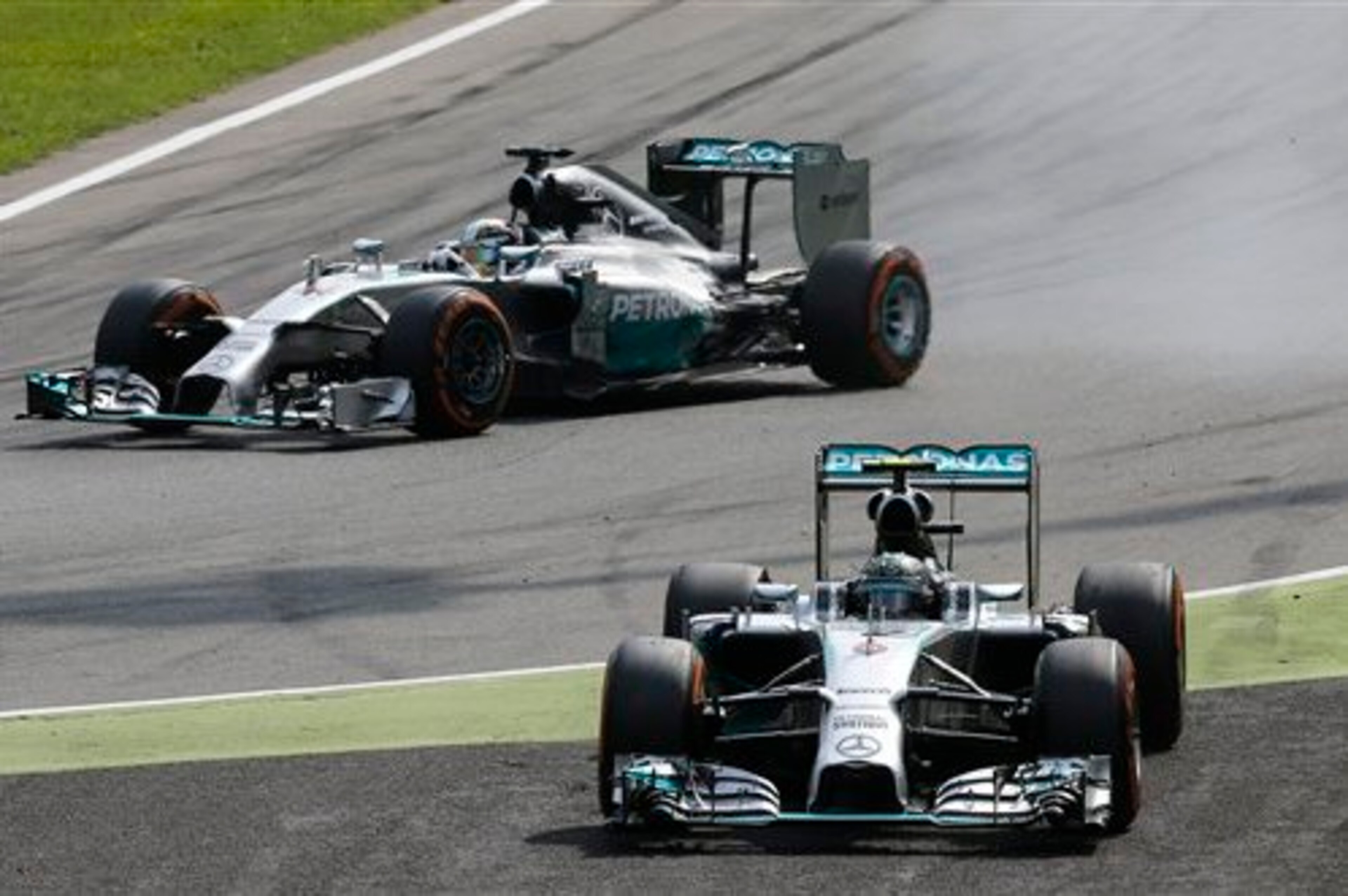
Those tiny errors, niggles and frustrations endured by Rosberg since Hungary all appeared to be building up to a much more significant, instantaneous blow to his title hopes, which made his retirement from Sunday's Singapore Grand Prix after 13 gloomy laps seem eerily predictable.
A "steering column wiring loom failure" was, according to Mercedes' official website, at the root of Rosberg's problem, which forced the German to give up his grid slot of second place and start from the pit lane before driving, as he told the same source, with "no radio, no DRS and reduced Hybrid power" as well as contending with double up-shifts.
The decision to wheel the No. 6 car into the garage at what would have been his first pit stop of the evening, along with Hamilton's seventh victory of the season, leaves Rosberg trailing his teammate by three points with just five races remaining.
And although the difference between first and second place in a given race is worth seven points—with a Rosberg victory in the next round at Suzuka enough to see the German return to the top of the drivers' standings—it is difficult to imagine how the German will break this miserable run of hiccups and bounce back.

As a methodical driver, leading the world championship suited Rosberg perfectly, allowing him to pre-determine a tactical plan ahead of a race weekend and doing whatever he needed to do against the backdrop of the numbers game.
Trailing Hamilton—who told Sky Sports' Pete Gill that he will maintain the attitude of a chaser—however, has left with the German with no option but to act as the aggressor.
Simply put, the Singapore Grand Prix and its resetting effect on the title battle has dragged Rosberg into a situation that he has always tried his utmost to avoid: a straight fight.
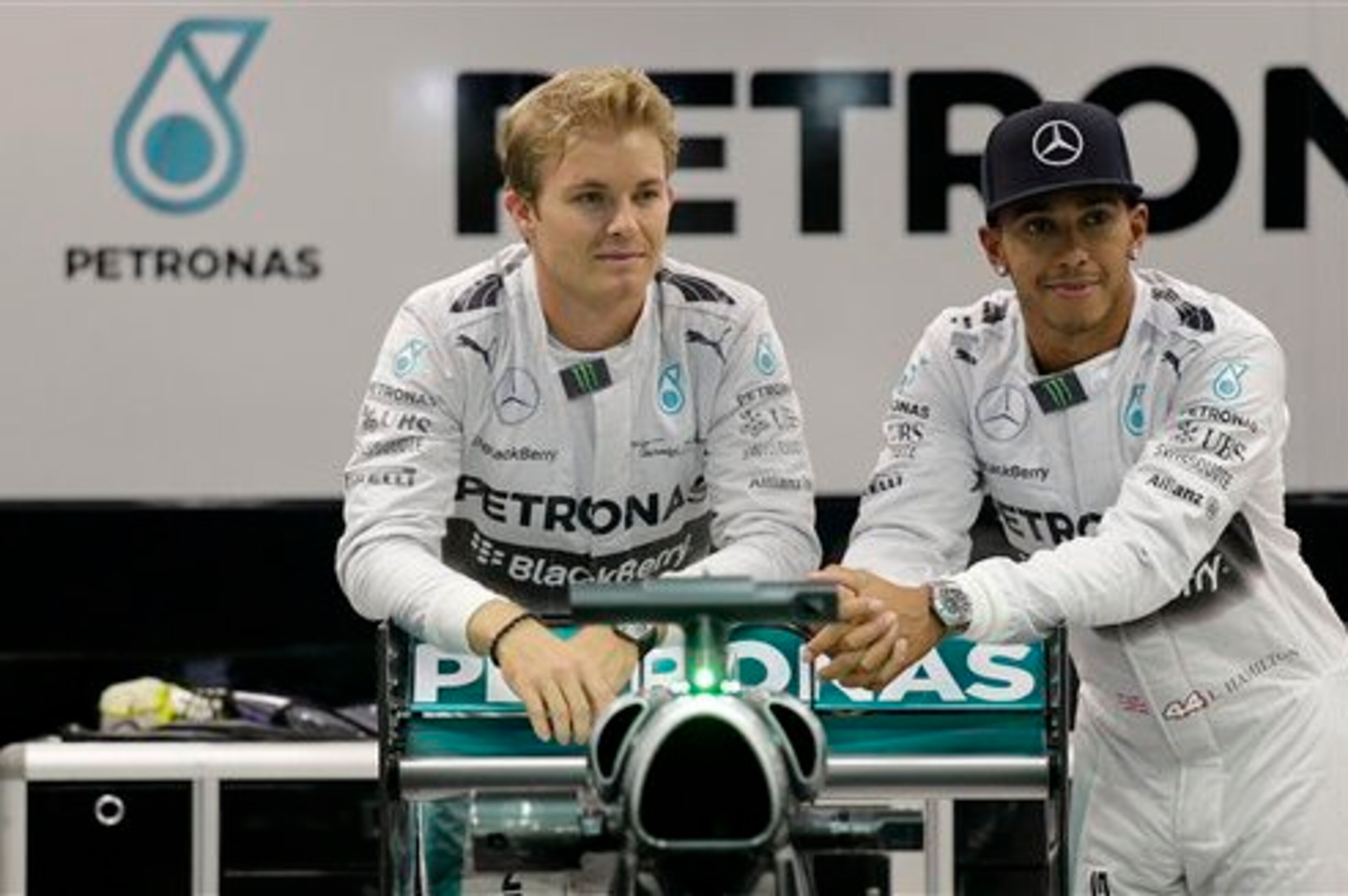
And with Hamilton almost certainly the faster driver of the pair, Rosberg will have to operate at a level of performance that he has arguably only ever hinted at reaching if he is to wrestle the championship from his teammate.
That is, of course, before you consider any lasting psychological effects of not only the events of the Singapore Grand Prix but those of the last four races.
It might not have gone unnoticed that the last driver to take on Hamilton in a head-to-head scrap, Felipe Massa, found the wheels beginning to come off the wagon of his title challenge in Hungary—where he retired from the lead with three laps remaining—before disaster struck in Singapore, where the Brazilian pulled away from his pit box with the fuel hose still attached.
Rosberg's immediate reaction to his retirement—standing motionless in the Mercedes garage while staring at a television screen with his helmet still on, as if oblivious to all around him—was akin to the behaviour of Fernando Alonso in parc ferme following the 2012 Brazilian Grand Prix, with the Spaniard looking emptily into the distance, almost in an attempt to digest and come to terms with his defeat to Sebastian Vettel.
Even though Rosberg might not rebound from his retirement, that is not to suggest that he cannot go on to win the world championship from here.

If anything positive was to be taken from his Sunday in Singapore, though, it was that Mercedes' reliability problems remain alive and well.
And given the topsy-turvy nature of the 2014 campaign, it would not be surprising if the title battle took at least one more twist and one more turn before the season-ending Abu Dhabi Grand Prix on November 23.
Nevertheless, Rosberg will now be approaching the final five grands prix with more hope than expectation.

_0.png?w=3840 "Summer League Takeaways ✍️")
.jpg?w=3840 "1 Word to Describe Pre-Camp Vibe of All 32 NFL Teams")