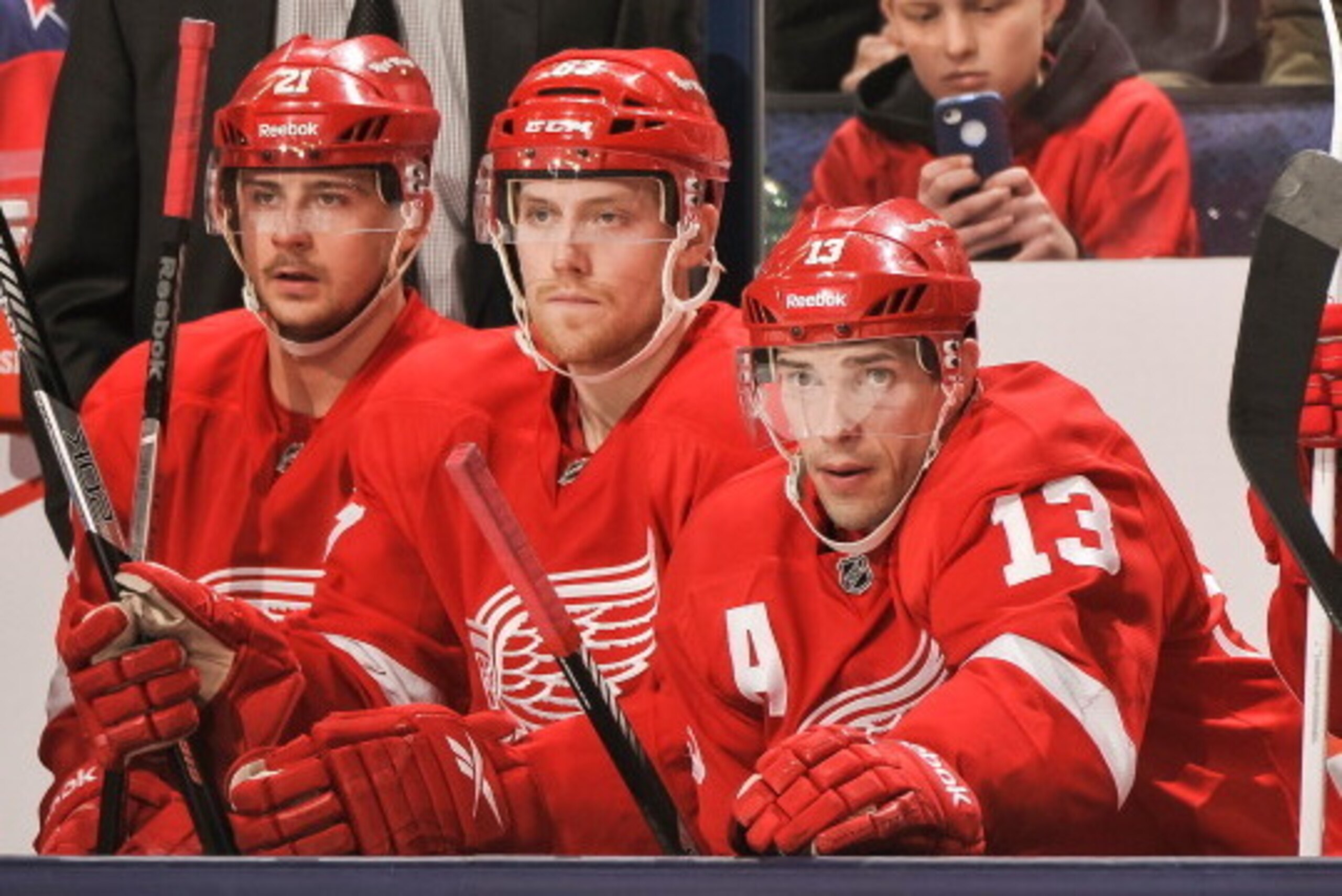

Predicting the Advanced Stat Leaders for the Detroit Red Wings in 2014-15
Professional sports have undergone significant changes over the many, many years they’ve been in action.
The game itself often undergoes rule alterations, strategy innovations or complete facelifts to evolve along with the demands of the professional environment and public influence.
One of the most intriguing changes is the development of new ways to track statistics. The NHL has a few figures of its own that have come out of the woodwork in recent years.
Corsi, Fenwick and PDO numbers are some that are not officially recognized stats, but as the game grows, their accuracy is recognized by coaches and team personnel.
The Detroit Red Wings have taken these numbers into consideration, and subtle implementation could pay larger dividends by the end of a long season.
The following is a list of the Red Wings players who will lead the team in these advanced statistics in 2014-15.
Corsi: Pavel Datsyuk
1 of 5
Corsi is an up-and-coming analytics rating that determines a player’s puck-possession efficiency based on total shot attempts for and against.
Named after former Buffalo Sabres and current St. Louis Blues goalie coach Jim Corsi, the statistic follows the number of goals, saves, missed and blocked shots a player encounters while on the ice. The higher the number, the more time spent with possession.
Pavel Datsyuk led Detroit last year with a 17.3 rating, according to Hockey Analysis. It means that Datsyuk spent more time in the offensive zone producing 17.3 more shot attempts than were taken against him.
The NHL leaders in Corsi analysis rating in 2013-14 were Jake Muzzin and Anze Kopitar of the Los Angeles Kings at 24.7 (minimum 500 minutes played).
Datsyuk played in just 45 games last year, totaling 17 goals and 37 points. Everyone in hockey knows how valuable he is to Detroit’s lineup, but his Corsi efficiency helps demonstrate his true significance.
When he is in the lineup, good things happen at both ends of the ice.
Shooting Percentage: Gustav Nyquist
2 of 5
Detroit was forced to turn to its younger players for offensive output last season, with Gustav Nyquist and Tomas Tatar answering the bell.
While Tatar led the team with 158 shots on goal in 73 games, Nyquist finished second with 153 in 16 fewer games. He also scored at an unreal 18.3 percent clip to lead the team with 28 goals.
Heading into the 2014-15 season, Nyquist is sure to receive top-six minutes and hopefully produce in a similar stride. It’s not realistic that he scores at the same 18 percent pace, but with an increased scoring role, the opportunity will be there.
A sophomore slump is inevitable, so being patient and continuing to shoot the puck is the best medicine for any struggles. Once it starts to go in, the numbers will come in bunches.
He’s a talented young player who will see plenty of scoring chances playing amongst Detroit’s top forwards. His breakout season last year helped carry Detroit to the postseason.
With a healthy group of forwards and a full season at the NHL level, more of the same could be forthcoming.
Fenwick, FenClose: Henrik Zetterberg
3 of 5
Like Corsi, Fenwick is a statistic that measures puck possession based on shots both on goal and missed.
The difference between the two is Fenwick labels blocked shots as a defensive skill that players can influence; therefore, they are excluded in calculation.
Pavel Datsyuk and Tomas Tatar led Detroit last season with a rating of 15. It means the team produced 15 more unblocked shot attempts than faced when each player was on the ice.
The stat can be taken a step further by adding the variable of a close game (within a goal or tied) into the equation. This number is titled FenClose, and it measures how a team performs in clutch situations.
While it’s no secret Datsyuk is among the league’s best defensive forwards every year, it tends to overshadow Henrik Zetterberg’s ability at both ends.
Although Zetterberg finished with a rating of 10.8, he is the club’s captain and top center. He’ll face plenty of close situations throughout the course of a season to lead the team in 2014-15.
While the numbers are similarly calculated, the FenClose equation as well as last year’s plus/minus differential factor in (Datsyuk plus-one, Zetterberg plus-19).
Both are among the league’s elite defensive forwards, but Zetterberg gets the nod in our Fenwick and FenClose category.

PDO: Tomas Tatar
4 of 5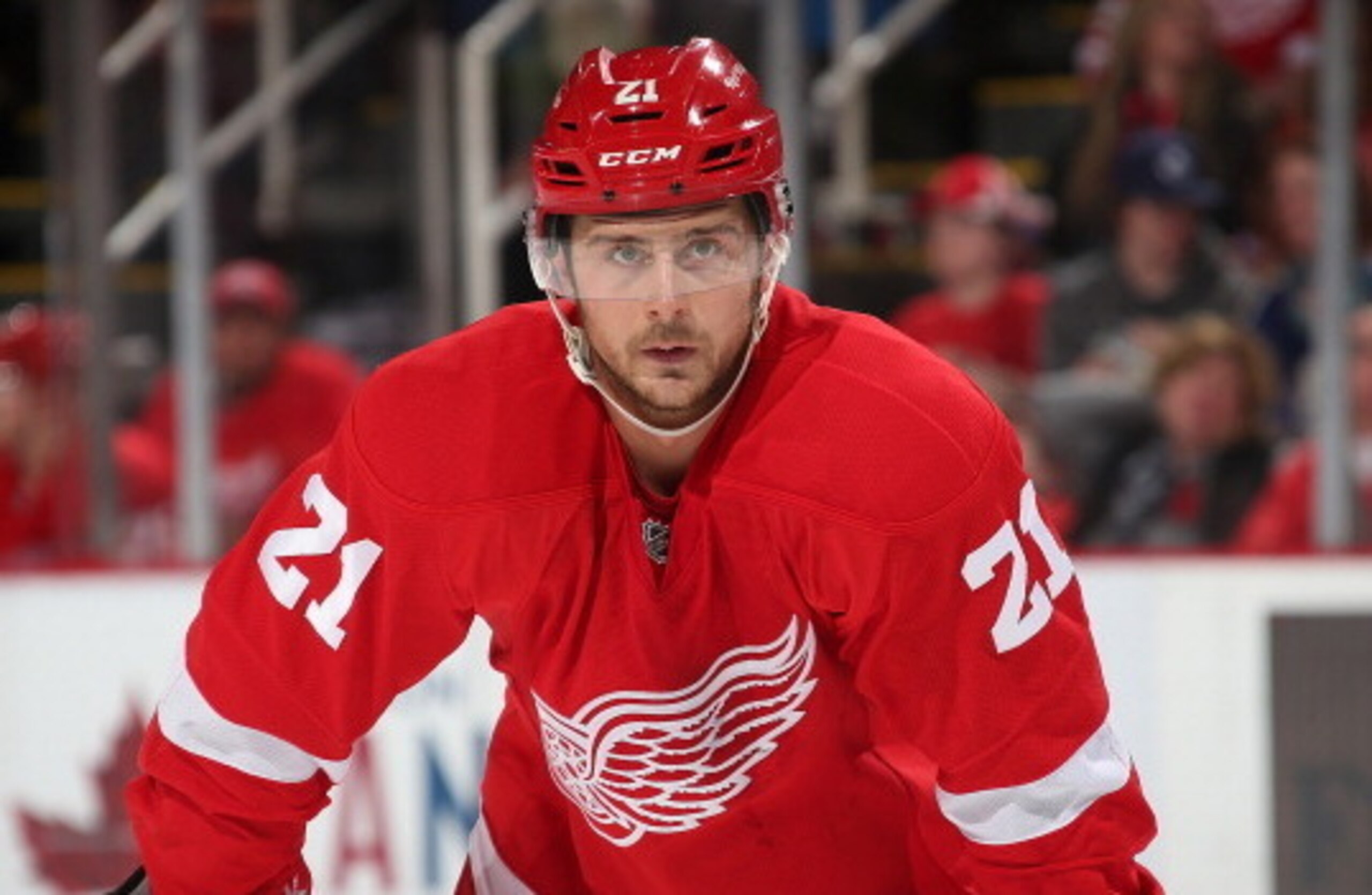
PDO doesn’t necessarily stand for anything, but it is often referred to as the NHL’s “luck” statistic.
PDO measures a player or team’s luck by adding together its shooting percentage and save percentage at even strength. Putting the average at 100 percent or 1.000 (no standardized format), a player’s shooting percentage of 12 percent added to a goalie’s .900 save percentage would equal 1,020, or 1.020.
In Detroit’s case, starting goaltender Jimmy Howard had a .919 save percentage at even strength in 2013-14. Gustav Nyquist led the team with an even-strength shooting percentage of 18.75, per Hockey Analysis. Without rounding, it gives Nyquist an impressive PDO of 1,106.
Tomas Tatar didn’t spend much time on the power play last year, scoring 17 of his 19 goals at even strength.
He was second on the team with an 11.97 even-strength shooting percentage (a more realistic pace), translating to a PDO of 1,038, still above the designated average in 73 games played.
Tatar will likely flank the third line again, but his innate ability to create offense will score him the team lead in PDO for 2014-15. He is a career 12 percent scorer, so there’s reason to believe he can maintain his pace.
He won’t line up quite as often against teams' top defensive units, allowing him a little extra freedom to score. Tatar had a good start to his NHL career in 2013-14, but bigger things can be expected in the upcoming season.
NHLE: Anthony Mantha
5 of 5
NHLE is an equation used to determine how a prospect’s statistics may translate to the NHL.
It is a formulaic evaluation to determine a statistical value for a transitioning prospect. A series of calculations formed by Gabe Desjardins a few years ago determined league values as follows, courtesy of SBNation’s Justin Azevedo:
| LEAGUE | NHLE |
| KHL | 0.83 |
| SEL | 0.78 |
| FNL | 0.54 |
| AHL | 0.44 |
| NCAA | 0.41 |
| OHL | 0.30 |
| WHL | 0.30 |
| QMJHL | 0.28 |
| USHL | 0.27 |
| AJHL | 0.16 |
| BCHL | 0.14 |
The formula to determine a player’s NHLE looks like this:
[(Points ÷ Games Played) x 82] x League NHLE Value = NHLE
Let’s break it down using Anthony Mantha’s numbers from the QMJHL last season.
[(120 ÷ 57) x 82] x 0.28 = 48.33
Mantha’s NHLE total would translate into the best rookie season Detroit has seen from a 20-year-old since Shawn Burr put up 47 points in 1986-87.
The other prospect vying for a spot would be Tomas Jurco, whose 32 points in 32 games last year in Grand Rapids translated to a 36.08 NHLE.
While there are so many factors that can determine how a player makes the adjustment, the speculative NHLE number is an interesting stat to keep an eye on.
Mantha is Detroit’s stud prospect hoping to make noise in this year’s training camp and preseason. If he can stand out enough to earn a roster spot, his NHLE could be a good mark to measure him by.
All statistics courtesy of NHL.com unless otherwise noted.

-(2).jpg?w=2560 "Bleacher Report")

.jpg?w=2560 "2 NFL Officials Suspended")


.jpg?w=2560 "Mahomes' Wife Trolls Kubiak 💀")

.jpg?w=2560 "Love's Body Already 'Tired'")