Bucs' Offensive Struggles Stem from Play-Calling, Not QB Play
Tampa Bay Buccaneers quarterbacks coach Marcus Arroyo is stuck in an unenviable position. Arroyo was thrust into play-calling duties during the first two games of the season after offensive coordinator Jeff Tedford had a procedure to place two stents in his heart.
While Tedford's health is the priority in this situation, the Buccaneers offense has struggled to develop any type of rhythm under Arroyo's supervision.
When Tedford was hired by Lovie Smith at the start of the year, the Buccaneers head coach said, via ESPN:

.jpg?w=2560 "Commanders Eagles Football")

"We are very fortunate to have Jeff as our offensive coordinator. I have a great deal of respect for the job Jeff did at Cal for more than a decade and I believe he will be a great fit for what we are attempting to do in Tampa. Jeff has a successful and proven track record as a teacher and developer of young talent and I know our players, and the organization as a whole, will benefit from his experience.
"
During his 11 years as the Cal Golden Bears head coach, Tedford was considered an offensive mastermind and one of the first major proponents of the spread offense.
The Buccaneers were expected to sprinkle some spread concepts and tempo into the offense with Tedford at the helm. Instead, the unit has been stuck in neutral against the Carolina Panthers and the St. Louis Rams.
Arroyo admitted to Fox 13 Sports' Kevin O'Donnell he isn't quite sure how the offense would look with Tedford calling the plays:
"That would be hard for me to say because I don't know what he'd call. We know the system fairly. I mean, I've been with him for two years. I know the system. I know it as a quarterback. I know it. I'm running his system. We're running his system. But the play calls, I don't know what he would have called in certain situations. I don't know the answer to that.
"
Tedford has been in the coaches' box providing help to his protege. Arroyo also told O'Donnell: "It's eyes in the sky. It's another set of eyes. It just helps to have that. I mean, you're down a guy. You know you're down your leader. So anything is help, and he continues to do that."
The Buccaneers coordinator will once again be in the box for the Buccaneers' Thursday night affair against an NFC South rival, the Atlanta Falcons.
Despite Tedford serving as an overseer, Arroyo's play-calling has been ultraconservative in each contest until late in the game when the Buccaneers were trailing and attempting to make a comeback.
Four examples are provided below to show how a poor play call slowed the Buccaneers' comeback attempts against the Panthers and Rams. Each play took place in the second half in a critical situation.
The first example came on the opening drive of the third quarter against Carolina with the Buccaneers down 10-0. It started as a promising 11-play drive before Tampa Bay faced a 3rd-and-12 from the Panthers 29-yard line.
Tampa Bay ran four routes on the play. Only one of them had the potential to be completed beyond the first-down marker, and wide receiver Vincent Jackson was covered underneath by the linebacker while the safety was playing over the top.
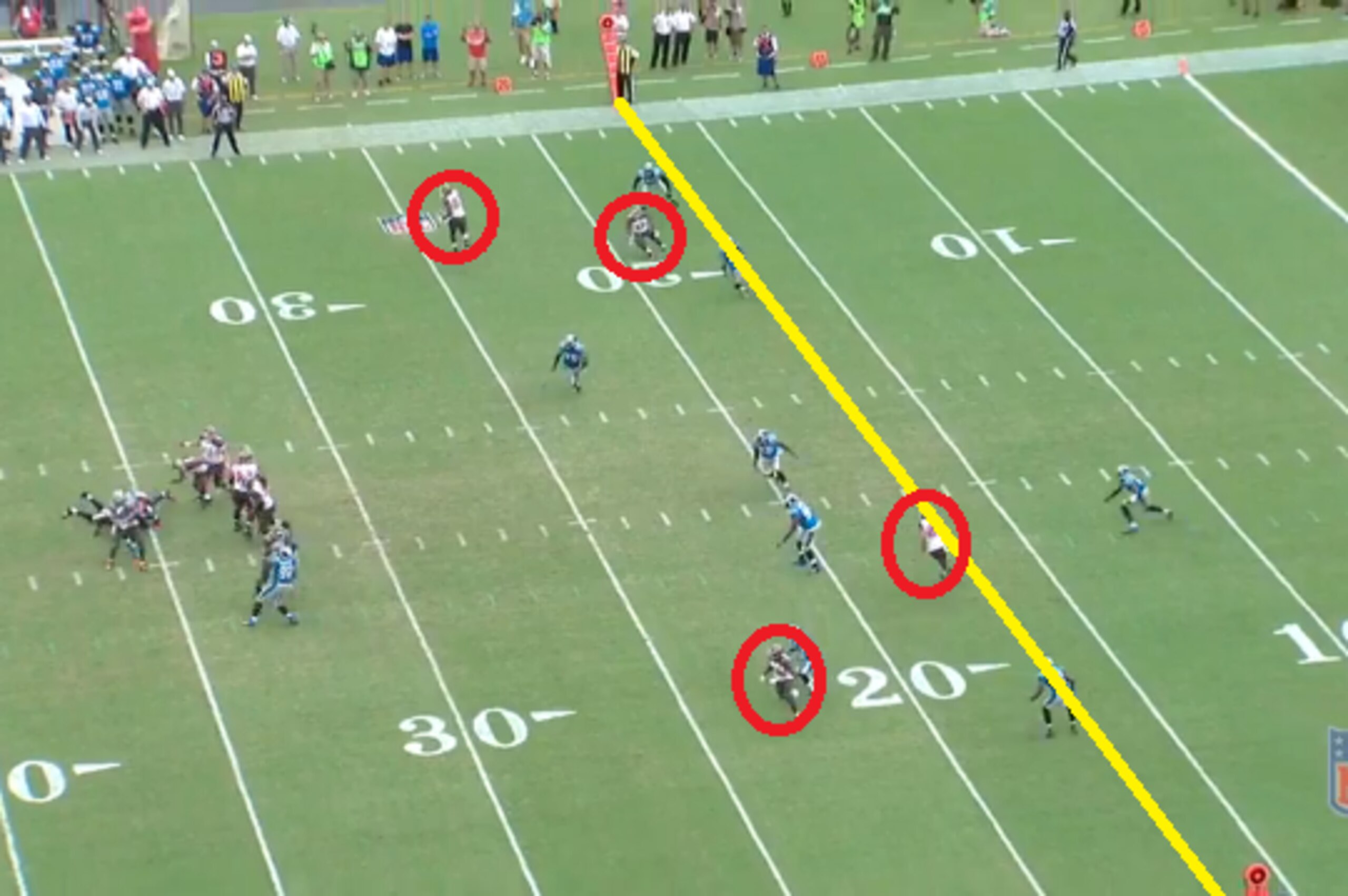
Quarterback Josh McCown was sacked for a seven-yard loss, which took the team out of field-goal position, but the signal-caller had very little chance to actually convert the first down due to the route combinations called.
A similar problem occurred during Tampa Bay's first drive in the fourth quarter.
The Buccaneers trailed 17-0 at this point and faced a 3rd-and-2 scenario. The difference this time was three of the four routes the team's receivers ran were beyond the first-down marker. Yet, the primary read was a one-yard route out to the flat.
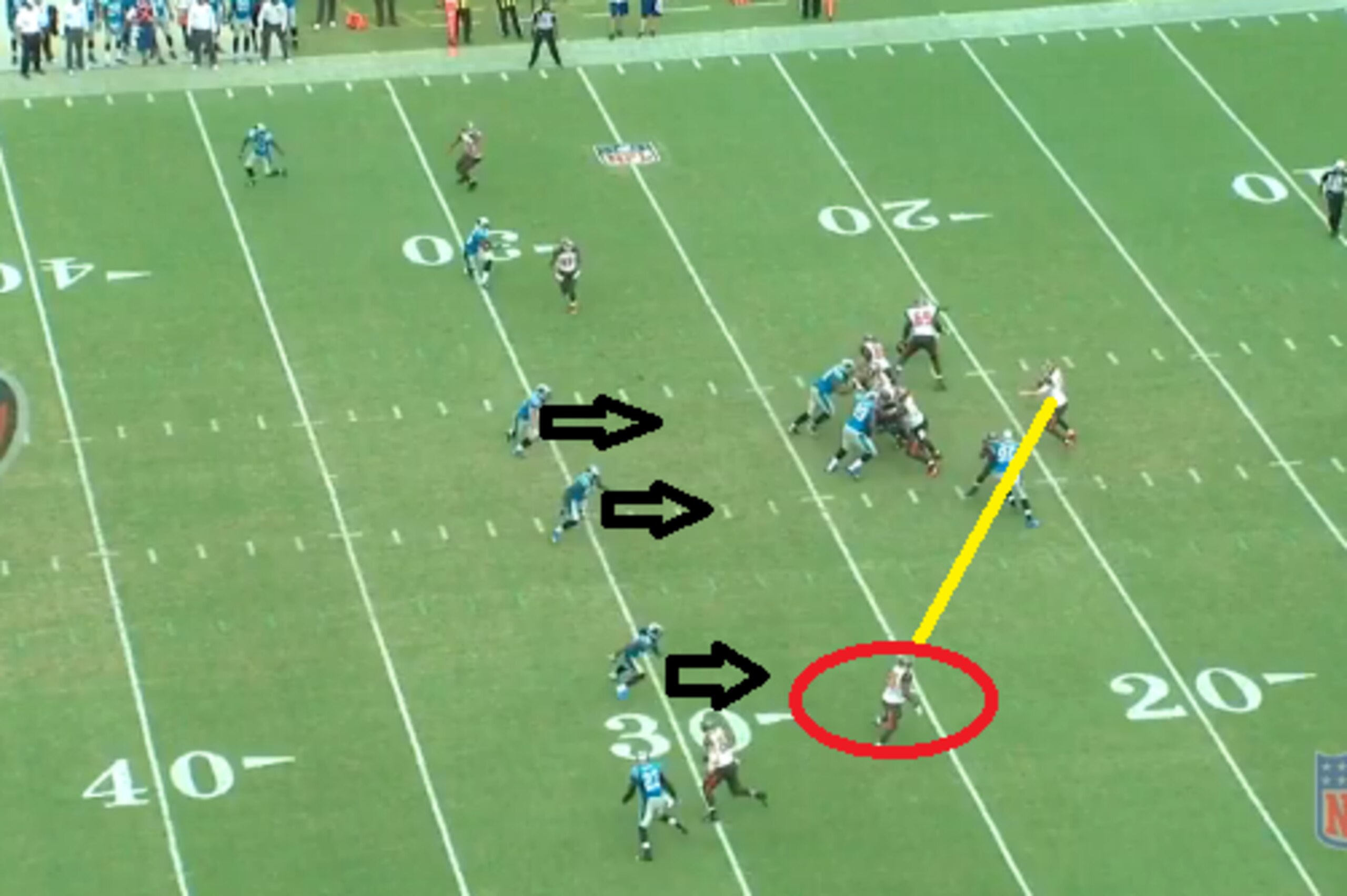
Since the Panthers defenders were squatting on the underneath routes, they easily made the tackle for a one-yard gain. Tampa Bay was forced to punt.
The worst call during the two games came at the end of the third quarter against the Rams.
It was 3rd-and-7 from the Rams 9-yard line. The Buccaneers were winning 14-13. Instead of being aggressive in an attempt to put the game away, Arroyo called a running play.

What compounded the poor choice of running the football was the Panthers didn't even have a numbers advantage to the left side. There were clearly four defenders with a safety over the top for three offensive linemen to block. Of course, the play didn't result in a touchdown or even a first down.
Even Tedford wasn't thrilled with the decision.
The Buccaneers settled for a field-goal attempt, which was blocked.
However, Arroyo's offense had a chance to redeem itself late in the contest. With seven minutes, 15 seconds remaining and the ball at the Rams 24-yard line, Arroyo once again decided not to take a shot toward the end zone. Instead, the substitute coordinator called three straight running plays.
Here is the look the Rams provided on 3rd-and-2.
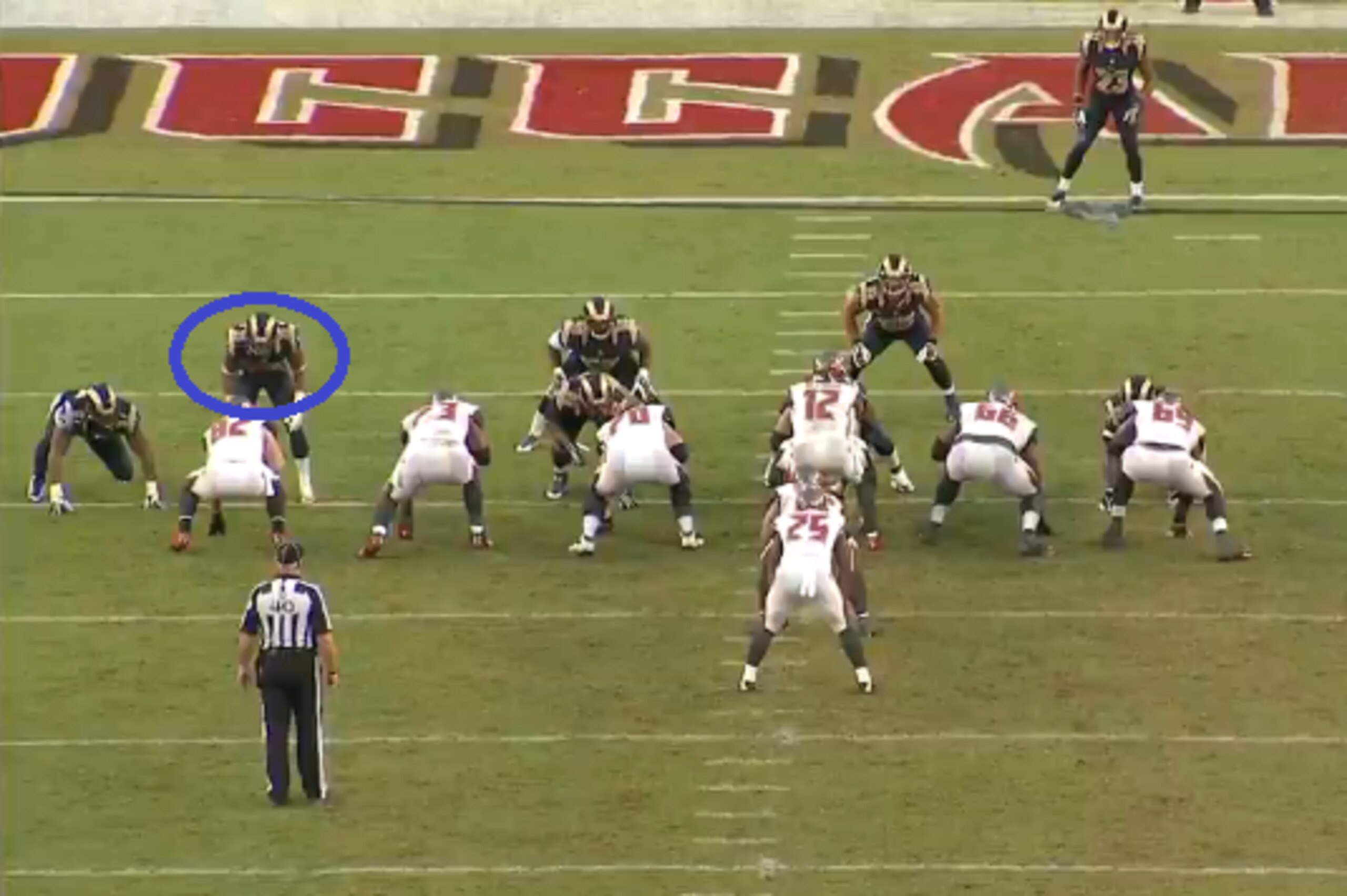
The safety walked up to the line of scrimmage and lined up exactly where the Buccaneers attempted to run the ball. With all three of the linemen covered, a scraping linebacker came free to blow up the fullback. And a backside defensive end got off a block to drop running back Michael James for a two-yard loss.
The sequence of play-calling for the Buccaneers in the fourth quarter against the Rams was horrid, especially since the team lost 19-17. Points were left on the field without even attempting to secure them.
Yes, part of the blame should fall on McCown. The veteran signal-caller made some unconscionable mistakes during his first two games. But he needs to be put in a position to succeed.
For example, McCown looked far more comfortable in the fourth quarter against the Panthers after Arroyo decided to increase the offensive tempo. The coach hinted he might use more no-huddle the following week against the Rams, yet it never happened. The Buccaneers ran one no-huddle play during their second contest.
A coach's primary job is to put his players into a position to succeed. Arroyo is quickly learning this task is easier said than done. Once Tedford is cleared by doctors and given an opportunity to take full control of his offense, it should look far different than the one seen the previous two weeks.
Brent Sobleski covers the NFC South for Bleacher Report. Follow him on Twitter.
.jpg?w=2560 "Chiefs Dolphins Football")
.jpg?w=2560 "Cardinals Giants Football")