

Minnesota Vikings Must Get More from Defensive Line to Stay Competitive in NFC
The ebbs and flows have already begun for the Minnesota Vikings in 2014. The team isn’t just all over the map off the field. Multiple units followed up stellar Week 1 showings with duds in Week 2.
The defensive line is at the forefront of that polarizing play.
Tom Brady and the New England Patriots minced the entire Vikings defense on Sunday. The defensive line getting torn apart stands out above the rest. Its struggles against New England were equal parts surprising and concerning.

.jpg?w=2560 "Steelers Saints Football")
.jpg?w=2560 "Rams Raiders Football")
Three of the four Vikings starters on the defensive line were either extended or signed outright since October of 2013. Those contracts for Brian Robison, Everson Griffen and Linval Joseph all rank in the top eight of Vikings' salaries, via Spotrac. Also don't forget the investment made in the fourth starter, last year's top draft pick Sharrif Floyd. Lots of resources have gone into the defensive line, so production must follow.
On top of the money poured into building this defensive line, efforts to rebuild the linebacker and secondary units only increase the expectations and demands on the front four. Quality line play is the easiest way for Minnesota to mask its talent deficiencies elsewhere on defense.
When the front four puts in as poor a performance as it did against New England, there's little the rest of the Vikings defense can do to stop an opposing offense. That cause and effect was on ample display in Week 2.
Minnesota’s defensive line failed to live up to its reputation, especially when it came to rushing the passer. The statistical drop-off from the first to the second week is obvious.
| vs. STL | vs. NE | |
| Sacks | 4 | 1 |
| Hits | 5 | 1 |
| Hurries | 11 | 3 |
| Solo Tackles | 11 | 10 |
It should be noted that circumstances differed in each game. New England attempted only 22 passes while leading most of the game. St. Louis attempted 36 passes while chasing the game.
Minnesota's defensive numbers against the run indicate some decline as well. The Viking allowed the Rams only 3.0 yards per carry in Week 1, a terrific showing. That number slipped a whole yard to 4.0 against the Patriots. New England was able to wear down the Vikings over the course of the game too. The Patriots could muster only 3.4 yards per carry in the first half, but that figure jumped to 5.0 yards per carry in the second half.
The tape reveals a letdown by the defensive line both in stopping the run and in generating a pass rush. New England was able to keep Minnesota’s defense guessing throughout the game with adept play-calling. While that’s a credit to the Patriots and offensive coordinator Josh McDaniels, players along the Minnesota front did a poor job recognizing plays and adjusting.
The first tactic the Patriots used to deal with nose tackle Linval Joseph, who had an impressive first week of the season.
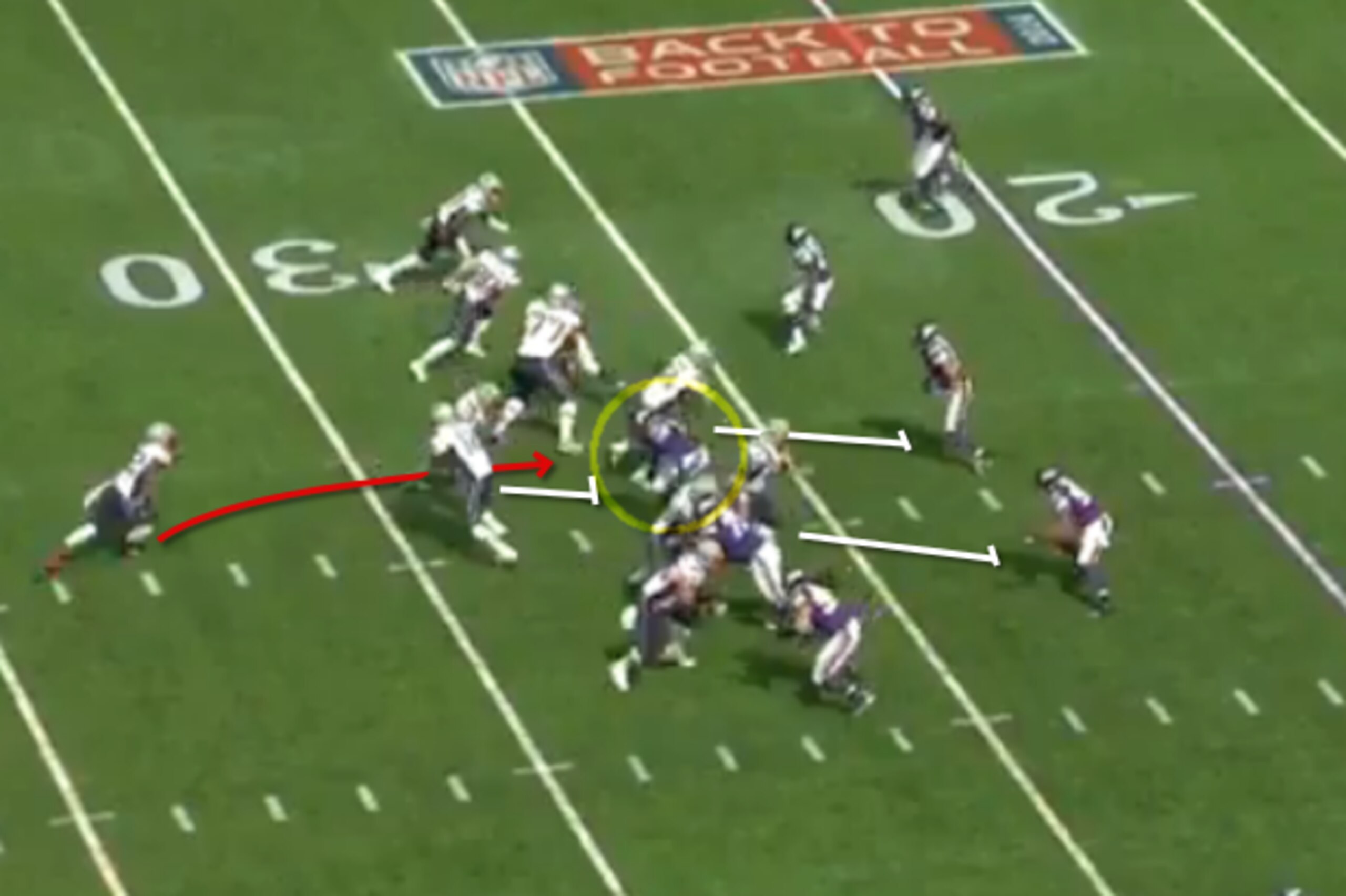
Instead of having their center and guard double-team Joseph and get caught up at the line of scrimmage, the Patriots let him come free. The fullback then picked him up, engaging Joseph just enough for the back to scoot by.
If Joseph were able to diagnose the the play more quickly, he should freeze and find the football. He doesn’t do that, and the Patriots have free reign at the second level, putting bodies on bodies.
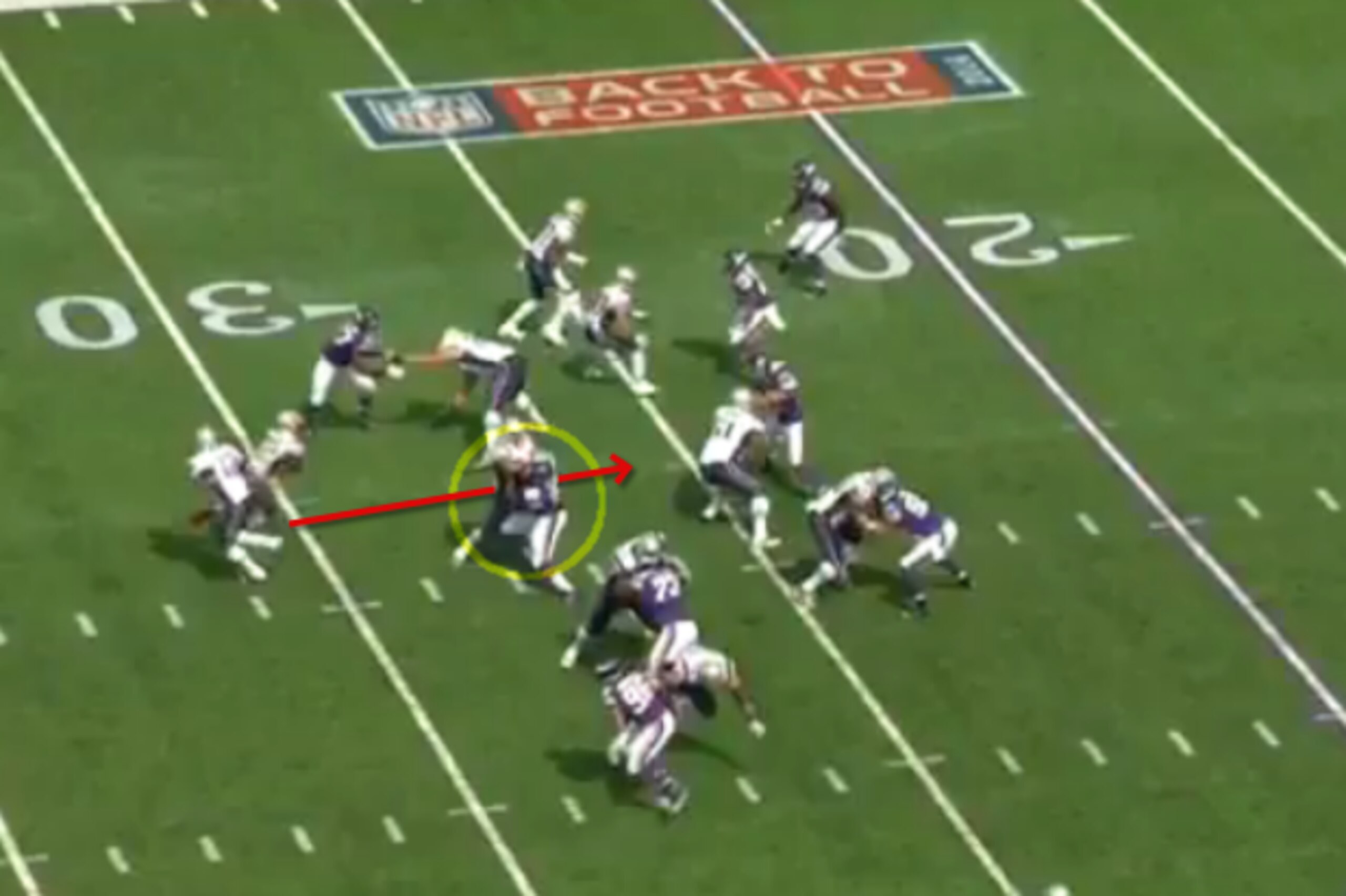
The Vikings don’t have the type of linebackers who can play off blocks like this. Few teams in the NFL do, to be truthful. Though this play was called back on a hold, it’s an example of how Minnesota's defensive line struggled to make adjustments and diagnose plays.
The very next play, a draw, didn’t go any better either.

Floyd makes an outside move when he comes off the ball, essentially taking himself out of position to make a play. Joseph does a fine job pushing back the center; he just needs to find the ball.
The problem is that he’s still the only defender in a reasonable position to make a stop. The Patriots, meanwhile, again pour blockers into the second level of the defense. Only the Vikings safeties have clear paths to the football, but they are aligned very deep at the snap.

Joseph doesn’t use his hands to separate from the center, however. He’s still stuck on the block as the linebackers do their best Houdini impressions. New England back Shane Vereen gets just seven yards here, which seems like an abject failure considering the poor way in which Minnesota plays it.
These examples weren’t cherry-picked either. New England went back to the well, leaving a fullback to handle Joseph later in the game. It produced the same result as the first time.
Minnesota defensive linemen were getting skewered by run blocks left and right throughout the game, while the linebackers were left to sort through the muck. The Patriots were stopped in the backfield on only one play, and that tackle was made by linebacker Chad Greenway. Since it picked up decent gains on almost every single run call, New England’s offense was able to stay on schedule and wear down the Minnesota defensive front.
The effort the Vikings exerted in defending the run then took a toll in terms of generating a pass rush. New England was able to slow down rushers with play action first and foremost. Griffen, Robison, Floyd and other Minnesota pass-rushers used in rotation all struggled to take advantage of their matchups. Brady was allowed to stand tall in the pocket and pick apart the secondary.
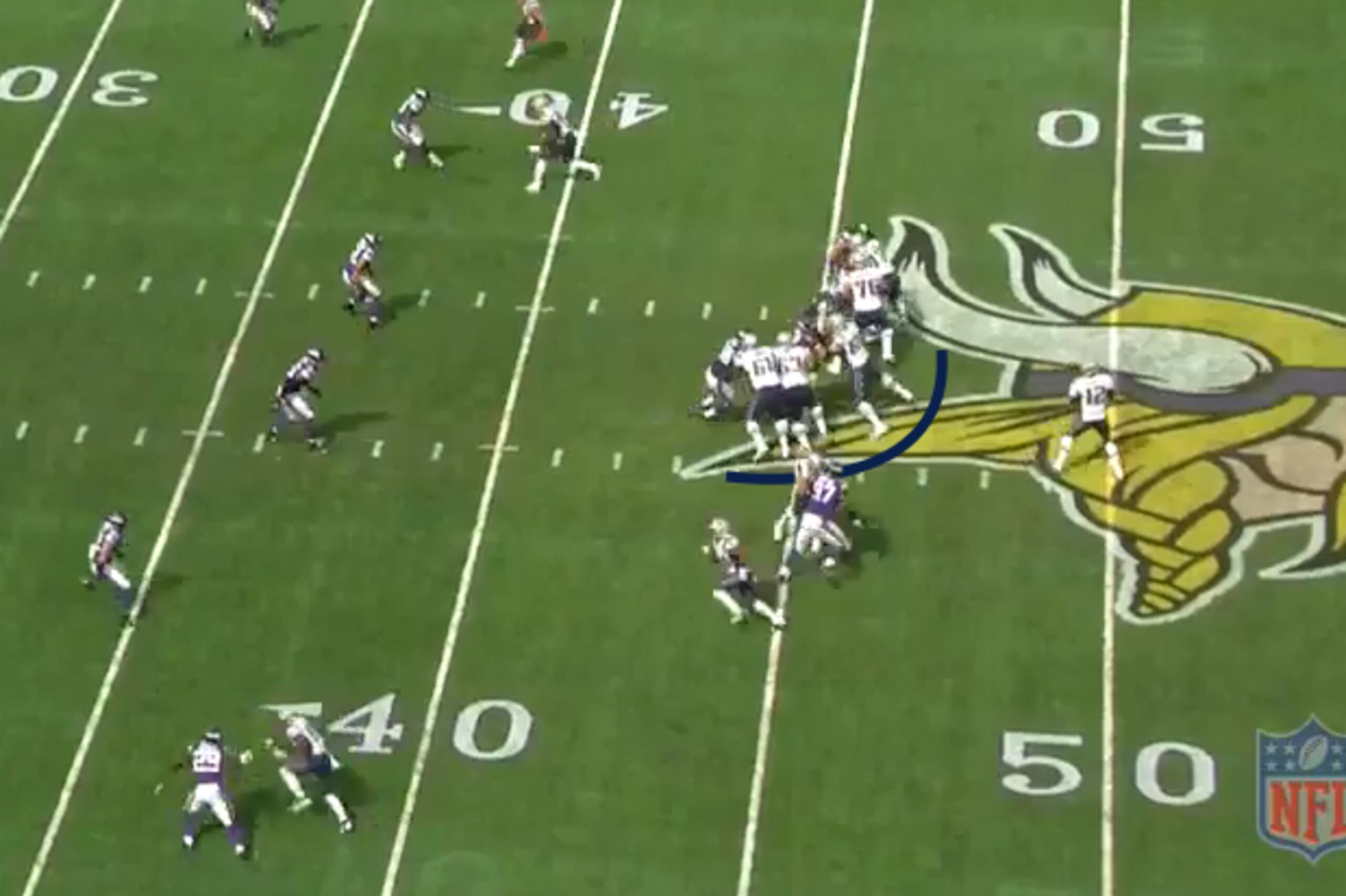
Sights like this were quite common. The interior rush from the likes of Joseph, Floyd, Tom Johnson and Shamar Stephen was anemic. When that happens, the job of the edge-rushers becomes much more difficult. A sharp quarterback like Brady has too much room to operate and will climb the pocket to avoid rushers coming off the corner. That’s what he did here.

Rushing the passer is a coordinated effort. Without out complementary pressure from the middle, the ends must be beat the tackles cleanly in order to get to the QB. The Vikings interior pass rush was simply not good enough against New England.
Coverage limitations only made matters worse for the Vikings defense. Knowing his unit couldn’t match up with all of New England’s receiving talent, Zimmer was hesitant to blitz Brady. That left the four-man rush having to deal with a big challenge—and it failed.
That situation isn’t about to go away either. Minnesota’s next three opponents pose the same dilemma. Drew Brees, Matt Ryan, Aaron Rodgers and Matthew Stafford will all swiftly move within the pocket to elude the rush. Their offensive weapons will dissuade the Vikings from bringing blitzes, so it's incumbent on Minnesota’s defensive line to perform much better.
For Minnesota to save their suddenly sinking ship, increased output from the defensive line has to happen. The unit has enough strength to hold its ground and get off blocks in the run game. It has enough athleticism to attack offensive lines without exotic blitzes. Unfortunately, things haven’t come together.
Without improvement, Minnesota will get run right off the field again.
.jpg?w=2560 "Chiefs Giants Football")

.jpg?w=2560 "🚨 Week 8 AP Top 25 Poll")

.jpg?w=2560 "Lamar Being Out Shocked Ravens")
.jpg?w=2560 "Packers Safety Slams Refs 🤬")