

How Abandoning the Run Ruined San Francisco 49ers' Chances for Victory in Week 2
There are plenty of reasons behind the San Francisco 49ers' 28-20 loss to the Chicago Bears in Week 2.
Penalties, turnovers and a "lack of killer instinct" demolished San Francisco's hopes to debut Levi's Stadium in a positive light.
It would be easy to point out how each of the aforementioned issues contributed to the 49ers' woes versus the Bears, and rightfully so. Each one of those problems played a direct role in costing San Francisco the game.

.jpg?w=2560 "Steelers Saints Football")
.jpg?w=2560 "Rams Raiders Football")

Leading at one point by a score of 17-0, the 49ers seemed as if they were trying to find every possible way to lose this game instead of put it away.
But one aspect, perhaps above all others, negated any chance San Francisco had to go 2-0 on the young season: abandoning the running game.
Prior to the game, one could argue that establishing the run would be the essential element to defeating a vulnerable Bears defense. This is precisely what NBC's Tony Dungy argued prior to Sunday Night Football.
Before we dive into this any further, let's take a look at the numbers.
As a team, the 49ers rushed for 129 overall yards. Quarterback Colin Kaepernick led all rushers with 66 total yards on nine attempts, while running back Frank Gore notched 63 yards on 13 carries.
It should also be noted that rookie back Carlos Hyde gained zero yards on four carries.

But let's look at the splits for some further clarification.
The 49ers held a 17-7 lead at halftime. The Bears had trouble establishing much of a rhythm up to that point, and San Francisco had essentially carried almost all the momentum throughout the game so far.

Greg Roman's offense ran a total of 32 plays in the first half. 11 of these plays were running plays.
The 49ers ran nine more running plays in the third quarter.
But the running game was all but abandoned in the fourth quarter—a point where San Francisco saw its lead evaporate and then turn into an eight-point deficit.
In the fourth quarter, the 49ers called a mere three plays that involved handing the ball off to their backs.
"Everything became abandoned once the fourth quarter arrived," wrote Christian Gin of Examiner.com when it came to evaluating San Francisco's rushing attack.
Let's also take this into consideration. The 49ers led 20-7 at the start of the fourth quarter. Granted, Chicago had possession of the ball to start the quarter—a drive that would wind up in a Brandon Marshall touchdown at the 13:41 mark.
But the following 49ers' possession lasted just one snap. Kaepernick threw a costly interception—one of three on the night—that turned the ball over to the Bears at San Francisco's 3-yard line. Chicago's next play gave it a 21-20 lead.
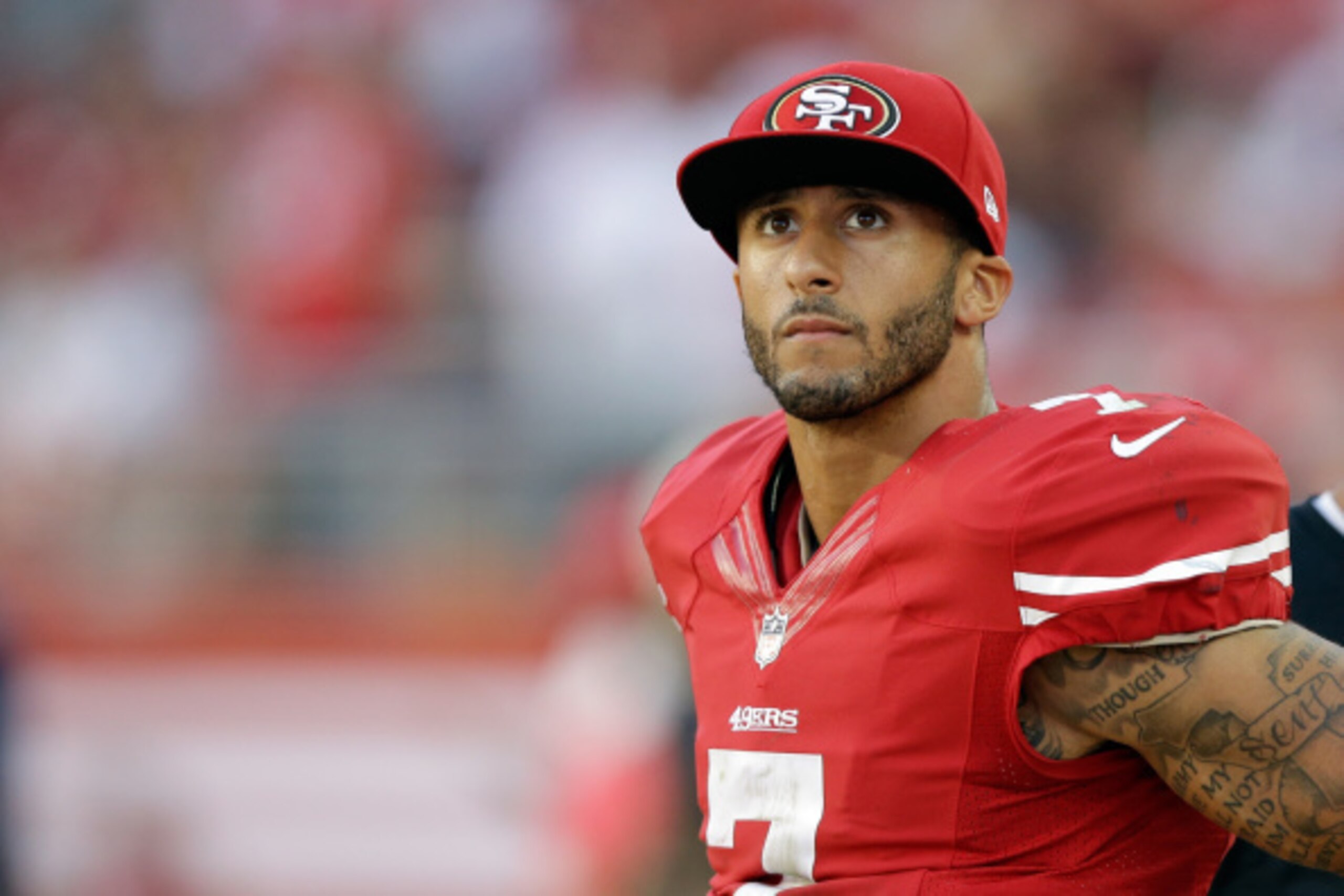
For whatever reason, the deficit somehow convinced Roman and the 49ers offense that they were behind, not by one point, but by two scores or more.
Yes, San Francisco started off its ensuing drive with a Gore run, but then the 49ers all but abandoned any running play until the 4:59 mark.
By this point, Chicago had increased its lead to 28-20, but San Francisco was still in range to tie the game late.
Where does all this lead us? Does any of the above information make sense? Let's put it all together.
Whatever the weapons upgrades San Francisco enjoyed during the offseason, the fact remains that the 49ers are a power-running team. Even at 31 years old, Gore still demonstrates the prowess and skill necessary to force opponents to respect his abilities.
Hyde is also an up-and-coming back that has garnered respect in the young season. Look at his Week 1 showing versus the Dallas Cowboys as an example.
On the flip side, the Bears allowed 193 yards on the ground to the Buffalo Bills in Week 1. Their run defense was vulnerable entering Week 2 and a strong 49ers' running game. While Hyde was largely stuffed by Chicago's defense, Gore was able to create some damage throughout the first three quarters of play.
Gore also had a would-be 54-yard burst for touchdown. But a questionable holding penalty on Anquan Boldin nullified that run and symbolized San Francisco's problems, per Cam Inman of the San Jose Mercury News.
Whatever the reason, Roman abandoned the notion of punishing Chicago's defense late. Gore averaged 4.8 yards per carry, and it was clear the Bears could not stop him aside from the first 49ers drive of the third quarter—described by Matt Maiocco of CSN Bay Area.
Instead, the play-calling provided the unfortunate opportunities for Kaepernick to turn the ball over four times, twice in the fourth quarter.
San Francisco appeared to have this game plan in place for the first half. Gore and the running game set up play action, which gave Kaepernick the ability to punish a vulnerable Bears defense. This essentially disappeared in the fourth quarter.
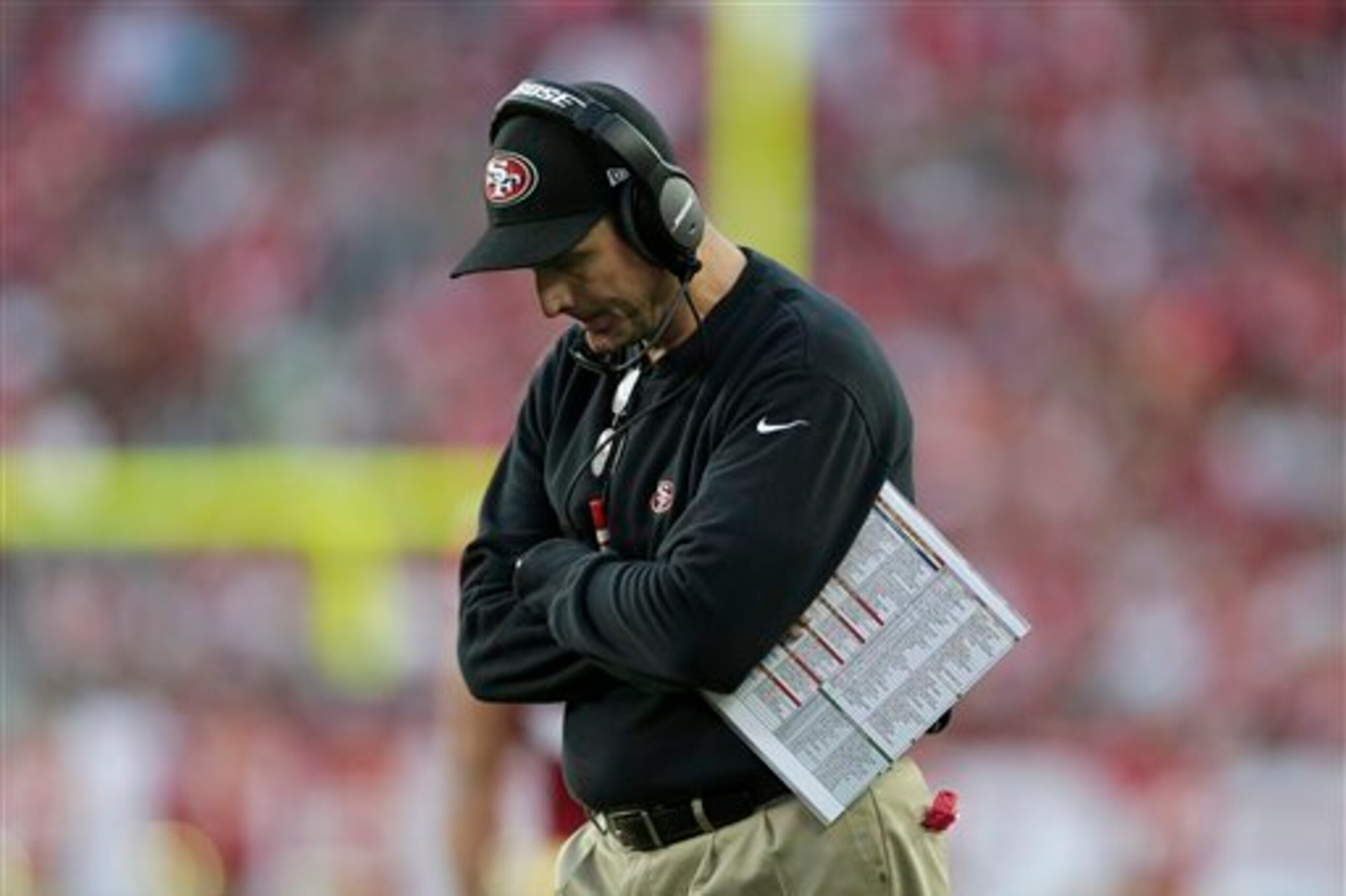
Did Roman get too cute? Did the 49ers' offensive coordinator call running plays when San Francisco should have passed—the first drive of the third quarter—and call too many passing plays when the 49ers could have gained significantly on the run?
Perhaps all of these are true.
Before fans call for Roman's head, let's slow the roll and remind ourselves that San Francisco committed 16 penalties for 118 yards.
That's bad.
The defense—hindered by an ineffective offense in the second half—coughed up a 13-point lead in the fourth quarter.
That's really bad.
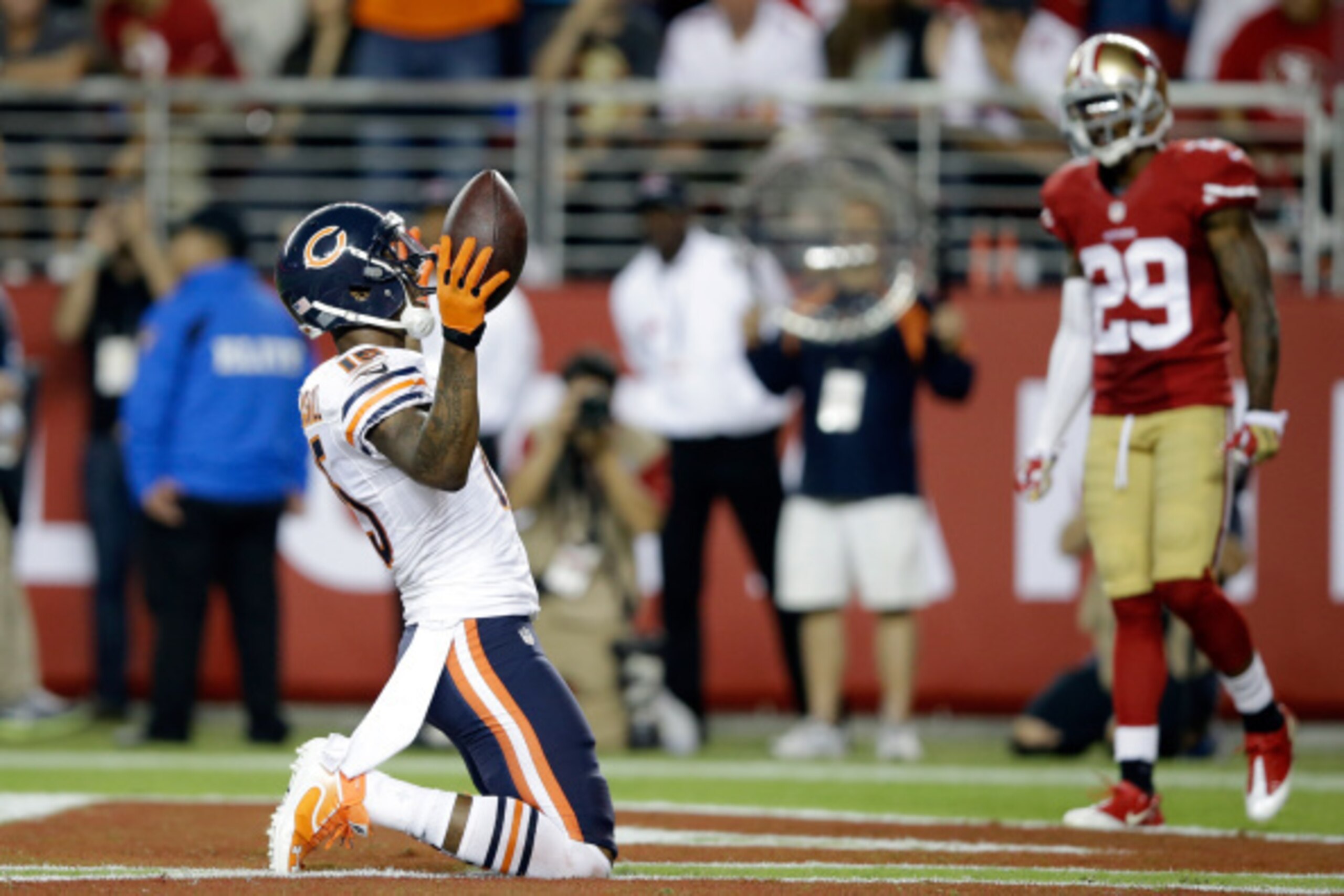
The defense could not adjust to Chicago's use of Jay Cutler and Brandon Marshall. Rookie defensive back Jimmie Ward had zero answers for Marshall and the Bears' passing game.
That hurts badly too.
Then there were San Francisco's turnovers.
Exponentially bad.
But the running game, or lack thereof in the fourth quarter, spelled the biggest problem. A good running attack could have solved the 49ers' woes that had plagued them earlier. Instead, San Francisco essentially removed Gore from the latter portions of the game when it needed its playmakers to make plays.
While the other mistakes are horrible, this particular one is painful.
Let's hope the 49ers do not repeat such mistakes again.
All statistics, records and accolades courtesy of Pro-Football-Reference.com and ESPN.com unless otherwise indicated.
Peter Panacy is a featured columnist for Bleacher Report, covering the San Francisco 49ers. Be sure to check out his entire archive on 49ers news, insight and analysis.
Follow him @PeterMcShots on Twitter.
.jpg?w=2560 "Chiefs Giants Football")

.jpg?w=2560 "🚨 Week 8 AP Top 25 Poll")

.jpg?w=2560 "Lamar Being Out Shocked Ravens")
.jpg?w=2560 "Packers Safety Slams Refs 🤬")