Breaking Down the Miami Dolphins Defensive Struggles in Week 2 Loss to Buffalo
The Miami Dolphins’ defensive unit couldn’t overcome the mistakes made by the team’s offense and special teams, and Miami fell to the Buffalo Bills, 29-10, in Week 2.
Yesterday, we looked at why the Dolphins must execute better to get back to winning football games. Now, it’s time to break down why the defense was unable to force any turnovers against the Bills.
The raw statistics on the Dolphins’ defensive performance aren’t bad, but digging into the film showed alarming trends that cost Miami the ability to force a punt. Buffalo needed only 13 first downs to score 22 offensive points, which is a result of bad special teams play and offensive drives cut short by drops.
.jpg?w=2560 "Rams Raiders Football")

.jpg?w=2560 "Steelers Saints Football")
But with 315 offensive yards for the Bills on just 59 plays, the Bills averaged 5.3 yards per play. That’s a first down every other play, and no defense will get the necessary amount of stops to earn a win with that amount of yards per play unless they force turnovers.
So let’s take a look at the three areas that Miami struggled with the most in Week 2, and how the team can fix the issues moving forward.
Third Down Execution
The Dolphins’ defense allowed one first down per drive, and the biggest reason Buffalo sustained its drives is that Miami's inability to force Bills’ quarterback EJ Manuel into bad decisions on third down.
Miami’s vaunted pass rush created just four hurries on Manuel and couldn’t finish a play with a sack. With the time to scan the field and make the proper reads, Manuel dissected the Dolphins’ secondary and backup linebackers.
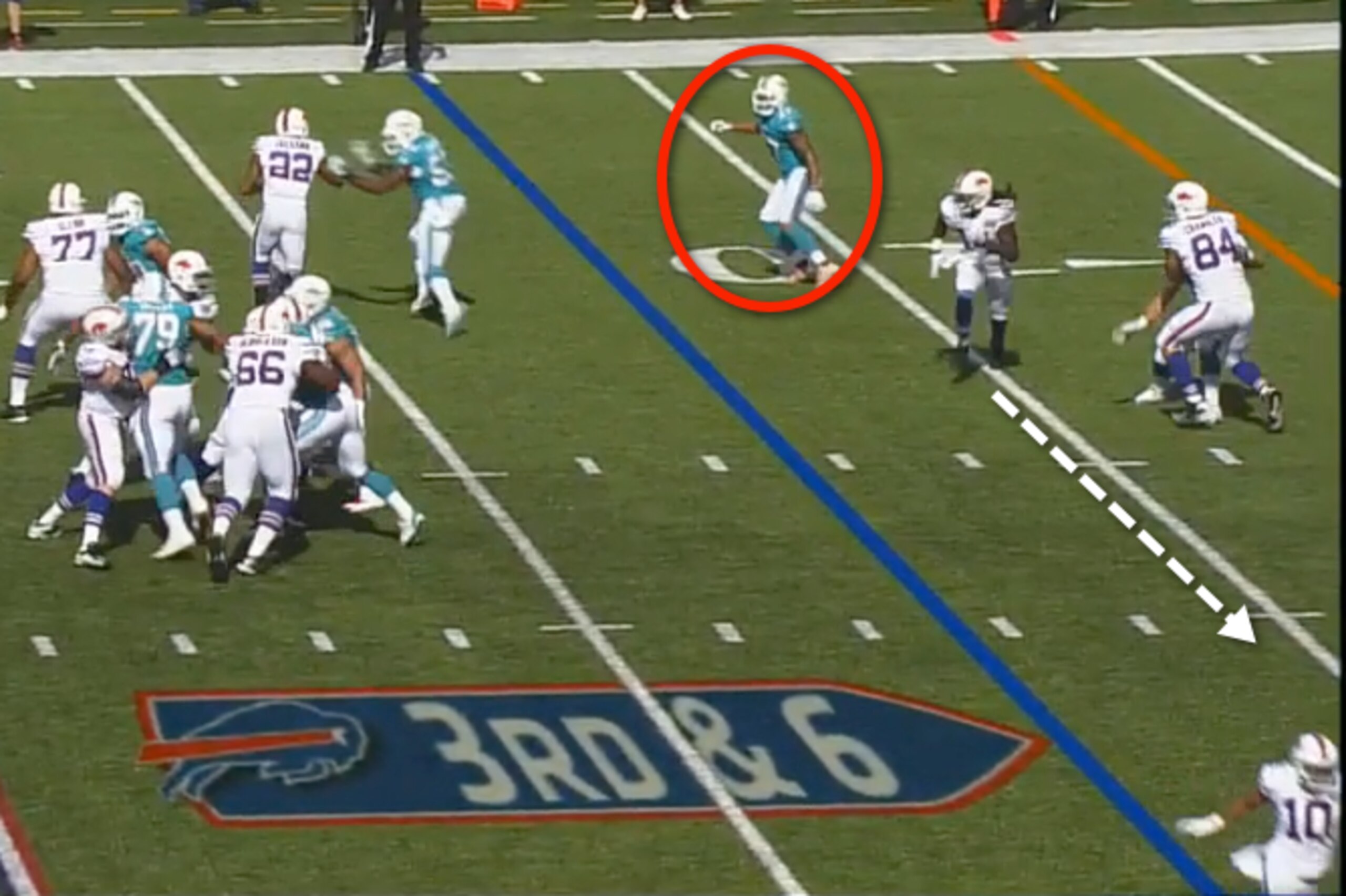
The third-down woes started early for Miami, when the pass-rusher was unable to bring Manuel down on a 3rd-and-6 situation in the first quarter. On the play below, Manuel avoids pressure from Cameron Wake and Jared Odrick and finds Fred Jackson for a 28-yard gain.
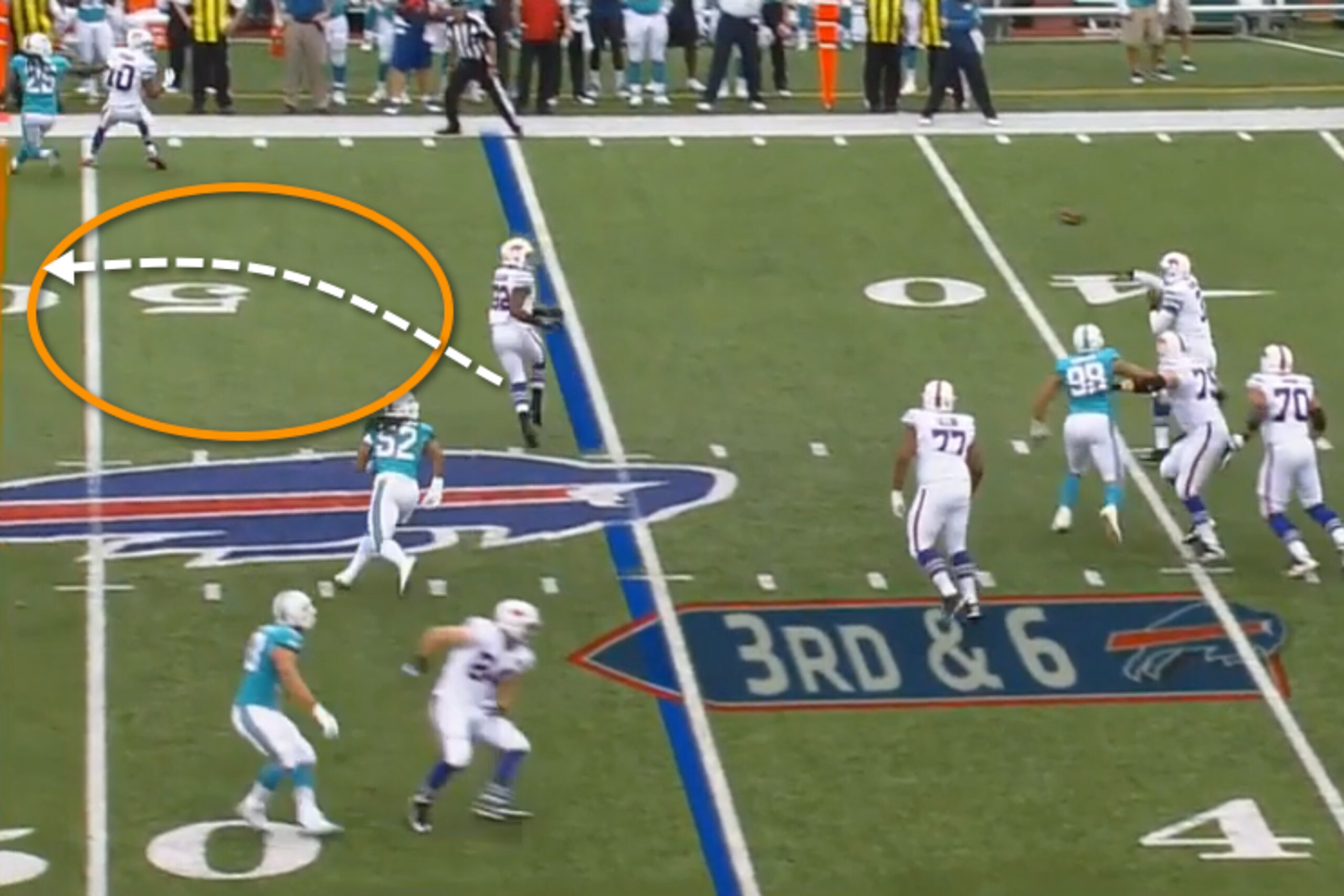
The troubling part is that all of the yards came after the catch. Manuel made a simple dump-off pass, and with no one within yards of Jackson, the Bills were able to get into field-goal range on a broken play.
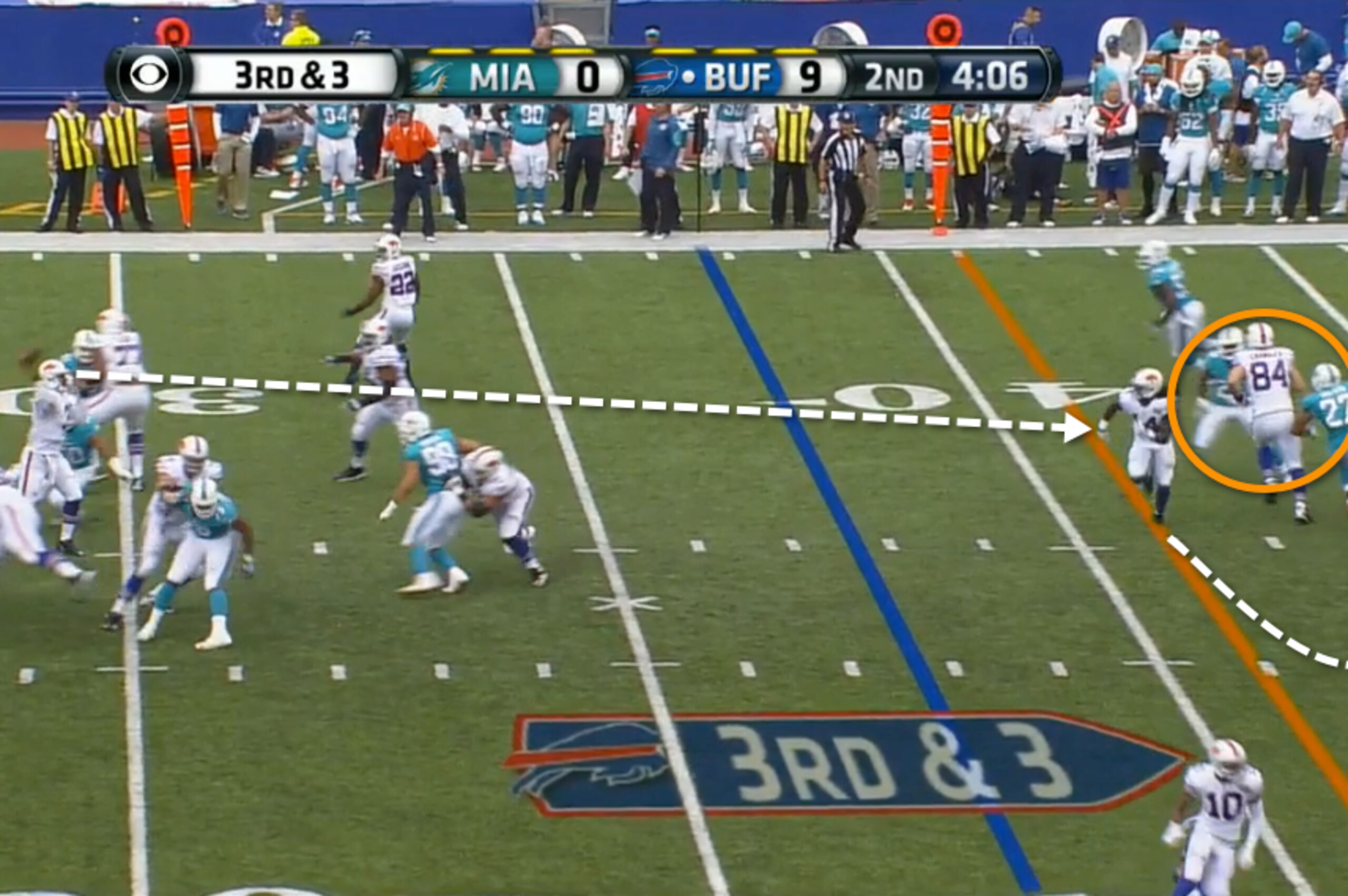
Later in the first half, the Bills were able to convert a 3rd-and-3. Had Miami stopped this play, the offense would’ve had the ball with four minutes to play in the half and more time to gain momentum before halftime.
Take a look at the rub route that Buffalo utilized to get Sammy Watkins free on an underneath crossing route. No. 84 is tight end Scott Chandler, who doesn’t make contact with the Dolphins’ cornerback but gets in his way. Watkins is so physically gifted that he didn’t even need this much space to create a 17-yard gain.
The Dolphins didn’t defend the first-down markers as well as they should have throughout the game. Another first-half play that displays the conservative approach defensive coordinator Kevin Coyle takes is this out route on 3rd-and-4.
Notice how far off the cornerback was and that this route took about two seconds to run. Miami didn’t force tough throws on third downs. Against a young quarterback like Manuel, they should’ve dared him to beat their talented secondary.

Instead, he had easy looks on the most crucial down of the day.
Prevent Chunk Plays
Even the best of game plans can look foolish when the on-field execution is poor, and Miami fell victim to self-inflicted mistakes throughout the game.
No play illustrates Miami’s bad execution more than the way linebacker Jason Trusnik attacked this running lane that Bills’ running back C.J. Spiller exploited.
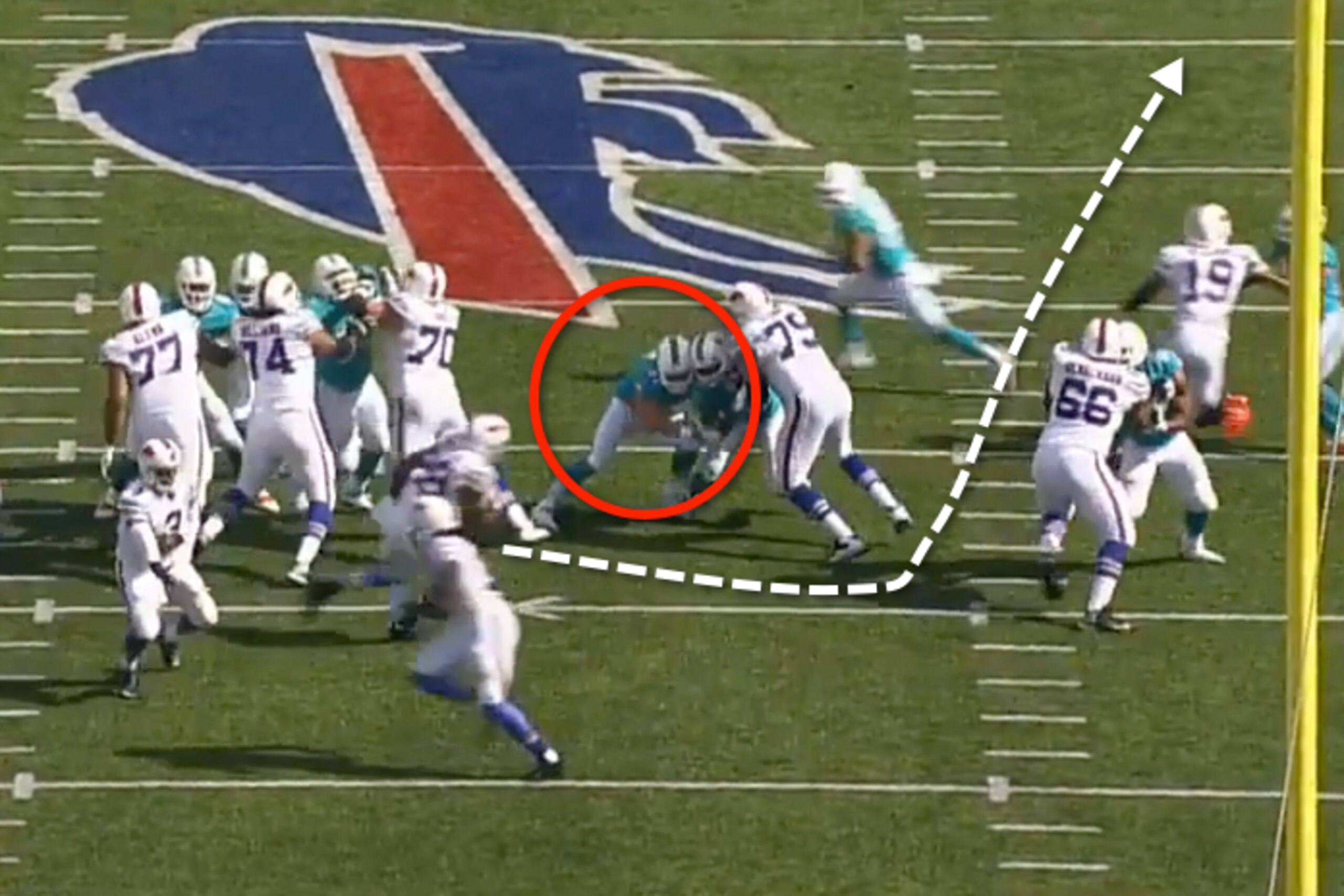
As defensive end Cameron Wake set the edge for a second-level Dolphins’ defender to finish through, Trusnik shuffled right into his teammate. Spiller followed his right tackle, and there was enough room for a 47-yard gain.
The pre-snap motion by Sammy Watkins pulled cornerback Brent Grimes away from the strong side of the offense. Offensively, this is a solid strategy. Last week we looked at the Dolphins’ game plan against the Bills, and countering the Bills’ horizontal attack was one of the main strategies. Miami couldn’t execute.
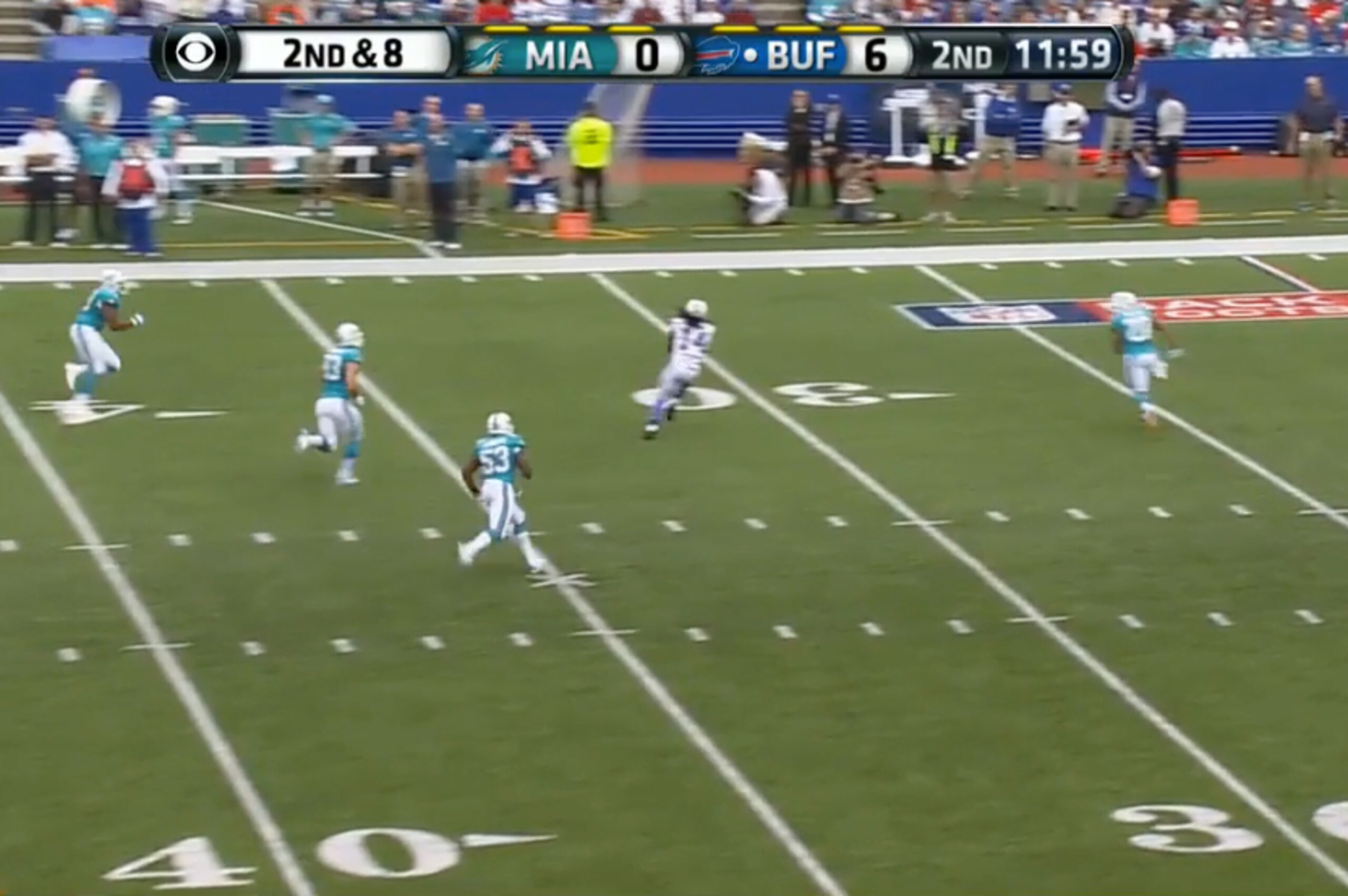
Another chunk play that should’ve been avoided was a deep crossing route by Watkins in the second quarter. On 2nd-and-8, Watkins gained 30 yards into Miami territory. Instead of a broken play, the Dolphins’ linebackers bit on play action, and Watkins was able to catch this pass without the fear of being hit. There was no defender within five yards of Watkins.
Without tight passing windows, Manuel was able to post a 98.6 quarterback rating. The Dolphins simply gave him too many easy opportunities, and Manuel converted.
Take Away Their Strengths
Considering the vast amount of offensive weapons along the Bills’ roster, the Dolphins should’ve game planned for the speed they’d face.
Instead, Miami looked lost against misdirection and quick-hitting routes, allowing the Bills to get advantageous situations on second and third down.
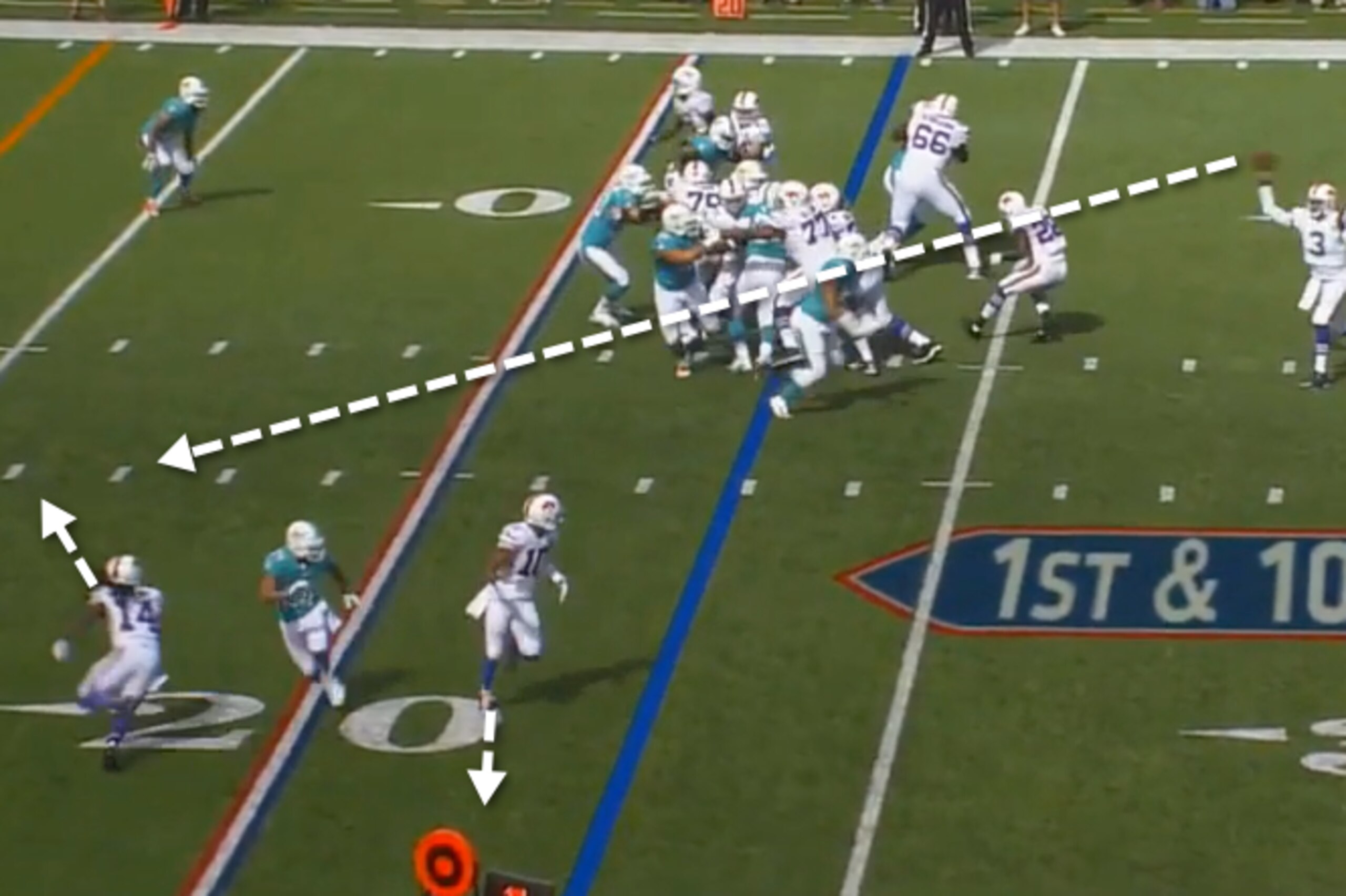
Here is a basic quick slant play that is very popular for offenses to hit when the secondary is essentially giving up six or more yards in pre-snap coverage. The slot receiver cleared out the linebacker, leaving Watkins and Manuel to connect for an easy pitch and catch. With a missed tackle, this is a touchdown. Miami was able to stop Watkins, but they still allowed an easy gain. Forcing a young quarterback to hit tough throws should’ve been the focus, not employing a bend-not-break philosophy.
Discipline and gap integrity was also a problem. Buffalo uses play action to free up their receivers and tight ends on free releases, and Miami looked unprepared for one of the most effective aspects of the Bills’ attack.
Below is a 13-yard gain on a simple delayed-release route for tight end Chris Gragg. The Dolphins’ linebackers bit hard on the fake handoff to Spiller, and no one stayed over the tight end in coverage.
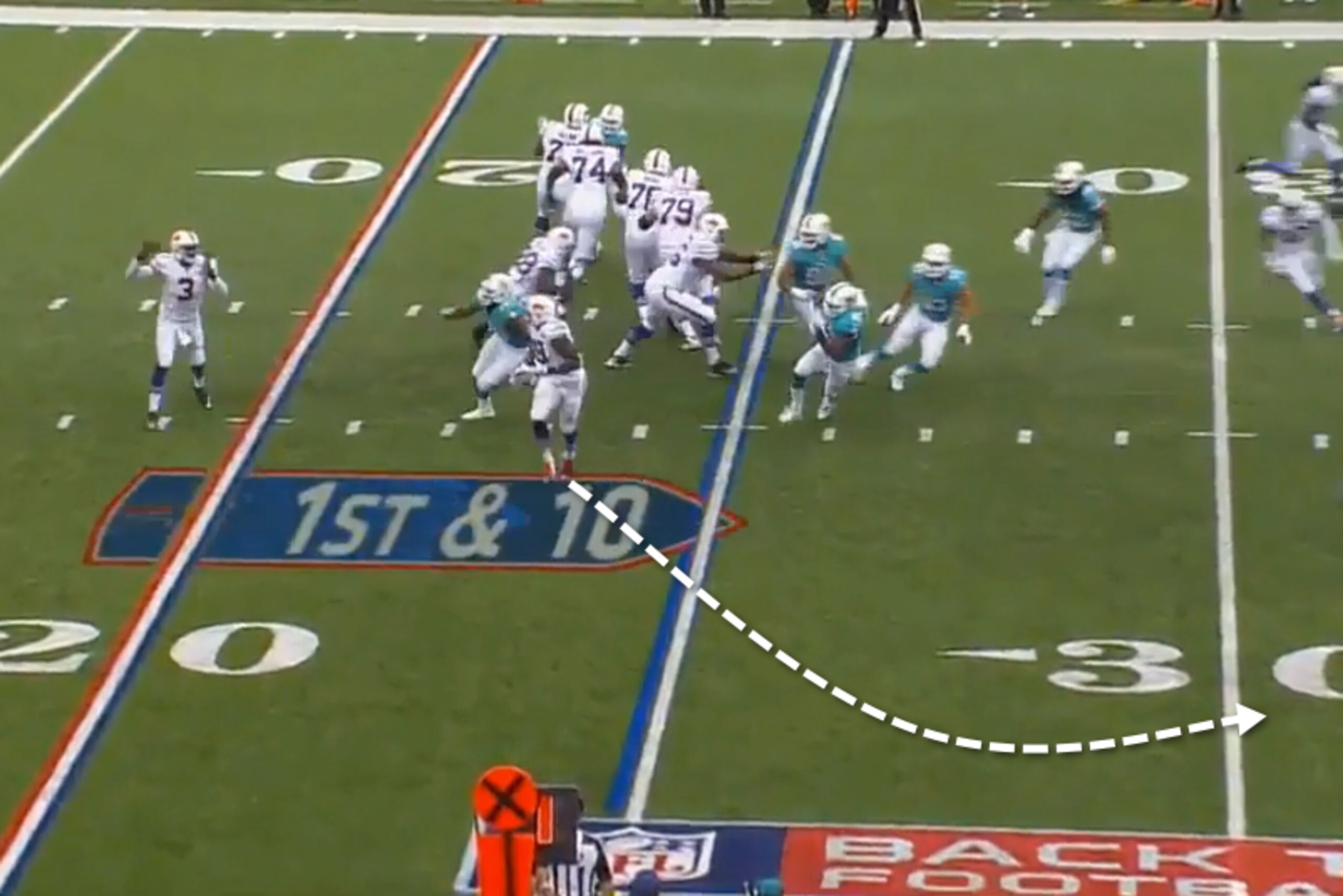
The mistake wasn’t a major blow to the Dolphins, as they didn’t allow points on the drive, but plays like this provide reason for concern about the game-planning abilities of the Dolphins’ coaching staff.
Identifying the strengths and weaknesses of the adversary is critical to winning games, as is the execution by the players. For Miami, Week 2 featured bad coaching and execution.
Entering Week 3, the Dolphins need to re-adjust their strategy and become more aggressive, or else they’ll continue to allow offenses to dink and dunk them down the field.
All stats used are from Pro Football Focus' Premium Stats (subscription required) or sports-reference.com. All game day information was obtained from espn.com.
Ian Wharton is a Miami Dolphins Featured Columnist for Bleacher Report, contributor for Optimum Scouting, and analyst for FinDepth.
.jpg?w=2560 "Cowboys Packers Football")




.jpg?w=2560 "🚨 Week 8 AP Top 25 Poll")