Complete Preview for the San Jose Sharks' 2014-15 Season
The gap between the impressive rhetoric in San Jose and the team’s near total inaction over the summer is staggering.
“We now become a tomorrow team,” general manager Doug Wilson told NHL.com in mid-June. He spoke of the team’s “reset/refresh” period as having ended, and a full-fledged rebuild being underway.
“We have 16 picks [at the 2014 and 2015 drafts] for a reason,” he emphasized. “We didn't trade our first-round pick last year, we're not trading it this year and we're not trading it next year and probably the year after. That's the phase we're in.”

.jpg?w=2560 "NHL Trade Grades Connor Hellebuyck")
But those strong words were not backed up by action. The Sharks signed John Scott and they stripped Joe Thornton of his captaincy; symbolic moves with extremely limited on-ice impact. The team with seven veterans with some form of no-trade or no-move clause proved unable or unwilling to deal any of them. After a while, the rhetoric got a lot weaker.

“We want to reset the hierarchy and culture in the organization,” head coach Todd McLellan told NHL.com two months after that Wilson availability. “That's really where the term rebuild came from. We feel we have a tremendous talent pool. We feel the players that are with our organization are part of the solution and not the problem now… We think we have a very good hockey club and we think we need to tinker with a few things and continue to push forward.”
The reset/refresh period is over and the Sharks are a tomorrow team that will lean on their first-round picks in 2014, 2015 and 2016. The team is continuing to reset its hierarchy and will lean on Joe Thornton and Patrick Marleau, who in McLellan’s words “are part of the solution, not part of the problem.” Part of the rebuild involves stripping Thornton and Marleau of their letters, because apparently the part of the solution they comprise isn’t an official role in the club’s leadership.
But while the entire Sharks offseason has been an exercise in confusion, it can be summed up rather simply. There has been almost no meaningful change to a pretty successful roster. Therefore there seems little reason to project anything other than the kind of strong regular season the Sharks have produced with regularity under the watch of Wilson and McLellan.
What We Learned in 2013-14

The really important thing is less what we learned and more what the Sharks’ management group learned. What they learned pretty clearly seems to be that the marvelous regular-season team assembled in San Jose isn’t capable of getting the job done in the playoffs.
The object lesson that seems to have imprinted that belief was suitably shocking. The Sharks took a 3-0 lead in their first-round series against Los Angeles last spring, only to lose four games in quick succession. That the Kings went on to win the Cup wasn’t enough to offset this humiliation; neither was the fact that Boston suffered the same sort of disaster the year before winning its most recent championship.
Likely that’s because this has all been seen before. The Sharks have been a strong regular-season team going back to the other side of the 2004-05 NHL lockout, but never managed to advance beyond the Western Conference Final. The 2013-14 edition of the team had its best regular-season finish since 2011, but once again spun its wheels in the postseason.
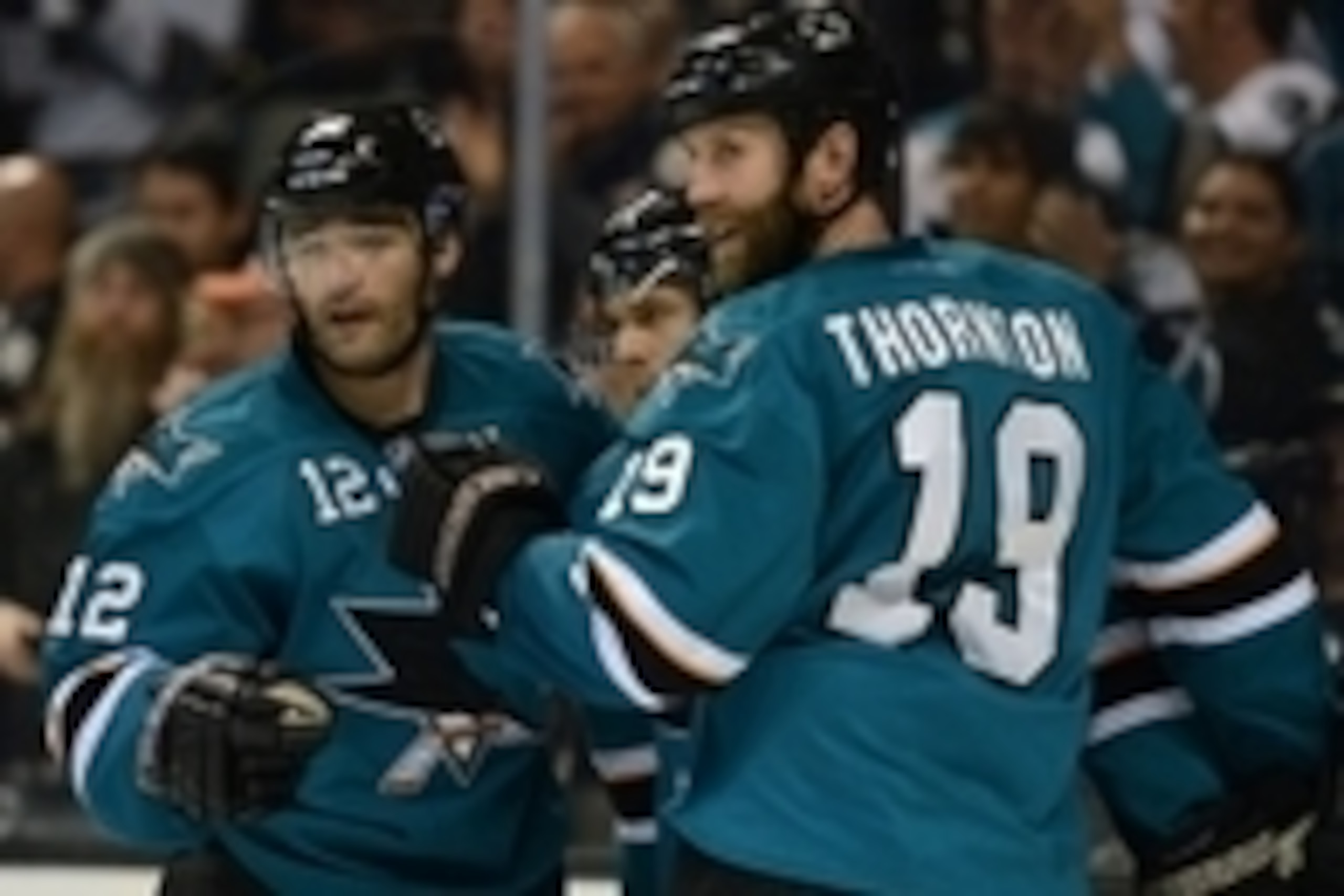
There is a school of thought that all a general manager can do is put a great team together and hope for the best in the playoffs, but even by those standards the Sharks have a problem: The key engines of the team are running on borrowed time. Joe Thornton had 76 points and Patrick Marleau had 70 last season, but both are 35 years old; at some point they’re headed for a fall. Even Joe Pavelski, who rode an 18.2 percent shooting percentage to a career year, is 30.
Anyone who tracked the Sharks throughout the year knows that this is still a very good team capable of exceptional performances and that Thornton and Marleau in particular can still be dominant (Marleau was a point-per-game player and even vs. Los Angeles) at times. But the combination of age and playoff embarrassment led the team to opt for a serious rebuild, though ultimately it was a serious rebuild they proved unable to execute.
Why the team didn’t do more is anyone’s guess, but there have been some obvious indicators, such as this snippet from ESPN’s Pierre LeBrun back in June:
"Stars GM Jim Nill said he’d like to add a piece or two to his forward group but did not divulge his specific targets. Sources suggest he’s talked to San Jose about Joe Thornton and also to Ottawa about Jason Spezza. What he found out is that Thornton at this point has no intention to waive his no-movement clause.
"
The Sharks wanted to do something dramatic and failed; it seems clear that they’re stuck with their aging stars.
Outlook for 2014-15
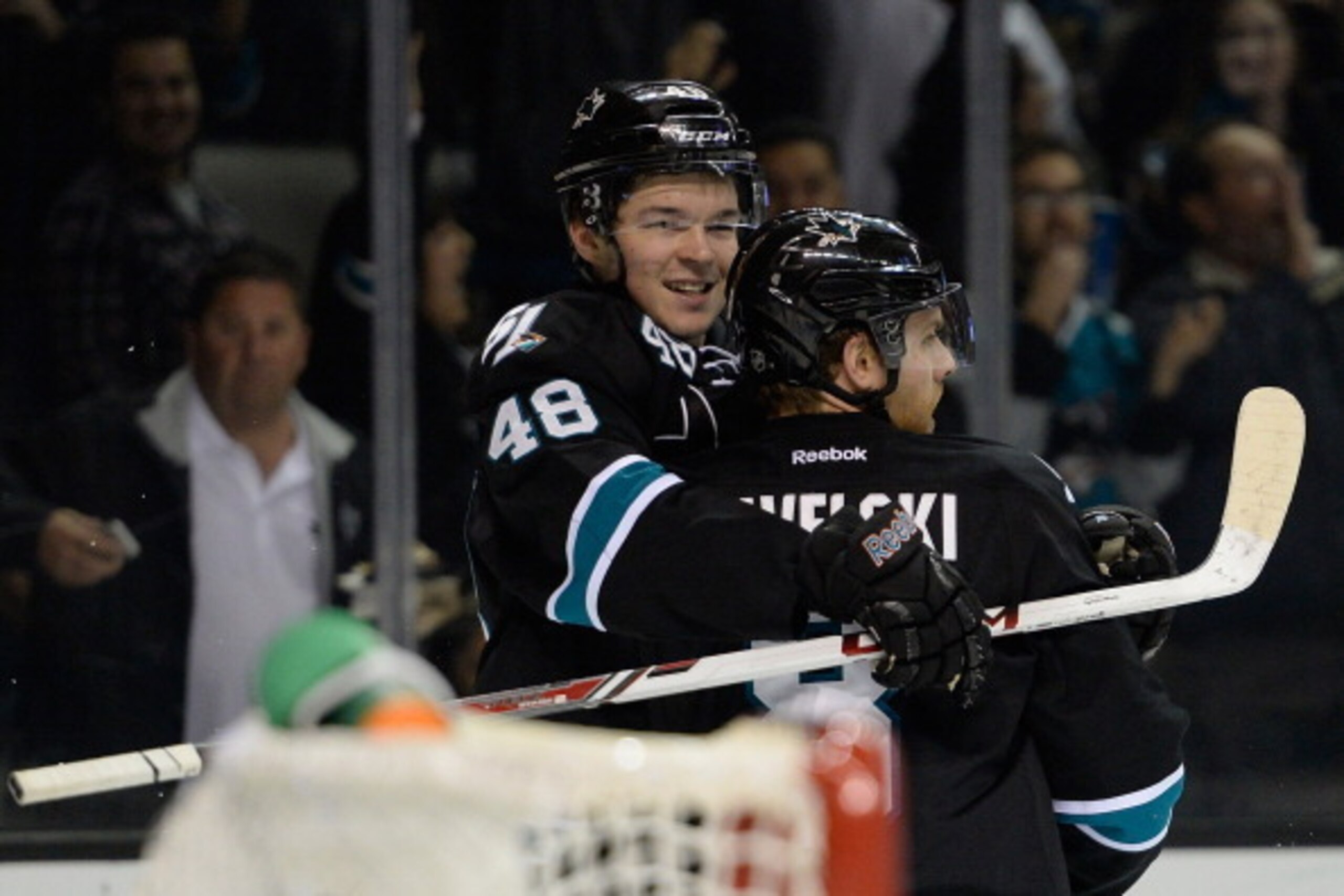
The absence of sweeping change may turn out to be a positive or a negative long-term, but in the short term there seems little question that San Jose’s inability to move people like Thornton and Marleau is going to pay off for the team. The Sharks put up 111 points in a brutally tough Pacific Division in 2013-14, and the same group is returning.
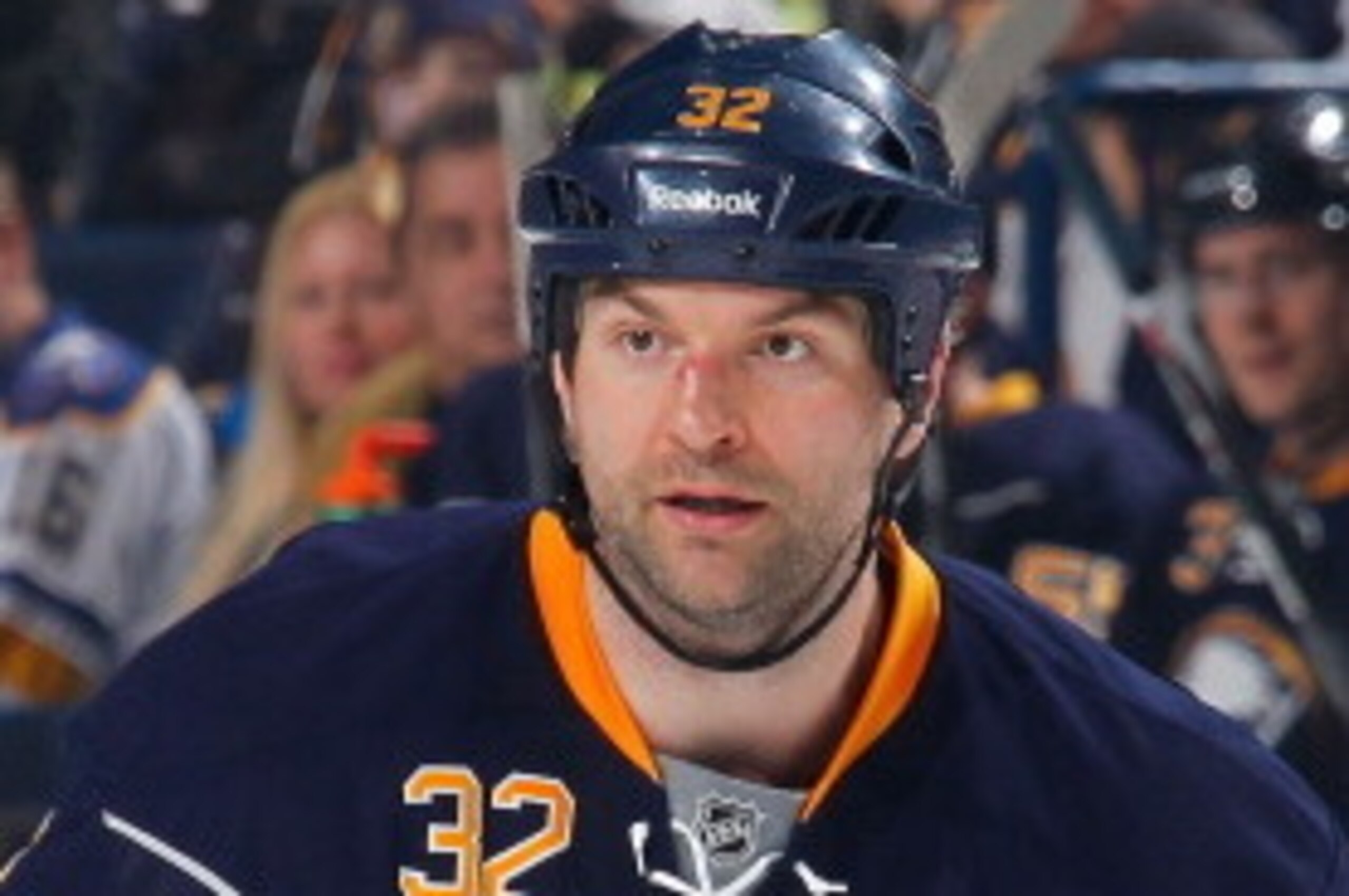
The team is diminished in some ways, though. The addition of John Scott is subtraction by addition in terms of the club’s ability to score more goals than the opposition. The loss of Dan Boyle and subsequent shift of Brent Burns back to defence cost the Sharks one top-nine forward; an injury to Raffi Torres cost them another. Martin Havlat’s departure didn’t help, either.
The club will still ice a formidable top six, but its depth has suffered significantly from last season:
| Tomas Hertl | Joe Thornton | Joe Pavelski |
| Patrick Marleau | Logan Couture | Matt Nieto |
| Tommy Wingels | James Sheppard | Tyler Kennedy |
| Mike Brown | Andrew Desjardins | Freddie Hamilton |
| John Scott | Adam Burish |
It’s not quite as bad as it looks, because Pavelski is bound to be double-shifted at centre at times, but even so the bottom six is banking heavily on either the emergence of a young player like Hamilton or the return to form of one of the disappointing veterans in the mix.
One play the team will be improved is in the toughness department. Mike Brown is a very capable middleweight, while 6’8”, 260-pound John Scott is monstrous even by NHL standards.
It will also be interesting to see how the Sharks deploy their forwards. Clearly the organization wants to accomplish more change than it has managed to date, and might do something counterintuitive—perhaps even slashing the ice time of players like Thornton and Marleau as it strips them of their letters.
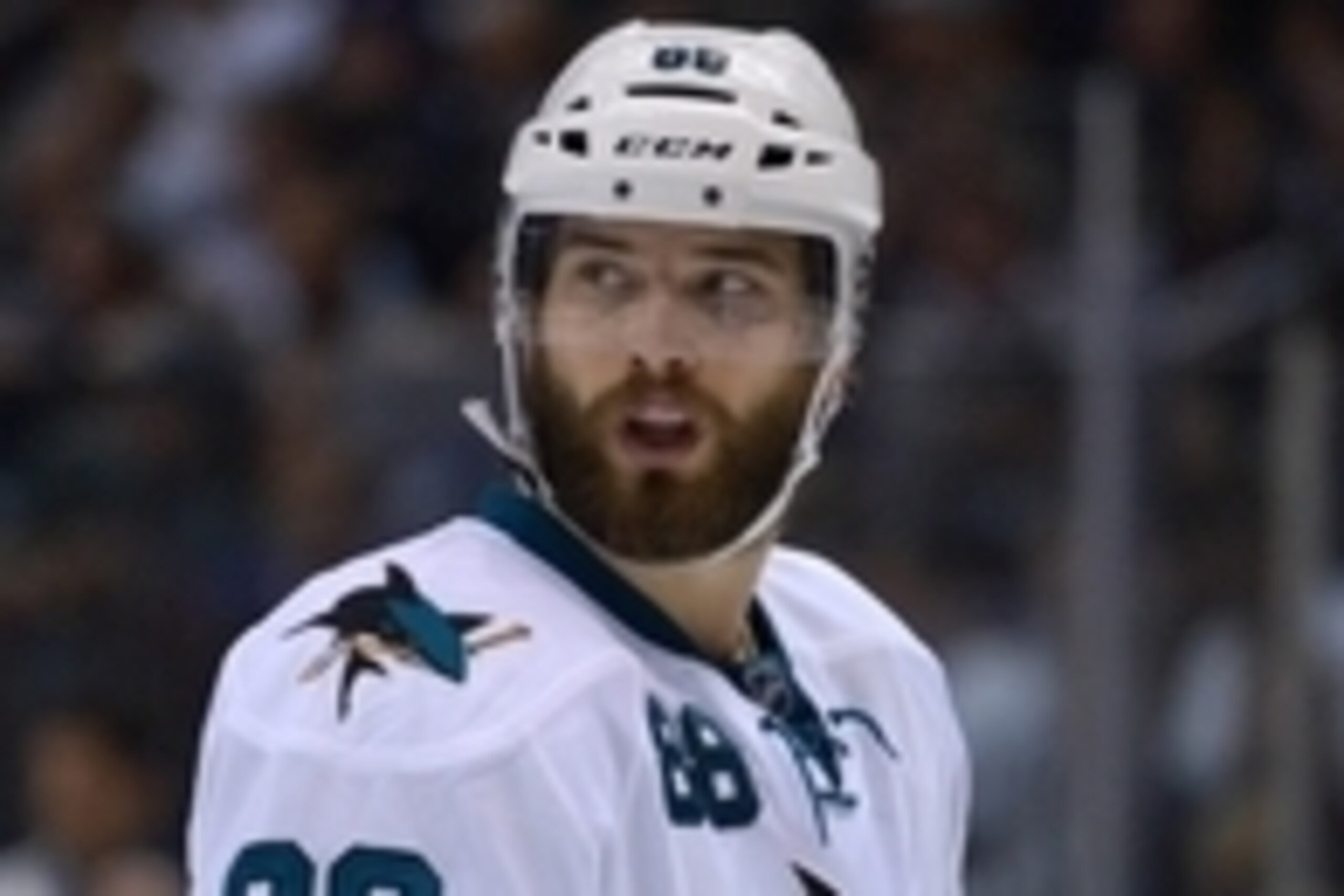
The return of Burns to the blue line may hurt the team’s forward depth, but it will have a positive impact on the blue line, where he should more than replace Dan Boyle:
| Marc-Edouard Vlasic | Justin Braun | Antti Niemi |
| Jason Demers | Brent Burns | Alex Stalock |
| Matt Irwin | Taylor Doherty | |
| Scott Hannan |
Assuming San Jose keeps Vlasic and Burns separated, the Sharks are going to be able to ice an extremely formidable top-four group. Vlasic is one of the premier shutdown defenders in the NHL, and Burns is a top-pairing rearguard in his own right. Demers, Braun and Irwin all add value to the group.
That leaves two slots open, one for the veteran Hannan and another for one of the Sharks' defensive prospects. The 6’8”, 230-pound Doherty gets the nod here because he adds the size and physical dimension that San Jose has pursued this offseason, but also because he would need to clear waivers to be sent down to the minors. First-round pick Mirco Mueller and newcomer Taylor Fedun all also qualify as legitimate candidates for the job.

In net, it is expected that Stalock will be given every opportunity to supplant Niemi as the team’s starter after he outperformed the veteran in 2013-14. Whether he can do it is another matter; despite the gap last season Niemi has a strong track record, while Stalock’s minor league numbers are decidedly middling.
Overall, it’s hard not to keep coming back to the same point. The Sharks have a quality roster: decent goaltending, strong defence and a brilliant top-six group up front. They’ve been a very good team with the same basic construction for many years, and they’re likely to be one again.
Jonathan Willis covers the NHL for Bleacher Report. Follow him on Twitter for more of his work. Statistics via NHL.com; salary information courtesy of CapGeek.com.


.jpg?w=2560 "NFL House in Paris Closes for Protests")
.jpg?w=2560 "Trevon Diggs Cut by Seahawks")