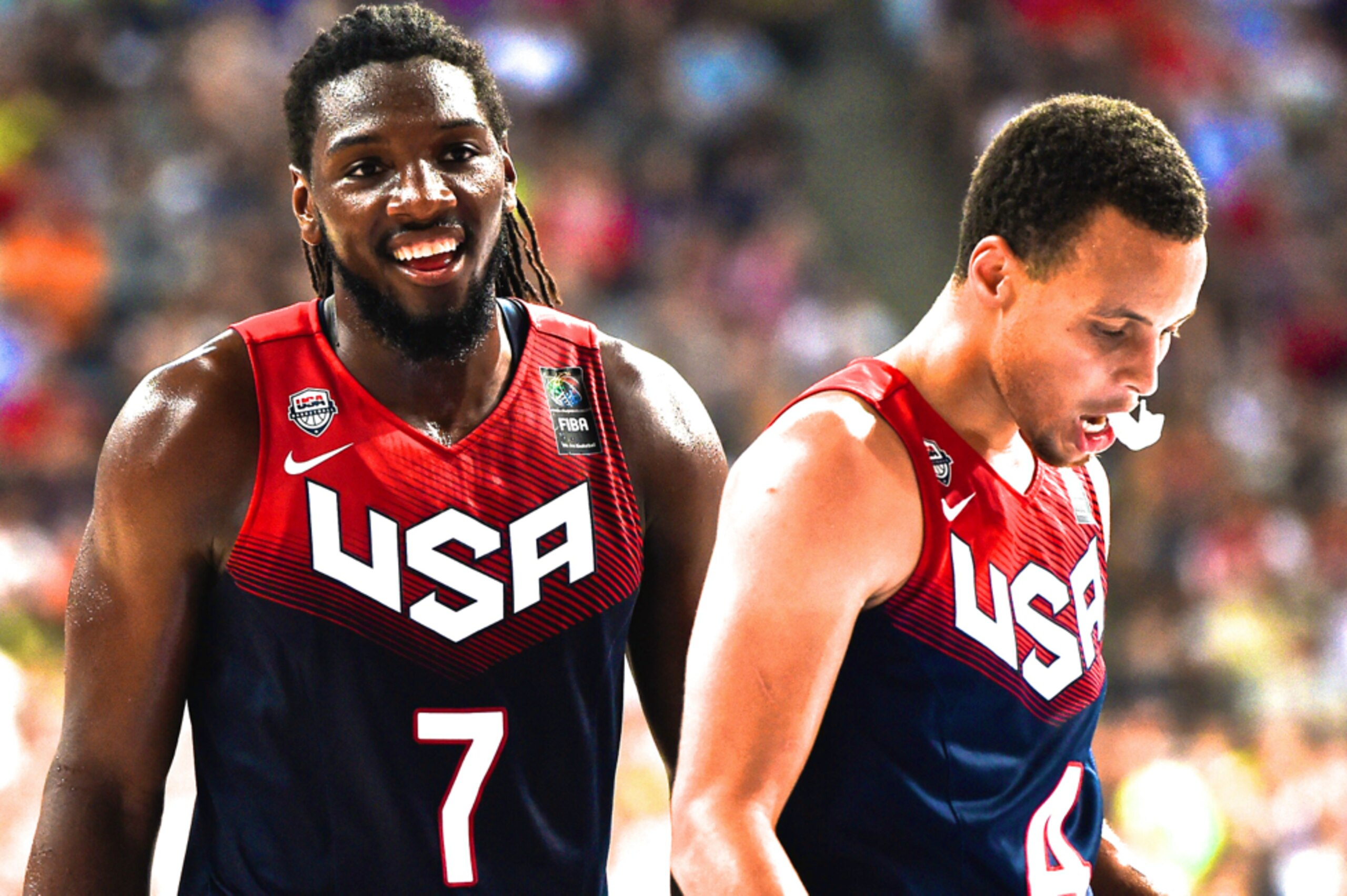

How Long Can Team USA Survive on Slow Starts in 2014 FIBA World Cup?
If there’s a fine line between teams that feel an opponent out and those that merely overcome their own anemia, Team USA has toed it like a high-wire circus act throughout the 2014 FIBA World Cup.
The scenario played out once more in the tournament’s quarterfinals, with Mike Krzyzewski's crew recovering after a sluggish start and mere seven-point halftime lead to dispatch an outmanned Slovenia 119-76 Tuesday night.
As with their somewhat harrowing pool-play showdown with No. 7-ranked Turkey, the game’s early going found the Americans struggling to find an offensive rhythm, allowing Slovenia—led by brothers Goran and Zoran Dragic—to catch its foes off guard in transition.
TOP NEWS

LeBron's Special Helicopter Deal

MJ Makes Record-Setting Donation 🙌
Shams: KAT, Hart Could Be Trade Names
All’s well that ends well, of course, and a 43-point drubbing certainly fits the bill.
Still, it’s worth wondering how long it might be before Team USA learns its lesson the hard way.
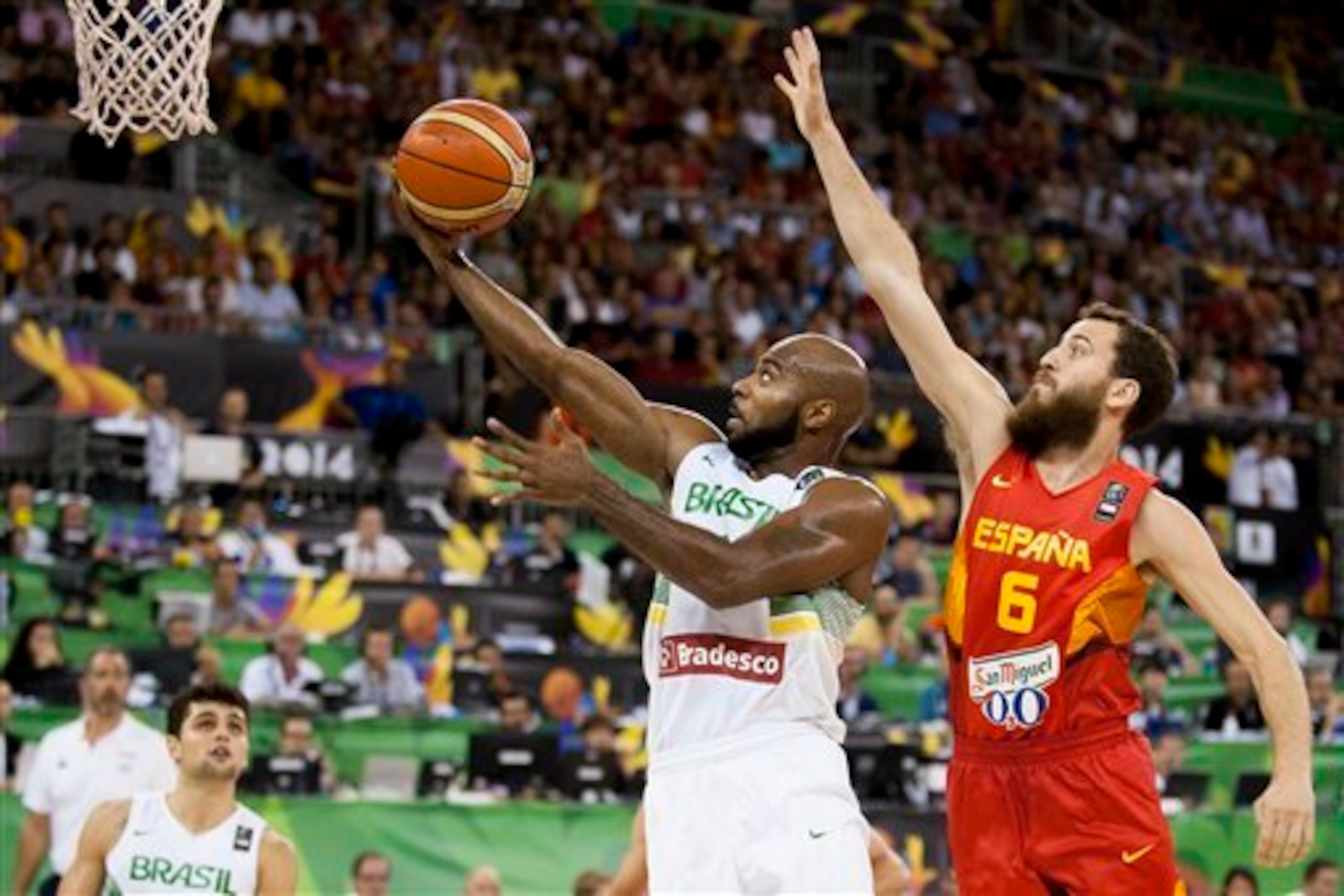
It’s one thing to spot an early lead to Ukraine or the Dominican Republic; it’s another thing entirely to give a team like Lithuania, Serbia, France, Spain or Brazil—the tournament’s five other remaining sides—that kind of first-quarter confidence.
| Team | Largest 1st-half deficit | Final Score |
| Turkey | 38-32 | 98-77 |
| Ukraine | 19-12 | 95-71 |
| Slovenia | 8-4 | 119-76 |
That all five are currently ranked in the top 11 only adds to the danger factor.
The silver lining: If slow starts have emerged as Team USA’s potential Achilles' heel, defense and offensive rebounding have been by far its biggest saving graces. And with 25 turnovers forced and a flurry of second-chance flushes and put-backs at the other end, Tuesday was no different.
At the same time, it’s unclear how disruptive Team USA’s length and athleticism will be against a team as steady and as seasoned as Spain, which touts no fewer than four point guards with a bevy of NBA experience (Ricky Rubio, Jose Calderon, Juan Carlos Navarro and Sergio Rodriguez).
Sooner or later, Krzyzewski’s offense must find its first-quarter fulcrum—a way to leverage the kind of early efficiency that can help keep a team like Spain at bay.
Indeed, for all Team USA’s unquestioned star power, there remains something of a leadership vacuum—the palpable sense that, without the sheer offensive versatility of a LeBron James or Kevin Durant, the attack risks intermittently sliding into incoherence.
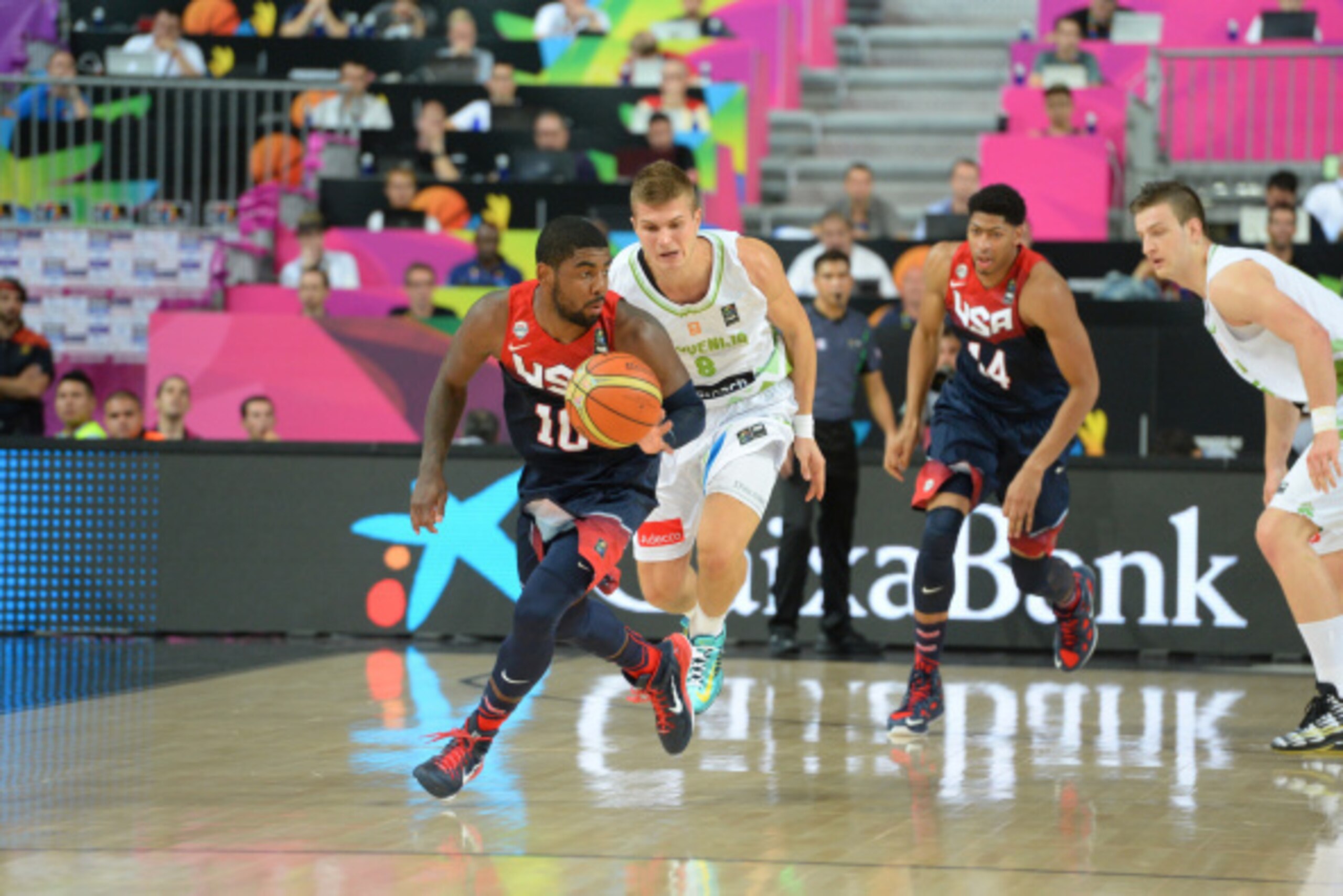
That’s not to take away from Stephen Curry, James Harden, Kyrie Irving or anyone else—far from it. Rather, it’s in the team’s abundance of scorers that pure playmaking—the hallmark of James and longtime Team USA staple Chris Paul—risks being sacrificed.
This all might sound like so much unnecessary handwringing, especially considering Team USA’s gargantuan average margin of victory (33 points through seven games). But as Grantland’s Zach Lowe underscored in a recent FIBA dispatch, there are enough similarities between Team USA’s 2006 instantiation and this year’s version to put Krzyzewski and his troops on heightened notice:
"This is probably the weakest iteration of Team USA since the 2006 World Championships, when the U.S. finished third and lost to Greece. Huge victory margins over our sorry group-mates obscure serious vulnerabilities. Good news: Only Spain, the host team, appears anywhere near good enough to prick those soft spots enough times over 40 minutes to actually beat Team USA. And Spain has a much thornier path to the title game.
Spain destroyed the closest thing this tournament has to a Group of Death by about 25 points per game — perhaps more impressive than the U.S.’s run, once you adjust for the level of competition. We go into these tournaments searching for a team that might challenge Team USA. This tournament hasn’t turned up a team that appears capable of challenging Spain. It just hasn’t been compelling.
"
A Spain-USA final might not be written in the stars, but it was certainly written into this year’s FIBA bracket. And while Spain clearly wound up drawing the tougher group, the team’s significant home-court advantage is sure to pay a thousand decibels worth of dividends if and when the two teams meet in the tournament finale on Sunday.
That only makes Team USA authoring a quick start all the more imperative. Even if Spain jumps out to a seemingly small six- or eight-point early lead, the noise of the crowd is bound to make it seem double or triple that number for the Americans.
Krzyzewski might boast the bigger, faster, stronger team. In terms of sheer familiarity, however, it’s hard to stop the sense of gestalt head coach Juan Antonio Orenga has continued to cultivate in his two-plus years as Spain’s sideline skipper.

To neutralize Spain’s cagey chemistry, Team USA must, from the get-go, put the home team—and the home crowd—on the defensive. That means summoning a crisper, more coherent offense than the seemingly helter-skelter schemes we’ve come to expect.
Of course, the mere act of looking ahead in spite of the potential stumbling blocks before you speaks to precisely the kind of hubris that resulted in bronze medals at both the 2004 Olympics and the 2006 World Basketball Championship.
For now, Team USA must set its sights squarely on Lithuania, a team more than capable of summoning some upset magic of its own. Exorcise the slow-start demons, and Krzyzewski and his crew will waltz into the final as the unquestioned team to beat, just as it was when pool play began nearly two weeks ago.
Replicate the kind of start it's authored a few times already, however, and Team USA might be lucky to see Sunday at all.


.jpg?w=2560 "Viral Rams Coach Vid 🖕")
.jpg?w=2560 "Injury-stricken Seahawks signing veteran RB")
.jpg?w=2560 "2 NFL Officials Suspended")
.jpg?w=2560 "Grading WWE Raw 🔠")
.jpg?w=2560 "Mahomes' Wife Trolls Kubiak 💀")
