Kevin Magnussen Unfairly Penalised in Italian GP Over Valtteri Bottas Incident
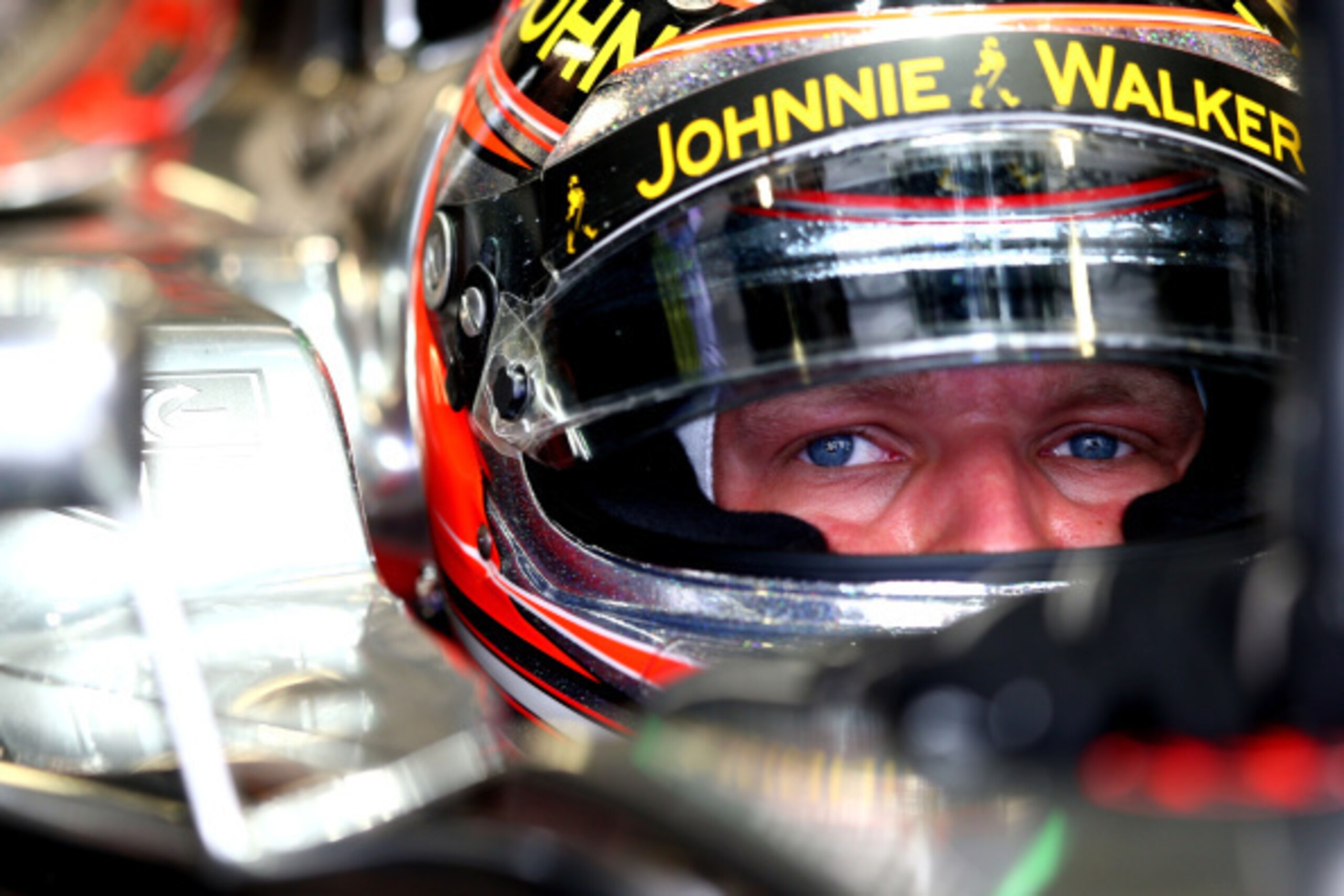
Motor racing appeared to die its latest death in Sunday's Italian Grand Prix when Kevin Magnussen, the McLaren driver, was punished for defending his position.
The Danish rookie was running in fifth place on the 31st lap of the race at Monza when he found himself in the way of Valtteri Bottas, his Williams counterpart, who was in the midst of his recovery to fourth place by the chequered flag after a poor start from third on the grid.
As both drivers, with DRS enabled, hurled down the main straight, Magnussen made his one permitted move to the right of the circuit to cover the inside of the first chicane, forcing Bottas to take the outside line into a corner he had utilised all afternoon.
.jpg?w=2560 "Commanders Eagles Football")


Even though the nose of Bottas' car had nudged slightly ahead of Magnussen's in the braking zone, the 21-year-old, on the inside, always had control of the corner as they approached the narrow, tightening right-left turn.
And with that advantage, the McLaren simply ran the Williams out of space—no touching and rubbing, just edging and easing—leaving Bottas with no option but to take to the run-off area and experience a bumpy ride over the sleeping policemen ramps before rejoining the circuit.
A racing incident, right?
Wrong.
According to the panel of FIA race stewards, which included former F1 driver and current BRDC president Derek Warwick, Magnussen was guilty of failing to leave "enough room" for Bottas and, as a result, "forced him off the track."
A five-second penalty, added to his race time, was deemed to be a suitable punishment for the crime, with Magnussen—as per the official F1 website—finishing in 10th place rather than seventh, the position in which he crossed the finish line.
The telltale sign of a questionable manoeuvre is, more often than not, the reaction of the driver who is thought to have been wronged.
When Bottas rejoined the track, there was no arm waving, as you might see from several other drivers on the grid.
And according to the FIA's live television feed, at least, there were no team radio transmissions made by the Finn urging his Williams colleagues to alert Charlie Whiting, the race director, to look into the incident.

Instead, Bottas—as he has done all season long—put his head down and got on with the job, returning to the rear of Magnussen's McLaren and completing the pass with relative ease at the very same corner on Lap 37.
Even after the grand prix, Bottas admitted that he was not certain whether his rival deserved to be punished.
He was quoted by Autosport's Ben Anderson as stating:
"It's difficult to say if it was worth a penalty.
For me there was nowhere else to go—I had to cut the chicane.
I didn't have the chance to overtake even though we were already side by side.
It's a tough one. In the end it didn't change anything for me, even though he got a penalty, because I still had to overtake him, so for me it didn't really matter.
There are two ways if you want to keep the position: do what he did or you carry a bit more speed but you leave a car's width inside and then you can still get a good exit and stay ahead.
"
There is little doubt that the more lenient penalty system which has been introduced for 2014 has been a success among drivers, teams and onlookers alike.
The five-second penalty handed to Magnussen at Monza on Sunday, it is worth considering, would most likely have been a drive-through penalty, costing him around 20 seconds and therefore ruining his race, just 12 months ago.
Yet, the sheer harshness of the punishment handed to the McLaren driver for what was a relatively minor incident implies that the stewards are—perhaps due to there being no reference for the new penalty system—handing out sanctions based on a driver's reputation.
And who can blame them after an alarming drop in driving standards in recent seasons?
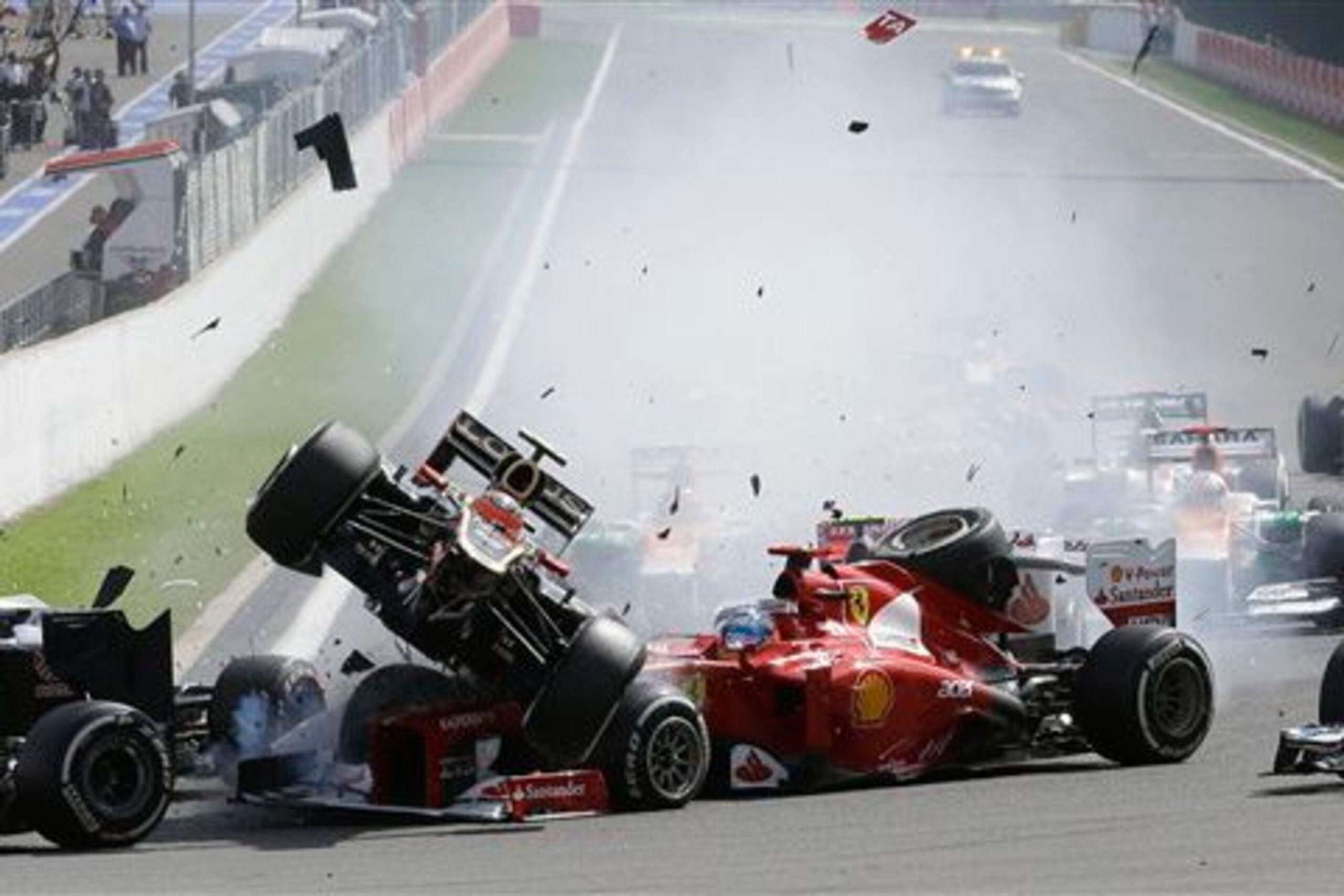
With the 2012 exploits of Romain Grosjean—which saw the Lotus star announce his return to F1 by crashing here, there and everywhere, earning himself a one-race ban in the process—still fresh in the memory, as well as the mishaps made by the likes of Pastor Maldonado and Sergio Perez, it is in the interests of safety that questionable manoeuvres are stamped out of the sport.
And Magnussen, it is fair to say, has been among the rowdiest drivers of 2014 thus far, hitting Kimi Raikkonen in Malaysia and Bahrain, contributing to Felipe Massa's roll at Hockenheim and shoving Fernando Alonso on the grass on the Kemmel straight in last month's Belgian Grand Prix, for which he was handed a 20-second penalty.
Although the suits' apparent willingness to knock the aggression out of the Dane before those incidents become habitual—if that is indeed the case—is admirable, it is with unease that you suspect that a driver's misdemeanors might not be treated in complete isolation.
The whole point of handing out punishments to drivers such as Magnussen, after all, is to provide them with guidance—not to make an example of them.

.jpg?w=2560 "Chiefs Dolphins Football")

.jpg?w=2560 "Love's Body Already 'Tired'")