

Bayern Munich's 5 Biggest Weaknesses to Exploit in the 2014/15 Season
Bayern Munich have been a dominant force in Germany over the last two seasons, in each setting a new record for being the fastest team in league history to win the Bundesliga title. And despite some slip-ups in the first month of the 2014-15 campaign, they remain out-and-out favorites to claim the trophy for a third consecutive year.
Although the predicted front-runners, Bayern nonetheless are not without their weaknesses and like any team will have to be careful to cover their deficiencies lest they be upset in their quest for domestic and European glory.
The early stages of the campaign have proved Bayern are indeed beatable if certain weak spots are exploited. Click "Begin Slideshow" for a run-down of their five most significant weaknesses.
Central Midfield
1 of 5
Central midfield for many years was Bayern's strongest area, but now it is becoming somewhat of a weak point as injuries have taken their toll.
Javi Martinez will miss at least six months before returning to training; when he does return, it will be some time before he is back at his best.
Thiago Alcantara twice has had set-backs in his recovery from a knee injury, and now his return is nowhere in sight as Matthias Sammer admitted to Kicker (h/t Goal.com).
Bastian Schweinsteiger is nearing his long-awaited return but will suffer from the same post-World Cup fatigue he experienced in 2010 and in any case has proved very injury-prone especially over the last three years.
Bayern have some young talents in Pierre Hojbjerg and Gianluca Gaudino, but the latter still does not have the build of an adult and both are very inexperienced.
Sebastian Rode is, at nearly 24, certainly older but still is uncapped at senior level and has no Champions League experience. Xabi Alonso turns 33 in November and is past his best. David Alaba and Philipp Lahm are other options, but both are better as full-backs than in central midfield.
No matter what, Bayern will field a strong midfield. But as of now, it's no longer a given that their central core will simply dominate any opponents on a week-in, week-out basis.
Once in a while, they'll be tired or off their game, and a team that plays aggressively will be able to press to break up play and perhaps find space between the Bayern midfield and defense.
The Left Wing
2 of 5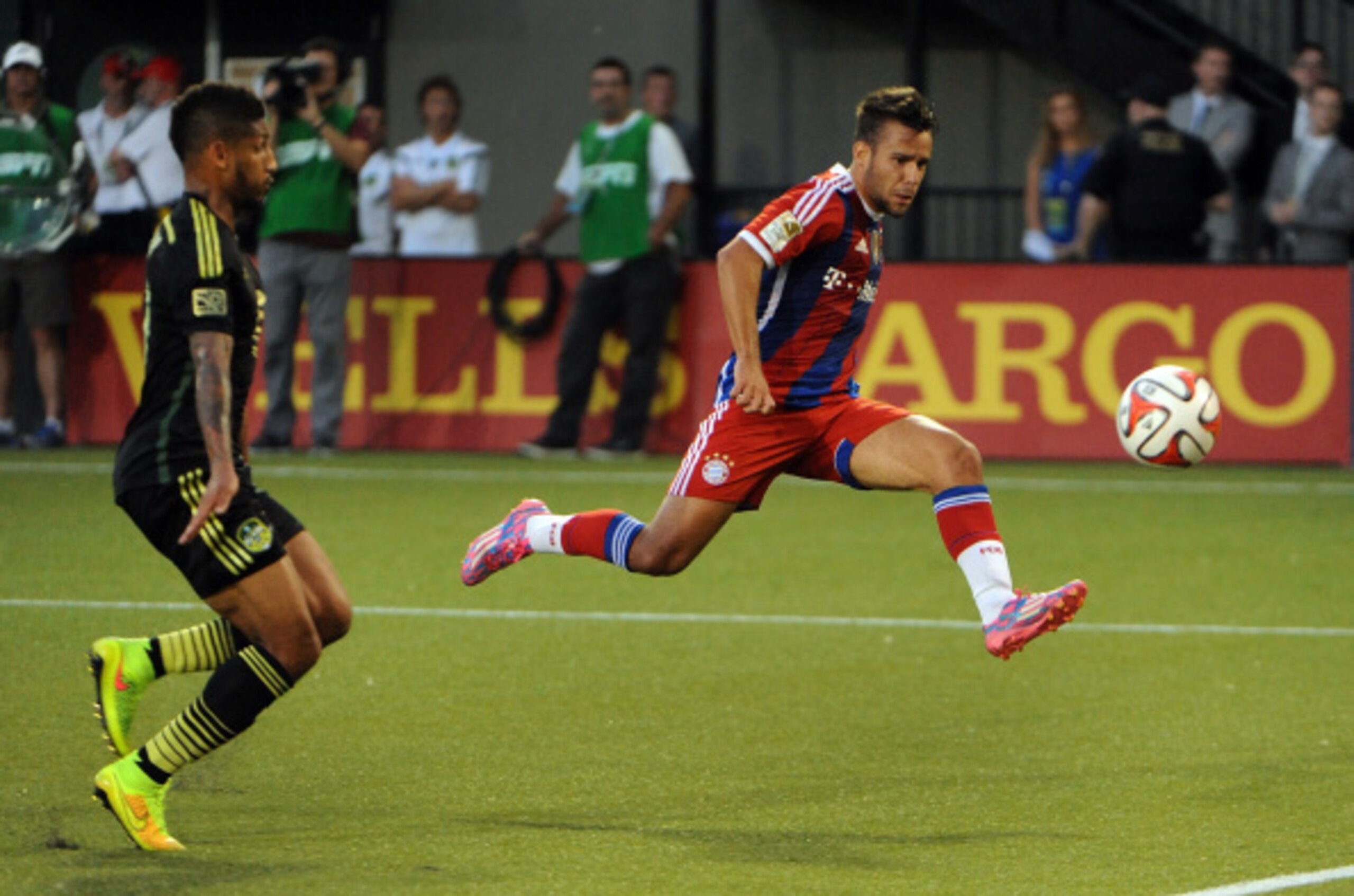
Bayern's weakness on the left wing is functionally dependent on the system Guardiola uses and whether David Alaba plays in central midfield or on the wing. If the latter, what could be a weakness is much, much less so.
If Guardiola continues to play Juan Bernat on the left behind a more out-and-out attacker like Franck Ribery, that side of the pitch could be a soft point for Bayern in defense. Ribery is just 1.70 meters tall; Bernat is 1.72. Neither is built particularly broadly.
The Frenchman has developed more of a defensive work ethic in recent years but will be 32 in April and still is not the greatest defender. The Spaniard is certainly very strong in possession, but isn't exactly a defender by nature.
If confronted by strong, quick, technical wingers and full-backs, the pair could be in trouble.
Propensity to Cross
3 of 5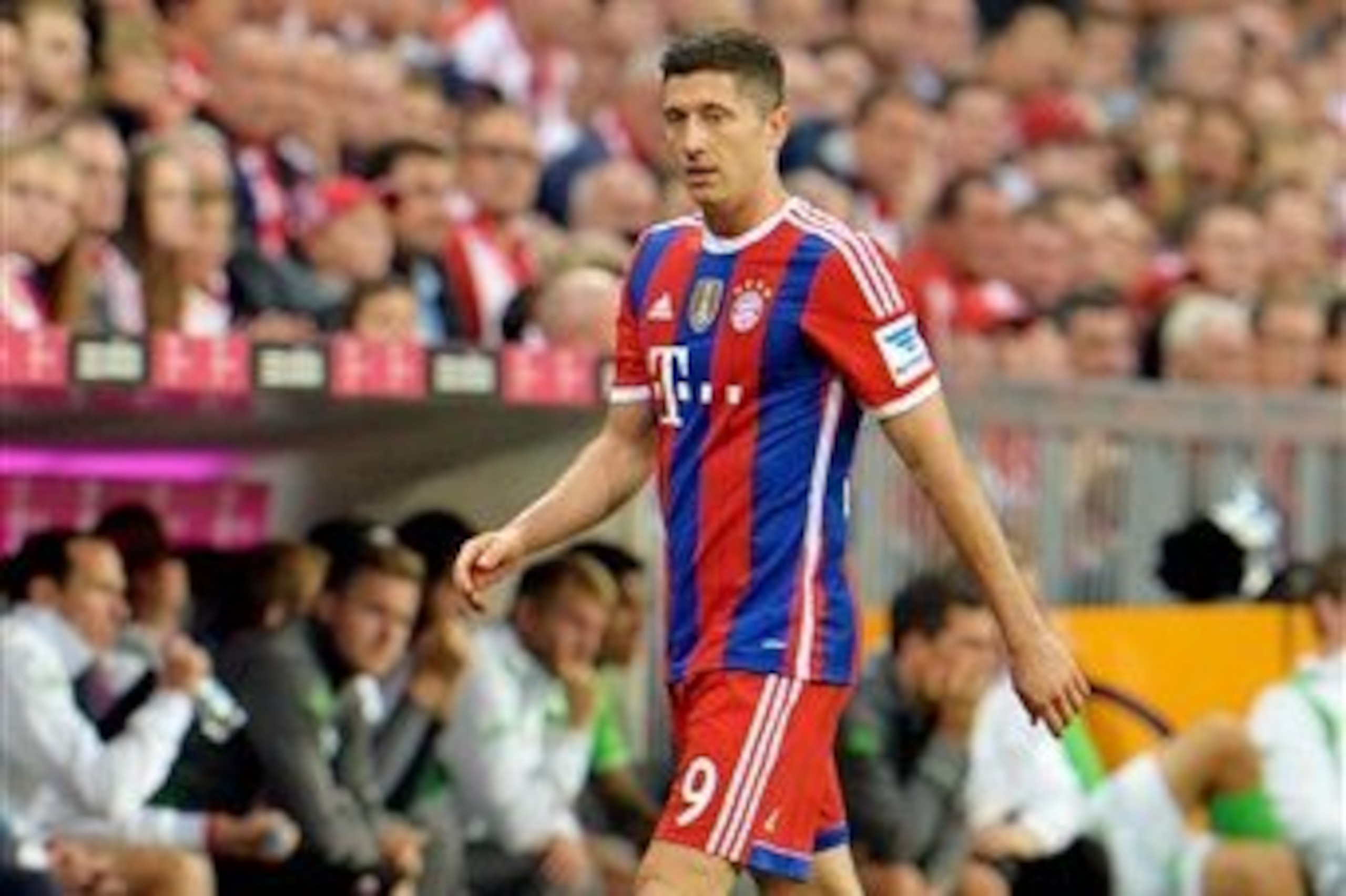
One of the biggest problems Guardiola has faced as a proponent of possession-based football is adjusting to teams that are happy to hold onto their point and sit deep to defend it, perhaps hoping to convert on a chance to counterattack.
Last season, Bayern faced such teams on several occasions and often ran out of ideas. With opponents "parking the bus" in front of their own goal, there were no lanes to pass through and they often resorted to crossing the ball hopefully toward Mario Mandzukic.
The Croat, at 1.87 meters, is a monster in the air and in his career has made his head as much a favored weapon as his right foot.
Mandzukic has been replaced by Robert Lewandowski this season and, although the Pole is an upgrade in most areas, one thing he does not do as well as his predecessor is score with his head. Lewandowski is just three centimeters shorter, but he scores a much lower proportion of his goals with his head and wins fewer aerial challenges, per FIFA.com.
Bayern occasionally struggled to break down opposing defenses when forced to play against teams that played deep last season and now have lowered the threat of a "plan B" scoring with a header from a cross.
Guardiola has tried to make his team quicker in transition this season, but if opponents can stop Bayern from counterattacking, it could become very difficult for the double-winners to score.

.jpg?w=2560)
Set Piece Defending
4 of 5
In every match this season thus far, Bayern have been at a height disadvantage. In their four competitive matches, players among Guardiola's XI have averaged a height of 1.81 meters. For comparison, Wolfsburg averaged 1.84 meters and Schalke 1.86 meters in their two Bundesliga meetings, per Football-Lineups.com.
Those Bayern players who are on the taller side are not all the best in the air. Holger Badstuber is 1.90 meters in height but never was the best defender from headers. Robert Lewandowski is 1.84 meters tall but his strength is more in tracking and holding up the ball than winning it inside the penalty area.
There is some height in central midfield depending on who is used there, but David Alaba, Philipp Lahm, Pierre Hojbjerg and Gianluca Gaudino have narrow frames, and Xabi Alonso was never a Sami Khedira-like figure in the box.
To their credit, Bayern have good set-piece defenders in Jerome Boateng, Dante and Mehdi Benatia. But two or maybe three aerially dominant players in the box to defend from set plays may not be enough. Bayern had more aerial presence last season and even then it was set plays that put their Champions League tie with Real Madrid out of reach.
With their equalizer in Matchday 2, Schalke proved that Bayern remain suspect from dead-ball situations. Good news for opponents: There is no easier way to work a goal than with a hopeful cross.
Tactical Insecurity
5 of 5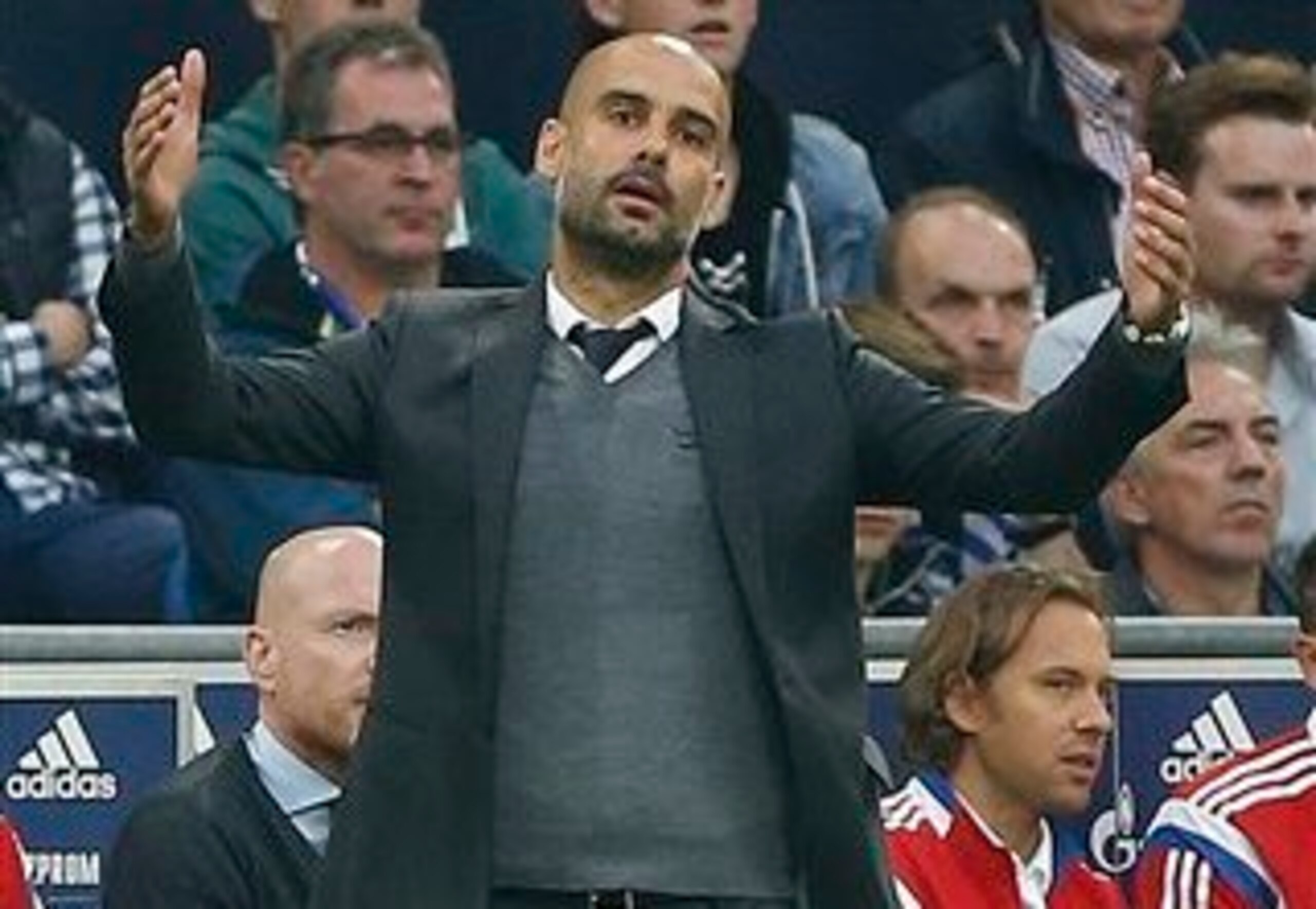
Over a year into his tenure at Bayern, Pep Guardiola is still trying to find the best tactical system for his team. He started last season by playing a 4-1-4-1 formation, then moved toward 4-2-3-1. This season he experimented with 3-4-3 but more recently tried 4-3-3.
Whatever Guardiola chooses, he'd be wise to make his decision soon and stand by it. The current generation of German footballers has historically not adapted well to changing tactics.
Louis van Gaal once tried a 3-4-3 system to disastrous effect amid years of 4-2-3-1. Germany were stunned to concede three goals to Ukraine in 2011 when Joachim Low sprung the idea of a three-man defense on his team for the first time in his tenure. Similarly, when the trainer moved Mesut Ozil to the wing and incorporated Toni Kroos in a 4-3-3 at Euro 2012, his team capitulated against Italy.
When German teams have played well it's in consistent systems. Jupp Heynckes had a clear tactical plan in Bayern's treble-winning 2012-13 season, and his starting XI was remarkably consistent. Only slight pruning occurred.
Similarly, Low made few changes to his Germany team at the 2014 World Cup once the knockout rounds came. Even with some playing out of position, it was consistency and understanding of each player's role that lifted the team to win the final in Brazil.
It's important that Guardiola make the right calls with his tactics but just as important that he makes a plan and sticks to it. His players won't be comfortable with any uncertainty.

.jpg?w=2560 "Rams Eagles Football")
.jpg?w=2560 "Bijan's INSANE 1st Half 🤩")

.jpg?w=2560 "Injury-stricken Seahawks signing veteran RB")

.jpg?w=2560 "2 NFL Officials Suspended")
