Stanford's David Shaw Opens Up on Coaching, Pac-12 vs. SEC and More
There are a lot of college football coaches who care about being mentors to their players. There are plenty more who lose sleep at night trying to figure out ways to help their players succeed on and off the field. However, there’s no coach who exemplifies these traits better than Stanford’s David Shaw.
Shaw, who is entering his fourth season as head coach of the Cardinal, is far more than a football coach, though he’s done a pretty good job with that gig so far. Under his leadership, the Cardinal have gone 35-7, made it to three straight BCS Bowl Games and haven’t won fewer than 11 games in a season. To put that into perspective, Stanford has only won 11 or more games four times. Unsurprisingly, Shaw was on the staff in each of those four campaigns.
TOP NEWS

Updated CFP Bracket Projections 🔮

Week 5 AP Top 25 Poll 🔢

Top Overreactions after Week 5 of CFB Season 😧
It’s premature to call Shaw the most successful coach in the history of Stanford football—after all he’s only been running the place for three plus years. But he’s moving in that direction, and it’s not like Stanford has employed mediocre coaches.
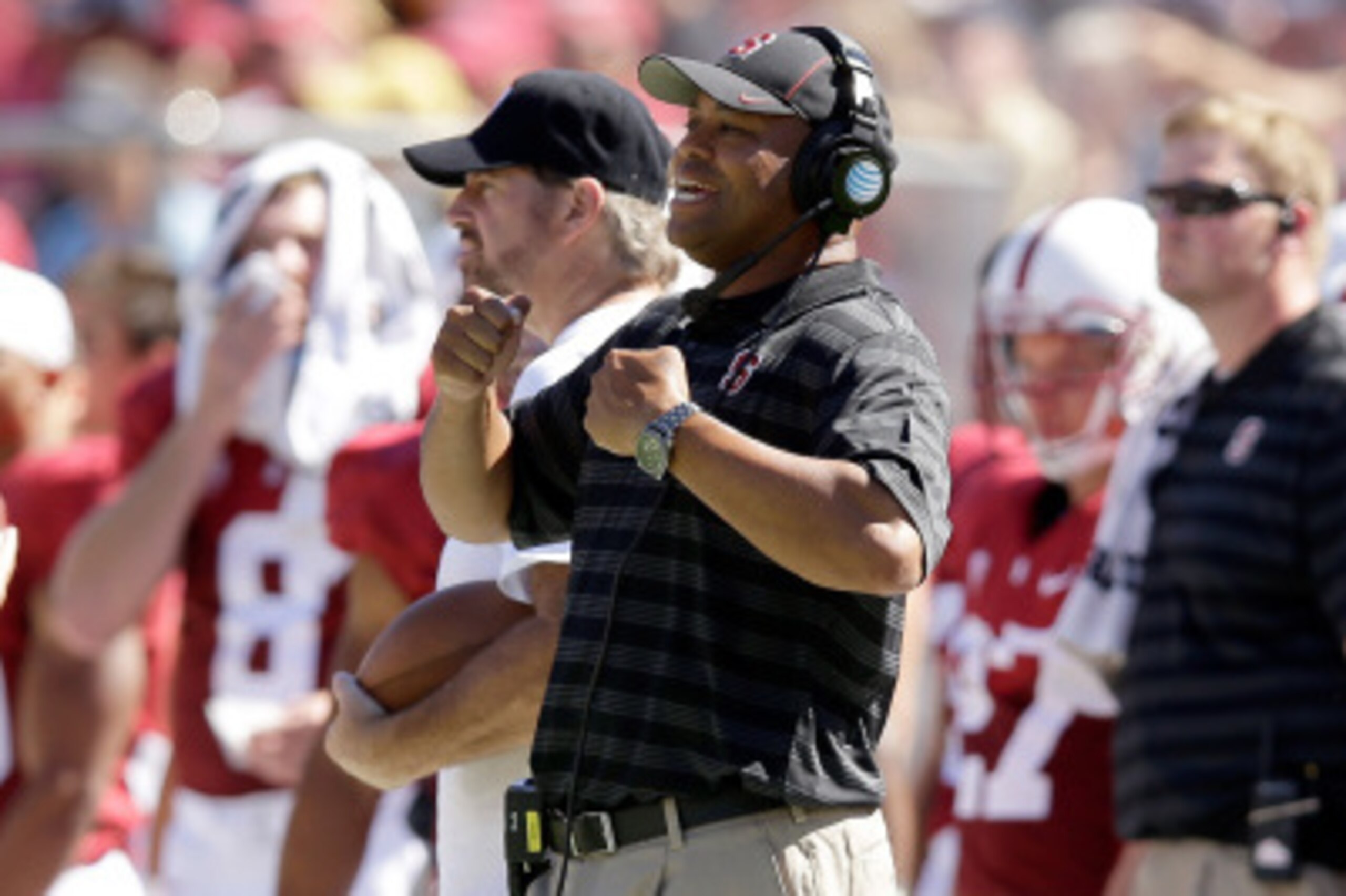
Stanford has seen Hall of Fame coaches lead the school onto the field. Names like Walter Camp, Pop Warner and Bill Walsh are synonymous with the game of football. Jim Harbaugh, Shaw’s predecessor and former boss, is one of the best coaches in the NFL.
The NFL will undoubtedly come calling for Shaw’s services, if teams haven’t already. No one would blame Shaw if he left, but college football would be losing a great asset.
Shaw is a coach who's committed to mentoring young men first and football players second. In a day where money trumps all, Shaw is focused on building children—which is what some players are when they enter his program as freshmen—into grown men with bright futures.
When asked about how he intends continue Stanford's success on the field going for the foreseeable future, he de-emphasizes the football part of the equation and instead focuses on the human element.
“… It’s about people, first. Having the right coaches and recruiting the right guys. Not just great football players, but tough kids, smart kids, kids that understand the game, kids that get it on and off the field."
Shaw feels a personal responsibility to impact his players at a deeper level. Sure, he can coach them on the field and extract their best when they don the Stanford uniform. However, he's compelled to have an impact on their lives beyond the field because he received that sort of mentorship growing up.
“It’s huge the impact that we have on these young people and so much about what is being talked is about money and what they can get and all those things; but the biggest thing I think they can get through team sports, but also coaching, is preparing these guys for life, preparing these guys for the challenges that are going to arise,” Shaw said. “People did that for me growing up, my dad, of course, and Bill Walsh were mentors to me early on, and I want to be mentors to our guys going forward."
Shaw is one the best football minds at the collegiate level, molded by the likes of Walsh and his father Willie, a longtime assistant coach in the NFL and at Stanford. He also has an incredible grasp of the college football landscape, but his focus continues to be on the students and not the business.
The NCAA recently instituted the “autonomy” rules, thus giving the power five conferences control of how they operate, which will at some point mean increased benefits for players, including full-cost scholarships, four-year scholarships and educational trusts, at the very least. When asked about the new rules, Shaw stayed on message and said while the new rules are great for student-athletes, the coaches and athletic departments must remember they are mentors first and foremost.
“I think [the autonomy rules] are going to be really good for college football players. But at the same time, I think the emphasis still has to be on us being mentors, being teachers and preparing these guys for life. This can’t be just about the money they get to put in their pocket. People need to decide what kind of impact college coaches, but all coaches have on these young people."
There’s a little bit of John Wooden in Shaw’s persona, although you have to tread cautiously when using the Wizard of Westwood as a point of comparison.
Wooden, who won 10 national titles as head coach of the UCLA basketball team, once said about life, “You can't live a perfect day without doing something for someone who will never be able to repay you." Well, I don’t know how many perfect days David Shaw has had, but you can bet he’s focused on doing something for someone who will never be able to pay him back. Not that he’d admit it. Shaw, in his mind, is just trying to pass on what was given to him.

Yes, Shaw is focused on winning Pac-12 titles and national championships. Every coach in the conference is. He knows that he’s in for the toughest battle of his head coaching career this year. The Pac-12 returns 10 starting quarterbacks and, according to Shaw, is even with the SEC in terms of competitiveness and might be deeper overall.
“I think [the SEC and Pac-12] are even, for the most part. I think maybe the Pac-12 has more depth. I think what you’ll see in the Pac-12 also is some the teams you’d say are ‘lower teams’ are going to beat the ‘upper teams.' That doesn’t happen in most of the other conferences. You know every week in our conference there’s a good chance someone is going to get knocked off. That’s what makes our conference so tough."
Indeed, the Pac-12 is going to be as competitive as it has ever been from top to bottom this season. It’s not like Shaw has a lot of time to prepare his young team for the battle. The USC Trojans, fresh off a 52-13 victory over Fresno State, come to Palo Alto, Calif. this weekend.
But the opponent doesn’t necessarily concern Shaw because he’s more interested in making sure his team is ready and motivated for every game, every week. When asked about Stanford’s goals for the 2014-15 season, Shaw said that he wants his players to “de-emphasize the end goal and focus on what we can control and what we can control is our effort and our execution."
Wooden once said, "Success comes from knowing that you did your best to become the best that you are capable of becoming." Shaw agrees, suggesting that by controlling effort and execution and doing everything in your power to achieve your goal, you'll be successful regardless of the result.
It’s another life lesson from a coach who is more interested in the future success of his players than the spotlight for himself. Shaw is a mentor first, a teacher second and a football coach third.
That’s the way college football coaches should operate, isn’t it?
Stanford head coach David Shaw has partnered with Dove Men+Care Deodorant to promote the “Care Always Wins” campaign, which honors coaches who foster a caring environment on and off the field. Share the story of a caring coach in your life at Dovemencare.com, and you could win a trip to Atlanta, Ga. and be honored by the College Football Hall of Fame.
All quotes obtained firsthand unless otherwise noted. Follow Jason Gold on twitter @TheSportsGuy33.
_0.png?w=2560)


.jpg?w=2560 "Injury-stricken Seahawks signing veteran RB")
.jpg?w=2560 "2 NFL Officials Suspended")

.jpg?w=2560 "Viral Rams Coach Vid 🖕")


.jpg?w=2560 "Mahomes' Wife Trolls Kubiak 💀")