
What We Learned from Borussia Dortmund's 2014 Summer Transfer Window
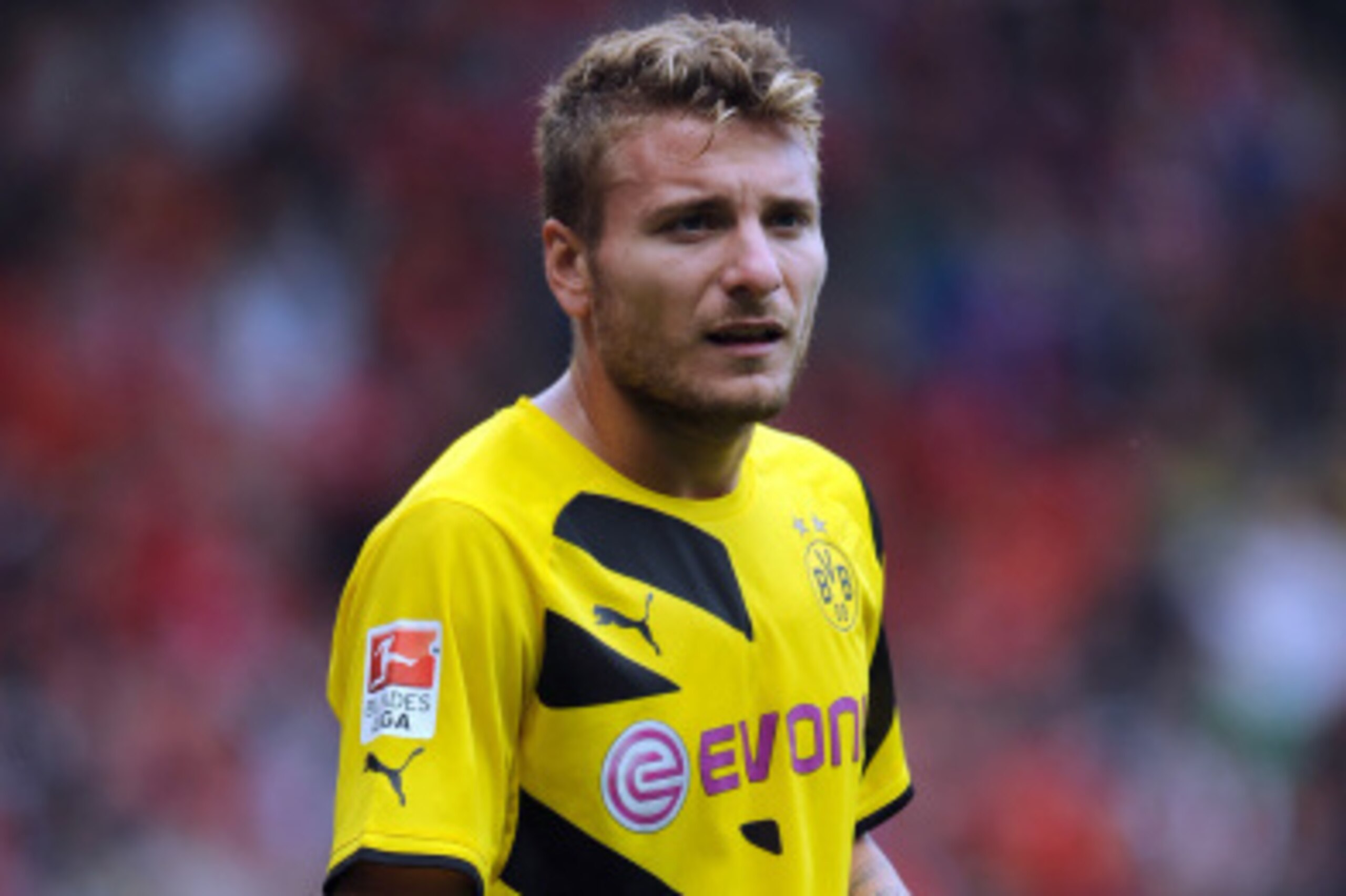
The 2014 summer transfer window was an active one for Borussia Dortmund, who made an unprecedented investment in the transfer market. Despite bringing in just €2.6 million for the sale of Julian Schieber and €100,000 for the loan of Marvin Ducksch, BVB spent (per Transfermarkt) €54.1 million on newcomers.
Ciro Immobile, Matthias Ginter, Adrian Ramos, Shinji Kagawa, Nuri Sahin and Dong-Won Ji were signed on long-term deals at the Signal Iduna Park. In addition to Schieber and Ducksch, the club parted ways with Robert Lewandowski, Manuel Friedrich and Jonas Hofmann.
Dortmund's summer transfers mark a change in the club's direction as they look to build a stable long-term future as a big club. Click "Begin Slideshow" for analysis of their dealings and the take-home points from their transfer campaign.
Transfers Meant to Pre-empt Star Departures
1 of 4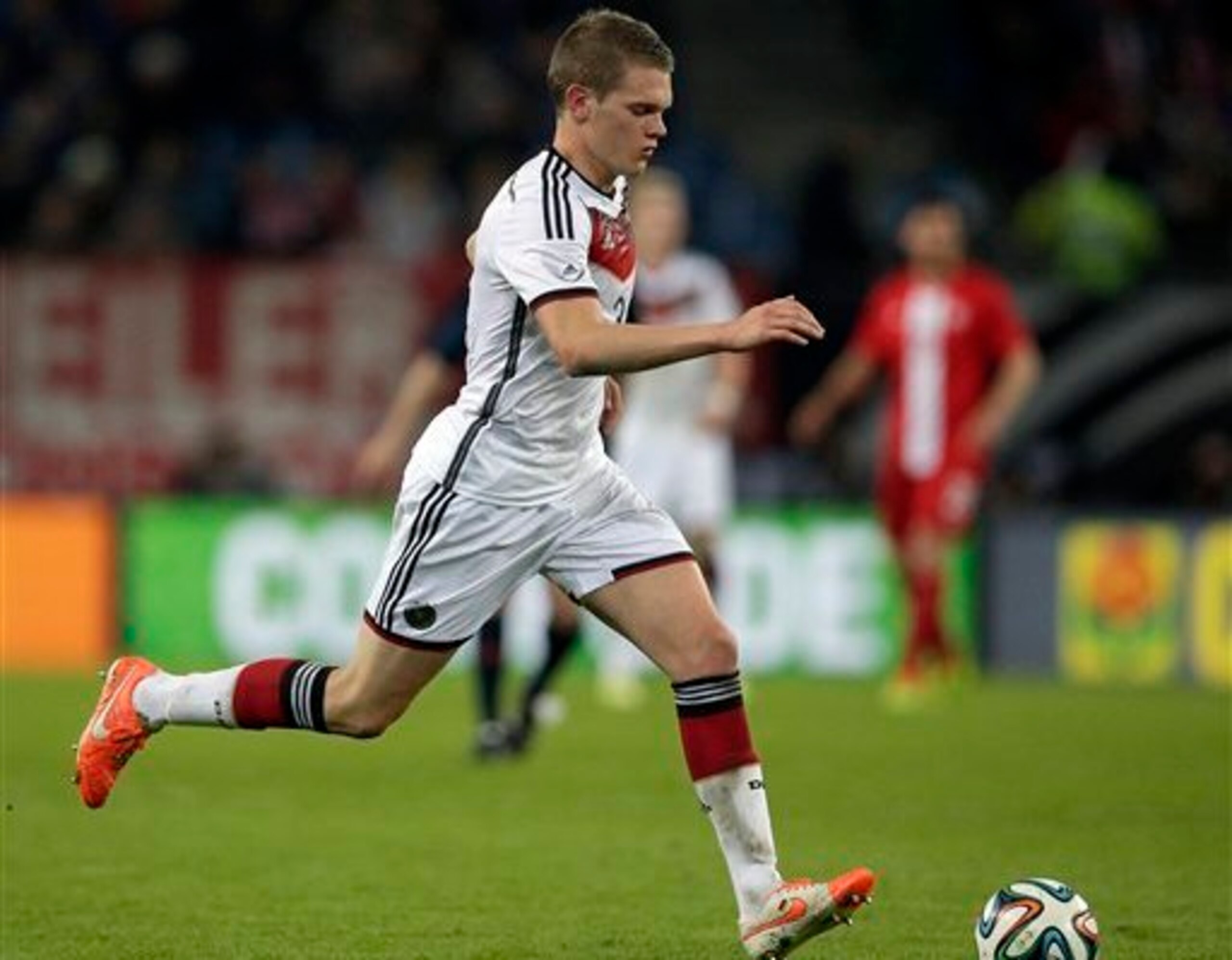
On the one hand, Dortmund's summer signings may suggest that the club's goal is to build a team with enough depth to cope with the possibility of injuries that have decimated their squad and forced them to resort to measures such as calling up youth players and bringing others out of retirement in recent seasons. However, it appears that there's another purpose to the depth being added: pre-empt departures.
It took more than half a year for BVB to find a suitable successor to Nuri Sahin after he left the club in 2011: Ilkay Gundogan was initially a failure and Moritz Leitner also struggled to impose himself. The former finally made big strides in the spring of 2012, though Dortmund had already been eliminated from the Champions League at that point. Similarly, Henrikh Mkhitaryan struggled for almost all of the 2013-14 season and was nowhere near the level of Mario Gotze, the player he replaced in Klopp's XI.
Looking at BVB's summer signings, there is a clear strategy to many of the additions as possible successors to coveted stars. Matthias Ginter is 20 years of age and still a raw talent; he won't play every game, but he could become world-class in the next few years. With Mats Hummels, Neven Subotic and Sokratis Papastathopoulos all having attracted attention from possible suitors, the ex-Freiburg man could replace any of the above in one or two years, depending on whether BVB sell.
Even more clearly a move to pre-empt a departure is the addition of Shinji Kagawa. CEO Hans-Joachim Watzke told SportBild (h/t Goal.com) that the playmaker could influence Marco Reus to stay at the club, but Kagawa's signing could mean more than Watzke was willing to state publicly. It could also be seen as a warning to Reus that BVB are prepared to replace him if need be.
Short-Term Plan Is Domestic Sustainability, Not Continental Greatness
2 of 4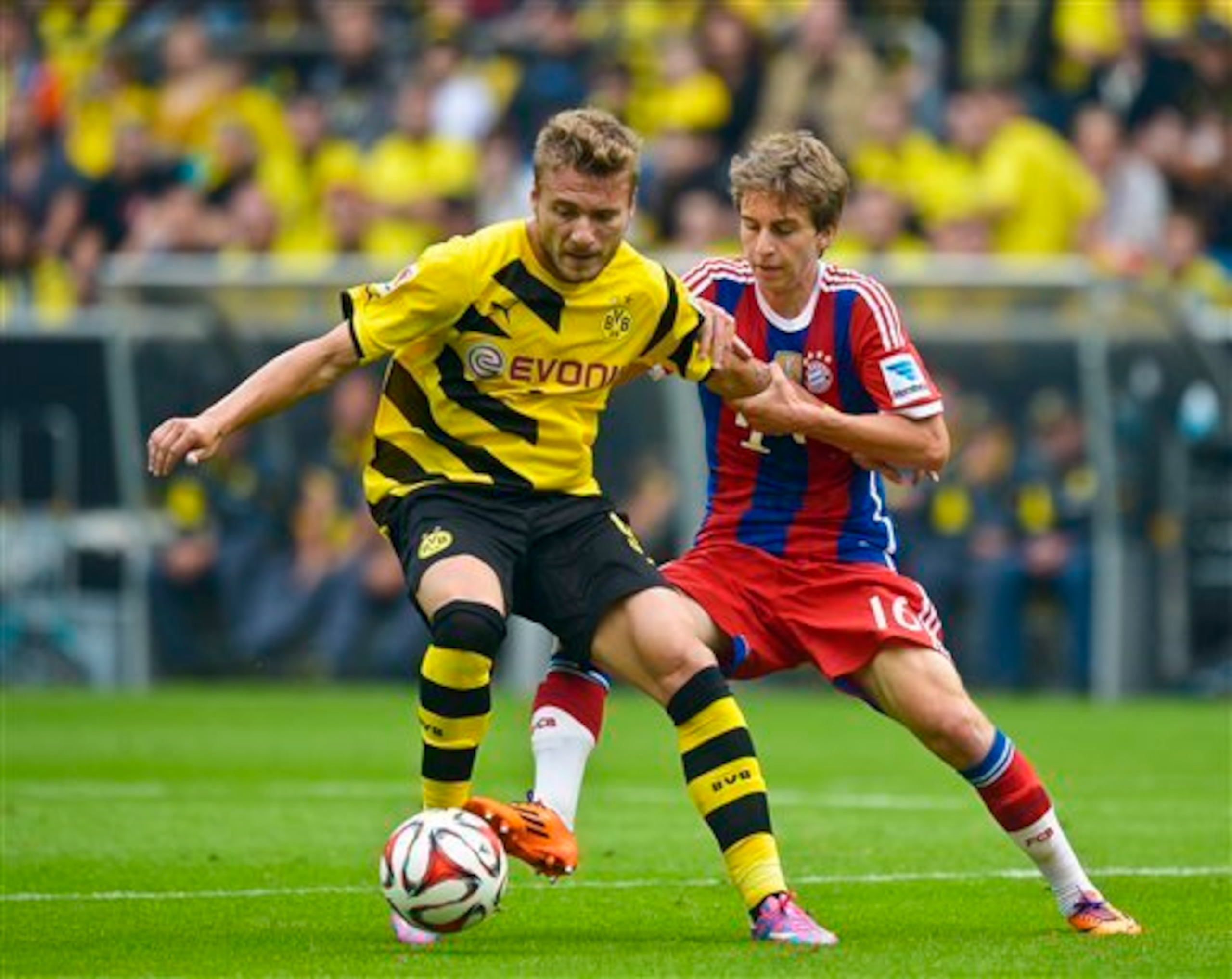
Based on their summer transfers, it appears that Dortmund are more concerned with keeping their status as a top-four (and preferably a top-two) Bundesliga club than targeting another run to the Champions League final. Some stars are simply irreplaceable, either due to the cost of possible successors or in terms of the skill set required to be exact fits in Jurgen Klopp's team.
Instead of making a move for a player like Diego Costa to replace Robert Lewandowski, Dortmund were forced to look for options less coveted by top teams. They moved for Ciro Immobile, Adrian Ramos and Ji Dong-Won, a trio of strikers who all currently stand behind Pierre-Emerick Aubameyang in the pecking order as BVB's main target man.
In all likelihood, none of the above will be as prolific as Lewandowski, and it's hard to see any of them scoring four goals against Real Madrid. But Dortmund will at least have options if one is unable to impose himself or injured.
Similarly, Dortmund's signing of Shinji Kagawa will be a downgrade from Marco Reus should the latter leave the club at any point in the near future. The club could have held on to their €8 million and perhaps moved for a bigger name next summer. Instead, they've added Kagawa to an attacking midfield that already contains many options. It's a decision (although they had little choice) in favor of long-term sustainability above risk and possible (if improbable) short-term windfalls.
Klopp Makes Players Better Than They Truly Are
3 of 4
Each summer since their Bundesliga-winning 2010-11 season, Dortmund have lost a key player. First it was Nuri Sahin, then Shinji Kagawa. The summer of 2013 saw Mario Gotze leave the club, and more recently Robert Lewandowski became the fourth big star in as many years to make his exit.
After rising to prominence under Jurgen Klopp, each of the aforementioned players felt they were ready to make the next step in his career at a bigger club. To date, none have impressed. And now, some are even returning to the club that made them stars.
Sahin rejoined BVB on loan 18 months ago and this summer his move was made permanent. After selling him to Real Madrid for €10 million (per Transfermarkt) in 2011, Dortmund managed to recoup the midfielder on a full transfer for €7 million. Similarly, Kagawa was sold to Manchester United in 2012 for €16 million and re-signed with BVB this summer for half that value, €8 million.
The fact that Sahin and Kagawa not only failed to succeed at big clubs and were eventually forced to leave speaks volumes of the training they had at Dortmund. And the fact that they returned to Klopp speaks even more; it's a unique situation. However, Sahin has turned his career around since returning to Signal Iduna Park and Kagawa may yet do the same over the coming months.
The question now is whether Gotze or Lewandowski will follow at some point and whether BVB's other coveted stars, such as Marco Reus and Mats Hummels, will take Sahin and Kagawa's stories as a sign that the grass may actually be greener in Dortmund.


.jpg?w=2560)
BVB Are Finally Taking Risks
4 of 4
In 2005, Dortmund nearly went bankrupt. The club had huge support and had won the Champions League eight years prior, but in trying to keep pace with giants and football's nouveau riche like Chelsea, BVB nearly collapsed into complete insolvency.
Record signing Marcio Amoroso, who cost a whopping €25.5 million in 2001, couldn't drive the club to necessary glory. Relying on the transfer market to provide the club's star players was ineffective.
BVB rebuilt, focusing on developing players in their academy and signing young, burgeoning talents from other Bundesliga sides. The first XI in the Dortmund team that won the 2010-11 Bundesliga title cost less than €15 million.
Since then, BVB have invested more, perhaps out of necessity due to the departures of their coveted stars. And in the summer of 2013, Dortmund invested an unprecedented €52.6 million (per Transfermarkt) in squad improvements. However, on balance, their spending was very, very modest. Mario Gotze alone brought in €37 million and the club's overall sales amounted to €47.18 million. Net spending was just €5.42 million.
This summer, Dortmund finally took some risks. The Ruhr side spent a record €54.1 million and only pulled in €2.6 million—a net of €51.5 million. Their gross spending exceeds even Bayern's, and their net is much, much more than that of the Munich giants, who actually turned a profit over the course of the summer.
It's a big risk for a club that still has a relatively modest revenue, approximately €260 million (per Yahoo) during the 2013-14 season. But to make up ground on Bayern, perhaps it was their only option. Time will tell whether Dortmund's gamble was worthwhile.
.jpg?w=2560 "Rams Eagles Football")
.jpg?w=2560 "Texans-Mixon Released Football")

.jpg?w=2560 "2 NFL Officials Suspended")

.jpg?w=2560 "Mahomes' Wife Trolls Kubiak 💀")
