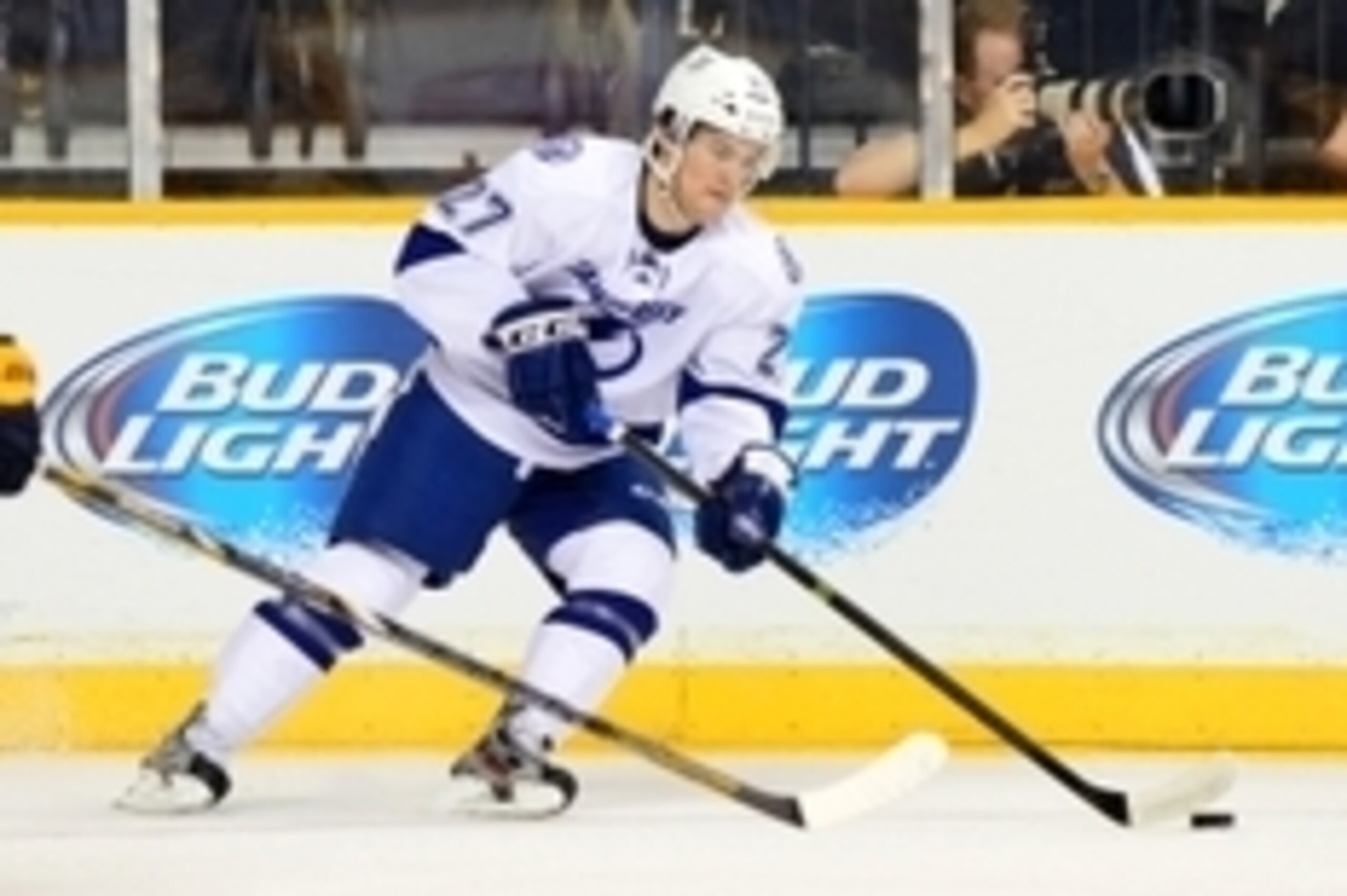

Ranking the Tampa Bay Lightning's Top 10 Prospects
Prior to the 2014 draft, Jonathan Drouin was without any question the single-best prospect in any NHL organization.
He's definitely still the best prospect in the Lightning system and will almost certainly be taking his talents to the NHL next year, joining an impressive group of young skaters in Tampa Bay. But he's merely the crown jewel of a fairly impressive group.
The following slideshow ranks the team's 10 best Calder-eligible prospects (don't go looking for Brett Connolly, who has played too many NHL games to qualify) and provides capsule scouting reports. Prospects are primarily ranked based on their potential NHL ceiling, but the amount of risk involved in that projection is also a significant factor in this list.
10. Nikita Nesterov
1 of 10
Profile: Nikita Nesterov is an intelligent puck-moving defenceman—so much so that as Raw Charge's Kyle Alexander notes he even spent some time at centre in the KHL. The trouble with Nesterov is that for all his ability with the puck he hasn't posted great numbers at the senior level; he'll get the puck out of the zone, but at this point he seems unlikely to be a difference-maker offensively.
Risk factor: Undersized (6', 185 lbs) defencemen who don't pile up the points are among the highest-risk prospects in general terms. Beyond that, he's also had some injury problems along the way.
NHL projection: Second-pair defenceman
9. Brayden Point
2 of 10
Profile: Brayden Point is an offensive dynamo. He posted 91 points on a Moose Jaw Warriors team last season that didn't have another skater with even 60. Blessed with intelligence, playmaking vision and high-level puck skills, Point is the rare third-round pick who might have top-line offence in the NHL.
Risk factor: The list of 5'9", 160-pound forwards who fail to translate their junior performance to the professional ranks is a long one.
NHL projection: Top-six forward
8. Dominik Masin
3 of 10
Profile: An exceptional two-way defenceman at the Czech U-20 level, Dominik Masin projects more as a dependable defensive type with some puck-moving ability at the NHL level. He already has decent size (6'2", 190 lbs) and at least as importantly he's aggressive all over the ice and doesn't hesitate to make contact with his man in the defensive zone.
Risk factor: We're at the very early stages of Masin's professional career, and there is a long road from where he is now to the majors. A lot can happen along the way.
NHL projection: Second-pair defenceman

7. Cedric Paquette
4 of 10
Profile: A late birthday caused him to be passed over in his first year of draft eligibility, Cedric Paquette has been making up for lost time ever since. Big, tough and with a surprising amount of offensive ability, he emerged as a key player over two full years in the Quebec Major Junior Hockey League (QMJHL) and then stepped into the AHL and immediately provided both secondary scoring and a significant physical element.
Most significantly, he played in all four postseason games with the Lightning, despite being a rookie pro.
Risk factor: The question here is where Paquette's ceiling lies. He's knocking at the door of the NHL, but does he have enough talent to climb above the third line?
NHL projection: Middle-six NHL forward
6. Vladislav Namestnikov
5 of 10
Profile: Vladislav Namestnikov isn't just fast, but he's also very good at making plays while in flight, either passing the puck or slipping by defenders with some sleight-of-hand. He also has a sneaky physical game and contributes at both ends of the rink. He's more of a passer than a scorer.
Risk factor: Namestnikov just finished his second season at the AHL level, and while he's a contributor he has yet to really emerge as a top-flight offensive option in the minors. He needs to find a way to produce more if he's to have an impact in the majors.
NHL projection: Middle-six forward
5. Slater Koekkoek
6 of 10
Profile: Reports pretty much unanimously give Slater Koekkoek top marks for his hockey sense at both ends of the rink; he's both a capable positional defender and an intelligent player at the offensive end of the rink.
He's not particularly physical, and his skating gets mixed reviews, though he's very capable of rushing the puck. His scoring totals in juniors are on the low side for a guy regarded as an excellent offensive defenceman.
Risk factor: Injuries have been the biggest story for Koekkoek; he lost pretty much a whole season of development time between 2011-13. It's also going to be interesting to see how much offence he carries over to the professional level.
NHL projection: Top-four defenceman
4. Anthony DeAngelo
7 of 10
Profile: Anthony DeAngelo, a defenceman, outscored most of the top forwards at the 2014 draft; his points-per-game total was only a hair behind that of fifth overall pick Michael Dal Colle. He has a legitimate chance to be an elite offensive defenceman in the majors. At 5'11" and 175 pounds, he is small for the position and may have trouble with NHL size.
Risk factor: Red Line Report wasn't subtle in describing its reservations about DeAngelo, who they described as "WORST! TEAMMATE!! EVER!!!" and awarded their Scarecrow award for having "$5 million skills/10 cent head." It's also worth noting that the transition to pro is often tough for undersized defenders.
NHL projection: Top-four defenceman
3. Adam Erne
8 of 10
Profile: Adam Erne would be a fit in any system, but that's especially true in Tampa Bay. The 6'1", 206-pound winger brings not just offensive ability but also a power forward game that should nicely complement the Lightning's roster of small, crafty scorers. He's a nicely rounded player who took a step forward last season, and so far he looks like pretty good value for a No. 33 pick.
Risk factor: The usual caveat that Erne hasn't made the jump to the pro level applies, and he has had some injury problems. Given his style of play, health is always going to be something of a concern.
NHL projection: Top-six forward
2. Andrey Vasilevskiy
9 of 10
Profile: The "big game goalie" label gets applied too frequently in hockey, but Andrey Vasilevskiy has a better claim to it than most. He's put in dominant performances at six different major tournaments (U-18, U-20 and World Championships) and posted a 0.934 save percentage in the KHL playoffs last year.
His 6'3" frame fits the growing emphasis on big goalies, and while he's capable of highlight-reel saves he's so disciplined positionally that often they aren't required.
Risk factor: Goalies always carry higher risk than other positions, and Vasilevskiy hasn't made the jump to North America yet (though he is slated to next season).
NHL projection: No. 1 goaltender; potentially even a franchise goalie
1. Jonathan Drouin
10 of 10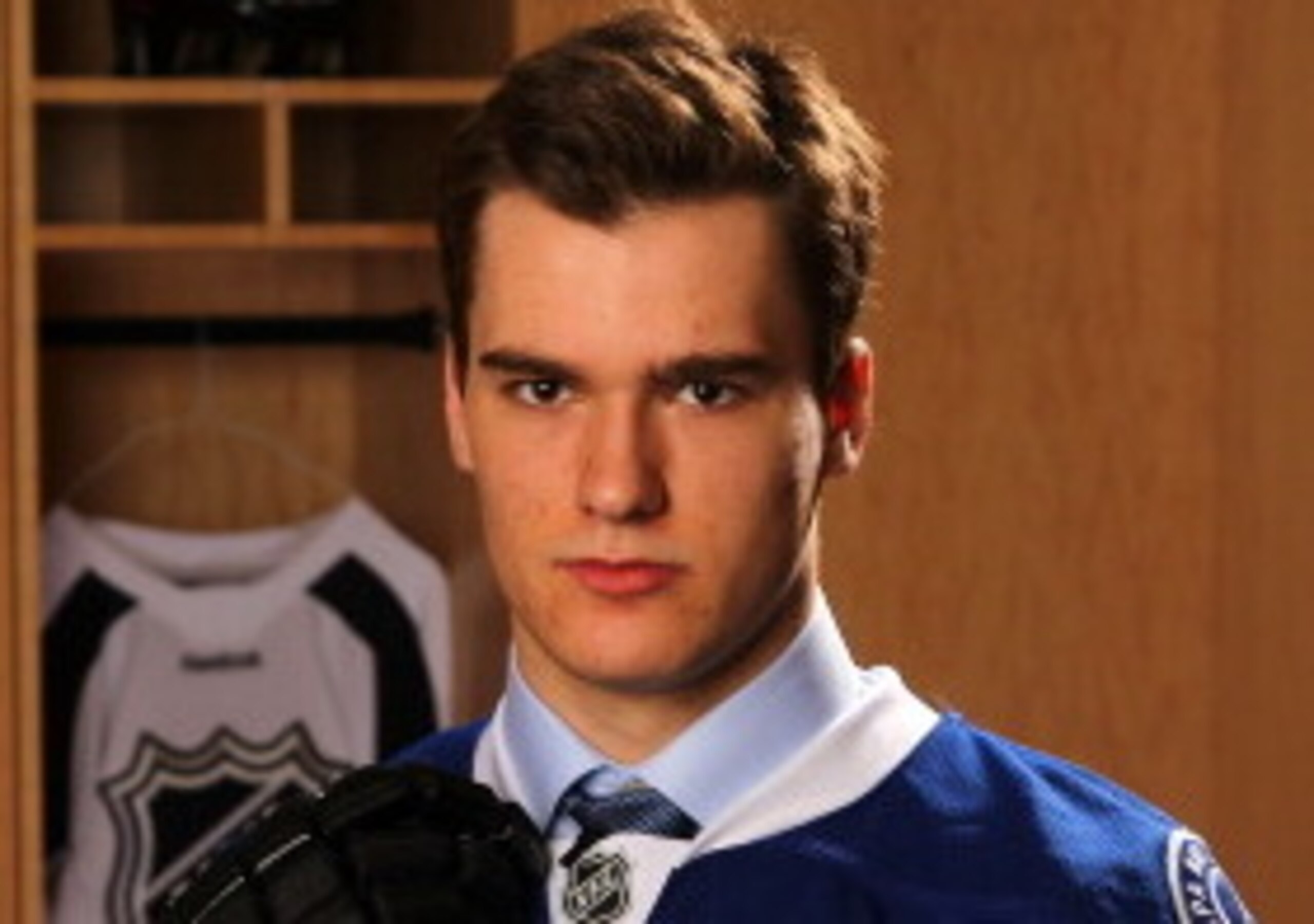
Profile: There was some speculation prior to the 2013 draft that Drouin could be the first overall selection. His offensive toolkit is off-the-charts good; he can pass and shoot at an elite level and processes the game in scoring situations as well as anyone. If that wasn't enough, he also possesses both exceptional skating and hockey sense.
Risk factor: Some eyebrows were raised when the Lightning returned Drouin to juniors last year, because most saw him as NHL-ready then. Barring injury, there's virtually no risk here.
NHL projection: First-line forward
Jonathan Willis covers the NHL for Bleacher Report. Follow him on Twitter for more of his work.
Statistics courtesy of EliteProspects.com or NHL.com unless otherwise noted. Scouting reports from McKeen's Hockey, Red Line Report and The Hockey News (subscription required) were consulted in writing profiles.


.jpg?w=2560 "Viral Rams Coach Vid 🖕")
.jpg?w=2560 "Injury-stricken Seahawks signing veteran RB")
.jpg?w=2560 "2 NFL Officials Suspended")

.jpg?w=2560 "Grading WWE Raw 🔠")
.jpg?w=2560 "Mahomes' Wife Trolls Kubiak 💀")

