

Complete Preview for the Toronto Maple Leafs' 2014-15 Season
"I want Dye in right, Justice DHing, Pena on the bench, Hatteberg at first and anyone but Mags first out of the pen."
"You want Pena on the bench?"
"That's right. So you can play Hatty."
"Pena is not only the best first baseman on the roster, he's the only first baseman on the roster."
"Listen to me, Hatty gets on base more than Pena. In fact, 20 percent more."
"And his fielding?"
"His fielding does not matter."
"I've heard enough of this."
"Have you?"
"And I, uh...I disagree with you, plain and simple. And moreover, I'm playing my team in a way that I can explain in job interviews next winter."
There are multiple scenes in the Oscar-winning Moneyball that feature Brad Pitt’s Billy Beane and Philip Seymour Hoffman’s Art Howe butting heads over the lineup of the Oakland Athletics. Beane, the general manager, is annoyed that Howe, the manager, is not deploying players properly. Beane and Jonah Hill’s Peter Brand (Paul DePodesta in real life) have discovered a new way of looking at the game, at assessing a player’s value and ability, and Howe is not seeing eye to eye with his bosses.
All the while, the team is losing games.
Change the names, positions, terminology and the season for job hunting, and it could be a conversation that happens internally with the 2014-15 Toronto Maple Leafs.
What We Learned in 2013-14
Under the guidance of general manager Brian Burke from 2008-13 and later his successor, Dave Nonis, the Leafs put a premium on players with the traits of truculence and grit—which are words designed to disguise and distract from the fact that those players are usually bad—over better players who lack those characteristics. The organization hit rock bottom in 2013-14 by winning two of its final 14 games to go from third in the conference to out of the playoffs, mathematically eliminated with two games remaining.
The Leafs defied math for most of 2013-14; in 2014-15, they have shown a willingness to put the math on their side.
Team president Brendan Shanahan, the NHL’s former dean of discipline who left that position to take the job in Toronto on April 11, cleaned house and hired a rising analytical star to change the team’s fortunes.
On May 8, the Leafs fired assistant coaches Dave Farrish, Greg Cronin and Scott Gordon. On July 22, assistant general managers Dave Poulin and Claude Loiselle, whose regular interviews on Canadian radio were often a point of simultaneous laughs and tears among Leafs fans, were also shown the door.
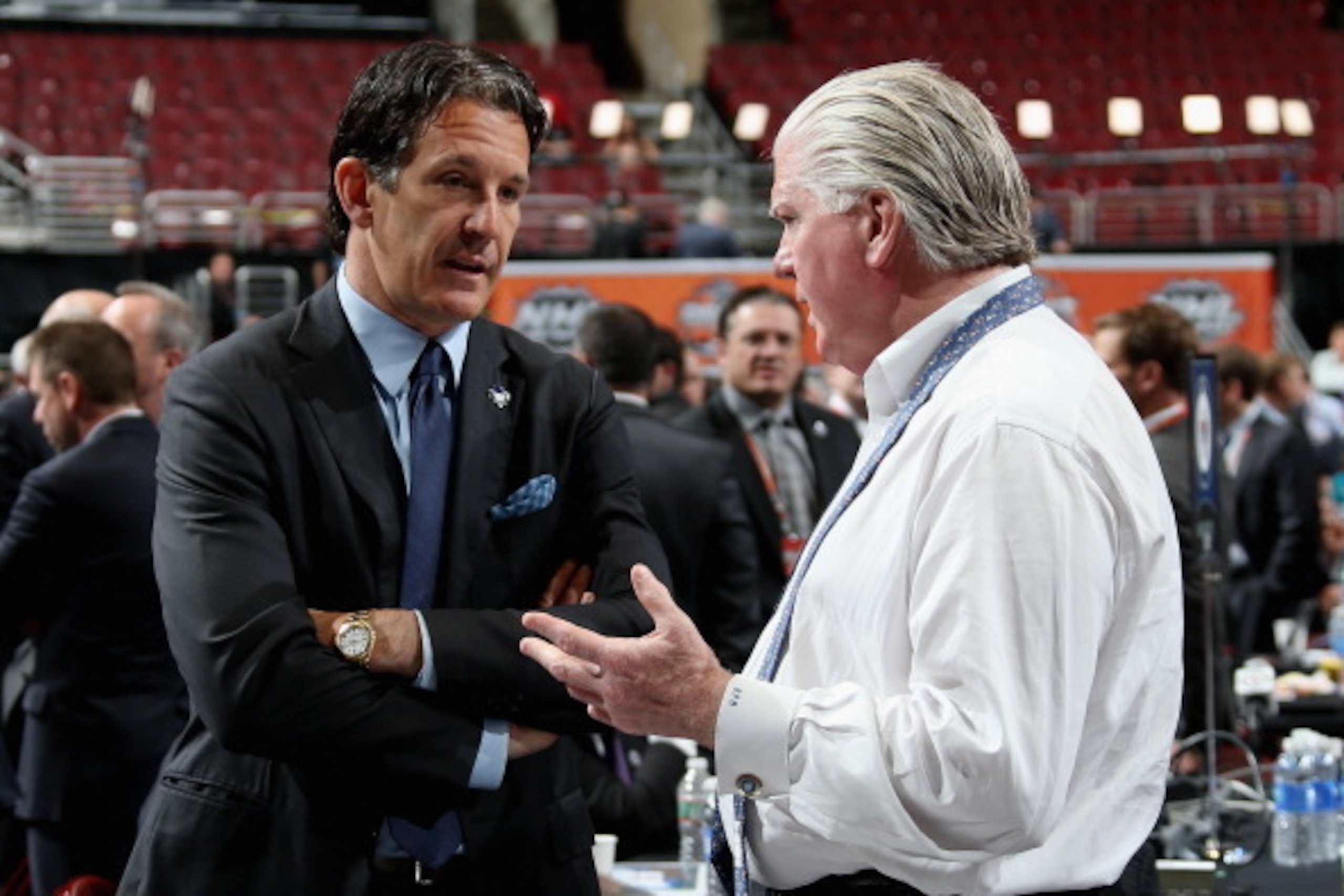
On the same day Poulin and Loiselle were fired, Shanahan announced the hiring of Kyle Dubas, the general manager of the OHL’s Sioux Ste. Marie Greyhounds for three seasons, as an assistant general manager.
It’s not often—heck, it practically never happens—that an assistant GM hiring receives the universal praise and intense attention that occurred when Dubas was hired. The 28-year-old used advanced/fancy/underlying/possession statistics to help the Greyhounds improve in points percentage from .412 to .471 to .574 to .699 in junior hockey’s most competitive league and represents the idea that the stodgy Leafs are ready to embrace a new way of thinking about the game.
The Leafs have built an analytics department out of the rubble of a tough-guy club, poaching Darryl Metcalf of Extra Skater (a site that no longer exists) and hockey writer Cam Charron.
Despite the front-office and bench shakeup, Shanahan did not fire Nonis, although the former now has final say on all moves. The real surprise was coach Randy Carlyle not only survived the bloodbath but emerged with a two-year extension that runs through 2016-17.
Carlyle is a relic from the Burke era, hired in March 2012 when the Leafs were attempting to become the toughest toughs to ever tough. With the progressive thinking that seems to be sweeping through the Maple Leafs, it’s odd that someone like Carlyle, even with new assistants, would still be in the fold. It’s like making wholesale changes at a company with a history of harassment and sensitivity problems and hiring Don Draper to oversee the staff.
| James van Riemsdyk | Tyler Bozak | Phil Kessel |
| Joffrey Lupul | Nazem Kadri | David Clarkson |
| David Booth | Peter Holland | Mike Santorelli |
| Daniel Winnik | Petri Kontiola | Leo Komarov |
| Troy Bodie, Colton Orr, Matt Frattin |
Outlook for 2014-15
The Leafs had a mixed offseason in terms of acquiring new players; they failed to land a marquee free agent and were rebuffed by defenseman Josh Gorges, who chose Hockey Siberia in Buffalo over coming to Toronto. But they were able to snag a potential 15-20 goal scorer in David Booth, the first move that had Dubas' fingerprints on it, although the Leafs were already considering signing him.
Other new faces include slow-footed defensemen Stephane Robidas and Roman Polak, two players who aren’t exactly guarantees to improve the back end. Forwards Booth, Mike Santorelli, Daniel Winnik, Petri Kontiola and once-jettisoned Leo Komarov are sure to help a once miserable bottom-six group become much more formidable in the upcoming season.
| Dion Phaneuf | Stephane Robidas | Jonathan Bernier |
| Jake Gardiner | Cody Franson | James Reimer |
| Morgan Reilly | Roman Polak |
The stats that wear tuxedos and drink tea from fine china with a pinkie extended bode very well for many of those forwards.
The Corsi and Corsi-relative numbers for those forwards in 2013-14 provide reasons for optimism. Santorelli (50.6, +0.9), Booth (52.0, +1.0) and Winnik (48.0, -2.8) performed well; Santorelli and Booth could be even better, as they can expect more sheltered shifts than they received last season, while Winnik posted his numbers in the face of tough zone starts and a high quality of competition.
In 2013, Komarov (45.6, +1.8) played well for the Leafs but had to settle for a job in the KHL. Kontiola stood out for Team Finland at the 2014 Sochi Olympics (five points in six games) and had 37 points in 53 games for Chelyabinsk Tractor of the KHL last year, making him something of a wild card this season.
But how big of an upgrade are the new forwards over those who left this summer?
Mason Raymond (44.2, +1.9) signed with Calgary after a 19-goal, 45-point season, but Booth is being counted on to fill that void. The oft-injured Dave Bolland (44.1, +3.1) had eight goals and 12 points in 23 games and took his services to Florida. Nikolai Kulemin (41.3, -2.0), Jay McClement (38.7, -5.0) and Jerred Smithson (32.6, -10.7) were possession detriments, and while Colton Orr (39.1, -4.3) is still with the team, ideally, he won't touch the ice this season.
To answer the previous question, the upgrades have the potential to be anywhere from somewhat big to very big.
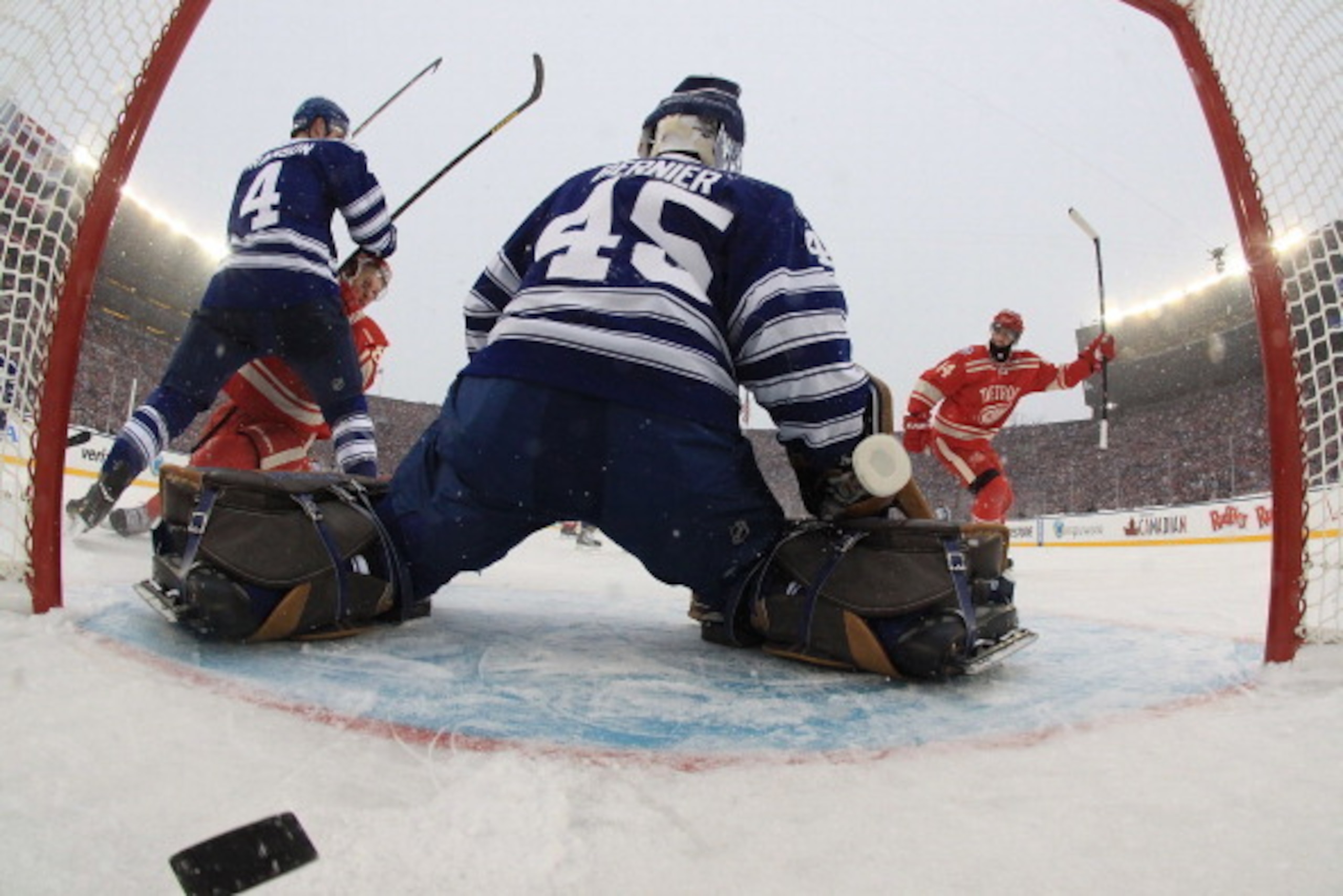
This new bottom six supporting a top six of James van Riemsdyk, Tyler Bozak, Phil Kessel, Joffrey Lupul, Nazem Kadri and David Clarkson (only Lupul was in the red in Corsi relative last season) is enough to give Leafs fans all the belief in the world that a team that finished last in Fenwick differential last season won’t have to rely on Jonathan Bernier’s heroics as heavily this season.
The Leafs also have a decision to make on 2014 first-round pick William Nylander, who has impressed during rookie camp. But with no room in the top six, it probably makes sense to hold off on his NHL career for at least one season.
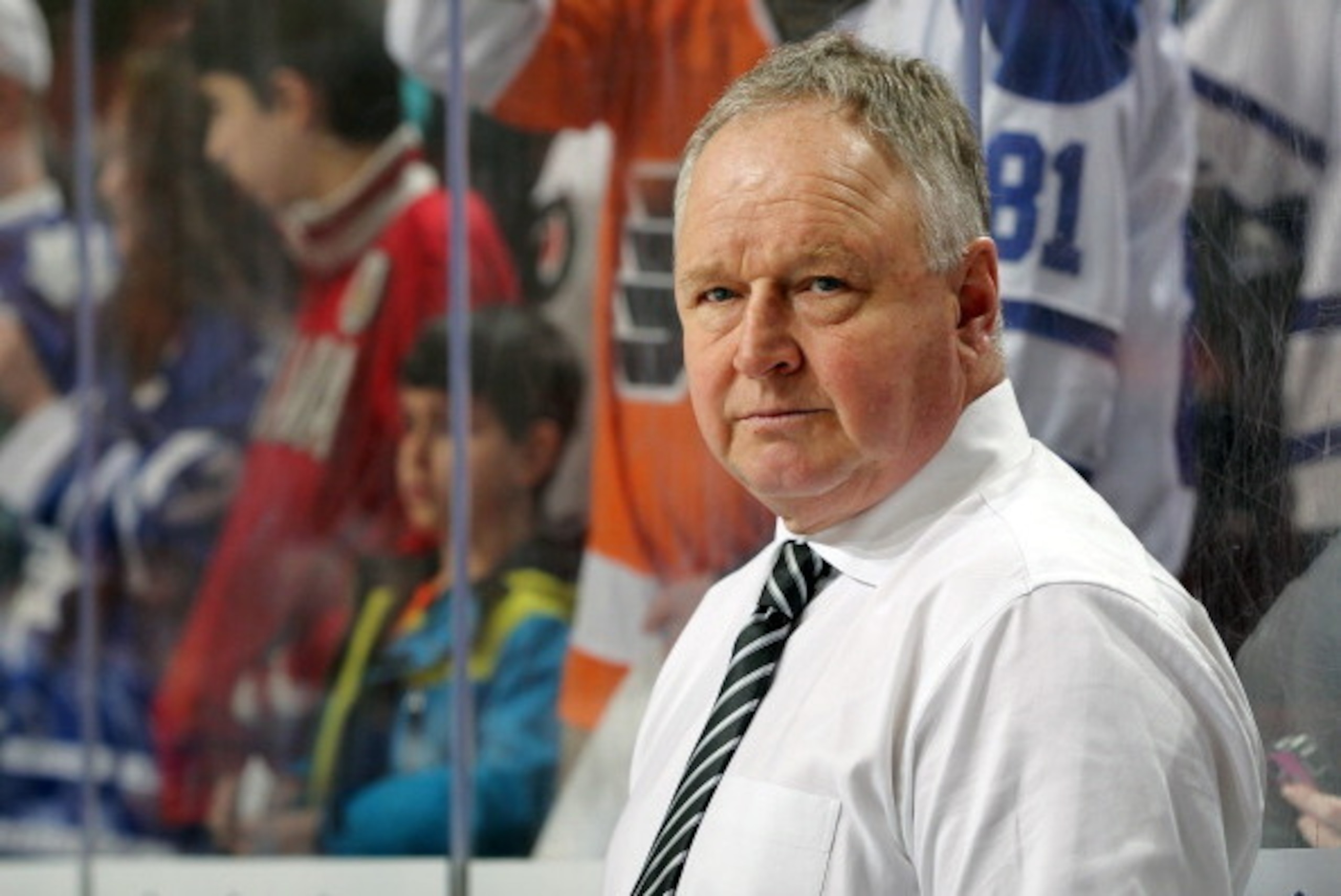
Then again, Randy Carlyle.
Carlyle played fourth-line center Jay McClement more than 18 minutes in a game 21 times last season. TWENTY-ONE TIMES. The 31-year-old McClement, despite not cracking 17 points in a season since 2009-10, found himself receiving more ice time than Kadri during some games.
Orr, Frazer McLaren and Smithson combined to play 99 games in 2013-14; their contributions featured zero goals, zero assists and 196 penalty minutes.
McClement and Smithson are gone, but Orr and McLaren remain Leaf properties.
So what happens during training camp or the regular season when it comes time to fill out the lineup? Will Carlyle be on board with this new way of Leafs thinking? Or will he insist the fourth line needs that much-ballyhooed toughness and pencil in the names of Orr and/or McLaren? Will Carlyle's system still have the Leafs chasing the puck instead of possessing it?

It’s not impossible for the Leafs to reach the postseason; they have an excellent top-six group and a goaltender who probably would have carried the team to the 2014 playoffs if not for a late-season injury. Sweeping, philosophical organizational changes rarely lead to overnight success unless you have, say, Mark Mulder, Barry Zito and Tim Hudson—and the Leafs don’t have that.
It’s more likely that this will be a season of growing pains, with Shanahan in Carlyle’s office asking him to play Peter Holland over Colton Orr or Matt Frattin over Frazer McLaren and Carlyle sticking to his guns, telling his boss that he decides the lineup.
The true test will be how Carlyle reacts to the team's first three-game losing streak and how it loses those three games. If the Leafs control the possession but find themselves succumbing to bad luck, will Carlyle ignore the underlying numbers and insert useless tough guys and give them way too much ice time, or will he see it as an unlucky three-game stretch and stay the course?
Even if Carlyle follows orders and ices the optimal lineup, he may not know how to coach it properly. There is virtually endless data showing Carlyle's teams become worse possession clubs with him at the helm. It’d be like taking your well-meaning dad to a dubstep concert; yeah, he agreed to go and is doing his best to get into it, dancing with strangers while wearing a neon green glow necklace, but really, you probably would have been better off having someone else who wasn’t there begrudgingly.
All statistics via NHL.com or Extra Skater (obtained in advance).
Dave Lozo covers the NHL for Bleacher Report. You can follow him on Twitter: @DaveLozo.

.jpg?w=2560 "Mahomes Told Teammate to Leave Meeting")
.jpg?w=2560 "Rodgers Iced Out on Plane 💎")
.jpg?w=2560 "🚨 Week 8 AP Top 25 Poll")


.jpg?w=2560 "Lamar Being Out Shocked Ravens")
.jpg?w=2560 "Raiders Could Start Mendoza")