

10 Things You Need to Know About Alejandro Sabella's Argentina
Big things are expected of Argentina in the coming World Cup. With one of the most exciting attacking line-ups out of all the teams competing and plenty of superstars in the squad, a semi-final finish or better looks very possible for the side captained by Barcelona genius Lionel Messi.
Everybody knows about La Pulga and his exploits in Europe, but to what extent are you familiar with the rest of the 23 players who make up the Albiceleste squad?
From the footballers' birthplaces, to the team's excellent record at youth level, here are 10 essential facts to help you get to know the Seleccion a little better ahead of the World Cup.
The Squad Has Not Won a Senior Trophy
1 of 10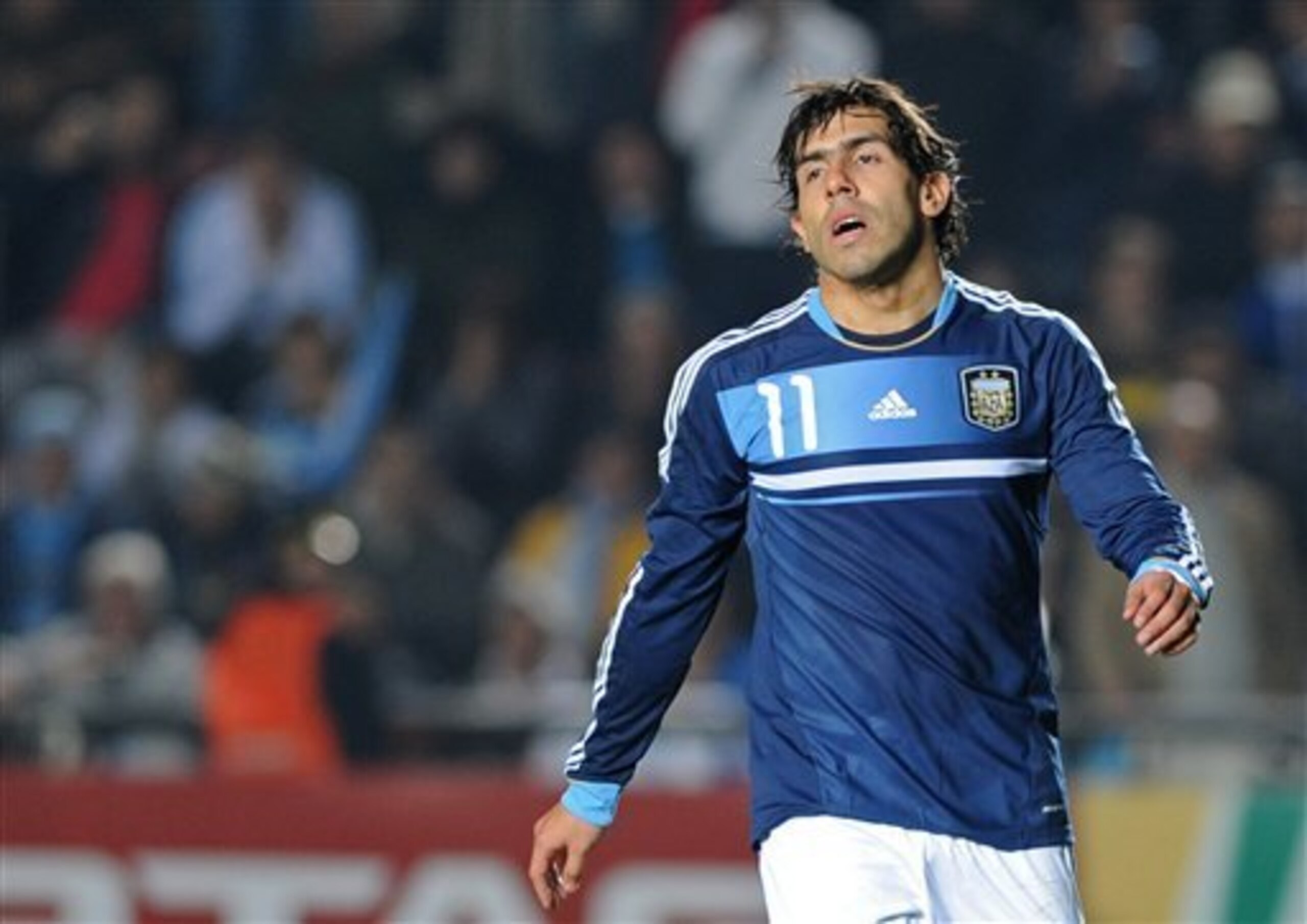
For a nation accustomed to glory, the last 20 years have been extremely painful for fans of the Argentine national team. The 1993 Copa America in Ecuador, with Alfio Basile at the coaching helm, was the last time the Albiceleste lifted a major trophy at senior level.
The run marks the worst trophy drought in national team history. The previous longest dry spell spanned 19 years, from the Copa America victory in 1959 to that unforgettable win at the 1978 World Cup. Can Messi and Co. put the record straight by stopping the rot in Brazil?
But at Other Levels There Is Plenty of Silverware
2 of 10
While those senior crowns have eluded the Seleccion, it has been a different story at youth levels over the last 10 years. Two Olympic crowns (2004, 2008) and two Under-20 World Cups demonstrate that the current generation has massive promise to take the football world by storm.
Six of the current squad represented Argentina at the 2005 World Cup, while Angel Di Maria and Sergio Romero swell that number to eight with their participation in the glorious 2007 campaign. In total, seven of the expected starting XI took part in one or more of those triumphs, showing a consistency from junior to senior levels unseen in almost any other team.
Most Stars Call Santa Fe Home
3 of 10
When one thinks of Argentina, capital Buenos Aires is the place that will most likely come to mind. But the buzzing, cosmopolitan city was not responsible for the upbringing of the vast majority of the Seleccion's 23 stars; that honour goes to the province of Santa Fe.
Ezequiel Garay, Di Maria, Javier Mascherano, Maxi Rodriguez, Lionel Messi and Ezequiel Lavezzi were all brought up in the football hotbed, with Ever Banega another Santafesino who just missed the cut for the World Cup.
Goalkeeper Mariano Andujar, defender Pablo Zabaleta and midfielder Ricky Alvarez, meanwhile, are the only men who call Buenos Aires their birthplace, although others such as Sergio Aguero, Agustin Orion and Fernando Gago were brought up in the wider urban area of the metropolis.
The (1-Man) French Foreign Legion
4 of 10
Gonzalo Higuain's birth certificate is a little different from that of his team-mates'. The prolific striker was born on the other side of the Atlantic Ocean, making him the only Argentine player born outside national borders.
Pipita came into the world on December 10, 1987, while father Jorge was representing France's Stade Brestois in Ligue 1. After Paraguay-born Constantino Urbieta Sosa (1934) and Arico Suarez, born in Gran Canaria, Spain (1930), in 2010, Higuain became just the third "foreigner" to represent Argentina at a World Cup.
They Are the Oldest Team in Brazil
5 of 10
Do not let the baby faces of Messi, Aguero and the rest of the Argentina squad fool you. Compared to the rest of the teams that qualified for Brazil 2014, they are positively veterans.
As revealed by Peter McVitie of Goal.com, with an average age of 28.92 among the 23 selected for the World Cup, the Albiceleste are the oldest team at the competition. Ghana, in comparison, have an average age of just 25.44 years to set the record for the youngest team.
This is not an elderly team though. The statistics are skewed somewhat by the fact that Marcos Rojo, at 24, is the baby of the squad. Indeed, just nine years separate the youngest and the oldest players (Hugo Campagnaro, at 33)—the smallest margin of any of the 32 participants.
The vast majority of those starting, the class of the 2005 and 2007 World Cups, including Messi, Aguero, Di Maria, Higuain and Mascherano, to name just a few, are right at that peak age between 26 and 30.
They Know Where the Goal Is
6 of 10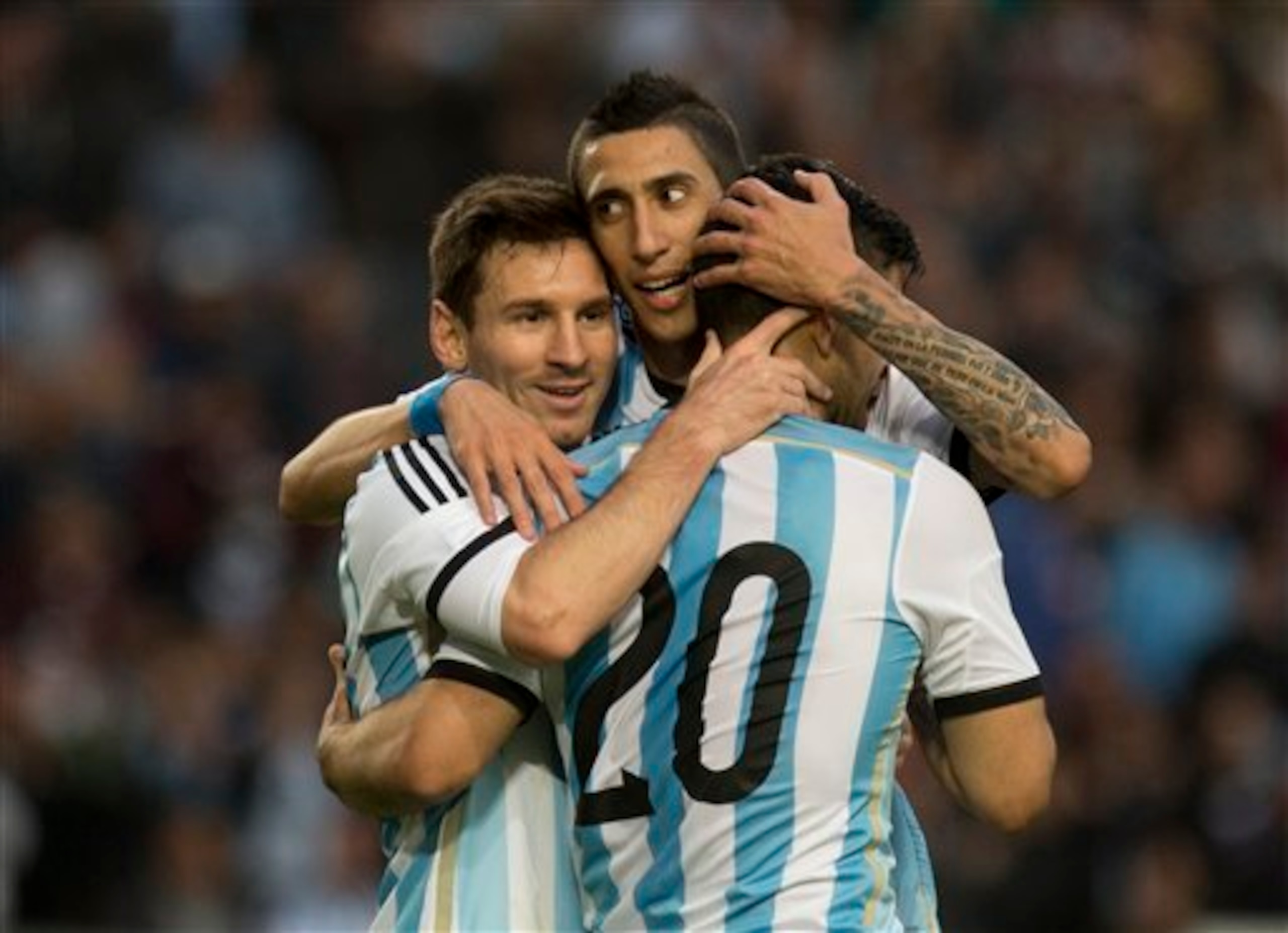
One of Argentina's greatest strengths as a side is their unpredictability. It is difficult to know what the likes of Messi, Di Maria and Aguero will do once the ball is at their feet. One thing you can count on, however, is plenty of goals coming.
The Albiceleste have smashed 24 goals in their 11 games, including both World Cup qualifiers and friendlies, disputed over the last 12 months. Just two of those fixtures, 0-0 draws against Ecuador and Romania, have ended without an Argentine getting his name on the scoresheet.
The Coach Was Signed over Diego Maradona
7 of 10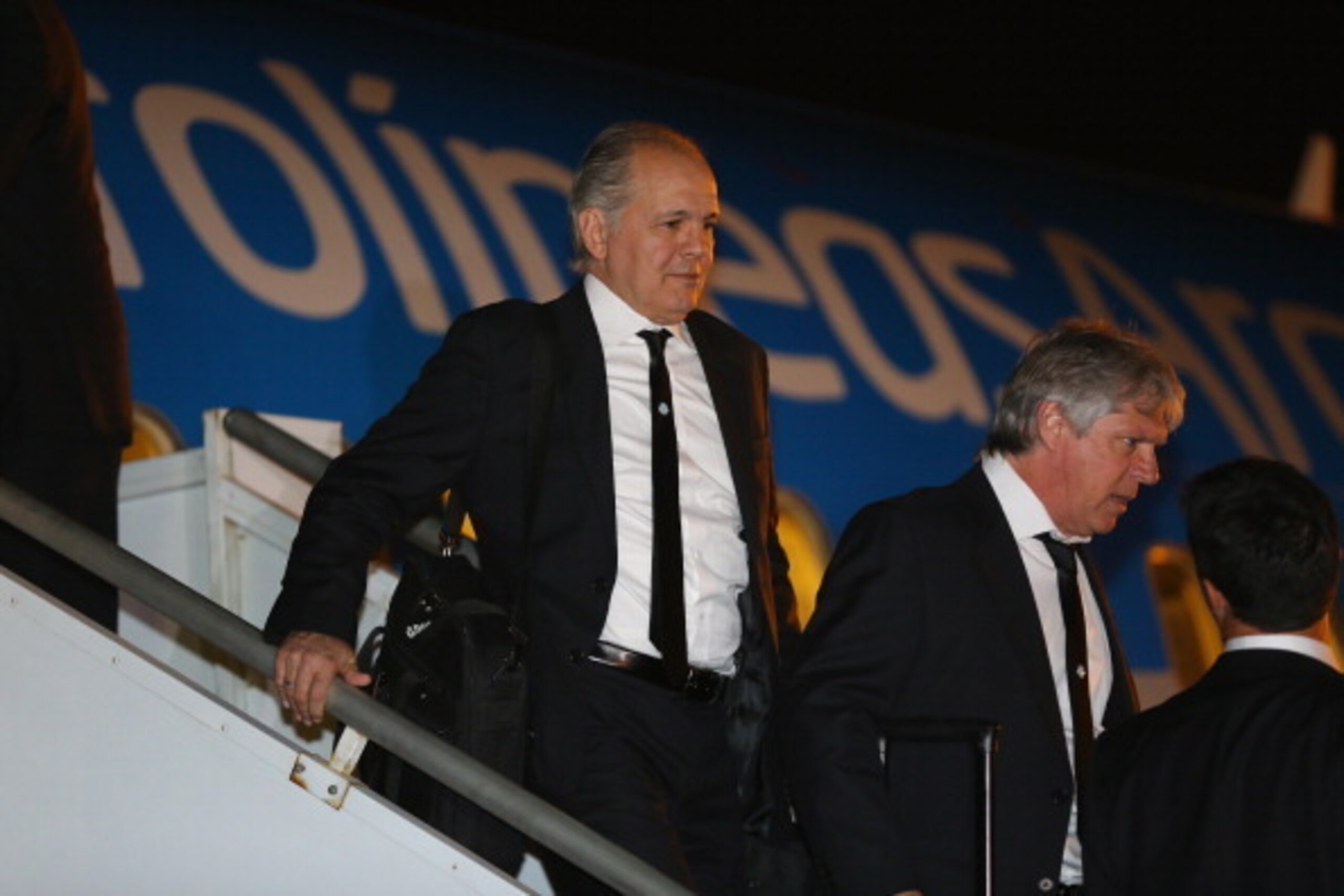
Argentina coach Alejandro Sabella was a useful attacking midfielder in his playing days. Cultured on the ball and with no little skill, he managed to overcome a lack of mobility on the pitch that earned him the nickname he carries to the present day: "Pachorra" (Sloth).
What younger fans may not know is that, alongside Ossie Ardiles and Ricardo Villa, Sabella helped open up the English game to foreign players at the end of the 1970s. In 1978, the star signed for Sheffield United, going on to play 76 games and score eight times for the club.
But according to The Guardian, an even bigger star could have been heading to Bramall Lane. Diego Maradona was scouted by the club, who eventually plumped for Sabella due to a smaller transfer fee.
And This Is Not His 1st World Cup
8 of 10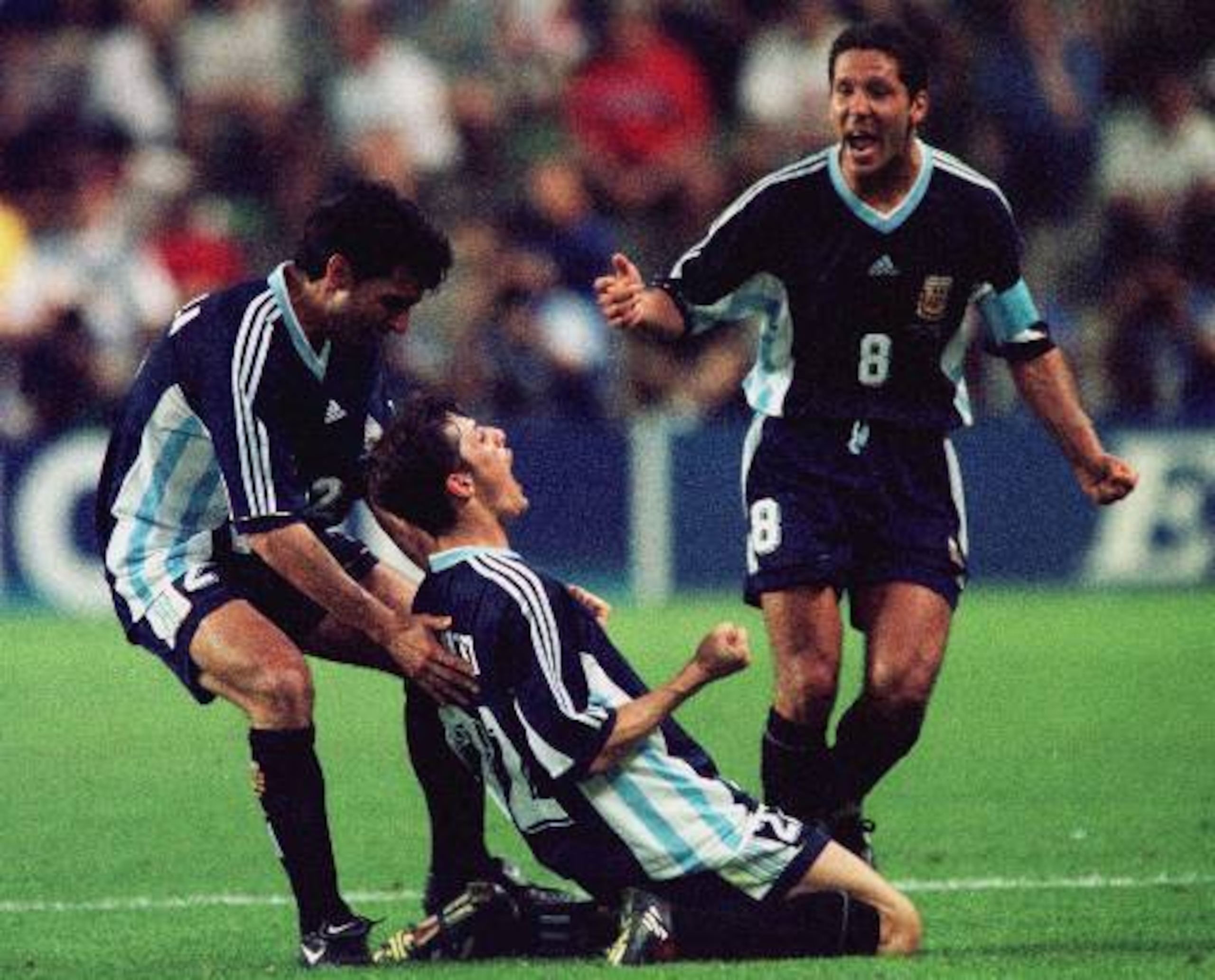
Pachorra has had a comparatively short coaching career. The current trainer only took his first job in 2009, at the helm of Estudiantes, and the Argentina post is remarkably only his second in professional football.
That is not to say that Sabella is lacking in experience, however. The coach spent years as Daniel Passarella's assistant, traipsing the globe with the ex-River Plate president, including spells in Mexico with Monterrey, Italy (Parma), Brazil (Corinthians) and the Uruguay national team.
He was also present in France '98 with The Kaiser as the squad made the quarter-finals of the World Cup, taking an agonising penalty shoot-out victory over England before falling to the Netherlands at the next stage.
There Is a Strong Estudiantes Connection
9 of 10
Sabella's appointment to the most important job in Argentina was inspired by a short but sweet spell at the helm of Estudiantes. In just over 18 months in charge, Pachorra led the La Plata club to the 2009 Copa Libertadores and a Clausura championship the following year.
It is perhaps unsurprising, then, that his current Albiceleste squad has a heavy Pincharrata influence. Andujar and Orion both have experience in Estudiantes, with the former standing between the posts when the club were crowned champions of South America.
Federico Fernandez and Rojo both took their first steps in football under Sabella's wing, while Enzo Perez was also a key part of those sides.
Local Players Are Thin on the Ground
10 of 10
As you might expect, the Argentine national team has leaned heavily on players based outside of the country for the 2014 World Cup. While the side that lifted the 1978 title had only one star who played away from Argentina, this time around, just three of the final squad represent local clubs.
Boca Juniors stars Orion and Gago and Newell's Old Boys idol Rodriguez make up the domestic contingent, while the French, Italian, Portuguese, Spanish and English leagues provide the bulk of the squad. But for two players, the link with the homeland is even fainter.
Messi, who left Rosario while still a teenager, and Campagnaro, who made the jump straight from the Argentine lower leagues with Deportivo Moron to Piacenza, are the only two men not to play a single game in the nation's Primera Division top flight.



.jpg?w=2560 "Dak to Stroud: Get Some Wins 💯")
.jpg?w=2560 "5 NFL Players Getting Trade Buzz")

.jpg?w=2560 "NFL Won't Fine 'Beverage' Celebrations 🍻")