

Andrew Wiggins and Top Prospects Start New Trend by Skipping NBA Combine
Andrew Wiggins won the 2014 NBA Draft Combine. He wasn't in attendance—nor even in the proximity of Chicago. But with one "conveniently" disseminated Instagram picture, Wiggins leapt head and shoulders (literally) above the competition and rendered whatever was going on in Chicago at the moment obsolete.
You know the picture. The one with Wiggins showing off his superhuman leaping ability, his feet dangling near the torso of an unknown man with his mouth agape and flashing a wry smile—the one that serves as a natural reflex when you literally have no idea what else to do.
For hours Thursday, that one picture dominated NBA discourse. At first, no one knew how high Wiggins jumped. Could he have reached the unheard-of 50-inch vertical? That picture had to be Photoshopped or altered in some way, right?



Bill Duffy, Wiggins' agent, ruined the mystery somewhat by telling ESPN's Chad Ford that the image depicted a 44-inch vertical. That would have been the highest of any player measured this week in Chicago, but only a half-inch better than Jahii Carson and Markel Brown.
Not that the actual figure matters or anything. Wiggins won the weekend in those hours of speculation.
He also could be at the forefront of an increasing trend for top-level NBA prospects.
Wiggins, Joel Embiid and Jabari Parker—widely expected to be the top three players taken in June's draft—each skipped out on the combine festivities entirely. It's become expected that a majority of lottery picks opt out of all or most of the drills. In most cases, players still attend to speak with teams, go through the measurement process and have their medical testing easily disseminated to all 30 teams.
Wiggins, Embiid and Parker chose to write their own narrative. There will be no "official" measurements of height or weight, only the same approximations that followed their collegiate careers. They will also be able to choose which teams see them work out and who has access to their medical records (and when they receive them).
That's especially big for Parker and Embiid. Parker struggled with conditioning due to lingering complications from a high school injury, while Embiid missed the end of Kansas' season due to a fractured back. Wiggins has no such injury questions, but with his biggest competitors for the No. 1 overall pick bowing out, his camp (correctly) assumed there was little sense in interrupting his workout schedule.
"To be honest," one general manager told Yahoo! Sports' Adrian Wojnarowski, "I'm surprised more guys don't do this. It's the only thing they can really control."
What's striking here is how little their absences mattered. A top prospect skipping out on the NFL combine might cost him an entire round grade. Wiggins, Embiid and Parker came into this week as the consensus top three players in the draft. They left the same.
That's largely because the NBA combine has devolved from a necessary evil to a glorified meet-and-greet. The only potential lottery pick to participate in the drills portion of the combine was UCLA's Zach LaVine. Others like PJ Hairston, Jerami Grant and KJ McDaniels are first-round talents, but they're guys who are still attempting to solidify their spot in the late teens or early 20s.
Rick Bonnell of the Charlotte Observer pointed out that former NBA commissioner David Stern was long a champion of eliminating the draft combine. That will likely never happen—traditions are mighty hard to kill—but more and more players are going to take their cues from the 2014 trio.
The combine is helpful for players like Doug McDermott, who can publicly dispel his "unathletic" reputation with surprising measurements. But you don't need a centralized combine for that. In one picture, Wiggins did more to create buzz about his athletic ability than any participant in Chicago did the whole week.
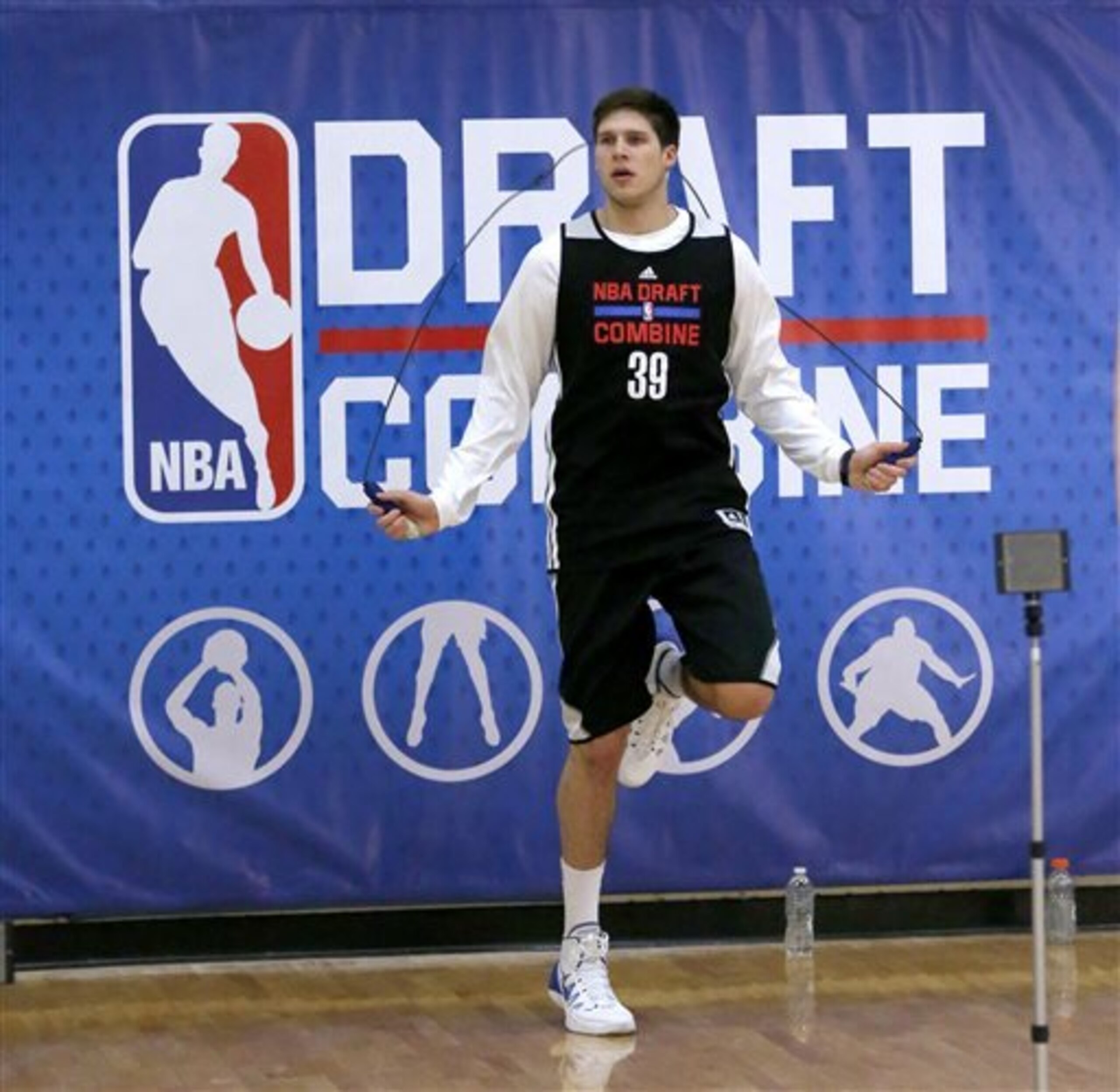
There is a weird "going through the motions" cloud that hovers over the whole system. Long gone are the five-on-fives in which relative unknowns could take a shot at top-ranked players. Those drills were extinguished when more and more agents began pushing their clients to pull out in fear of a poor performance hurting their stock.
Long gone are the days where NBA teams even need to see these guys in five-on-five action. Scouts can log into Synergy and in five seconds have every single play of a college player and most international guys' careers. No one watched Elfrid Payton and Louisiana-Lafayette during the regular season, but you can catch up in one mid-afternoon sitting.
The reason Dante Exum was such a hit in Chicago is because he's a unicorn—the rare prospect without much accessible tape.
Agents are increasingly understanding there is minimal need for secure players to make the trip. Basketball is basketball. Teams cannot compete for titles without star players. Even if a general manager is upset with Wiggins and Co., he'll still gallop cross-country on horseback for a chance to land them.
There are no consequences. Wiggins, Embiid and Parker can control their own narrative without fear of it actually hurting them. The NBA has zero power to force players into participating.
It will be interesting, then, to see how much of a trickle-down effect this has. Only the top three prospects dropped out entirely this year. It shouldn't shock anyone if 10 or so did the same a year from now. Slippery-slope arguments are inherently flawed, but as agents and prospects see the lack of change in Wiggins, Embiid and Parker's draft stock, they're going to make mental notes and consider the practice with their lottery pick.
If that's the case, the NBA will have a problem on its hands. The combine remains somewhat useful as is. Teams can schedule as many as 18 interviews, the kind of one-stop shopping that's convenient and allows general managers to start finalizing their board. There are never any sweeping changes, but rejiggering one or two spots within tiers makes a difference.
There were plenty of those guys in Chicago. LaVine, in particular, might have solidified himself as a back-half lottery pick by performing well in both the athletic testing and on-court drills.
But when the biggest winner of a combine is someone nowhere near it, the NBA has a problem. They better find a way to incentivize prospects into making the Chicago trip before Wiggins and Co. start an epidemic.
Follow Tyler Conway on Twitter:

.jpg?w=2560 "Raiders Could Start Mendoza")

.jpg?w=2560 "Rodgers Iced Out on Plane 💎")
.jpg?w=2560 "Packers Safety Slams Refs 🤬")
.jpg?w=2560 "🚨 Week 8 AP Top 25 Poll")
