
Ranking Germany's 20 Greatest World Cup Goals
The 2014 World Cup is just over a month away, and Germany enter the tournament looking to end a major international trophy drought that dates back to their victory at Euro 1996.
The Mannschaft previously won World Cups in 1954, 1974 and 1990, and their current 24-year run without claiming football's most coveted international trophy is the longest of its kind in their history.
Germany will need a hero if they are to win the 2014 World Cup; many before them have stepped up to the plate, and it's now their time to deliver. The current players could do with a look back at previous years for inspiration.
In honor of the heroes of German football past, Bleacher Report has created a list of the best goals by Germany at World Cups. Goals are ranked by splendor, but significance was also given heavy preference.
Without further ado, click on to begin the countdown, starting with No. 20.
Mesut Ozil, Germany 1-0 Ghana, 2010 Group Stage
1 of 20Mesut Ozil missed several chances in pre-tournament friendlies and in the earlier stages of the 2010 World Cup, but he turned things around with a stunning and pivotal goal against Ghana.
With his team having found no way through the Ghana defense in their final group-stage match, the then-21-year-old playmaker received Thomas Muller's pass with his first touch and then volleyed a brilliant goal from the outside of the box into the back of the net.
It was a turning point for the player and for Germany.
Having lost to Serbia in their previous match, Germany could have been knocked out of the tournament in the group stage, if they had drawn with Ghana and the Serbs had beaten Australia in their final group-stage match. Joachim Low's side had plenty of the ball but no presence in the box, so Ozil took matters into his own hands and shot from distance.
The goal provided a huge boost of confidence for Ozil, who showed his best form in the tournament from that point onward.
Miroslav Klose, Germany 1-1 Argentina, 2006 Quarterfinal
2 of 20Despite having home-field advantage, Germany were underdogs when they took on Argentina in the 2006 World Cup quarterfinal. And surely enough, the Mannschaft were first to concede, with Roberto Ayala scoring the opener after 49 minutes.
Germany recovered in the second half, though, and equalized with 10 minutes left in regular time thanks to a well-orchestrated sequence that was punctuated by perhaps Miroslav Klose's most significant goal at a World Cup. Michael Ballack whipped in a cross that Tim Borowski nodded into the path of Klose, who headed firmly home.
The match would eventually go to penalty shootout, which Germany won thanks to Jens Lehmann's heroics.
Karl-Heinz Rummenigge, West Germany 3-0 Mexico, 1978 First Group Stage
3 of 20The 1978 World Cup was not exactly the height of Germany's footballing history, but it did include at least one emphatic result and a superb goal by Karl-Heinz Rummenigge.
Toward the end of the first half and with West Germany already leading Mexico 2-0, the Bayern Munich man won the ball deep in his own half following a botched free-kick attempt. He then ran nearly the entire length of the pitch before poking home.
Rummenigge had to take advantage of some shambolic defending by the Central American side, and the final result (6-0, with two scores from the Lippstadt-born forward) spoke volumes of how poor Mexico were in the face of the West German attack. But full credit should be given to Rummenigge for having the ambition, skill and lungs to go from end to end.


Heinz Flohe, West Germany 6-0 Mexico, 1978 First Group Stage
4 of 20In the same match here Karl-Heinz Rummenigge ran coast-to-coast to score for Germany against Mexico in 1978, Heinz Flohe scored an absolute belter from well outside the box.
Already 5-0 ahead, Germany had a free-kick in the closing stages of the game. The ball was rolled centrally for Flohe to strike, and the Koln midfielder sliced ferociously, with the ball curling away from him as it flew into the top-left corner of the net. Germany would later be eliminated in the second group stage—but not for lack of sensational goals.
Philipp Lahm, Germany 4-2 Costa Rica, 2006 Group Stage
5 of 20History has a way of repeating itself, and in 2006, Philipp Lahm scored a goal that was remarkably similar to that of Paul Breitner against Chile 32 years before. Like his predecessor, Lahm was a left-back with a strong right foot who cut in from the wing and fired home from outside the penalty box. And like that of Breitner, Lahm's goal was an early opener in Germany's first group-stage match of a World Cup on home soil.
Following a disappointing showing at Euro 2004, Germany had a very different team at the 2006 World Cup, one with more aggressive tactics and many inexperienced but talented players. Future captain Lahm was, at 22, one of the German team's rising stars and set the tone as the hosts dared to believe in repeating their 1974 triumph. They would ultimately fall short, losing to Italy in extra time in the semifinal.
Lukas Podolski, Germany 2-0 England, 2010 Round of 16
6 of 20As a finish, Lukas Podolski's goal against England in 2010 was nothing spectacular. But the play that built toward it was a work of art.
The video shows the entire play that led to his goal from start to finish. Note how at the beginning, Thomas Muller plays a first-touch pass and immediately is on the run. Mesut Ozil's hesitation upon receiving the ball forces defender John Terry to step forward, allowing Muller space into which to run. Ozil finds Miroslav Klose, who has drawn Matthew Upson well out of position.
Through clever movement and time management, Ozil and Klose have effectively eliminated the English center-backs. Seeing acres of space ahead of him, Muller turns on the pace and sprints toward goal, receiving a clever first-touch pass from Klose. The rest resembles a two-on-one training-ground exercise.
Podolski's goal against England was a clear display to the world of just how cultured German football had become during Joachim Low's tenure.
Paul Breitner, West Germany 1-0 Chile, 1974 Group Stage
7 of 20Paul Breitner was a master of the long-range shot. In addition to his screamer against Yugoslavia, he found the net with an even greater golazo against Chile.
The South Americans were West Germany's first opponents in the 1974 World Cup, and Breitner gave the home fans at the Olympiastadion in Munich something to appreciate as he opened the scoring after just 18 minutes with one of the best goals in World Cup history.
He fielded the ball from far outside the box and, under no pressure, took a chance. His shot was like a laser beam, barely changing in height as it flew over the head of the goalkeeper, who got a slight touch on the ball but was unable to divert its path. Breitner and West Germany's first goal of the tournament set the tone for the hosts as they began their run to the title.
Andreas Brehme, West Germany 1-0 Argentina, 1990 Final
8 of 20Penalties (at least those that are converted) are rarely spectacular out of context, and Andreas Brehme's spot-kick against Argentina in 1990 is no exception. The left-sided all-rounder stepped up to the spot and delivered a perfect penalty kick just inside the left post.
Put in context, though, his goal was so much more than a routine penalty. It came in the 85th minute of the World Cup final against a dangerous Argentina side. Lothar Matthaus had put on a majestic performance of neutralizing football living god Diego Maradona, but as the final minutes approached, the score remained deadlocked—until Rudi Voller won a controversial penalty that Brehme converted to seal victory.
Germany had just beaten a strong Argentina side in a hotly contested 1990 final, which marked Franz Beckenbauer's first and only World Cup title as a coach.
Michael Ballack, Germany 1-0 South Korea, 2002 Semifinal
9 of 20South Korea's winning streak at the 2002 World Cup was an improbable and controversial one, but it ended just short of the final thanks to Michael Ballack. In the tournament that saw him rise in profile to superstardom, the Gorlitz-born midfielder dragged an unfavored Germany team to the final. His goal against South Korea was exemplary of his spirit and professionalism.
In the 71st minute and with the score still deadlocked at 0-0, he was forced to make a professional foul that saw him draw a yellow card, which would rule him out of the final with suspension in the event that Germany progressed. It was a devastating blow for the player and the team that he had put on his shoulders.
But Ballack recovered mentally. Three minutes later, he scored the goal that put Germany through to the final, firing home from a rebound after his initial attempt had been parried. Germany would go on to lose the final 2-0 to Brazil, marking the first of many disappointing international near-misses for Ballack.
Torsten Frings, Germany 4-2 Costa Rica, 2006 Group Stage
10 of 20Philipp Lahm's opener against Costa Rica in the 2006 World Cup group stage was a very significant goal, but Torsten Frings' was a thing of beauty. Germany were 3-2 ahead with just three minutes remaining and were probably on their way to victory in any case, but the midfielder sealed three points with a majestic goal, scoring with his first touch from more than 30 yards.
His shooting technique for the most beautiful goal of his career was flawless; he managed to put tremendous power on the ball, which corkscrewed into the top-right corner of the net.
Uwe Seeler, West Germany 2-2 Northern Ireland, 1958 Group Stage
11 of 20In 1958, West Germany were reigning World Cup champions. But the Mannschaft had some struggles in the group stage and entered their final match needing at least a draw to ensure qualification for the next round. They nearly failed to get that and have Uwe Seeler to thank for salvaging a point in spectacular manner.
With the Germans being a goal behind in the latter stages of the game, the then-21-year-old Seeler struck a bouncing ball on the half-volley with tremendous force. Taken from just a few yards leftward of the D, the ball had a long way to go but traveled straight into the top-right corner, sealing the draw and Germany's group-topping finish.
Paul Breitner, West Germany 1-0 Yugoslavia, 1974 Second Group Stage
12 of 20Before West Germany beat the Netherlands in the 1974 World Cup final, they faced Yugoslavia in the second group stage. And just as they encountered stiff resistance in the form of the Dutch, the Mannschaft had a real challenge in the Plavi, who had finished the first group stage ahead of Brazil.
A bit of individual brilliance from Paul Breitner was the only thing that separated West Germany from Yugoslavia in the first half; the left-sided all-rounder fired a powerful, straight shot from well outside the box into the top-left corner of the goal. The Mannschaft would go on to win 2-0 thanks to a late second from Gerd Muller.
Uwe Seeler, West Germany 2-2 England, 1970 Quarterfinal
13 of 20Sometimes a bit of ingenuity is needed to find the net. Finding an unorthodox way of scoring when the pressure is on is the sign of a great striker, and an aging Uwe Seeler proved his credentials with a devastating header against England in the 1970 quarterfinal.
England had gone 2-0 ahead, but Franz Beckenbauer had pulled a goal back for West Germany. To equalize, the 33-year-old Seeler made an audacious attempt that perhaps surprised no one more than the goalkeeper, who was caught off his line. The Hamburg legend had his back to goal as he prepared to receive a cross, but instead of taking the ball down, he delivered a looping header into the net, just inside the back post.
England were stunned by seeing their 2-0 advantage canceled out. The Mannschaft went on to win 3-2 but were later eliminated by Italy in the "Game of the Century."
Lothar Matthaus, West Germany 3-1 Yugoslavia, 1990 Group Stage
14 of 20Lothar Matthaus is regarded by many as the most versatile central midfielder ever to play the game, and his goal against Yugoslavia in the 1990 World Cup group stage is a prime example of the breadth of his abilities.
With West Germany already 2-1 ahead, the captain received the ball in his own half, turned and went on a long run toward goal. He showed his power and dribbling control on the way, beating one marker before unleashing a daisy cutter shot from what may as well have been a mile.
The goal ensured West Germany's first-place finish in their group and gave confidence to Matthaus, who was done a disservice by not being named the tournament's best player after guiding his team to victory.
Andreas Brehme, West Germany 2-1 Netherlands, 1990 Round of 16
15 of 20Germany and the Netherlands have been rivals for decades, with their every encounter being a heated contest. The Dutch stood between the Mannschaft and World Cup glory in 1974, and again found themselves in the path of their traditional foes—who were again led by Franz Beckenbauer, this time as a coach—in 1990.
West Germany took the lead through Jurgen Klinsmann in the 51st minute of clash in the round of 16, but their lead remained delicate as they approached the final minutes. Then, Pierre Littbarski was foiled in a one-on-one situation thanks to a brilliant save by goalkeeper Hans van Breukelen. Following the resulting corner, though, Andreas Brehme scored a peach of a goal to put the result out of the Netherlands' reach.
Nothing came of the initial corner, but Germany retained possession. Guido Buchwald spotted Brehme in the corner of the box and passed to the unmarked left-sided all-rounder, who then curled a brilliant finish inside the far post. The Dutch would pull a goal back at the death, but thanks to Brehme's stunning effort, West Germany won 2-1.
Lothar Matthaus, West Germany 1-0 Morocco, 1986 Round of 16
16 of 20West Germany's form at the 1986 World Cup was anything but convincing. The Mannschaft finished their group second to a perfect Denmark side, having won just one of their three matches. And in the round of 16, they faced a manageable Morocco yet struggled.
It took nearly the entire match for West Germany to break through, but a 25-year-old Lothar Matthaus proved to be their ace when it mattered most. Three minutes before the end of regular time, the midfielder took a free-kick from a near-impossible distance. His strike was true, straight, low and with nearly enough power to break through the net. The ball took a bounce en route to the goal but proved unstoppable. Matthaus' shot symbolically destroyed Moroccan hopes at the death.
Klaus Fischer, West Germany 3-3 France, 1982 Semifinal
17 of 20West Germany and France's meeting in the 1982 World Cup semifinal was one for the ages. Had it not been for Italy and West Germany's match 12 years prior, it may have even been remembered as the "Game of the Century."
With the score 1-1 at the end of regular time and perhaps incensed by Harald Schumacher's disgraceful (and somehow unpunished) challenge on Patrick Battiston, France came roaring out of the gate and took a 3-1 advantage by the 98th minute. But the Germans got a goal back through Karl-Heinz Rummenigge and drew level thanks to Klaus Fischer's overhead kick in the 108th minute.
The Mannschaft appeared down and out after going 3-1 down; they had just 22 minutes to score twice and were battling crippling fatigue at the time. Fischer found the ingenuity and technique to score an extremely difficult goal. The Koln man's equalizer forced a penalty shootout, which the West Germans won 5-4.
Franz Beckenbauer, West Germany 1-2 England, 1970 Quarterfinal
18 of 20Franz Beckenbauer did not score many goals at World Cups, but when he did, they were often spectacular. In the 1970 quarterfinal with England, West Germany found themselves 2-0 down before the Bayern man intervened in controversial manner.
As Francis Lee lay on the ground after being struck by the ball, Beckenbauer approached the box, quickly shifted to his right and exploded past his marker. There was little time and less space to shoot, but as his momentum carried him away from the goal, he fired nearly perpendicularly to his path of motion. He somehow managed to put enough power on his shot for it to beat the goalkeeper, and the comeback was on.
Germany would win 3-2, stunning the side that had controversially beaten them in the final four years prior.
Gerd Muller, West Germany 2-1 Netherlands, 1974 Final
19 of 20Among elite strikers, the distinction between world class and legendary is often made in the latter finding new ways to score, especially when it matters most. Gerd Muller falls into the "legendary" category, with his winner against the Netherlands in the 1974 World Cup final perhaps being the strike that cemented his status among the all-time greats.
With the score tied at 1-1 in the 43rd minute, Rainer Bonhof made enough space to cross low toward Muller. The ball was not led in front of the striker's run, and almost any other forward would have either scuffed a weak shot or touched the ball forward and inevitably into the arms of goalkeeper Jan Jongbloed.
Muller, in a moment of brilliance, figured out a third option: to touch the ball behind himself, stop his run quickly, step back and shoot. Few strikers would have been able to change direction so quickly, but the 5'9" Muller had a low center of gravity and powerful legs that allowed him to score a unique and iconic goal. The fact that it came on such a stage as the World Cup final just underlines the brilliance and innovation of the peerless Muller.
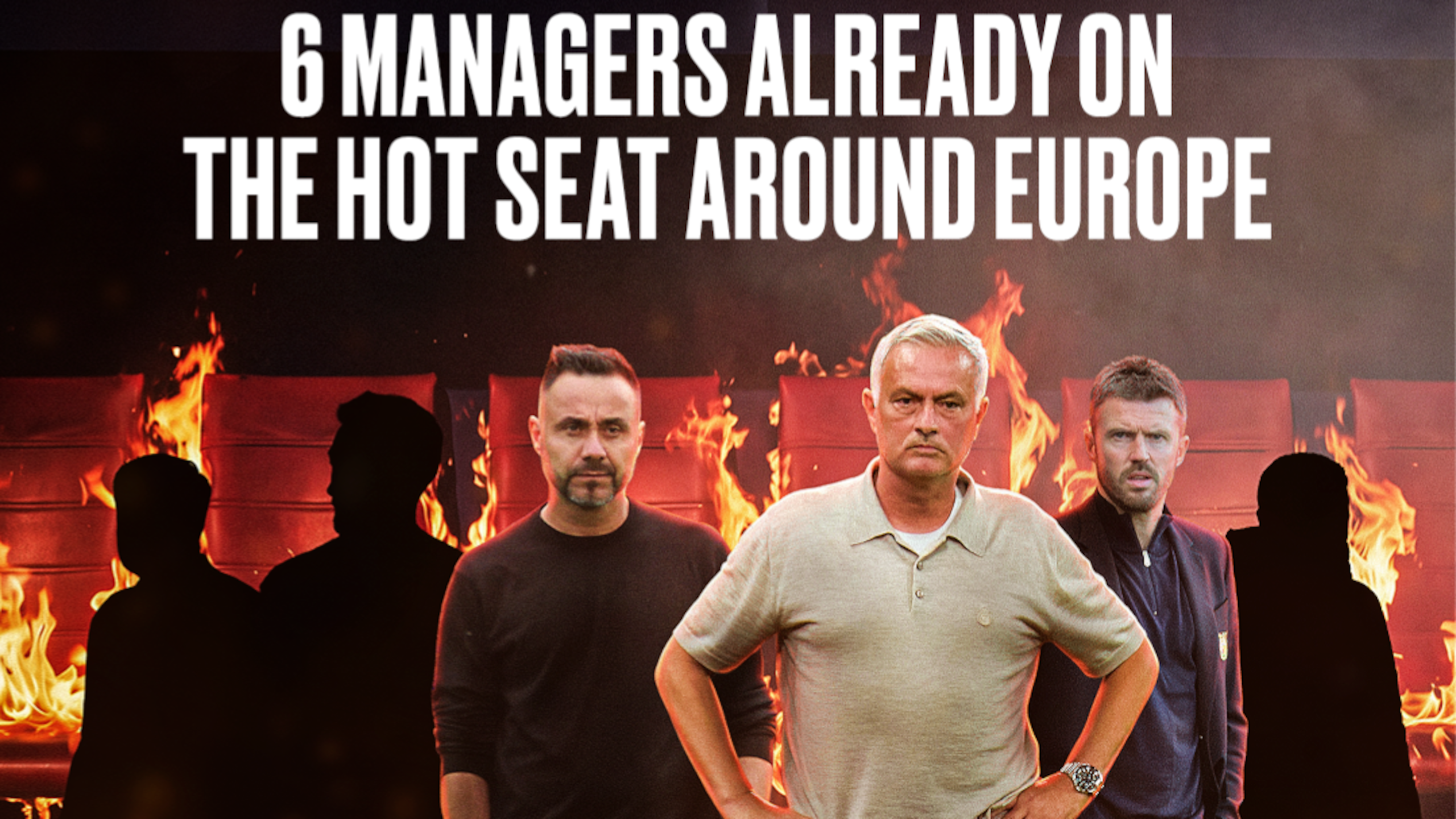
Helmut Rahn, West Germany 3-2 Hungary, 1954 Final
20 of 20When knowledgeable football historians look back at the great German football teams, those of the early 1970s stand out as superlative. But in terms of influence and significance, there is no story in German football history that can compare with the 1954 World Cup team.
At the time of the tournament, German football was still in its pre-Bundesliga state, and the country was in many ways reeling from World War II. Led by captain Fritz Walter, Germany overcame tough odds to advance to the final in Bern, Switzerland, where they faced the Hungary of Ferenc Puskas and Sandor Kocsis.
Hungary were heavy favorites and 2-0 ahead within eight minutes. But then, the "Miracle of Bern" ensued. Max Morlock and Helmut Rahn had leveled the score by the 18th minute, and the two sides dug in and kept the deadlock for more than an hour. And then Rahn did the unthinkable: He scored the goal that upset the best Hungary team of all time.
Six minutes before full-time, Rahn fielded a clearance outside the edge of the penalty box, quickly cut to the inside and delivered a low, powerful finish inside the far post. His goal handed Germany their first-ever World Cup title and forever changed the nation's status as a footballing power. In terms of significance, no goal in German football history can compare with Rahn's winner in Bern.


.jpg?w=2560 "Cam Ward Says He's Not A Loser")

.jpg?w=2560 "Chargers Fall to 0-5 🤢")

.jpg?w=2560 "Grading MHJ Trade 📝")