
Biggest Red Flags on the NBA Trade Block
There are some tantalizing options on the NBA trade block, but some talented prospective acquisitions would come at a heavy price, financial or otherwise.
A player's ability is not the only factor when it comes to making transactions, particularly in-season ones. He might be bolstering his value with impressive performances on his current team, but that doesn't necessarily mean his play will translate in another role or with a different supporting cast after getting moved.
Furthermore, there is the cost of actually landing a new talent. Whether someone comes with a prohibitive contract or his team makes exorbitant demands, no on-court addition comes without an assumption of risk or a loss of assets that can outweigh the team's improvement.
Any of these players have the skills to be great additions to a playoff contender, but buyers must beware the downsides that accompany them.
Tyreke Evans
1 of 5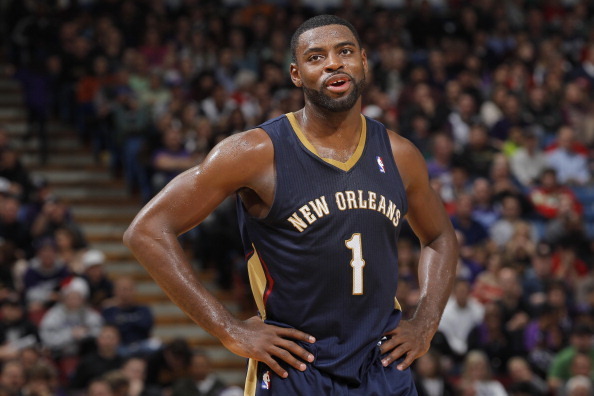
Few perimeter players are Tyreke Evans' equal when it comes to barreling through traffic and finishing at the rim. That makes him attractive as an iso-scoring option, especially when employed as a sixth man, a role the New Orleans Pelicans are paying him $44 million over four years to fill.
Though they entered the season with faint hopes of a playoff berth, the Pelicans are still in a transitional phase; a high-priced bench scorer is more useful to a franchise looking to win now.
If someone wants to surgically employ Evans to penetrate and break down defenses, they could consider picking up the expensive tab. However, that team couldn't ask him to do anything else.
Per John Reid of The Times-Picayune, New Orleans coach Monty Williams is still trying to get Evans to play more involved team basketball and produce outside of his preferred skill set.
"I certainly feel like I've had to learn his game, learn how to use him and I’m still working on that. He's also got to learn how we play basketball. He’s got to be a willing passer and understand that he doesn’t have to do it all by himself.
For Tyreke to be an effective player, he has to play consistent on both ends. We know he can attack the basket, but he’s going have to become a better jump shooter.
"
Even though Evans excels at getting inside looks off the bounce, his shooting otherwise has dampened the productive aspects of his game. He is shooting 40.3 percent from the field and a miserable 15.2 percent from beyond the arc, both career lows.
Perhaps there is hope that a player with the tools Evans has can succeed in the right system, but trying to integrate him in the middle of a season while paying him an eight-digit salary is not worth it.
Eric Gordon
2 of 5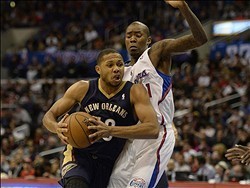
Sticking with New Orleans, there's a reason the Pelicans are trying to unload these high-priced guards.
Unlike Evans, Eric Gordon has actually shown the ability to shoot efficiently from the floor this season. His 43.1 shooting percentage is below his career average, but his 39.3 percent click on threes is his best yet.
Carrying the shooting load for a Pelicans team still grasping for an offensive identity has not suited Gordon, who can score 25 or single digits on any given night. A better team could employ him as more of a spot-up shooter and secondary offensive option; Gordon could be even more effective with limited responsibility.
But Gordon has a very spotty injury history, missing at least 20 games in every season since his rookie year; prior to this season, he had played just 51 games with New Orleans since joining the franchise in December 2011.
Don't even go so far as thinking about the first-round pick New Orleans would inevitably ask for. This is already a fragile player making about $15 million a year through 2015-16 who would be the third-best offensive player on a contender. Even for a team in win-now mode, that's not sustainable.
Kyle Lowry
3 of 5
Averaging 16.5 points and 7.5 assists per game and playing pesky defense for the surprisingly competent Toronto Raptors, Kyle Lowry came out of nowhere to be an All-Star-caliber point guard.
Between his quickness, his distribution ability and his two-way play, Lowry is the type of player who could man the point for any team playing with any strategy.
Whether he would fit in any locker room is another matter.
Per Mike Ganter of the Toronto Sun, Lowry has been an uncharacteristically positive influence, coexisting harmoniously with coach Dwane Casey after they had clashed in the past.
“Kyle has brought his game to a different level, and maintained it,” Casey said recently. “Kyle has shown he can be a positive leader. I think that was the biggest question among coaches around the league.”
At age 27 and with his third franchise, Lowry may finally be maturing. Then again, if his reward for succeeding with greater responsibility in Toronto is to play a less involved role elsewhere, he could get disgruntled.
He's playing well enough that he could warrant a first-rounder in return even for a rental, but not if he doesn't jell in his new environment. As dynamic as Lowry can be, there's no way to know if he'll work out in the short term.
There's also the matter of Lowry's expiring contract, so whatever team rolls the dice on him could end up empty-handed.



Evan Turner
4 of 5
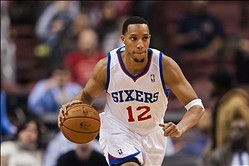
Only a team truly committed to revamping its on-court philosophy should even consider dealing for Evan Turner.
His attractiveness on the trade market is no big mystery. The second-overall pick in the 2010 NBA draft is a 6'7" utility player who can score, facilitate and match up defensively with anyone from point guards to power forwards.
That said, Turner is a funky player who would be difficult to integrate on the fly.
He's spotty as a jump shooter and is a liability from three-point range, yet he's also a wing who is most comfortable with the ball in his hands. And while he is versatile on defense, his work is spotty on that end; as Derek Bodner of Liberty Ballers points out, his rotational lapses have killed the Philadelphia 76ers' perimeter D.
He's just 25 and will surely keep learning and improving, but with one year left on his current contract, Turner isn't much use to anyone interested in winning this season. A team sure he'll extend and willing to reorient its roster around him could take Turner off Philly's hands, but no one else ought to.
Dion Waiters
5 of 5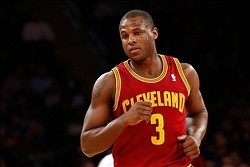
The news coming out of the Cleveland Cavaliers locker room is grim, and Jason Lloyd of the Akron Beacon Journal points to Dion Waiters' dealings with coach Mike Brown as a prime example of the chaos therein.
"Most of the complaints are focused on Irving and Waiters. One league source, speaking on condition of anonymity, confirmed Waiters was removed from practice recently, per the Daily News report. But Waiters’ minutes weren’t affected by the move, which left at least a handful of players raising their eyebrows — particularly within an organization that has preached accountability since Brown’s arrival.
“That’s Dion. He’s been like that since he got here. He doesn’t think anything is his fault,” one team source said. “He’s actually better about it this year than he was last year.”
"
If that's Waiters on improved behavior, it's not enough for the fed-up Cavs to keep the 22-year-old shooting guard.
Then again, that's why the other 29 NBA teams should be wary of jumping at the 2010 fourth-overall pick.
He's upped his three-point percentage to 38.1 in his sophomore campaign, Waiters isn't good enough to get away with petulance. As long as he's scoring an inefficient 14.2 points per game with little-to-no facilitation or defensive effort, a bad attitude will be a major black mark for him.

.jpg?w=2560 "Raiders Could Start Mendoza")

.jpg?w=2560 "Rodgers Iced Out on Plane 💎")
.jpg?w=2560 "🚨 Week 8 AP Top 25 Poll")
.jpg?w=2560 "Packers Safety Slams Refs 🤬")

.jpg?w=2560 "Fantasy Waiver Wire Stars 🤩")