Tracing Randy Orton's Evolution as a Main Event Performer
Randy Orton seems to be in pursuit of perfection, as he has continued to grow as a main event performer.
One might not notice when someone sharpens an already sharp dagger, and that may be true for Orton, a Superstar filing his skills down to a point year after year.
Just two years after debuting, he was vying for the World Heavyweight Championship. He has never strayed far from the main event picture since.
.jpg?w=2560)
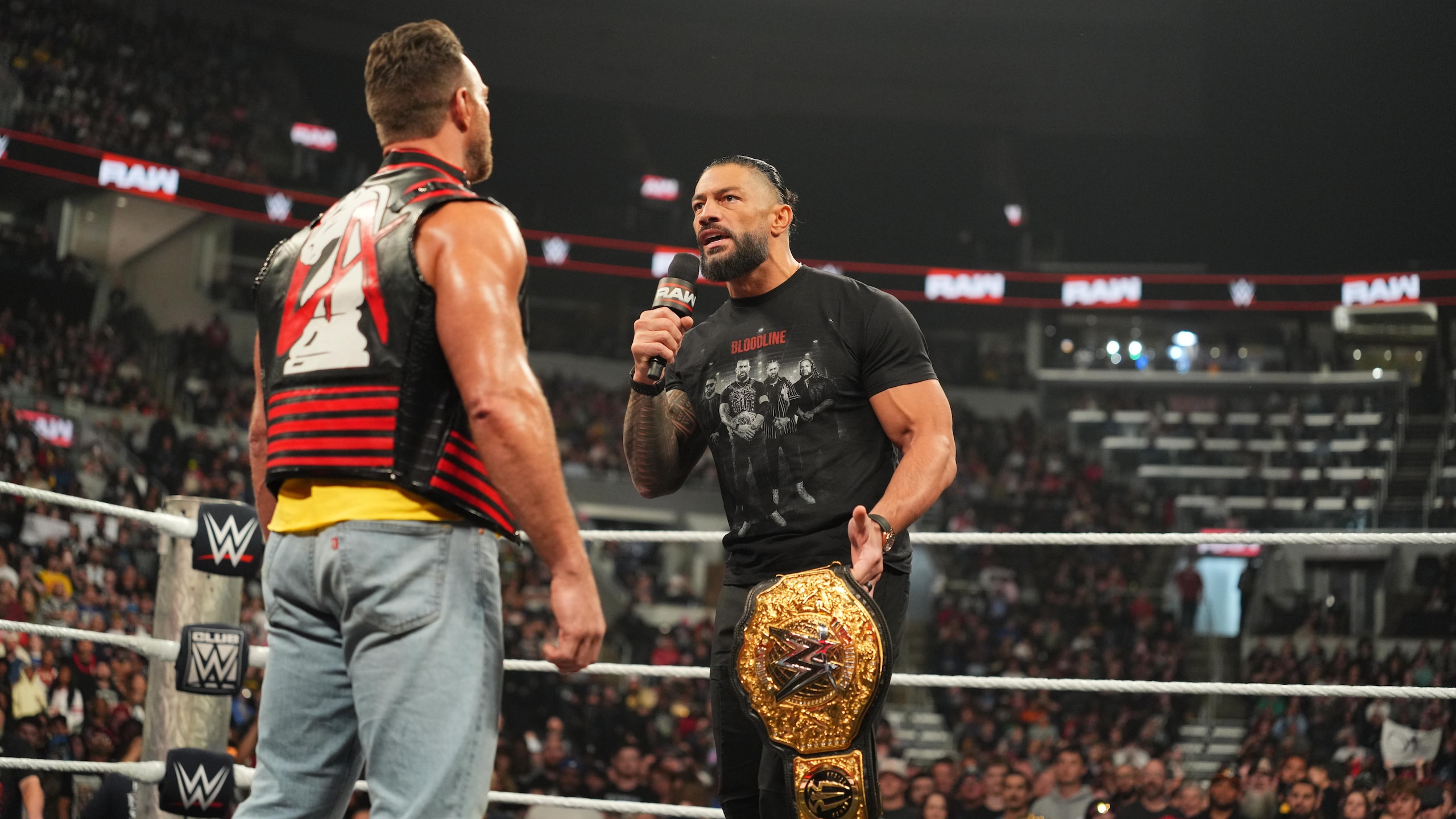

While many of his early bouts were excellent, Orton has grown into a more dependable, consistent and confident performer over time. He leaned on his athleticism and ring acumen early in his career but has since learned to be a character, as well as an athlete.
He has added moves to his arsenal and found the right balance between exaggeration and understatement.
His ability to handle a character has improved and, in small ways, so has his wrestling. The following is a look at Orton's progression, with a list of a sampling of his best matches during each time frame.
2004-2006
- Backlash 2004-vs. Mick Foley
- SummerSlam 2004-vs. Chris Benoit
- Armageddon 2005-vs. Undertaker
- SmackDown Jan. 27, 2006-vs. Chris Benoit
Orton went from rookie to world title contender in just a few long strides. Evolution took him in and sped up his career progression starting in 2003.
Being associated with Ric Flair, Batista and Triple H gave him instant credibility.
Many wrestlers given that opportunity so early on would have flopped, but Orton was delivering classics while just in his early 20s. WWE wisely paired him with a number of big names early on, including Undertaker, Rob Van Dam, Foley and Benoit.
He seemed like he belonged in the same group as these men. The narrative with him and Triple H was about Orton taking his place on top. It rang true because it was clear that Orton was a blue-chip prospect on his way upward.
Orton played a defiant upstart with a slick in-ring style. His "Legend Killer" character was excellent writing, but he didn't embody that role as much as he would his later gimmicks.
There was little to nitpick about his ring work. He was quick, athletic and a good storyteller.
In his match with Benoit at SummerSlam 2004, he gave a great performance. There was a melange of mat wrestling, slugging and drama.
Had he stayed at this level, he would have had a highly successful career. In order to be a true main eventer and dig his claws into the top spot, he would have to exude more of a star presence. That's not a trait that one can be taught; he clearly learned it, as he felt like more of a larger-than-life presence every few years.
2007-2009
- Backlash 2007-vs. John Cena vs. Shawn Michaels vs. Edge
- Raw April 30, 2007-vs. Edge
- No Mercy 2007-vs. Triple H
- Breaking Point 2009-vs. John Cena
Orton began to inject his performances with added viciousness that took his matches to a higher level.
The Legend Killer was aggressive and dangerous, but "The Viper" was a fearsome force impossible to look away from. He began to use body language to express his character more, pounding his fists on the mat or snarling at his foe.
His Last Man Standing match against Triple H showed off his amplified vileness.
From when he punched the champion in the corner to how demonstratively he reacted after hitting Triple H with the RKO, there was increased showmanship in his matches. His wrestling had always been good, and his entertaining was catching up.
It was then even more convincing when Orton escalated his villainy; he was a believable monster.
He began using the punt to finish off foes, an extra weapon in the hands of an already well-armed man. Orton could now use this kick to show the audience just how merciless he was.
Even bystanders like Stephanie McMahon or Cena's father were not to be spared.
At his best, Orton was one of the more hated heels in recent memory, given a role that suited him, as well as playing Kane suits Glenn Jacobs. For the most part, that translated to compelling matches, the audience naturally siding with the hero.
At times, though, Orton overdid it.
Once he had discovered the art of showmanship, he played with it wildly, unbridled. Some of his facial expressions were overboard; some of his in-ring action a 10 on the dial when a seven was required.
There was fine-tuning to do here, something that Orton has clearly done in recent years.
He is still very much a predator in the ring and more of a standout presence than he was in the early part of his career, but in a more subtle and effective way.
2010-2013
- Raw July 19, 2010-vs. vs. Chris Jericho vs. Edge
- SummerSlam 2011-vs. Christian
- SmackDown Nov. 4, 2011 vs. Cody Rhodes
- Hell in a Cell 2013-vs. Daniel Bryan
While he performed well as a fan favorite and earned some noisy, passionate responses from crowds, it became obvious that Orton's true calling was playing a heel. When he turned to the dark side once more after SummerSlam 2013, it was as if he went from filming in black and white to shooting in color.
The run as a hero seemed to help in the long run, though. Orton learned to reign in his acting. His performances became more understated than the over-the-top antics that he displayed as The Viper.
He was still slithering across the ring and merging his character with his wrestling, but not to the point of hamminess that he'd shown earlier.
Throughout his classic-laden feud with Christian in 2011, Orton displayed his mastery of the perfect balance between theater and sport.
He showed viciousness and aggression with sneers and stomps that all blended seamlessly into the match. He was now more a real-life pit bull than the cartoon he'd been at times before.
Seeing him in action in 2004 or 2008, it would have been hard to imagine that he'd become more fluid and precise in the ring, but Orton's growth appears to be continual.
A combination of experience, increased body control and confidence has led to Orton delivering great matches even more routinely.
Regardless of whether he's up against CM Punk, Dolph Ziggler, Goldust, Van Dam or Alberto Del Rio, Orton has spent the last few years being one of the best parts of every show he's been on.
Fans may have complained about how his Hell in a Cell bout with Daniel Bryan ended, but the journey was made an enthralling one by Bryan and Orton. Stretching the limits of the kind of brutality that his allowed in the era of a PG rating, Orton
He showed us that he's gone from great to greater in the last decade.
One has to wonder if Orton can keep getting better. What's sharper than a dagger, right?
Orton is only 33, though, and given multiple opportunities with the best talent WWE has to offer, we will continue to see him evolve and progress.
.jpg?w=2560)



.jpg?w=2560 "Viral Rams Coach Vid 🖕")