Will Manchester United Combat or Concede Chelsea's Central Midfield Dominance?
Last season, over four games between Manchester United and Chelsea, the pattern became clear.
Chelsea had the greater strength in the centre of midfield, but United had the advantage on the flanks. Chelsea had more of the ball, but United looked proportionally more dangerous when they had it—particularly in the first league game, before Roberto Di Matteo had been replaced by Rafa Benitez.
Once Benitez had arrived, for the final three of those four encounters, Chelsea had the better of things, winning two games 1-0 and drawing the other 2-2. United won the first meeting at Stamford Bridge 3-2, although even then Chelsea, having fought back from 2-0 down, were left feeling hard done by after two red cards—one clearly justified, one dubious—and a winning goal from Javier Hernandez that turned out to have been offside.

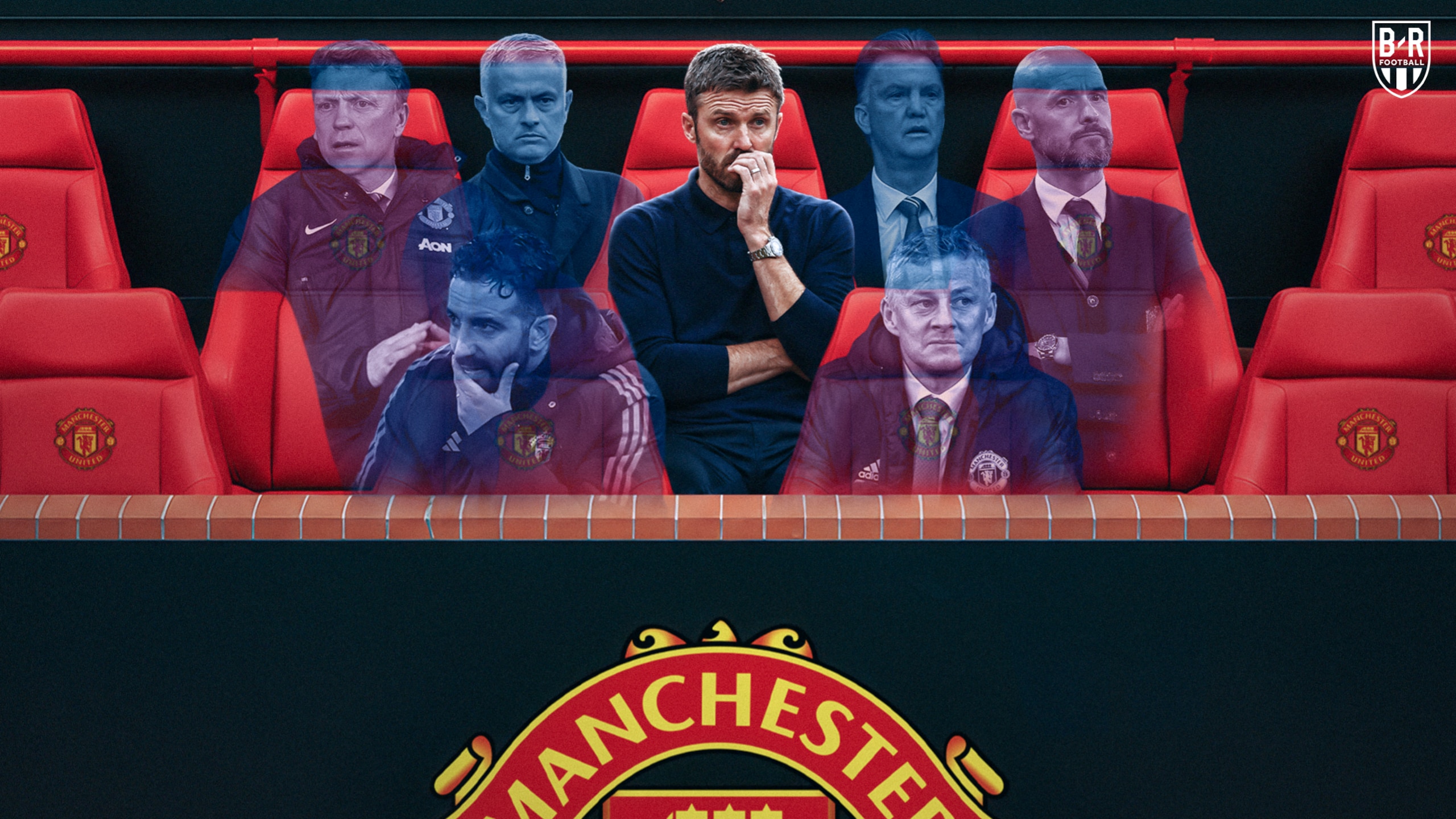

There have been only limited changes to the two squads since last season, so this represents a significant test of both Jose Mourinho and David Moyes, not just in how they match up against each other—of eight meetings between Everton and Chelsea in Mourinho’s first spell, Chelsea won five and there were three draws—but also in how they will adapt the approaches of their predecessors.
Moyes began at Swansea with United’s familiar 4-4-2/4-2-3-1 hybrid (above), with Danny Welbeck playing off Robin van Persie, Luis Antonio Valencia and Ryan Giggs wide and Michael Carrick and Tom Cleverley deep in midfield.
Mourinho similarly stuck to the blueprint of last season, seeing off Hull City with a fluid 4-2-3-1 (below). Both Frank Lampard and Ramires broke forward from deep repeatedly, but it’s hard to imagine them being so adventurous against United.
The creative trio was extremely fluent: although Eden Hazard operated primarily on the left, Oscar and Kevin De Bruyne switched repeatedly, while the Brazilian, when operating centrally, frequently dropped back to link with the two holding midfielders and offer cover when one of the forwards broke out.
Again, it’s hard to imagine there being such fluidity against United.
It’s easy to imagine the old Mourinho with the squad of his first era sitting deep and looking to close the game down. This, though, is a very different squad. Its strength is control of possession and it seems Mourinho will look to exploit that—as Chelsea did in the second half against Hull, when they closed the game down to protect their lead.
Last season, Benitez’s introduction of Mikel John Obi to replace Frank Lampard shortly after half-time in the FA Cup tie at Old Trafford proved decisive (see below), giving Chelsea control of the centre and liberating Ramires, who ended up scoring the equaliser.
The pair played from the start in the replay and were again dominant. Mikel, carrying an injury and reportedly set for a move to Napoli, didn’t even make the bench of Chelsea’s first game of the season, so it seems safe to assume that Lampard and Ramires will again start in the centre, as they did in the league meeting at Old Trafford in May last season.
In an ideal world, Moyes would probably like Wayne Rooney to play off Van Persie so he can disrupt Chelsea’s holding pairing with his physicality but, although he impressed after coming on for Giggs against Swansea, it remains debatable how fit he is—ether physically or mentally.
There must be a temptation as well for Moyes to use Phil Jones not at right-back but at the back of midfield (possibly even in a 4-3-3—as below) to try to handle Chelsea’s creative threat rather than leaving Carrick and Cleverley exposed.
Moyes must decide whether he wants to try to challenge Chelsea’s central superiority or simply accept it and try to absorb the threat by striking on the flanks.
.jpg?w=2560 "Commanders OL HEATED After Tie ▶️")
.jpg?w=2560 "49ers LB Suspended for Headbutt")