
5 Reasons the Penguins Advanced to the Eastern Conference Finals
For the first time since winning the Stanley Cup in 2009, the Pittsburgh Penguins have advanced past the second round of the NHL playoffs and will face the Boston Bruins in the Eastern Conference Finals.
Having defeated the pesky New York Islanders and the determined Ottawa Senators, the Penguins have emerged as a more-complete team, having learned their lessons from previous playoff failures and from early-round challenges.
As the Penguins prepare for the Bruins, a physical and talented team and recent Stanley Cup champion, let's examine the five reasons why Pittsburgh advanced to the Eastern Conference Finals:
They Adapted Their Game
1 of 5Of all of the attributes used to describe this Penguins team that Ray Shero has put together, versatility is not usually among them, but it should be.
In defeating two equally tough yet very different opponents, the Penguins showed an ability to adapt their game that they haven't shown in recent playoff runs.
With reserves such as Tanner Glass, Joe Vitale, Mark Eaton and Beau Bennett at his disposal, head coach Dan Bylsma has the ability to adjust his lineup to match the style of any opponent. In addition, the ability of veteran players like Brenden Morrow, Tyler Kennedy Matt Cooke and Jussi Jokinen to play whatever role is asked of them makes the Penguins a difficult team to match up against.
Since the arrival of players like Sidney Crosby, Evgeni Malkin and Kris Letang, the Penguins have been a very talented team. Given what they've shown in the first two rounds of the playoffs, they are now a deep and versatile team as well.
They Minimized Turnovers
2 of 5It has been said, "That which doesn't kill you makes you stronger." In the Stanley Cup playoffs, that saying rings even more true.
Facing a younger and faster team in the New York Islanders, the Penguins struggled at times to clear their zone and get pucks deep into the Islanders' zone. As a result, the Islanders were able to pin the Pens deep at times, jump on loose pucks and create scoring chances.
In the second round, they faced a Senators team that, instead of aggressively forechecking, looked to clog the neutral zone and create chances off turnovers as they had in their first-round victory over the Montreal Canadiens. Fortunately, the Pens were able to do a better job of maintaining puck possession and carrying speed through the neutral zone, a point of emphasis in Dan Bylsma's system.
Since the Bruins possess both the speed to aggressively forecheck and the size to clog the neutral zone, the Penguins will need to draw upon the lessons they learned in the first two rounds if they are to dictate the tempo of the game through puck possession.
They Avoided Bad Penalties
3 of 5Considering the bad blood that exists between the Penguins and Senators, it is remarkable that their second-round series did not descend into a repeat of the Red Wings vs. Avalanche grudge matches of the '90s.
Given that the owner of the Senators, Eugene Melnyk, famously hired a forensics expert to prove that Matt Cooke intentionally caused Erik Karlsson's Achilles tendon injury, and given that Senators GM Bryan Murray has lashed out at Sidney Crosby and other Penguins, there was certainly ample fuel for an explosion.
Fortunately, the Pens kept their composure, for the most part, and were content to turn dumb penalties by the Senators into power-play opportunities. With players like Matt Cooke, Brooks Orpik, Brenden Morrow, Jarome Iginla and Douglas Murray, the Pens have plenty of toughness to match up with any team remaining in the playoffs.
The question will be whether they have the discipline to avoid being drawn into taking bad penalties against a Boston Bruins team that was successful in getting the New York Rangers to do precisely that.

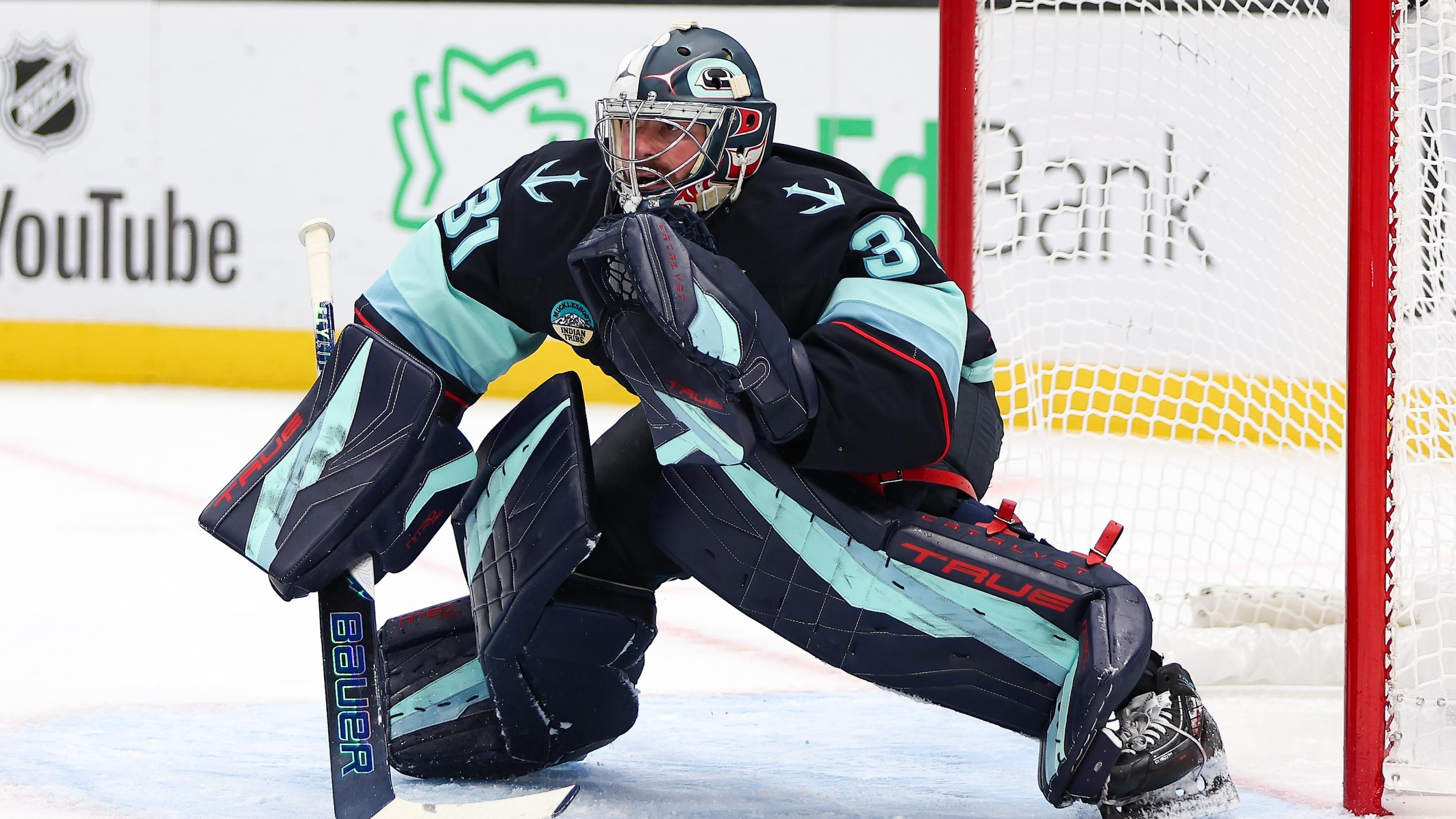

They Got Steady Goaltending
4 of 5Following three straight years of playoff disappointment, Penguins GM Ray Shero decided to upgrade the goaltending during the offseason and traded a seventh-round draft pick to the Washington Capitals for Tomas Vokoun.
Based on his play during the regular season and the playoffs, Vokoun may have been the bargain of the year.
While most figured Vokoun was brought in to rest Marc-Andre Fleury during the regular season, Shero undoubtedly made the move in the event that Fleury again struggled in the playoffs. Since taking over as the starting goaltender in Game 5 of the first round, Vokoun has been perhaps the Pens' most valuable player.
With a 1.85 GAA and a .941 save percentage in the playoffs, both of which place him among the league leaders, he has solidified the Pens' defense, and his ability to manage the puck has helped turn saves at one end into scoring chances at the other end.
While Dan Bylsma may at some point go back to Fleury, it is Vokoun's job to lose, and he shows no sign of relinquishing it.
They Showed an Ability to Finish
5 of 5Although the Penguins are 5-2 under head coach Dan Bylsma in series-clinching games on the road, prior to their win in Game 5 against the Senators, they were 0-6 at home during that same span.
Given their recent playoff struggles, it was important for the Penguins to take charge of the Ottawa series and show an ability to put teams away as they did. Outscoring the Senators, 13-5, in Game 4 and Game 5 after fumbling away a win in Game 3, the Pens were able to rebound from a tough loss and impose their will on the Senators.
If the Penguins are able to dictate the tempo and style of play against the Bruins, as they have at times in the first two rounds, they will have a chance to improve their record in series-clinching games and move closer to once again claiming the Stanley Cup.
.jpg?w=2560 "NHL Trade Grades Connor Hellebuyck")

.jpg?w=2560 "Raiders Could Start Mendoza")


.jpg?w=2560 "Rodgers Iced Out on Plane 💎")

.jpg?w=2560 "🚨 Week 8 AP Top 25 Poll")
.jpg?w=2560 "Packers Safety Slams Refs 🤬")
