A Swan Song for Our National Anthems
An almost imperceptible breeze caresses Jacques Plante and Maurice Richard, sending a shiver along the stitching of Nos. 1 and 9, respectively, hung high above center ice at the Bell Center in Montreal.
The breeze may have come from the building’s ventilation system or from the collective roar of more than 21,000 fans, celebrating in unison as Alex Kovalev buries one top shelf.
That same subtle wind also makes the stars and stripes and the red maple leaf shudder briefly, both flags sharing the same rafter space with the banners of former Canadiens greats. It is those flags, and the countries they represent, that are honored in what has become an outdated ceremony prior to every first pitch, puck drop, jump-ball and kick-off in every arena, park and stadium across the professional sporting world of North America.
Nations adopt anthems as a way to celebrate, memorialize and eulogize the shared history of its peoples. Emerging nations in the nineteenth and twentieth centuries believed having an anthem was an integral part of nationhood, distinguishing the country on the world stage which, even then, was growing ever smaller.
For decades, as those countries broke bread or—more likely—did battle with each other, it was the anthem that led the charge, the patriotic cacophony that led the faithful to war or, at the very least, let everyone know where you stood.
All of that has changed. At the dawn of the 21st century, the world is even smaller. There is no need for walls; no definitive need for war. This is the global village; the world is at our fingertips. Anthems are no longer a rallying cry but solely a source of pride for the people it represents.
The sporting world, much like the rest of the world, is a much smaller place than ever before, as well. It seems a little hypocritical for the North American sports leagues to continue playing both the American and Canadian National anthems when the rosters reflect the new global reality.
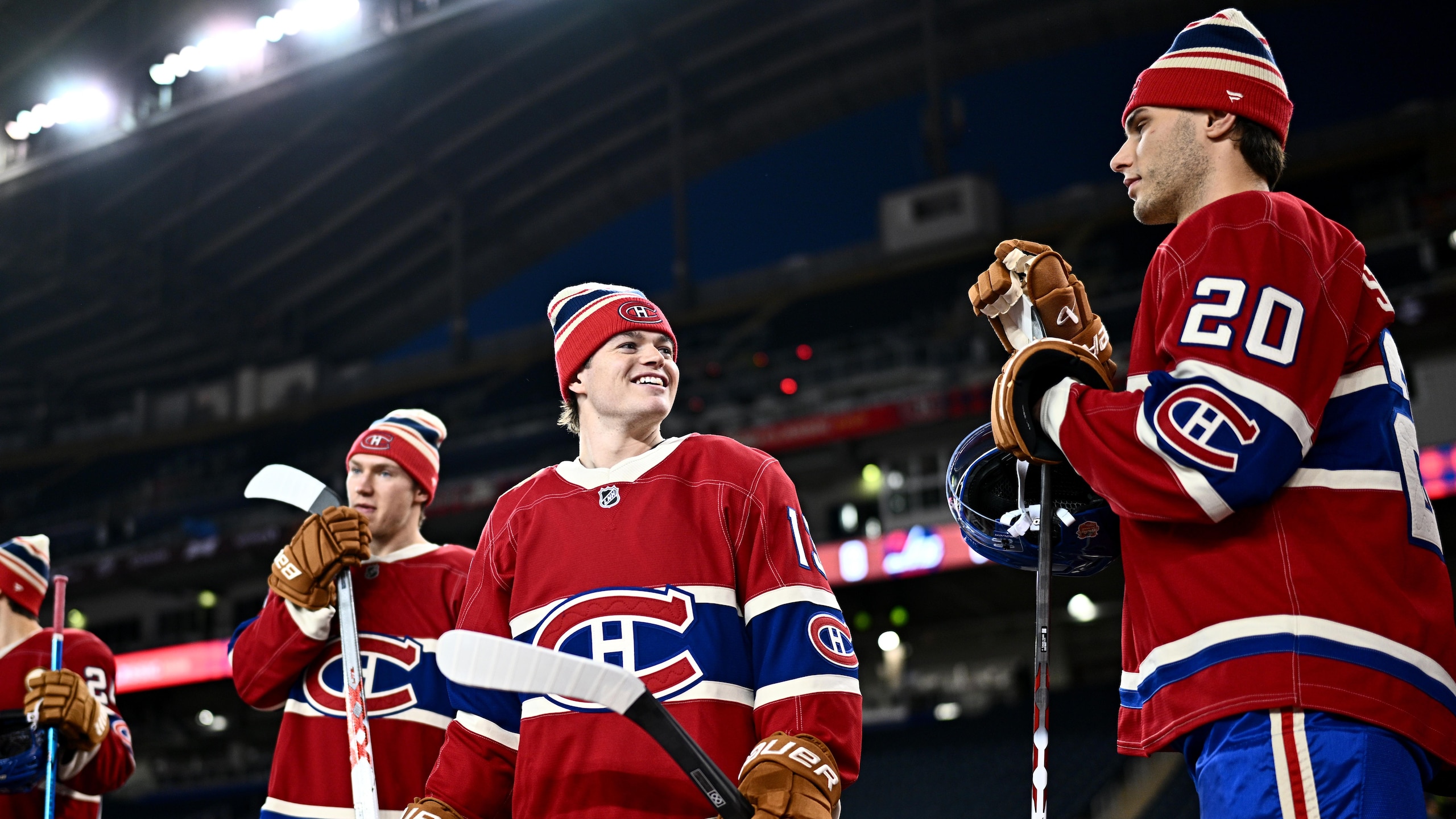
Take, for example, the current roster of the Montreal Canadiens. Skating for the Habs are 13 Canadians, four Americans, two Russians and two Belorussians along with a Finn, German, Slovak, Czech, Swiss and a Kazakh. It’s a high school geography class come to life. One of the Russians, Alex Kovalev, leads the team in scoring, followed by the Czech, Tomas Plekanec. Finland's native son, Saku Koivu, comes in at number five.
The NBA has about 50 international players on current rosters, including Dirk Nowitzki of the Dallas Mavericks and Yao Ming of the Houston Rockets. Major League Baseball has about 25-percent foreign born players on opening day rosters and the NFL, roughly 13-percent.
The only sporting stage that should continue with the tradition of playing the national anthem is the Olympics. Athletes compete for the glory of their respective countries so it’s only fitting when the gold is won, the anthem is played.
Patriotism and pride in one’s country is commendable. One should always be proud of their country, through the good times and the bad.
Consider, though, the real power of sport. The one thing it has always been able to do is bridge the gap between cultures. It's why the Boston Red Sox held their season opener in Japan and why the NFL continues to invest in Europe. When tens of thousands of fans—of all races, creeds, colours and genders—converge in a ballpark or stadium or arena, they are sharing their mutual appreciation for the team not the country.
That's why the concept of a Red Sox Nation and Leafs Nation exists. Whether you like the concept or not, fans of those two teams consider themselves a member of that nation. Within those parameters, there is no exclusion and no hatred. Toronto fans value their Leafs jersey, it's the membership in the club. They are elated when, outside of the city, they stumble upon another kindred spirit wearing the blue and white.
As barriers fall and empires crumble, continuing with this somewhat outdated tradition only hinders the natural evolution of the game and excludes those lured to the West to play it, no matter what the game may be.
Jacques Plante and Maurice Richard may not agree, but then they played hockey at a time when the Russians were the enemy, not line mates and when the captain was a French-Canadian, not a Finn.
As it is, at this moment in time, Habs fans wouldn't have it any other way.

.jpg?w=2560 "Rodgers Iced Out on Plane 💎")
.jpg?w=2560 "Raiders Could Start Mendoza")
.jpg?w=2560 "🚨 Week 8 AP Top 25 Poll")
.jpg?w=2560 "Mahomes Told Teammate to Leave Meeting")
.jpg?w=2560 "Lamar Being Out Shocked Ravens")

.jpg?w=2560 "Packers Safety Slams Refs 🤬")