
The Biggest MVP Snubs in NBA History
I have already written one and half articles on this subject (MVP voting) so I will be brief. Logically, the definition of the MVP winner in sports is: If you could magically take each player off his (or her) team and make their team play their season all over again, which player's departure would cause that team to drop the most in the standings (i.e., incur the most additional losses).
Given that this it is an abstract concept, it is difficult to determine the deserving MVP winner—especially when you start comparing MVP winners from different eras. But, I researched (basketball-reference.com) and did my best.
In the NBA, the players did the voting from 1956 until 1980 and the sportswriters and sportscasters have done the voting since then. And no matter who did the voting, I could not find one example of the MVP voting that stood out as being completely off-base.
Oh, I disagreed with a number of them, especially each time I saw Michael Jordan get ripped off (at least four or five times). (Just in case you thought I was getting soft with my second sentence of this paragraph.)
However, there were always some good arguments for voting for the winner. This is not surprising given that: 1. the person that won had a very good year (often the best or second best player in the league that year) and usually played on a team with a very good record (often the first or second best record in the league); and 2. in order for the voting to be COMPLETELY off-base you would be saying that about half the voters are complete morons.
TOP NEWS
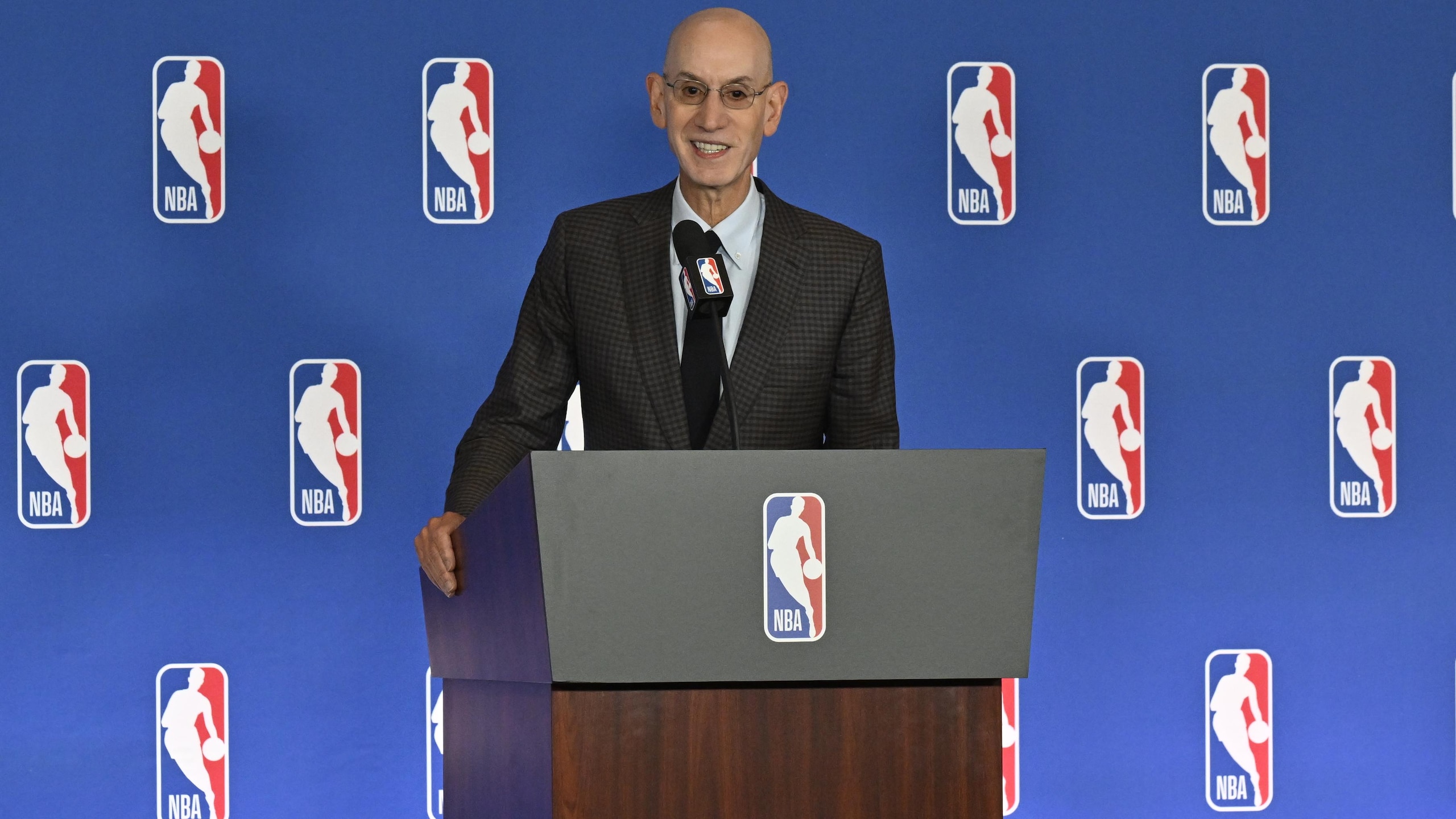
Silver Wants Team in Portland 📍
NBA Vegas expansion bids nearing $10B
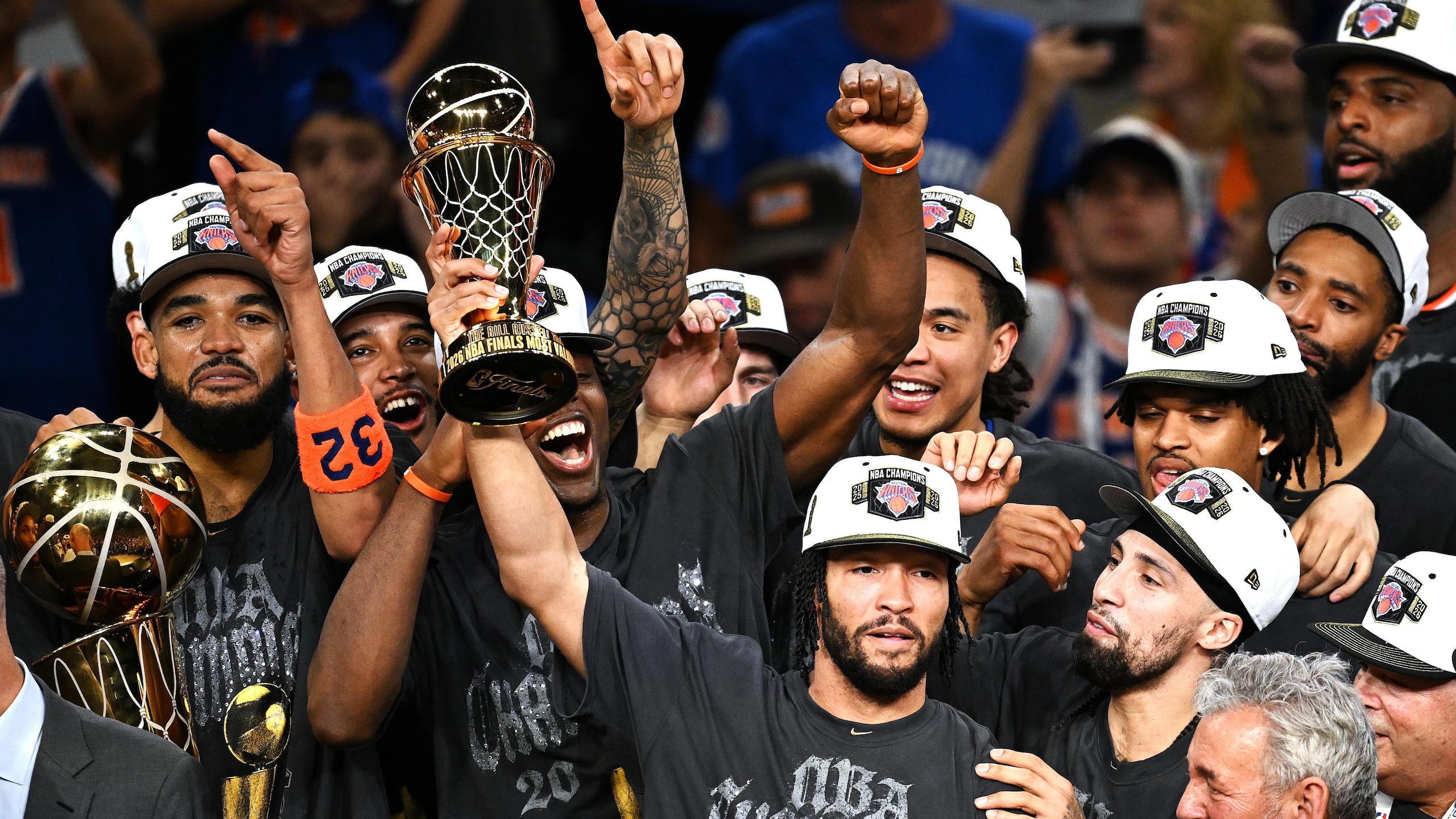
Knicks' 26-27 Ticket Prices 🥴
I have as strong as opinions as the next guy, however, I am not going to be like the idiots (still not soft) on the Internet ("you suck") and radio sports talk shows ("it is a conspiracy") and go that far.
(As a side note, I started watching and following the NBA in the 1969-70 season (Jabbar's rookie season) when I was 10 years-old. I noted this fact because your perspective is different when you follow basketball firsthand than when you just go and just look at statistics, which is what we our forced to do when evaluating NBA seasons before our time.)
In 1962, Wilt Chamberlain averaged 50.4 points and 25.7 rebounds while playing an average of 48.5 minutes per game! Also in 1962, Oscar Robertson averaged a triple-double: 30.8 PPG, 12.5 RPG, and 11.4 APG. They had two of the most amazing seasons in NBA history in the same year and neither was named MVP!
Instead, Bill Russell, who had one of his best seasons—18.9 PPG (the highest of his career), 23.6 RPG, 4.5 APG), won the second of what would be three MVPs in row.
Russell's Boston Celtics had the best record in the league (60-20) and went on to win the NBA Title that year. Wilt's Philadelphia Warriors were 49-31 (third-best record) and Oscar's Cincinnati Royals were 43-37 (fourth-best).
The MVP voting was Russell with 297 points, Wilt 152, and Oscar 135. It seems harsh to have Wilt's numbers and not win the MVP Award and to have the only triple-double for a season in NBA history (Oscar) and to come in third in the MVP voting.
How would you like to be the best player in the league, in fact, the best player in the history of the league (by now you know where I going with this), have these numbers (below) and not win the MVP award? And then, after the playoffs are over—were your team either dominated or exceeded expectations once again—hear the voters say, "Gee, I made the same mistake again; can I take my vote back?"
1. 37.1 ppg, 5.2 rpg, 4.6 apg, 2.9 spg, 1.5 bpg, .482 fg5%, .857 ft% (1987);
2. 32.5 ppg, 8.0 rgp, 8.0 apg, 2.7 spg, .8 bpg, .538 fg%, .850 ft% (1989);
3. 33.6 ppg, 6.9 rpg, 6.3 apg, 2.8 spg, .7 bpg, .526 fg%, .848 ft% (1990);
4. 32.6 ppg, 6.7 rpg, 5.5 apg, 2.8 spg, .8 bpg, .495 fg%, .837 ft% (1993);
5. 29.6 ppg, 5.9 rpg, 4.3 apg, 1.7 spg, .5 bpg, .486 fg%, .833 ft% (1997);
In 1997, Jordan's Bull were 69-13, the second best record in NBA history and he still did win the MVP Award, losing to Karl Malone. In numbers 2-5 above Jordan was also 1st team all-defensive team.
In 1987 he should have been—he was second in the league in steals and set a record for most blocks by a guard in NBA history (which he broke the next year for a record that still stands), but did not have the reputation because it was only his second full year in the league.
Doesn't defense, probably about 40 percent of the game, influence the MVP voting? Apparently not since the sportswriters and sportscasters took over the voting (Russell, probably the best defensive player in the history of the NBA, won five MVP awards when the players voted).
1987 is the only year in which Jordan was still not good at making the players around him better (although how good can you make Dave Corzine look?). Fine, that is the year I do not feel as strongly about (the Bulls were 40-42). However, how come Moses Malone, whose team was 46-36 in 1982, beat out Bird, whose Celtics were a league best 63-19?
But, in 1989, perhaps Jordan's best statistical year, the Bulls were 47-35, and Jordan was 2nd in the MVP losing out to Magic Johnson (his Lakers had the 2nd best record, 57-25). As I wrote last week, I just want the voters to be correct and if not correct, at the very least, consistent.
As a side note, I remember reading back in the early 90's that the Sporting News did a MVP voting among the players (who used to the official voting) and Jordan beat out Johnson in both 1989 and 1990 (I do not know who won in 1993 (Barkley won the official MVP Award) and 1997). Hmm.
Here is two more players for you to consider for this question. Elgin Baylor, whose Lakes were 53-27 (second best record in the league in 1963), lost out in the MVP voting to Russell, whose Celtics had the best record at 58-22. Baylor's statistics?: 34.0 PPG, 14.3 RPG, 4.8 APG, .453 FG%, .837 FT%. Ouch!
Jerry West came in the MVP voting a heart-wrenching four times and never won. He was quoted recently saying that he felt he should have beaten out Willis Reed in 1970 (the voting was 498-457).
Here were his statistics: 31.2 PPG, 4.6 RPG, 7.5 APG, .497 FG%, .824 FT%. He may have a point, though he only played in 74 games and his Lakers were just 46-36.



.jpg?w=2560 "Report: Darnold Could Miss 3-6 Weeks")
.jpg?w=2560 "Week 2 Start 'Em, Sit 'Em Decisions")

.jpg?w=2560 "Breaking News")