Pointless Theory: An Interpretation of Ryback's Squash Matches
I’m not a fan of squash-oriented long-term booking, especially in gargantuan promotions such as the WWE. My guess is that WWE competitors are paid very generous quantities. If the individual in question receives such amounts of money for squashing no-names in less than three minutes for months, then what a waste of money that is.
Anyhow, Ryback’s flash demolition derbies are mildly entertaining. It is the equivalent of dropping live mice in a glass container occupied by your pet snake. He has slightly developed a technique to his stiff treatment of local talent.
But that’s not the Ryback reading intended for this piece.

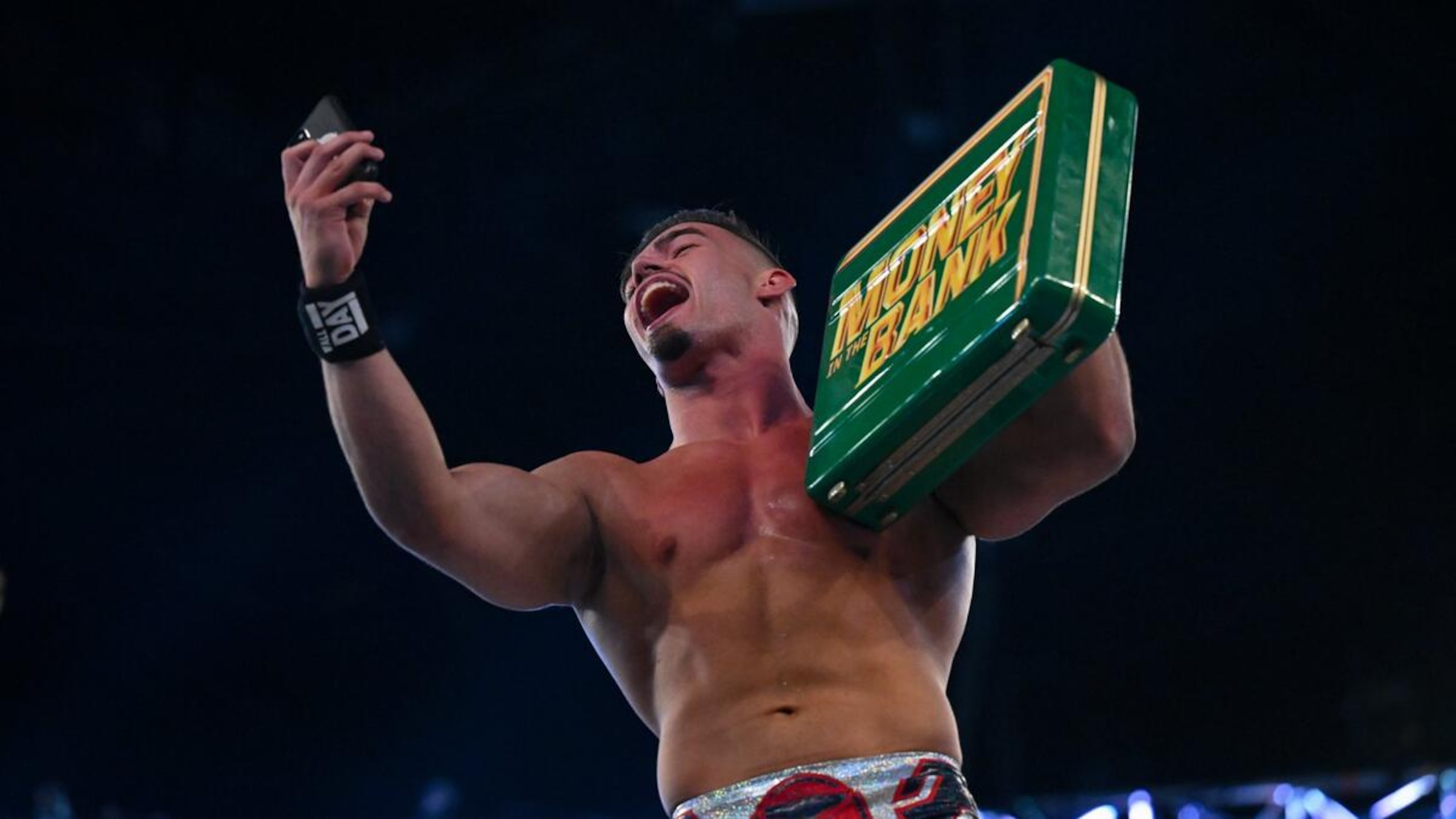
Professional wrestling is, among other things, a storytelling medium. More importantly still, it is action oriented; the ring is the central space for action. Important stuff happens (or should happen) mostly inside the ring.
Fans and non-fans like to compare pro wrestling to other storytelling mediums: movies, soap operas, even theatre. I envision the business as a hybrid of a circus act and ballet (a testosterone-driven Cirque du Soleil, if you will). Performers, situations, moves and even the crowd are elements in the syntax of a discourse, whether conscious or unconscious.
Of course, I don’t mean every headlock and hip-toss hide layers upon layers of significance, but if positioned correctly (or accidentally) among the right elements, the move becomes a readable sign.
A story is told. Not as in, “Wrestler A is struggling with an injury, and Wrestler B will try to capitalize on it." No; something a bit beyond that.
Let’s try to extract something more out of Ryback’s squash rush.
It is a well-known piece of trivia among insiders and members of pro wrestling’s Internet community that Vincent K. McMahon has a thing for muscular studs. Every promoter has the right to construct a material vision of the ideal term “wrestler." McMahon opted for (sometimes) charismatic bodybuilders—big men. Not necessarily huge, just big.
Anything different (smaller) might take the “I don’t get it” treatment. Fortunately enough, things have changed, but that’s a secondary point to this article.
Ryback fits, at least virtually, Vinnie Mac’s superstar archetype. His opponents, on the other hand, are located at the other end of the spectrum: frail, pathetic, awkward and unmarketable. I guess any of the local talents squashed by Ryback could perfectly illustrate the term “vanilla midget” in the Nash & Hogan Encyclopedia.
In the squash-runs, Ryback is a McMahon-branded bodybuilder: intense, brutal and larger than life—the former inhabitant of a comic book produced in the 90s. His opponents are grotesque projections of what McMahon saw first when introduced to guys like CM Punk, Bryan Danielson, Low Ki and others.
Ryback’s treatment of local jobbers then becomes a passion-driven interpretation of how CM Punk vs. John Cena should progress if imagined by McMahon.
“Feed me more” stands not only as a demand for better competition, but as a descriptive statement: Competitors with those specific traits do not deserve to stand in the same ring as a McMahon-branded superstar. They hardly qualify as minor snacks for a monster like Ryback.
We could then state that every Ryback match is an essentially looped cartoon short created by Vince McMahon to illustrate the dominance of his ideal over the concept of a technically gifted, though smaller competitors. Of course, in McMahon’s story, only the second part is illustrated.
Then again, as long as the facts within his company reflect otherwise, it causes no harm to anyone. The matches are pure fantasy manufactured by and for Vince McMahon as an escape from reality. The purity of his ideal is starving for legitimacy, if it hasn’t died already.


.jpg?w=2560 "2 NFL Officials Suspended")

.jpg?w=2560 "Mahomes' Wife Trolls Kubiak 💀")

.jpg?w=2560 "Love's Body Already 'Tired'")