2012 NBA Draft: Power Ranking Best 25 Lottery Picks Since 2000
When the 2012 NBA draft rolls around, all of the teams selecting prospects in the lottery will be crossing their collective fingers and praying that the young player they choose will one day find his way into these rankings.
After all, these are the 25 best lottery picks of the last decade.
They are the players who started off strong during their rookie seasons and didn't look back, putting up quality performance after quality performance as their team's management looked on with pride.
Read on to find out who they are.
How Were the Best Picks Determined?
1 of 34The following is taken from a previous article about draft steals of the last decade. This topic is quite similar—just updated and limited to the lottery portion of the draft—because a draft steal is inherently a best pick.
"We tend to have preconceived notions about what exactly it means to be a draft steal. In order to qualify, a player must have been drafted in the last few picks of the first round or at any point in the second and massively outperformed other players around them.
That way of looking at draft steals though has led us to overvaluing some players as diamonds in the rough. The best example of this phenomenon is the curious case of Monta Ellis. The scoring stud, drafted at No. 40 in 2005 by the Golden State Warriors, is almost universally regarded as one of the biggest draft steals of the last decade, but he's really not.
Ellis is actually just the 33rd best pick of the last decade (note: this is no longer true now that the data has been updated, but the point still stands), fitting in nicely between Ramon Sessions (No. 56 in 2007) and Leandro Barbosa (No. 28 in 2003), and as a result, will only be featured as an example on this one slide.
Now, let me tell you how I arrived at that conclusion.
First of all, what exactly can teams count on when they make a draft pick? Well, unless a team releases or trades a player, they are under the team's control after the draft for up to four years, the maximum length of a rookie contract. So really, when looking at draft steals, we should focus almost exclusively on the first four years of a player's career.
As a result, I looked at the first four years of Win Shares data for a player, as provided by basketball-reference.com. Win Shares are an advanced basketball metric calculated so that one Win Share is exactly equal to one win provided by that player to his team's cause. It's the combination of Offensive Win Shares and Defensive Win Shares, a full breakdown of which can be found on this page, called "Calculating Win Shares."
Starting with the year 1990, when the NBA Draft first introduced the current lottery system, I looked at each and every single player drafted into The Association, tracking their draft position and the amount of Win Shares they produced in their first four seasons in the league. It is important to note that I only evaluated data through the 2007 draft because the players taken in 2008-2011 have not yet played out their first four seasons in the league.
After I had data for all 1,028 players drafted from 1990-2007, I took the average number of Four-Year Win Shares for each draft position and plotted them on a scatterplot (which you can see in the embedded picture with draft position along the x-axis and Four-Year Win Shares along the y-axis).
Using a best-fit logistical regression, I found the following formula: Four-Year Win Shares = -5.836* ln (draft position) +24.537.
For the statistically inclined out there, that equation has a coefficient of determination (r^2) of 0.91024. For the non-statistically inclined, the equation fits extremely well.
Using this formula, we can plug in a number for draft position and have the formula show how many Four-Year Win Shares a player drafted there should be expected to produce. For example, the first overall pick of a draft should produce 24.537 Win Shares while the 30th overall pick should produce 4.688.
With that data firmly established, we can tell exactly how much players have exceeded or failed to live up to the expectations associated with the slot in which they were drafted. That can be done by subtracting the expected win shares based on the draft position from the actual number of Four-Year Win Shares that players produced. If the difference is positive, the player exceeded expectations by that much and was a bit of a steal. If the difference is negative, the player failed to live up to the expectations and was a bit of a bust.
Now let's go back to the Monta Ellis example.
Ellis was drafted 40th overall, so he should have been expected to produce 3.08 Four-Year Win Shares. The shooting guard actually produced 13.7 over the first four years of his career, meaning that the Golden State Warriors "stole" 10.69 Four-Year Win Shares when they drafted him. This was still a great pick, there's no denying that. It's just not quite as great as quite a few players drafted ahead of him.
It's important to realize exactly what we're looking at. As some of you may have realized, even No. 1 picks may be considered steals.
"
With the new data from this past season entered, the formula has changed slightly so that Four-Year Win Shares = -5.874*ln(draft position) + 24.735.
Also, because the 2012-13 season hasn't been played out yet, only players drafted in 2008 or earlier are eligible, as the rest have not had an opportunity to play out the first four seasons of their careers.
So, What Do You Do with Those Drafted in 2009, 2010 and 2011?
2 of 34There have been some incredible basketball players drafted in the lottery portion of the last three NBA drafts.
From the 2009 draft class, we have Blake Griffin, James Harden, Tyreke Evans, Ricky Rubio, Stephen Curry and Brandon Jennings.
From the 2010 draft class, we have John Wall, DeMarcus Cousins, Greg Monroe, Gordon Hayward, Paul George and Ed Davis.
From the 2011 draft class, we have Kyrie Irving and a bunch of players with potential who haven't emerged quite yet.
Because they haven't played out the four necessary seasons, I, along with my good friend Shashank Bharadwaj, developed a formula that projects win-share totals based on age and prior production. The formula is too complicated to explain here, but feel free to message me if you want more details.
Using that projection system, I've come up with hypothetical four-year win-share totals for the players drafted in the last three years. When the difference between the hypothetical total and the expected total is large enough to appear in these rankings, I've given them a hypothetical spot in the rankings.
You'll see what I mean in two slides.
Keep in mind that the projection system is flawed because it assumes a perfectly average career trajectory and can't account for potential breakout performances, as those would be considered statistical abnormalities.
For that reason, it's incredibly difficult for young players who haven't truly broken out to appear here. In fact, you'll see only seven of the aforementioned players in the rankings, although I have no doubt that others could join them in the future.
Now that everything has been fully explained, it's time for the rankings.
25. Thaddeus Young: 8.2 Difference
3 of 34When he was drafted: No. 12 in 2007 by the Philadelphia 76ers
Expected Four-Year Win Shares: 10.1
Actual Four-Year Win Shares: 18.3
Leading off with a former Georgia Tech Yellow Jacket, Thaddeus Young didn't receive too much playing time during his rookie season with the Philadelphia 76ers, starting just 22 of the 74 games he played in, while averaging just 21.0 minutes per game.
During each of his next three seasons, Young bounced between the bench and the starting lineup, but he maintained a consistently large role with the Sixers.
Young has never been dominant in any one area, but his versatile game allowed him to accumulate enough win shares to sneak into the top 25.
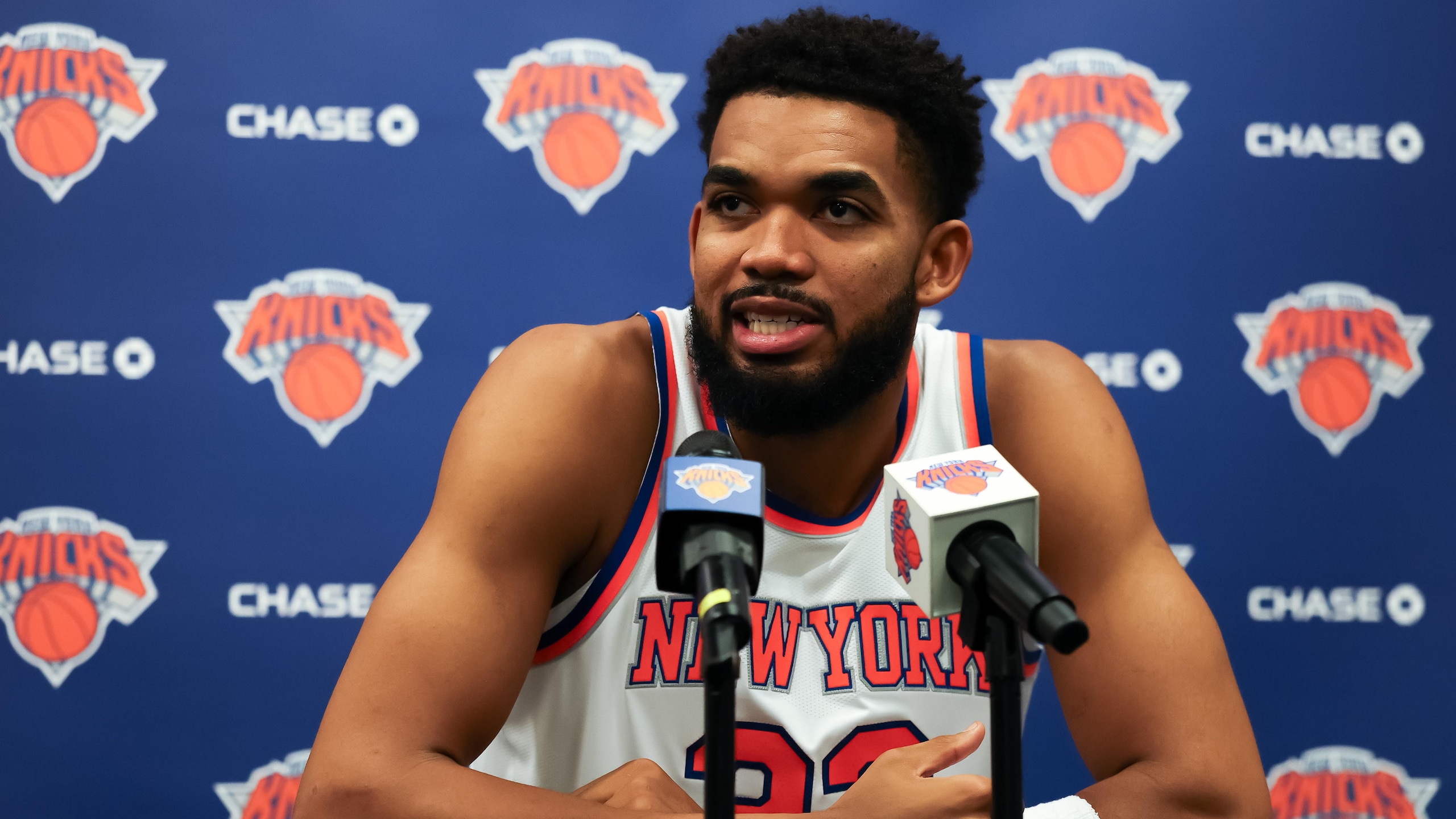


(Hypothetical) 25. Gordon Hayward: 8.3
4 of 34When he was drafted: No. 9 in 2010 by Utah Jazz
Expected Four-Year Win Shares: 11.8
Actual Four-Year Win Shares: 20.1
Gordon Hayward has only played two seasons. One of them was shortened by the lockout, but he's already accumulated 6.1 win shares. That puts him over halfway to the expected total associated with his No. 9 draft slot.
The young swingman might have a baby face, but his game is taking off. Hayward put together a fantastic sophomore season and should continue improving to the point that he becomes one of the 25 best lottery picks since the turn of the century.
If we prorate Hayward's 2011-12 season and make it full length to avoid the unfortunate disadvantage he's receiving, he'd now be projected to have 21.3 four-year win shares, giving him a difference of 9.5. That would place him in the hypothetical 21st place.
(Hypothetical) 25. Ed Davis: 8.4
5 of 34When he was drafted: No. 13 in 2010 by the Toronto Raptors
Expected Four-Year Win Shares: 9.7
Actual Four-Year Win Shares: 18.1
Although the statistics and projections dictate that I have to put Ed Davis in this spot, I seriously doubt that he's actually going to make it to this spot once he's played out the first four years of his career.
While Davis is an underrated big man with potential, his playing time is only going to go down once Jonas Valanciunas comes over and the frontcourt is all European.
Just for the sake of argument, though, had this past season not been shortened by the lockout, Davis' projected difference would have been 9.3 and he'd be in the hypothetical 22nd place.
24. Russell Westbrook: 8.8
6 of 34When he was drafted: No. 4 in 2008 by the Seattle SuperSonics
Expected Four-Year Win Shares: 16.6
Actual Four-Year Win Shares: 25.4
The first of the two UCLA boys you'll see from the class of 2008, Russell Westbrook has improved during each and every season he's spent in the NBA, even if he still always seems to take one too many infuriating jump shots.
Westbrook took a massive leap between his rookie and sophomore seasons and wasn't done yet.
Had this past season been 82 games instead of 66—Westbrook was on pace for a 9.8-win-share season—it would have bumped him 1.9 more in the difference category, placing him 20th here.
23. Brook Lopez: 9.1
7 of 34When he was drafted: No. 10 in 2008 by the New Jersey Nets
Expected Four-Year Win Shares: 11.2
Actual Four-Year Win Shares: 20.3
Even though Brook Lopez doesn't seem to know how to rebound (seriously, I'm not sure if that's an exaggeration or not), he's been so good on offense during his young career that he still earned a spot here, despite the lockout-shortened fourth season.
Lopez had a fantastic rookie season, averaging 13.0 points and 8.1 rebounds per game, and hasn't looked back since. Only injuries have managed to slow him for lengthy periods of time.
22. Josh Childress: 9.2
8 of 34When he was drafted: No. 6 in 2004 by the Atlanta Hawks
Expected Four-Year Win Shares: 14.2
Actual Four-Year Win Shares: 23.4
It's hard to believe now, but early in his career, Josh Childress was actually a ridiculously efficient scorer. Maybe it was the power of his Afro.
During his fourth and best season in the league, Childress averaged 11.8 points per game, but did so on 57 percent shooting from the field.
You'd never know it if you watch him play right now.
21. Carmelo Anthony: 9.4
9 of 34When he was drafted: No. 3 in 2003 by the Denver Nuggets
Expected Four-Year Win Shares: 18.3
Actual Four-Year Win Shares: 27.7
It's easy to work your way onto this list when you average over 20 points per game as a rookie.
Through the first four years of his career, Carmelo Anthony averaged 24.1 points, 5.7 rebounds and 2.9 assists per game. Not many people in NBA history can claim that.
'Melo had one of the best beginnings of any player on this list, but it's hard to work any higher in the rankings because he was drafted so high.
(Hypothetical) 21. Brandon Jennings: 9.6*
10 of 34When he was drafted: No. 10 in 2009 by the Milwaukee Bucks
Expected Four-Year Win Shares: 11.2
Actual Four-Year Win Shares: 20.8
Brandon Jennings just keeps improving as he matures. He may have broken the 50-point barrier as a rookie, but he's increasingly carved out a bigger and better role with the Milwaukee Bucks, even if he's given no indication that he wants to remain a long-term member of the team.
Jennings can be considered an All-Star snub this year after earning 5.5 win shares in a shortened season. Had 82 games been played, the lefty was on pace for 6.8 win shares, which would have moved his difference up to 19th.
20. Shane Battier: 10.5
11 of 34When he was drafted: No. 6 in 2001 by the Memphis Grizzlies
Expected Four-Year Win Shares: 14.2
Actual Four-Year Win Shares: 24.7
Shane Battier is a defensive specialist who hits three-pointers for the Miami Heat now, but he was so much more than that when he came out of Duke and joined the Memphis Grizzlies in 2001.
The small forward enjoyed the best scoring year of his career as a rookie, averaging 14.4 points per game, as he started all 78 games he appeared in. Although his scoring declined over the next three years, Battier became more efficient and thus, improved as a player.
19. Ronnie Brewer: 10.9
12 of 34When he was drafted: No. 14 in 2006 by the Utah Jazz
Expected Four-Year Win Shares: 9.2
Actual Four-Year Win Shares: 20.1
Ronnie Brewer quickly established himself as a great defensive player with the Utah Jazz, and that's where the bulk of his value came from during the first four years of his career. During that time, Brewer earned 20.1 win shares and 8.2 of those came on the defensive end of the court.
The former Arkansas Razorback wasn't just a defender, though. During the second two years of his still-young career, he averaged over 10 points per game and made more than half of his shots.
18. Joakim Noah: 11.4
13 of 34When he was drafted: No. 9 in 2007 by the Chicago Bulls
Expected Four-Year Win Shares: 11.8
Actual Four-Year Win Shares: 23.2
Speaking of great defensive players...
Joakim Noah came out of Florida as a solid player with great rebounding and defending skills, which shows in his win shares. 11.7 of his win shares during the first four years of his career came on the less glamorous end of the court.
It's scary to think how high up in these rankings he could have been if he knew how to shoot the ball without sidespin.
17. Deron Williams: 11.4
14 of 34When he was drafted: No. 3 in 2005 by the Utah Jazz
Expected Four-Year Win Shares: 18.3
Actual Four-Year Win Shares: 29.7
Deron Williams is one of the players whom I hate to talk about when discussing draft picks. After all, I'm an Atlanta Hawks fan and can't help but think about what could have been if the management had selected Williams or Chris Paul instead of Marvin Williams.
Regardless of my personal opinion, D-Will was moderately productive as a rookie floor general and then exploded onto the scene during his second season, averaging 16.2 points and 9.3 assists per game.
He hasn't looked back since.
16. Luol Deng: 11.9
15 of 34When he was drafted: No. 7 in 2004 by the Chicago Bulls
Expected Four-Year Win Shares: 13.3
Actual Four-Year Win Shares: 25.2
Another Duke Blue Devil who earned his way into these rankings, Luol Deng was a surprising inclusion because he didn't really light it up during his first season. As a rookie, Deng averaged an inefficient 11.7 points per game.
However, Deng's versatility and defensive capabilities have combined with his offense to form quite the potent player.
The bulk of Deng's win shares came during an insanely productive 2006-2007 season, when he was a true shutdown defender, while averaging 18.8 points, 7.1 rebounds and 2.5 assists per game.
15. Pau Gasol: 12.7
16 of 34When he was drafted: No. 3 in 2001 by the Memphis Grizzlies
Expected Four-Year Win Shares: 18.3
Actual Four-Year Win Shares: 31.0
Back when Pau Gasol looked liked a baby ostrich and not the full-fledged one he looks like today, he was lighting up the scoreboard for the Memphis Grizzlies.
Gasol enjoyed one of the more impressive rookie seasons in the last decade-plus, averaging 17.6 points, 8.9 rebounds and 2.7 assists per game on 51.8 percent shooting. He improved the next year before tailing off slightly during his third and fourth years in the States.
Had his 12.0-win-share fifth season been included, Gasol would have ranked even higher.
14. Amar'e Stoudemire: 13.5
17 of 34When he was drafted: No. 9 in 2002 by the Phoenix Suns
Expected Four-Year Win Shares: 11.8
Actual Four-Year Win Shares: 25.3
Amar'e Stoudemire's inclusion at No. 14 is a true testament to just how incredible he was during his third season with the Phoenix Suns. After all, he essentially only has three seasons included in his win share total.
Knee problems limited STAT to just three games during his fourth season and he still managed to earn this spot.
That's mostly due to a crazy-good 14.6-win-share season in which he led the league with 11.3 offensive win shares—thanks to his 26.0 points per game on 55.9 percent shooting from the field.
If we included Stoudemire's fifth season, hypothetically, he would have placed at No. 3.
13. Dwight Howard: 13.8
18 of 34When he was drafted: No. 1 in 2004 by the Orlando Magic
Expected Four-Year Win Shares: 24.7
Actual Four-Year Win Shares: 38.5
It's always impressive when a No. 1 pick finds a way into these rankings because the expectations are so high for players picked in that spot.
Dwight Howard may not have beaten out Emeka Okafor for Rookie of the Year after the 2004-05 season, but he beats out his fellow big man here.
"Superman" averaged a double-double during each of his first four seasons in the league, improving each year until he earned 12.9 win shares during his fourth year.
(Hypothetical) 13. Paul George: 14.5*
19 of 34When he was drafted: No. 10 in 2010 by the Indiana Pacers
Expected Four-Year Win Shares: 11.2
Actual Four-Year Win Shares: 25.7
I knew that Paul George was good, but I hadn't realized he was quite this good at this point in his career.
George has only earned 8.4 wins shares during the first two years of his career—5.1 of which came on defense—but he's still got two years to go and has nearly met his expected total.
The shooting guard/small forward is coming off a well-rounded season for the Indiana Pacers and is still only 21 years old. He has a good bit of growing to do yet, but he's well on pace to surpass expectations by quite a bit.
12. Yao Ming: 14.7
20 of 34When he was drafted: No. 1 in 2002 by the Houston Rockets
Expected Four-Year Win Shares: 24.7
Actual Four-Year Win Shares: 39.4
Now that we've become used to the fact that Yao Ming is retired and no longer fighting injury after injury, it's a little more difficult to remember how transcendentally great he was during the prime of his career.
The No. 1 pick of the 2002 NBA draft's two best seasons (in terms of win shares) came in his second and third seasons in The Association. Those years, his dominance on both ends of the court helped him earn 22.1 win shares and almost meet his expected total in just that time.
Imagine how great his career would have looked if his body had been able to stay healthy for him.
11. Al Horford: 14.9
21 of 34When he was drafted: No. 3 in 2007 by the Atlanta Hawks
Expected Four-Year Win Shares: 18.3
Actual Four-Year Win Shares: 33.2
Al Horford always seems to just quietly go about his business, but he simply got it done for the Atlanta Hawks during the first four years of his career.
The power forward shifted over to center after leaving Florida and started 77 games as a rookie, averaging 10.1 points and 9.7 rebounds per game, just shy of a double-double.
Horford steadily improved throughout those first four years, averaging 10.5 win shares per game during the final two years of it.
(Hypothetical) 11. James Harden: 15.6
22 of 34When he was drafted: No. 3 in 2009 by the Oklahoma City Thunder
Expected Four-Year Win Shares: 18.3
Actual Four-Year Win Shares: 33.9
Don't ever make the fatal mistake of doubting the beard-and-mohawk combination. It honestly feels a little bit weird to call the mass of hair on Harden's face just a beard. It's so much more than that.
Through the first three years of his career, Harden has still only started seven games. He's earned a huge role with the Oklahoma City Thunder and just finished a terrific season that saw him win Sixth Man of the Year.
With his Euro step and crafty ability to draw fouls, the lefty shooting guard has easily become one of the most efficient scorers in the entire NBA.
10. Kirk Hinrich: 15.7
23 of 34When he was drafted: No. 7 in 2003 by the Chicago Bulls
Expected Four-Year Win Shares: 13.3
Actual Four-Year Win Shares: 29.0
Kirk Hinrich is lucky that I'm only counting the first four years of his career because his production quickly tailed off after that time frame ended.
During those first four years, the sharpshooting guard earned 4.1, 7.2, 7.6 and 10.1 win shares, respectively. After that, he never topped his rookie season again.
But hey, I can't bend the rules!
9. Chris Bosh: 15.8
24 of 34When he was drafted: No. 4 in 2003
Expected Four-Year Win Shares: 16.6
Actual Four-Year Win Shares: 32.4
Sometimes I wish that Chris Bosh was still with the Toronto Raptors because I've never seen a player who more closely resembled his team's mascot. Something tells me that the Raptors wouldn't mind if Bosh was still on the team, either.
As part of the stacked 2003 draft class, it took Bosh only three seasons to break the 20-points-per-game barrier, and he averaged 22.5 points and 9.2 rebounds per game that year.
If you look at the talented power forward's career, it's unbelievable how consistent he's been during its duration.
8. Kevin Love: 16.3
25 of 34When he was drafted: No. 5 in 2008 by the Memphis Grizzlies
Expected Four-Year Win Shares: 15.3
Actual Four-Year Win Shares: 31.6
Kevin Love was good, but not quite great during his first two seasons out of UCLA. As a rookie, he nearly averaged a double-double, with 11.1 points and 9.1 rebounds per game, and followed that up with a sophomore campaign in which he averaged 14.0 points and 11.0 rebounds per game.
Then, Love got ridiculously good.
As a third-year player, Love led the league in rebounds with 15.2 per contest and improved his versatile offensive game enough to average 20.2 points per game.
Then, he got even better.
Love was historically great this past season, which was unfortunately shortened by injuries and the lockout. Keeping in mind the time he spent injured, if we prorate the 66-game season to an 82-game one, Love would increase his difference by 2.4 and move up to sixth place.
7. Kevin Durant: 17.5
26 of 34When he was drafted: No. 2 in 2007 by the Seattle SuperSonics
Expected Four-Year Win Shares: 20.7
Actual Four-Year Win Shares: 38.2
Even though he spent a good bit of time wearing it, it's still weird to see Kevin Durant wearing a Seattle SuperSonics jersey.
Nevertheless, that's technically whom Durant began his career with. As a rookie out of Texas, the high-scoring forward started off with a soft noise—not quite a bang. He earned only 2.9 win shares because his 20.3 points per game were produced very inefficiently.
Then, Durant got more efficient. The rest is history.
(Hypothetical) 7. Blake Griffin: 18.3*
27 of 34When he was drafted: No. 1 in 2009 by the Los Angeles Clippers
Expected Four-Year Win Shares: 24.7
Actual Four-Year Win Shares: 43.0
Hey, guess what—
Blake Griffin can do more than just dunk!
6. Richard Jefferson: 18.3
28 of 34When he was drafted: No. 13 in 2001 by the Houston Rockets
Expected Four-Year Win Shares: 9.7
Actual Four-Year Win Shares: 28.0
Richard Jefferson isn't very good anymore, but he lit it up at the beginning of his career after a draft-day trade sent him from the Houston Rockets to the New Jersey Nets.
The forward got off to a rough start offensively as a rookie, averaging single digits as he struggled to earn consistent playing time with the team. However, his defensive prowess still allowed him to earn 4.7 win shares that year.
Then, as a starter, Jefferson increased his scoring year after year and developed into a great player.
5. Andre Iguodala: 19.6
29 of 34When he was drafted: No. 9 in 2004 by the Philadelphia 76ers
Expected Four-Year Win Shares: 11.8
Actual Four-Year Win Shares: 31.4
During the first four years of his career, Andre Iguodala started 322 of a possible 328 games, missing only six due to injury. His well-rounded game and incredible defensive ability virtually guaranteed him a spot in the lineup straight out of Arizona.
Iggy still hasn't posted a season with double-digit win shares, but he's remained a consistently above-average player in almost every facet of the game.
He is and has always been one of the premier stat-sheet-stuffers.
(Hypothetical) 5. Greg Monroe: 20.2*
30 of 34When he was drafted: No. 7 in 2010 by the Detroit Pistons
Expected Four-Year Win Shares: 13.3
Actual Four-Year Win Shares: 33.5
I've been a huge fan of Greg Monroe ever since his Georgetown days and have constantly promoted him as a better young big man than DeMarcus Cousins, as well as one of the most underrated players in the league. I was quite happy when his name popped up near the top of my spreadsheet.
Monroe is still only 21 years old and has already exceeded the expectations associated with his No. 7 draft slot, despite the lockout-shortened season. Had the season been extended to a full 82 games and had Monroe maintained his pace, he'd currently be sitting at 15.3 win shares instead of 13.6, and his new difference would place him at No. 4 in these rankings.
The superb-passing big man averaged 15.4 points and 9.7 rebounds per game on a dysfunctional Detroit Pistons squad, as a second-year player, and still hasn't come close to fully realizing his potential.
4. Brandon Roy: 21.2
31 of 34When he was drafted: No. 6 in 2006 by the Minnesota Timberwolves
Expected Four-Year Win Shares: 14.2
Actual Four-Year Win Shares: 35.4
Let's all take a moment of silence to enjoy the greatness that was Brandon Roy's too-short NBA career.
3. Dwyane Wade: 23.5
32 of 34When he was drafted: No. 5 in 2003
Expected Four-Year Win Shares: 15.3
Actual Four-Year Win Shares: 38.8
Dwyane Wade's third season as a professional nearly justified the Miami Heat's decision to spend the fifth pick of the 2003 NBA draft on him. Averaging 27.2 points, 5.7 rebounds and 6.7 assists per game, Wade earned 14.4 win shares in just that season.
When you throw in the rest of his first three seasons in the league, it's easy to see why Wade ranks so high here.
2. LeBron James: 24.7
33 of 34When he was drafted: No. 1 in 2003 by the Cleveland Cavaliers
Expected Four-Year Win Shares: 24.7
Actual Four-Year Win Shares: 49.4
I'm sure that if LeBron James reads this article, he'll rub in the fact that he's ranked higher the next time he talks to his superstar teammates.
LeBron averaged 20.9 points, 5.5 rebounds and 5.9 assists per game during one of the finest rookie seasons in NBA history and continued to improve drastically over the next few seasons.
Although he never led the league in win shares during any of his first four seasons (as he has during each and every one of the past four), James did earn at least 13.7 in all but his rookie season.
1. Chris Paul: 38.7
34 of 34When he was drafted: No. 4 in 2005 by the New Orleans Hornets
Expected Four-Year Win Shares: 16.6
Actual Four-Year Win Shares: 55.3
Chris Paul dominated the NBA even as a rookie, averaging 16.1 points, 5.1 rebounds, 7.8 assists and 2.2 steals per game as he earned a ridiculous 10.4 win shares.
Now, fast-forward to his third season when he averaged 20.2 points, 4.0 rebounds, a league-leading 11.6 assists and a league-leading 2.7 steals per game to earn a league-high 17.8 win shares. That season alone surpassed the expected four-year total.
Through four seasons, Paul racked up an astonishing 55.3 win shares, a total that is unmatched by any other player drafted in 1990 to the present day. If you're curious, Michael Jordan accumulated 53.6 four-year win shares, a total that is slightly depressed because of the foot injury he suffered during his second season that limited him to just 18 games.
He is well-deserving of the No. 1 spot.


.jpg?w=2560 "Love's Body Already 'Tired'")
.jpg?w=2560 "Tyreek Deal May Come Soon")
.jpg?w=2560 "Ward Nearly Walks Out of Presser ▶️")

.jpg?w=2560 "NFL investigating 2 referees for separate viral exchanges")