
NHL Playoffs 2012: How Do the New York Rangers Compare to the 1994 Cup Winners?
All year long, as the Rangers slowly approached the month of April, the 2012 squad was constantly being measured against the 1994 squad. At the trade deadline, when the Rangers considered trading for Rick Nash, it was compared to the dealings of Mike Gartner, Tony Amonte, Doug Weight and others in exchange for Glenn Anderson, Stephane Matteau and others brought in for the playoff push.
In reality, how do the 2012 Rangers compare to the 1994 Cup winners?
Offense:
The '94 Rangers were a group of players that had tons of offense. They had enough offense in supply that they were able to part with Mike Gartner at the trade deadline. The top point producer was defenseman and skilled power-play quarterback Sergei Zubov.
Zubov was a very skilled defenseman who moved the puck with ease but could still beat you with a blast from the point if you gave him a chance to unload. His versatility and puck movement gave the Rangers a leg up. In '94 Zubov scored 12 goals and had 77 assists for a total of 89 points. Brian Leetch also put up an impressive 77-point campaign.
The top two scoring forwards were Mark Messier with 84 points, and Adam Graves who scored 52 goals and assisted on 27 others for a total of 79 points. Overall, the team scored 299 goals and was fifth in the league in scoring.
The 2012 squad is not as offensively gifted as the '94 team. Outside of Marian Gaborik and Brad Richards, pure skill and goal scoring ability is hard to come by. This is the top echelon for scoring when it comes to the Rangers.
The Blueshirts do not yet have a true No. 1 left-winger. Carl Hagelin has fit in nicely with the pair, but he's a first-year player and isn't quite up to par offensively when compared to "Gabo-Rich."
Ryan Callahan, Derek Stepan and Carl Hagelin have proved to be decent secondary scorers, but the 2012 team can't outscore a team like the '94 group could.
Callahan had a solid first year as the team's new captain, but injuries prevented him from reaching the 30-goal and 60-point plateau. Callahan was a key performer on the power play and scored a team-high 13 power-play goals. He needs to continue this performance in the playoffs if the Rangers want to be successful.
If the Rangers fail to go deep in the playoffs, this is an area that will be overly-analyzed.
Defense:
Given the similarities of both incarnations of the Rangers, there is no need to analyze each team separately. For starters, both teams were in the top five for least goals allowed, both in '94 and 2012. The '94 Rangers boasted a defense including Leetch, Zubov, Jeff Beukeboom and Kevin Lowe in prominent roles.
The 2012 Rangers have Ryan McDonagh, Dan Girardi, Michael Del Zotto and Marc Staal. These young defensemen have solid offensive instincts, a willingness to sacrifice the body and the ability to shutdown an opponent's star player when needed.
The only major difference is Marc Staal isn't the same he was last year. The missed amount of time has shown that he is still showing some signs of acclimating to the season.
In areas of comparison, defense is a spot where the current Rangers really match up well with their '94 counterparts. While Zubov was better than Del Zotto is currently, McDonagh and Girardi are carrying the team well like Leetch had to on the blue line.
Goaltending:
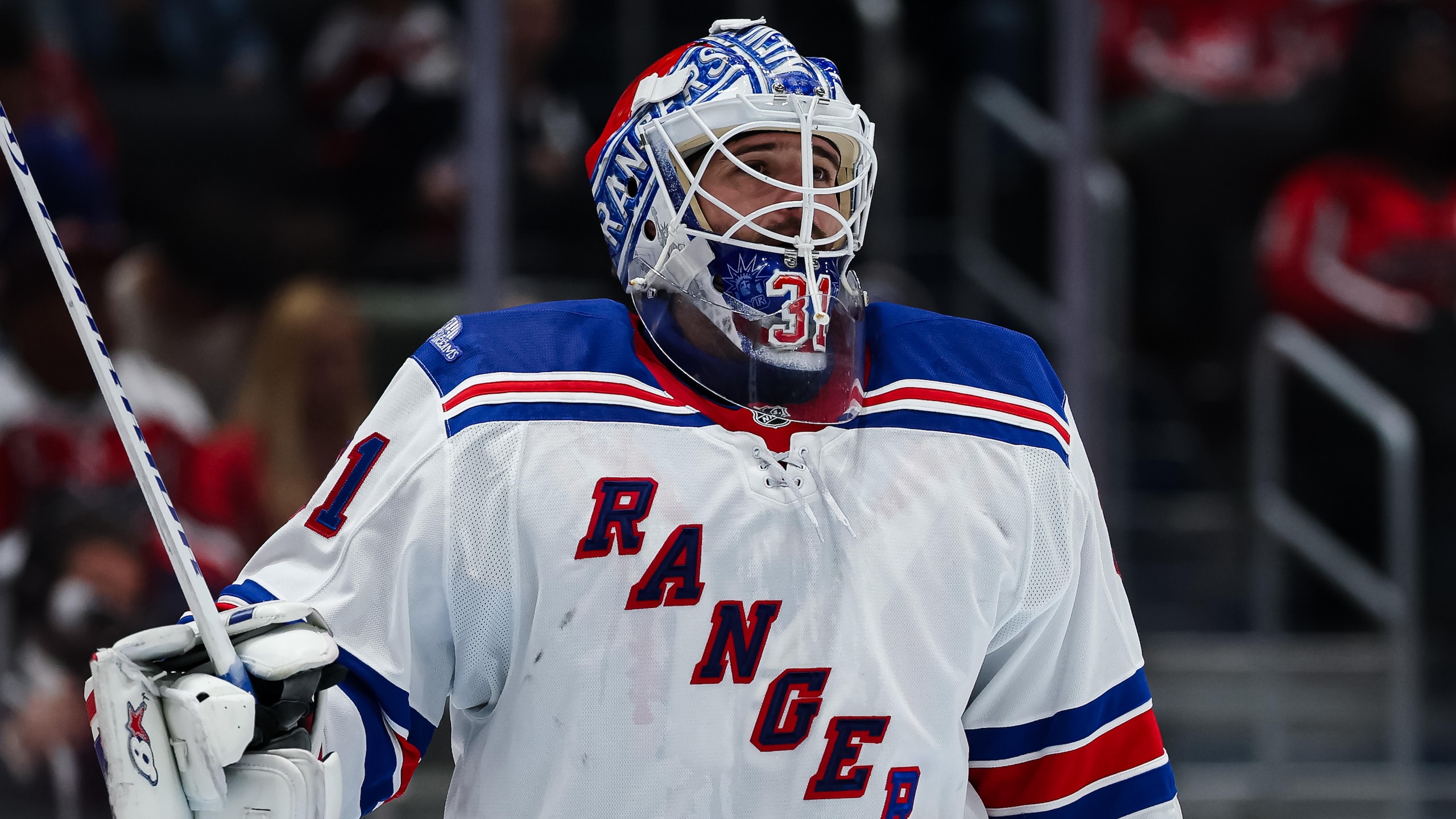
Henrik Lundqvist, when all is said and done, will have become a better goaltender than Mike Richter. At age 30, Lundqvist is the best goalie in the game today.
This is not to take away from the fact that Richter was a gifted goaltender who had his career cut short because of injuries.
He was huge in the '94 playoffs and was a big reason why they had success. Richter was a very clutch goaltender and backstopped the Rangers to their first Stanley Cup in 54 years, but, Lundqvist has done so much in so little time in the regular season for the Rangers.
This season, Lundqvist posted career-best numbers in wins (39), save percentage (.930) and goals against average (1.97) while only appearing in 62 games.
Adding a lengthy playoff run and a Stanley Cup would help solidify his place in Rangers folklore.
The biggest difference between Richter and Lundqvist is in terms of personal strain and use.
Henrik Lundqvist has been forced to carry the team for seven years. Richter never had to do this alone. Richter was never relied on or pushed in the same vein as Lundqvist has been pushed year after year.
Players like Mark Messier, Adam Graves, Brian Leetch and Sergei Zubov made his job a lot easier, because if Richter gave up a bad goal, the '94 Rangers would score some in return to get the team back in the game. In years past, the Rangers would lose games even if Henrik surrendered a meager two goals.
The 2012 Rangers will only go as far as Lundqvist will take them. He is the rock, he is the iron horse, and he is the most important player the Rangers have.
Special Teams:
The '94 Rangers had so many weapons at their disposal that scoring power-play goals was easy for them. It is no surprise that they led the league with a 23 percent success rate, and that the Rangers were third in the league with a 84.6 efficiency rating on the penalty kill.
This year, the Rangers' power play was atrocious. It was one of the NHL' s worst, and is another area of weakness for New York. Killing penalties was not a problem as the team was fifth overall with a 86.2 efficiency rating.
This only speaks to the defense and blue-collar work ethic of the Rangers.
The current squad is led by Ryan Callahan, Brandon Dubinsky, Brian Boyle, Ryan McDonagh, Dan Girardi, Derek Stepan, Ruslan Fedotenko, Brandon Prust and Carl Hagelin, all serving on the team's top-two units.
These players are great at blocking shots, sacrificing the body and doing everything they possibly can to clear the puck.
Both the '94 Rangers and the 2012 Rangers had great goaltending, defense and penalty-kill units. The '94 Rangers had a successful power-play unit as well as elite scorers, and this is an area where the current Rangers don't match up.
However, both teams had the right coach, right work ethic and players needed to win a Stanley Cup. John Tortorella is well respected by his players and they give it their all every night. The close-knit nature of this squad, when paired with their great defense and goaltending, benefits them for the playoffs.
While each squad may not exactly match up, you could say that both teams did things #therightway, and there is no reason to believe that the Rangers can't win the Stanley Cup. It has been 18 years since the Cup has made an appearance on Broadway, and given the Rangers' success thus far, 2012 may finally be the year the Cup comes home to Madison Square Garden.
Tom Urtz Jr. is an NHL Featured Columnist.
For more Stanley Cup Playoffs news, updates and alerts about players:
.jpg?w=2560 "NHL Trade Grades Connor Hellebuyck")
.jpg?w=2560 "Mahomes Told Teammate to Leave Meeting")
.jpg?w=2560 "🚨 Week 8 AP Top 25 Poll")
.jpg?w=2560 "Baker Gets Glove From Rays 🧤")


.jpg?w=2560 "NFL investigating Eagles")
.jpg?w=2560 "Updates from EVERY NFL Game 🏈")

.jpg?w=2560 "CFP Bracket After Week 8 🏆")
.jpg?w=2560 "Steelers Roll Saints in Paris")