
Joe Frazier Documentary a Poignant Look at Champ's Inspiring Life, Last Years
When the great Joe Frazier passed away last November 7, it was a tragedy that shook the boxing world and reverberated throughout the culture at large. Smoking Joe had been a figure who transcended the sport—Muhammad Ali's nemesis in the most storied rivalry in the history of professional sports.
When the Smoke Clears, an excellent documentary by director and producer Mike Todd available for free on hulu.com , offers a stirring glimpse of the once fearsome champion in his final years, as well as an intriguing portrait of the entire arc of his amazing journey, from his childhood in the Jim Crow south to his ascension to the top of the boxing world to his commendable post-retirement efforts to provide hope and uplifting support through his iconic Philadelphia gym.
TOP NEWS
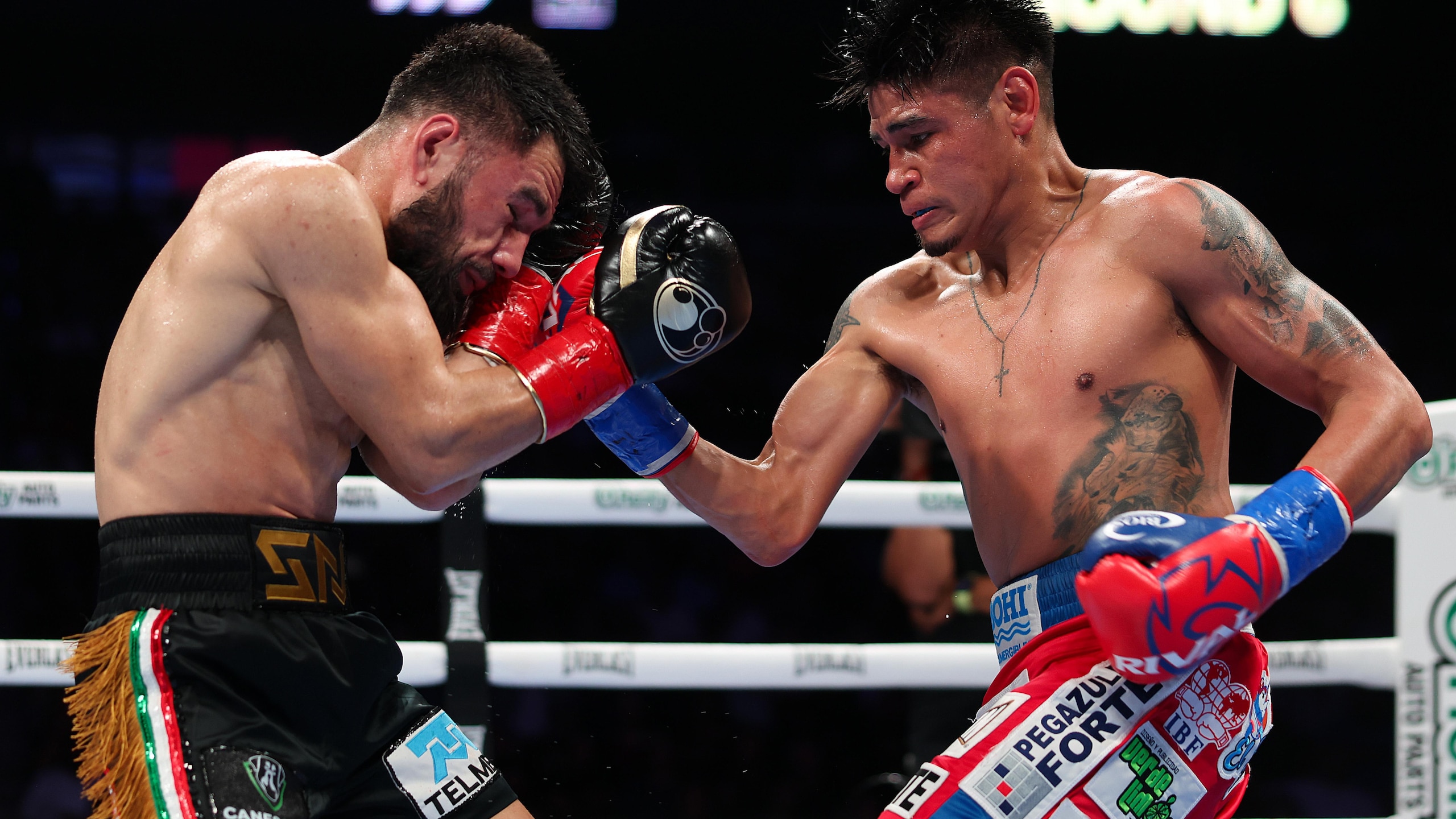
Emanuel Navarrete vs. O'Shaquie Foster
.jpg?w=2560 "Chiefs Giants Football")
Mahomes Told Teammate to Leave Meeting
.jpg?w=2560 "AP Poll Top Five Week 9")
🚨 Week 8 AP Top 25 Poll
If you're a boxing fan, you owe it to yourself to see this film. Todd does a great job grounding the film within the social and historical context of Frazier's career. What emerges is not just the story of a great fighter, but of a great man.
Todd makes excellent use of interviews. Current Ring light heavyweight champion and fellow Philadelphia boxing luminary Bernard Hopkins provides insights into the tough and dangerous life of inner-city Philadelphia and the role boxing plays for some as a source of hope and self-improvement.
Philadelphia Daily News writer Stan Hochman speaks about the fabled "gym wars," of the 1960s, when hungry young fighters would go at it so hard in sparring that they sometimes damaged their future careers.
This was the brutal background from which Smoking Joe emerged as a fighter. Todd goes beyond that to profile Frazier's childhood in Beaufort, South Carolina—a place so obscure and rural that, as one childhood friend notes, the road Frazier grew up on didn't have a name until it was named "Joe Frazier Road."
Todd shows the viewer the tight-knit community that Frazier grew up in. His sister and childhood friends remember his mother as an important presence in the community—a woman who fed children whether or not they were her own. "Nobody's child left your house hungry," notes Frazier's sister.
This backstory informs the inevitable discussion of the Ali-Frazier rivalry. It becomes clear that while both fighters were deeply concerned with improving a horribly flawed society, Frazier, though younger, came from a much more old-fashioned sensibility.
Whereas Ali became the symbol of radical revolution, Frazier was by temperament a throwback to an earlier figure like Joe Louis, attempting to open up and expand the ranges of opportunities in a racist society, rather than taking a stance of separation.
As Frazier points out in the film, when he met with Richard Nixon at the White House, he asked the Republican President to help Ali get his license back. "Maybe I was a Tom," he says, with a trace of a smirk, referring to Ali's infamous, and many believe, shameful, slur against him during the promotion of their fights. "But I was Tomming for Ali."
One of the really nice choices Todd makes as a director is to use Joe Frazier's son Marvis as a kind of narrative voice. I had the chance to see Marvis talk about his father's history fighting in Madison Square Garden less than a month after Smoking Joe's passing, prior to the Cotto-Margarito card, and I am always impressed by the way he manages to participate in his father's amazing legacy without being crushed by it personally.
The film ends on a sad note, and not just because the viewer realizes he's seeing Frazier in his last days, but because it documents the demise of Frazier's gym—a bastion of hope and positiveness in a drug-infested ghetto.
This really does seem like an unnecessary loss. Even in an age of shrinking municipal budgets, it seems like there should be funds available for an institution this historically important, with this kind of socially positive potential—and not just for Joe Frazier's sake.
The great champion led a full, if too short, life, admired by millions and loved deeply by a tight-knit family and large circle of friends. No, the true tragedy of Frazier's gym closing is the loss that it will represent to future generations of young people who would have continued to benefit from it.




.jpg?w=2560 "Baker Gets Glove From Rays 🧤")
.jpg?w=2560 "Updates from EVERY NFL Game 🏈")
