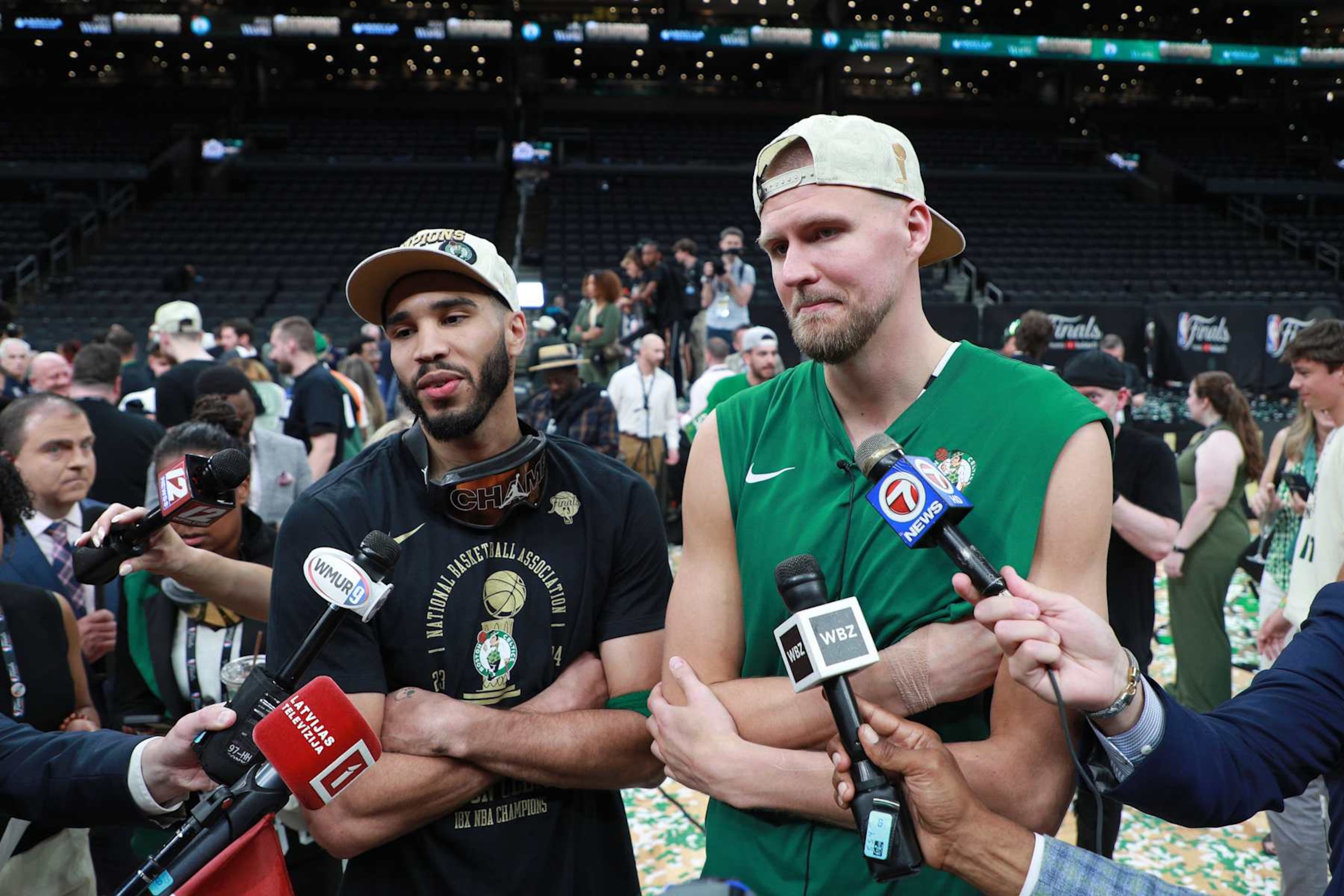

Projecting Jayson Tatum, Celtics Stars' Ceilings and Floors for 2024-25 NBA Season

The Boston Celtics will carry a simple goal into the 2024-25 NBA season: Make it just like the last one.
Last season, they were wire-to-wire the Association's top team, and they punctuated that run with the franchise's record-setting 18th league title.
So, how can they make this campaign a carbon copy of that one? Well, they started the process already by nearly retaining the entirety of their roster. Now, it's all about executing the game plan to the same degree.
All of their players will have a say in whether it's a successful effort or not, but their brightest stars will carry the heaviest burden. Let's break out the crystal ball, then, and see how great or not-so-great things could go for three of Boston's best players.
Jaylen Brown
1 of 3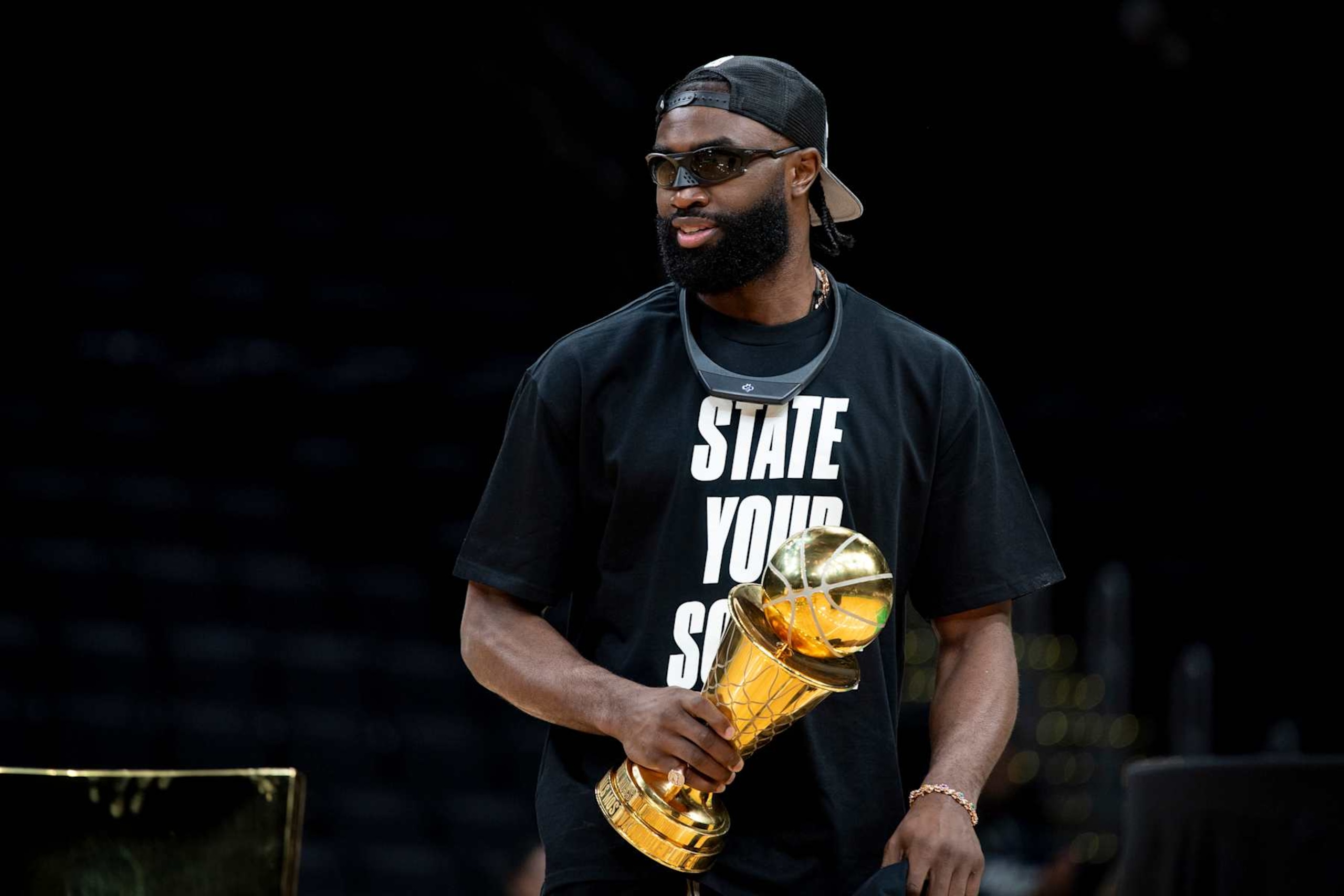
Ceiling: His three-point percentage improves, the gap widens between his assists and turnovers, and he returns to an All-NBA roster.
After signing a historic contract extension last summer, Brown had the weight of the basketball world on his shoulders. That didn't stop him from authoring a special season, which he ended on the highest of high notes by taking home MVP honors of both the Eastern Conference finals and the NBA Finals.
He could have been a pinch more productive, though, a sentiment apparently held by All-NBA voters who kept him off those rosters. Getting his All-NBA spot back is doable, especially if he can revive his three-point percentage (34.8 percent over the past three seasons; 39 over the two campaigns prior) and create more separation with his averages in assists (3.6) and turnovers (2.4).
Floor: His shooting rates worsen, his turnovers increase and he gets left out off of an All-NBA team again.
Brown's outside-the-arc regression is real. He hasn't simply saw his percentage drop, but his volume is down, too. In 2020-21, he averaged 2.8 threes on 39.7 percent shooting. Last season, those numbers dipped to 2.1 and 35.4, respectively. He also couldn't find his touch from the foul line last season, either (70.3 percent).
If he isn't an efficient shooter, that might put more pressure on his playmaking. It hasn't exactly been a huge asset for him. Just two seasons back, his averages in assists (3.5) and turnovers (2.9) were uncomfortably close. If his shot remains erratic, and he can't keep his giveaways down, he might be kept off the All-NBA teams again.
Kristaps Porziņģis
2 of 3
Ceiling: Porziņģis is healthy more often than not, and the Celtics are unstoppable when he is manning the middle.
While injuries deralied Porziņģis' playoff run, he did a decent (for him) job of staying upright during the regular season. His 57 outings may not sound like much, but they were his second-most appearances since 2019-20. He looked great when he played, too, averaging 20.1 points as a third option, piecing together a 51.6/37.5/85.8 shooting slash and tallying his most blocks in four seasons (1.9 per outing).
He'll miss the start of this upcoming season after leg surgery, but the hope is that once he returns, his absences will be minimal and his play will remain at a near-star-level.
Floor: He doesn't look the same upon returning from offseason surgery, and Boston pokes around to see if there's any way to unload his contract.
Injuries have been a common theme throughout his career, which is a big reason why Boston was incentivized to take him off of Washington's hands. The worry isn't merely that his injuries will keep him off the court, but also that he may not look like himself when he plays. Previous leg problems have limited his mobility upon his return, and he won't be of much use to the Celtics if he's easily exploited in pick-and-roll coverage.
Boston's roster is absurdly expensive, but that makes sense given its championship quality. If a hobbled Porziņģis can't contribute to another title run, though, it wouldn't be shocking to see the Celtics shop him around. They may not bring back better players in return, but they might find more reliable options with more digestible contracts.
Jayson Tatum
3 of 3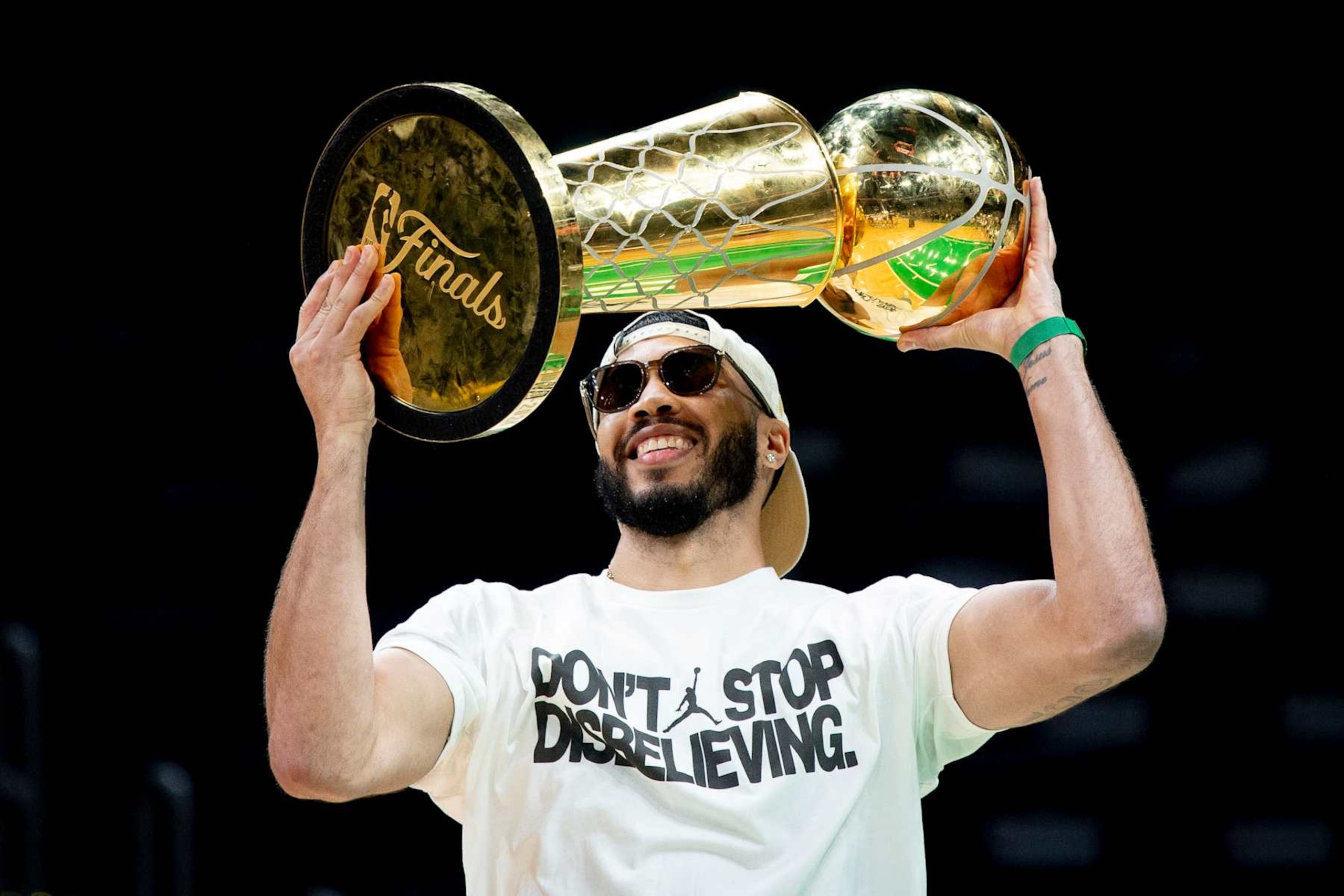
Ceiling: Tatum's efficiency and Boston's win rate both improve to the point he is finally crowned MVP.
Tatum should've silenced a lot of skeptics over the last year. He proved he can be the best player on a championship team while once again posting some of the most well-rounded stats in basketball. Still, there might be critics who note that he wasn't always great in the postseason (or the Olympics for that matter). It's also a reality that while he's often mentioned in MVP conversations, he seldom leads those talks.
He's a tough-shot-maker, but perhaps excising some of those contested looks from his offensive menu would up his efficiency. If he can push closer to 50 percent shooting from the field and 40 percent from three while also helping Boston play at an even higher level, he could have a not impossible path to earning MVP honors.
Floor: His shooting rates regress, his turnovers increase and someone swipes his All-NBA first-team spot.
Tatum shot 47.5 percent from the field and 43.4 percent from three as a rookie. He never matched those marks in the six seasons since. He sometimes hovers around a 45 percent conversion rate overall with a 35 percent success rate from three. That's not inefficient per se, but those aren't the kind of numbers you'd associate with an MVP candidate who counts scoring as his greatest strength.
He might backtrack a bit from last season's marks (47.1 overall, 37.6 from three), and he might also see a few more turnovers come his way (the 2.5 he averaged last season were his fewest in four years). If he regresses in both categories, his three-year grip on an All-NBA first-team spot could be broken.


.jpg?w=2560 "Mahomes Told Teammate to Leave Meeting")
.jpg?w=2560 "🚨 Week 8 AP Top 25 Poll")

.jpg?w=2560 "Baker Gets Glove From Rays 🧤")
.jpg?w=2560 "5 Teams Eyeing Jonathan Taylor")

.jpg?w=2560 "Steelers Roll Saints in Paris")
.jpg?w=2560 "NFL investigating Eagles")
