
Ranking the Top 10 Philadelphia Athletes of All Time
You wanna get a Philadelphia sports fan going, just mention Santa Claus.
Then duck.
These folks really, really dislike it when out-of-town media outlets bring up an incident that saw their forebears boo Santa while pelting him with snowballs during a 1968 Eagles game as an example of their unruly behavior.
So that won't be mentioned here. No siree. Not one word about it.
What we are endeavoring to do figures to be about as popular—compile a list of the top 10 athletes in Philadelphia history.
How do you do that when the Phillies were founded in 1883, the Eagles in 1933, the Sixers in 1946 and the Flyers in 1967? That's a ton of ground to cover, a ton of players to consider.
About the only one we can eliminate for certain is Andrew Bynum, unless you want to include him for his bowling exploits. Beyond that, there are a great many worthy candidates.
So here goes. And I eagerly await your snowballs.
Honorable Mentions
1 of 11.jpg?w=2560 "SUPER BOWL EAGLES")
Bernard Hopkins: He fought for 28 years, until age 51, long enough to hold the middleweight and light heavyweight titles at various times. Hopkins won one of them at age 49, becoming the oldest fighter to accomplish that.
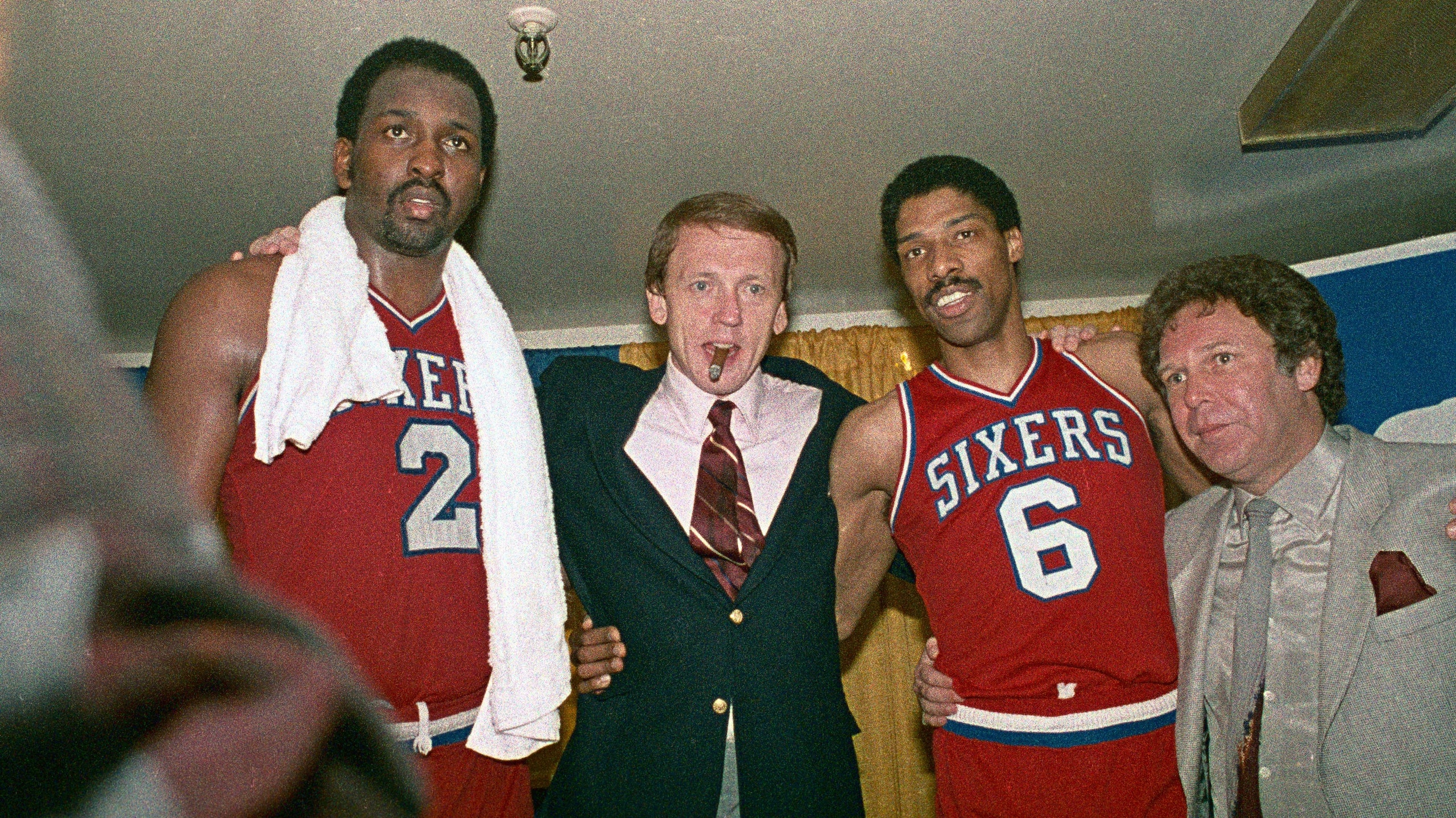
Moses Malone: Malone spent only four years in Philly, but he was the catalyst of the Sixers' last title team. Fun fact: It said "Fo', Five, Fo'" on each player's championship ring, an homage to Moses' memorable rallying cry.
Brian Dawkins: Dawkins made an enormous impact both on the Eagles' fanbase and opposing receivers. Just ask Atlanta tight end Alge Crumpler, whom Dawkins leveled in the 2004 NFC championship game. Nobody tapped into the Philly vibe to a greater degree than this Florida native.
Jimmie Foxx: Foxx spent the first 11 of his 20 seasons with the old Philadelphia Athletics, hitting 302 of his 534 homers for them, leading them to a world title in 1929 and winning the triple crown in 1933.
Steve Van Buren: Van Buren led the Eagles to back-to-back NFL championships in 1948 and '49. He also won three rushing titles and became the first NFL player to rush for more than 1,000 yards twice. He retired as the NFL's all-time rushing leader.
10. Jason Kelce
2 of 11.jpg?w=2560 "Eagles Cowboys Football")
Forget for a moment his ubiquity as a pitchman and podcaster, and appreciate the fact that Jason Kelce is one of the greatest centers of all time, a sure-fire Hall of Famer and a beloved figure in Philly. That's not something you usually see from someone who played such an unglamorous position.
Then again, he did anchor one of the greatest offensive lines ever. He was also part of a Super Bowl championship team in 2017, and nearly a second five years later. Six times in his 13-year career, he was named first-team All-Pro.
Former NFL lineman Brian Baldinger, now an NFL Network analyst, once told me that Kelce "revolutionized the position" because of his speed and ability to make blocks downfield and on the perimeter. His mind was no less quick.
Again and again, he would diagnose the defensive look and make the appropriate counter-measures. It is why the Eagles were so difficult to blitz on his watch.
Kelce's connection to the fanbase was cemented when he donned a Mummers costume and addressed the crowd celebrating the Birds' Super Bowl victory in February 2018. "No one likes us," he sang (yes, sang) at one point. "We don't care."
The latter point is open to debate. His greatness is not.
9. Bobby Clarke
3 of 11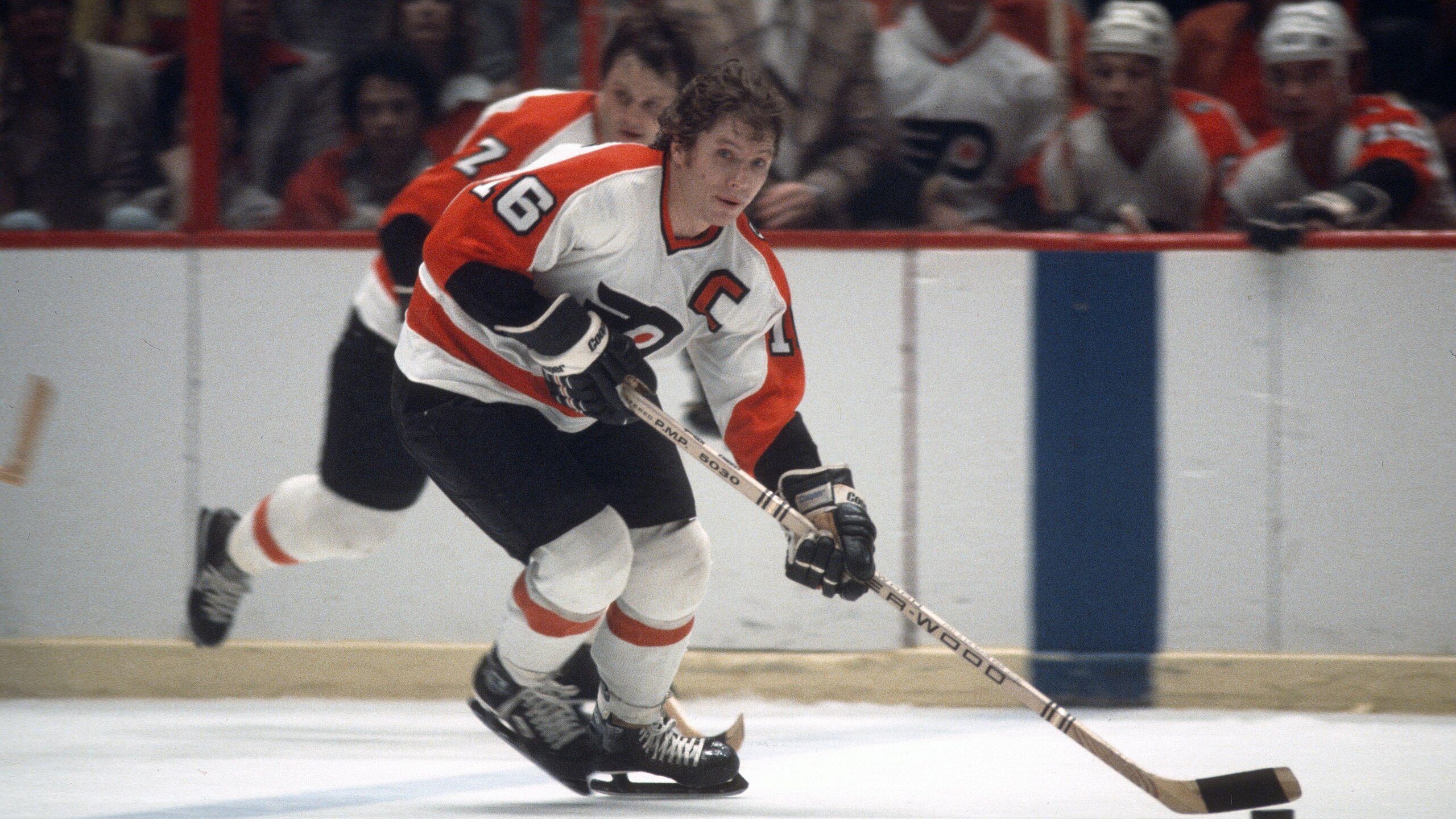
If Bernie Parent was the backbone of those Flyers teams, Bobby Clarke was the face. And Sports Illustrated's Mark Mulvoy once described it as being that of a man who was "a tenacious, gap-toothed, diabetic rink rat, with the guts of ten dozen burglars."
Other Broad Street Bullies might have been more feared pugilists, but Clarke set the tone with his feistiness, as might be expected of a 5'10", 185-pound center from the northern Manitoba mining town of Flin Flon.
During the Flyers' run to their first Stanley Cup in 1973-74, he scored the overtime goal that won Game 2 of the Finals. He also consistently frustrated Bruins star Phil Esposito in the faceoff circle.
Clarke, the league MVP in 1973, won it again as the Flyers repeated in '75, then took home the Hart Trophy a third time the following season. When he retired, he was fourth all-time in assists and 11th in points. He still holds club records for games, assists, points, plus-minus and short-handed goals, as well as playoff records for games, assists and points.
Clarke is too often remembered in Philadelphia for two failed stints as the Flyers' general manager, despite two runs to the Cup finals. That seems unfair. The Flin Flon Man deserves better.

.jpg?w=2560 "Packers 49ers Football")
.jpg?w=2560 "Lions Cardinals Football")
8. Bernie Parent
4 of 11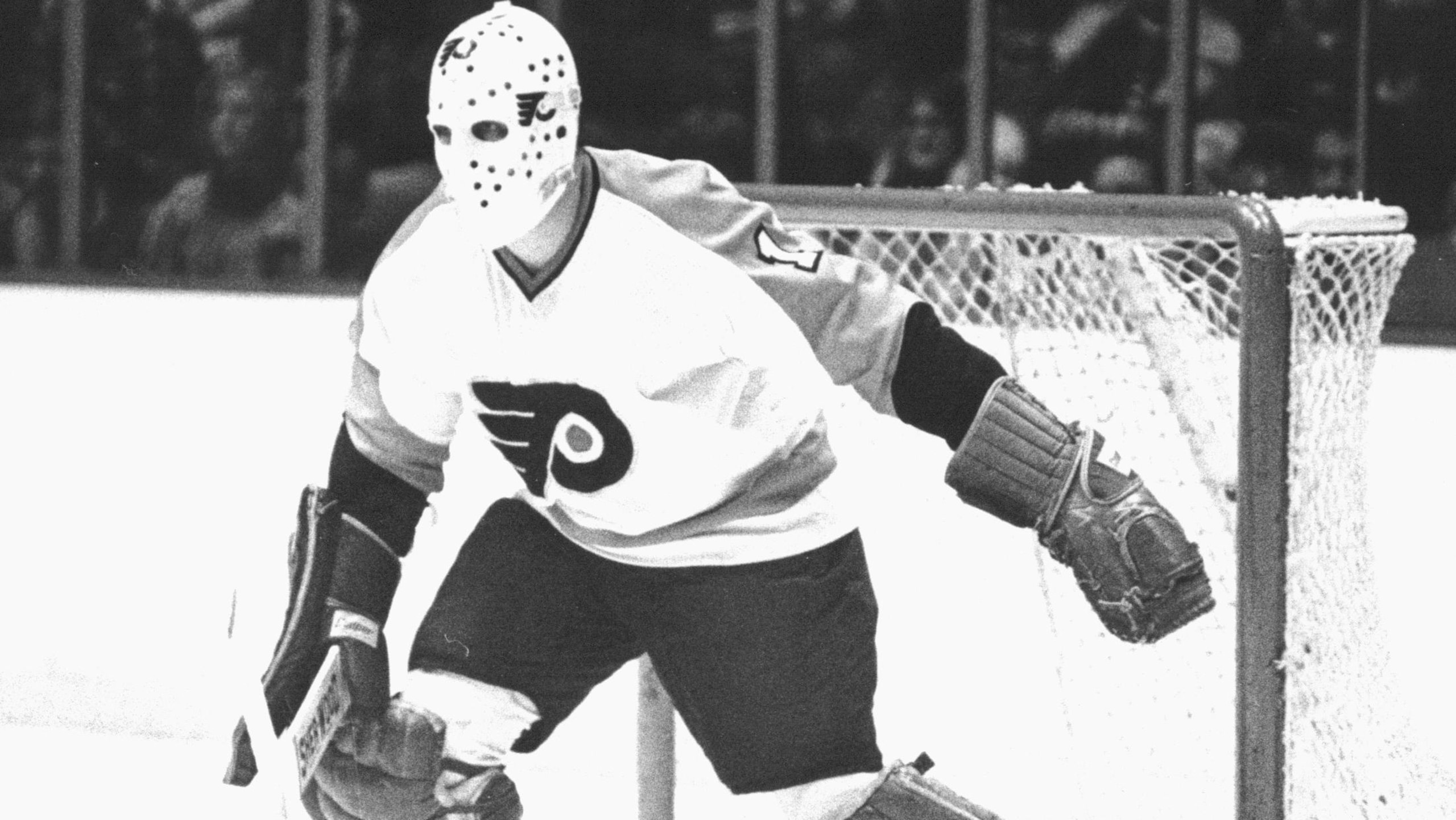
When the Flyers won back-to-back Stanley Cups in 1973-74 and 1974-75, a popular bumper sticker popular in the Delaware Valley read as follows: Only the Lord saves more than Bernie Parent.
It was only a small exaggeration, as the Philadelphia Inquirer's Mike Sielski noted while eulogizing Parent following his death in 2025.
During the Flyers' run to their first Stanley Cup in 1973-74, Parent topped the NHL in games (73), victories (47), shots faced (2,006), saves (1,870), save percentage (.932), goals-against average (1.89) and shutouts (12). Then Parent went 12-5 with a .933 save percentage and two shutouts in the playoffs.
The next season: rinse, repeat. Author Jay Greenberg wrote in his 2017 book Full Spectrum that Parent's work in net was "an art," adding that he was "economical and fluid" and could seemingly always anticipate where the puck would be.
Parent began his NHL career with the Flyers in 1987-68, the club's inaugural season. But after his third year, he was traded to Toronto, where he learned the finer points of his craft from his childhood hero, Jacques Plante.
When he returned to Philadelphia, he was more polished, more of a difference-maker.
Team captain Bobby Clarke acknowledged in The Great Philadelphia Fan Book that those clubs were talented.
"But really," Clarke added, "Bernie won all those games for us. We played a low-scoring style with little margin for error. And he never made mistakes."
7. Steve Carlton
5 of 11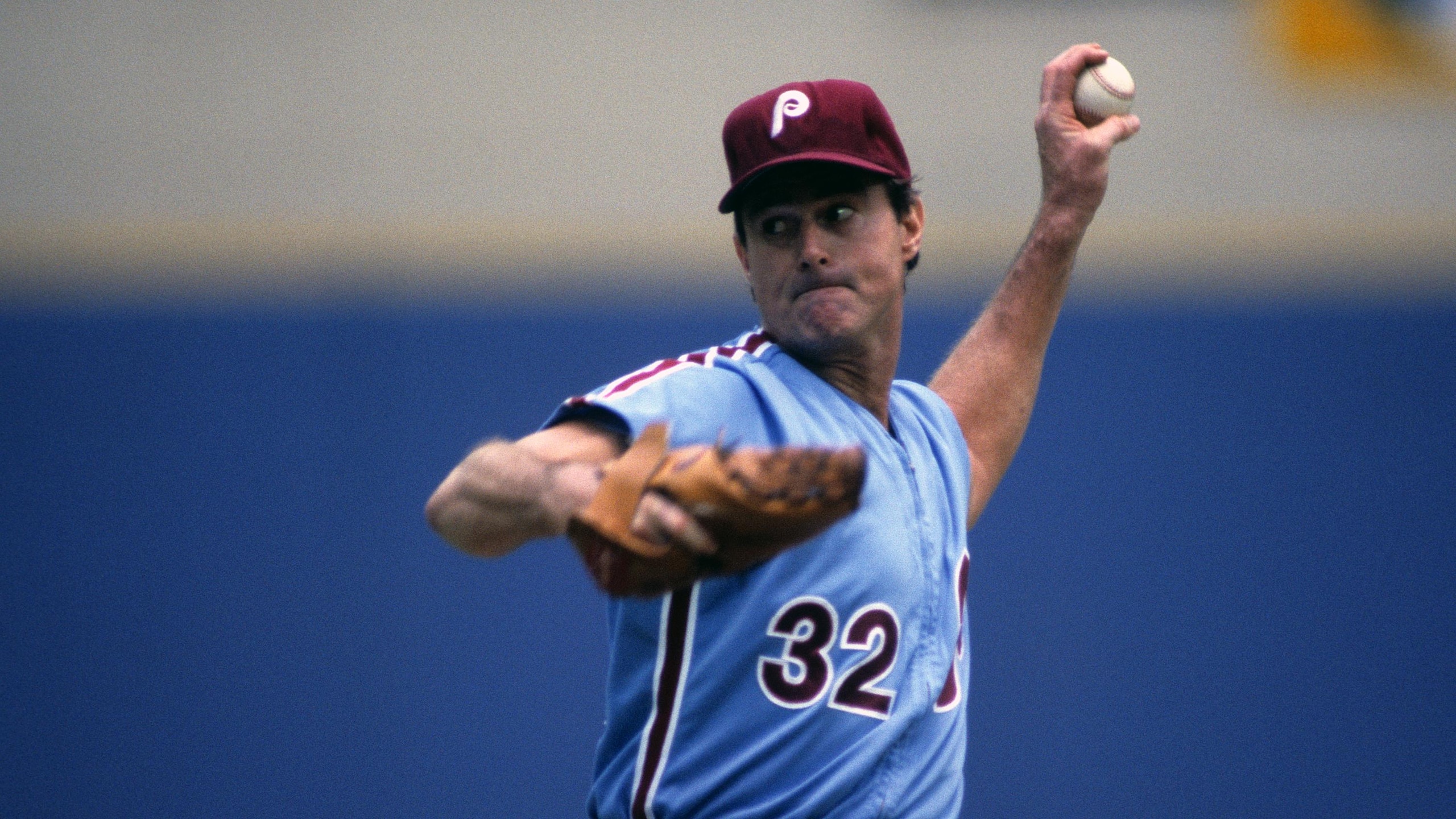
How bad were the 1972 Phillies? They hit .236 as a team, with a mere 98 homers. They committed 116 errors, and three members of their regular pitching rotation— Ken Reynolds, Bill Champion and Woodie Fryman—were a combined 10-39.
Then there was Steve Carlton. "Lefty," as he was known. Just "Lefty."
On a team that finished 59-97, he somehow went 27-10 with a 1.97 ERA and 310 strikeouts in 346.1 innings. It was the greatest season of his Hall of Fame career, one that saw him win the first of four Cy Young Awards. Only three other pitchers in major league history have won that many—Roger Clemens (7), Randy Johnson (5) and Greg Maddux (4).
Carlton combined a singular focus with a monk's ascetic. He didn't talk to sportswriters, forcing his personal catcher, Tim McCarver, to fill in the blanks, and leading to a long career in broadcasting for McCarver. Carlton also regularly worked out with strength coach Gus Hoefling, whose philosophy centered on the martial arts and "evolved from 520 AD," as he once told a reporter.
All that served Carlton well, as did the fact that he threw a slider that locked up even the best hitters. Making contact with that pitch, Pirates slugger Willie Stargell once observed, was "like trying to drink coffee with a fork."
Carlton, who broke into MLB with the Cardinals, spent 14-plus of his 24 major league seasons with the Phils, recording 241 of his 329 victories and winning a world championship in 1980.
6. Chuck Bednarik
6 of 11.JPEG?w=2560 "Obit Chuck Bednarik")
Such was the ferocity of Chuck Bednarik's hits that they have resounded across the ages.
Any Eagles fan worth his salt surely knows of the time Concrete Charlie laid out Frank Gifford, that Giants pretty boy, in 1960. Or how Bednarik wouldn't let the Packers' Jim Taylor get up off Franklin Field's frozen turf until the clock expired on the Birds' championship-game victory that very same season.
A linebacker on those occasions, Bednarik also played center for the Birds. He did both in that game against Green Bay—played every snap, save Eagles kickoffs, in fact—and went both ways for a time in 1961 as well. That made him the last of the NFL's two-way players, and in subsequent years, he grumbled that no one followed in his footsteps.
"This two-platoon stuff is pussycat," Bednarik told Tom Fitzgerald of the San Francisco Chronicle in 2010. "It's not worth a crap."
Bednarik, who died in 2015 at age 89, was not just some codger railing at a sport gone soft. He really was as rugged as he seemed, having flown 30 bombing missions over Germany as a B-24 waist gunner during World War II.
Oh, and that hit on Gifford? It knocked the future broadcaster out with a concussion for the rest of the '60 season, and all of '61.
But the Giffer never bore him any ill will. That's just how the game was played in those days. And just how Concrete Charlie in particular played it.
5. Julius Erving
7 of 11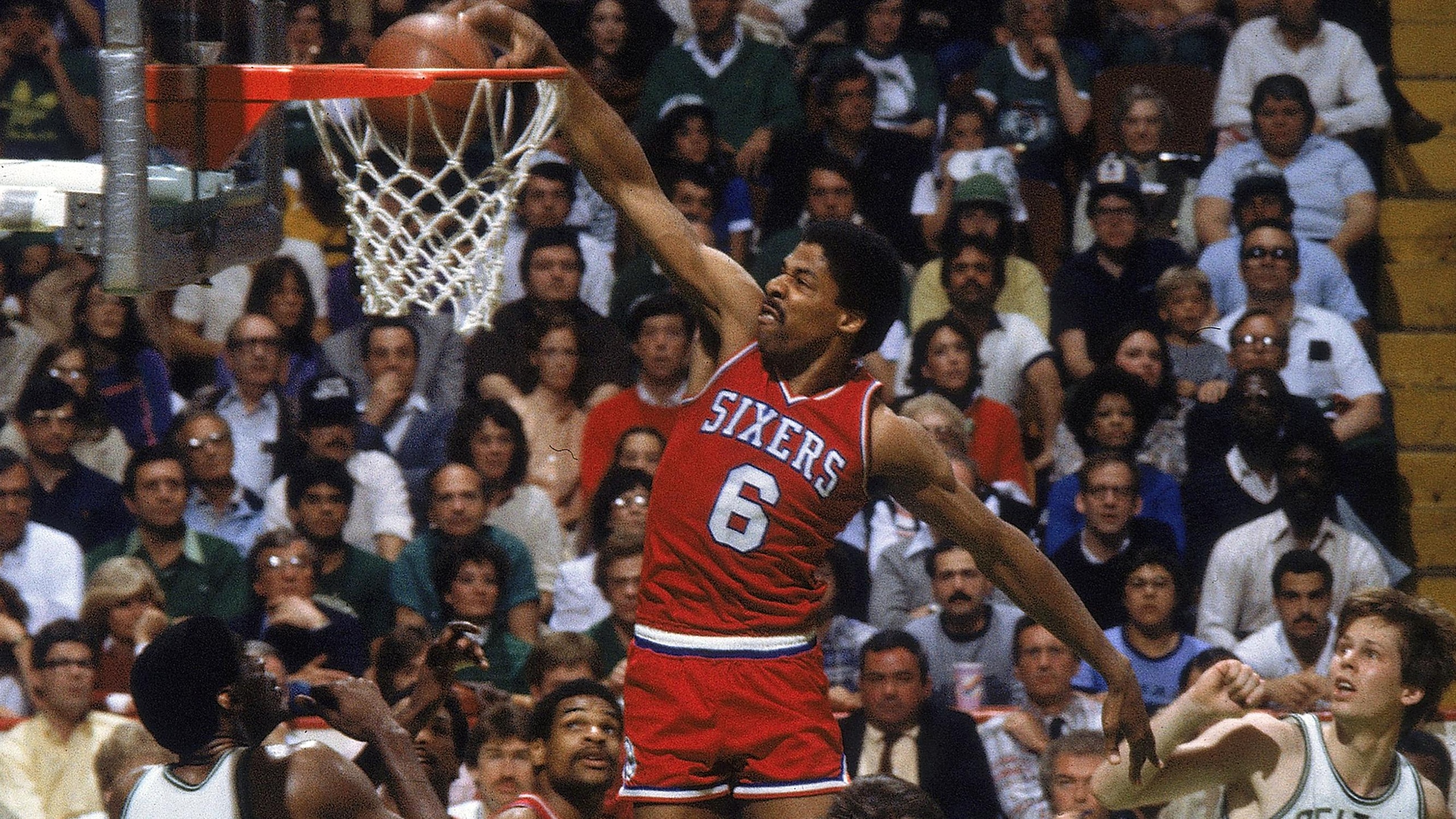
The greatest dunk of Julius Erving's career—and one of the greatest dunks ever—came on Jan. 5, 1983, in a regular-season game between his Sixers, who would win a championship months later, and the defending-champion Lakers.
The slam, which lives on in highlights packages to this day, saw Erving scoop up a loose ball and race downcourt, with Lakers defensive ace Michael Cooper in hot pursuit.
Cooper was a master of the chase-down block, long before LeBron James. But on this occasion, he saw Erving rise, the ball cuffed in his right hand, and realized discretion was the greater part of valor. So Cooper pulled the ripcord and parachuted out of bounds, ducking his head to avoid hitting it on the bottom of the backboard. One observer would later say it was as if Doc left Cooper off at the sixth floor and kept soaring up to the eighth.
Then he threw down as the Spectrum exploded and Lakers play-by-play man Chick Hearn provided the memorable narration.
"HEYYYYY," Hearn intoned. "Rock the baby to sleep and slam dunk."
The play exhibited everything Erving was about on the court—grace, creativity and showmanship. Off it, he was ambassadorial, signing every autograph, consenting to every interview, making every charitable appearance. He saved the old ABA and sent the NBA soaring toward the future, setting the stage for the superstars who would follow.
So yeah, Julius Erving could fly. But wingmen were always welcome, too.
4. Joe Frazier
8 of 11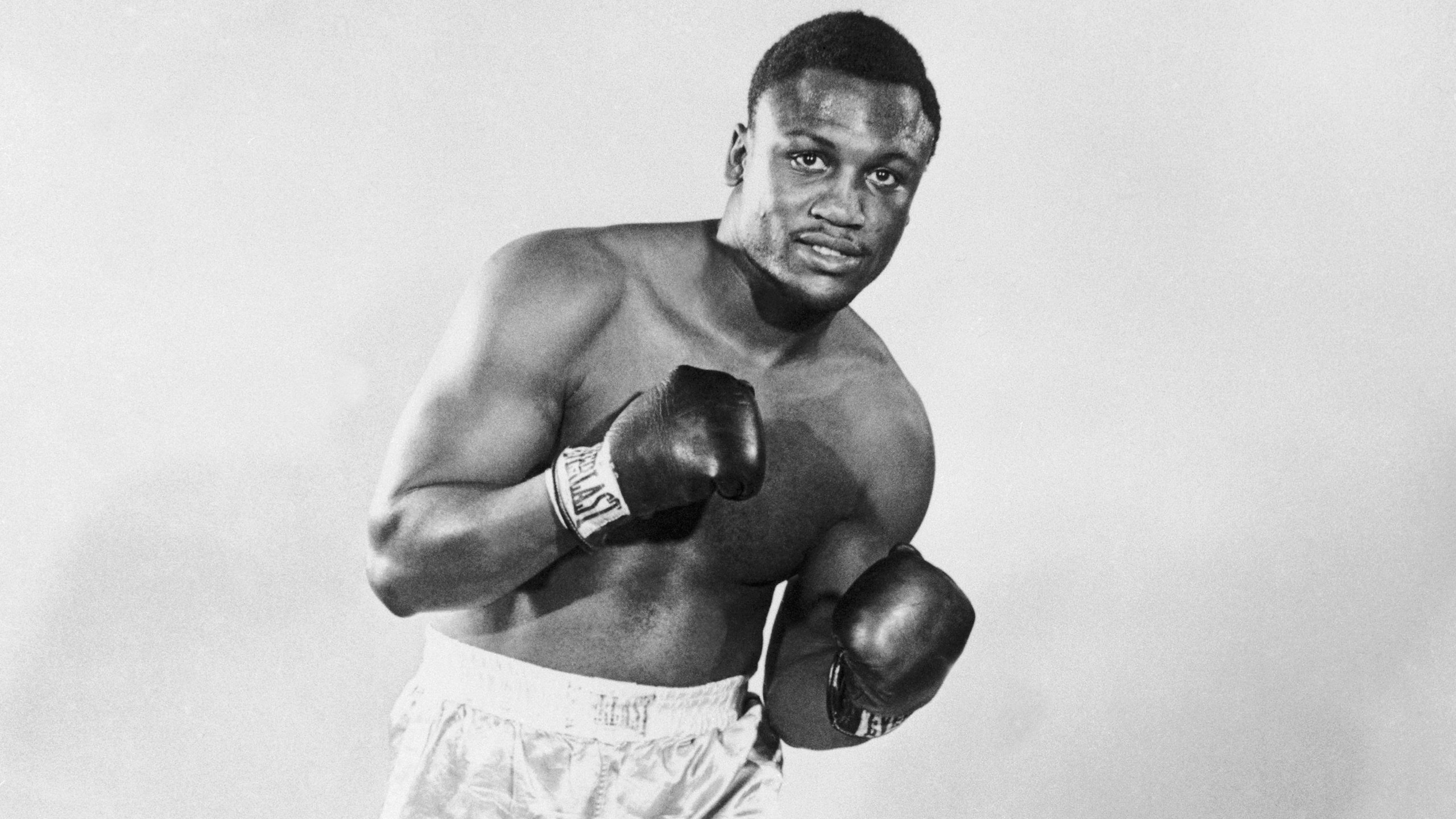
Overshadowed by Muhammad Ali in the ring and to a degree by a fictional boxer, Rocky Balboa, in his adopted hometown, Joe Frazier should nonetheless be remembered as a central figure in heavyweight boxing's last great era. He elevated his sport and most certainly elevated Ali, boxing's greatest champion.
Frazier and Ali fought three times between 1971 and '75, with Frazier winning the first bout, shortly after Ali returned from his three-plus-year exile for refusing military induction, and Ali winning the last two. By the final meeting, "The Thrilla in Manila," the enmity between the two was such that legendary boxing writer Jerry Izenberg would later say that they were fighting for "the heavyweight championship of each other."
Ali had the better of it early on, but then Frazier rallied. Another great boxing writer, the late Mark Kram, described it this way in the pages of Sports Illustrated:
"Most of his fights have shown this: you can go so far into that desolate and dark place where the heart of Frazier pounds, you can waste his perimeters, you can see his head hanging in the public square, maybe even believe that you have him, but then suddenly you learn that you have not."
Ali eventually prevailed, but he told Kram that the encounter was "the closest thing to dyin' that I know."
And that is how Joe Frazier should be remembered—as a guy who raised up a great champion by forcing him to dig deep. That in a sport of tough guys, he was as tough as any.
3. Reggie White
9 of 11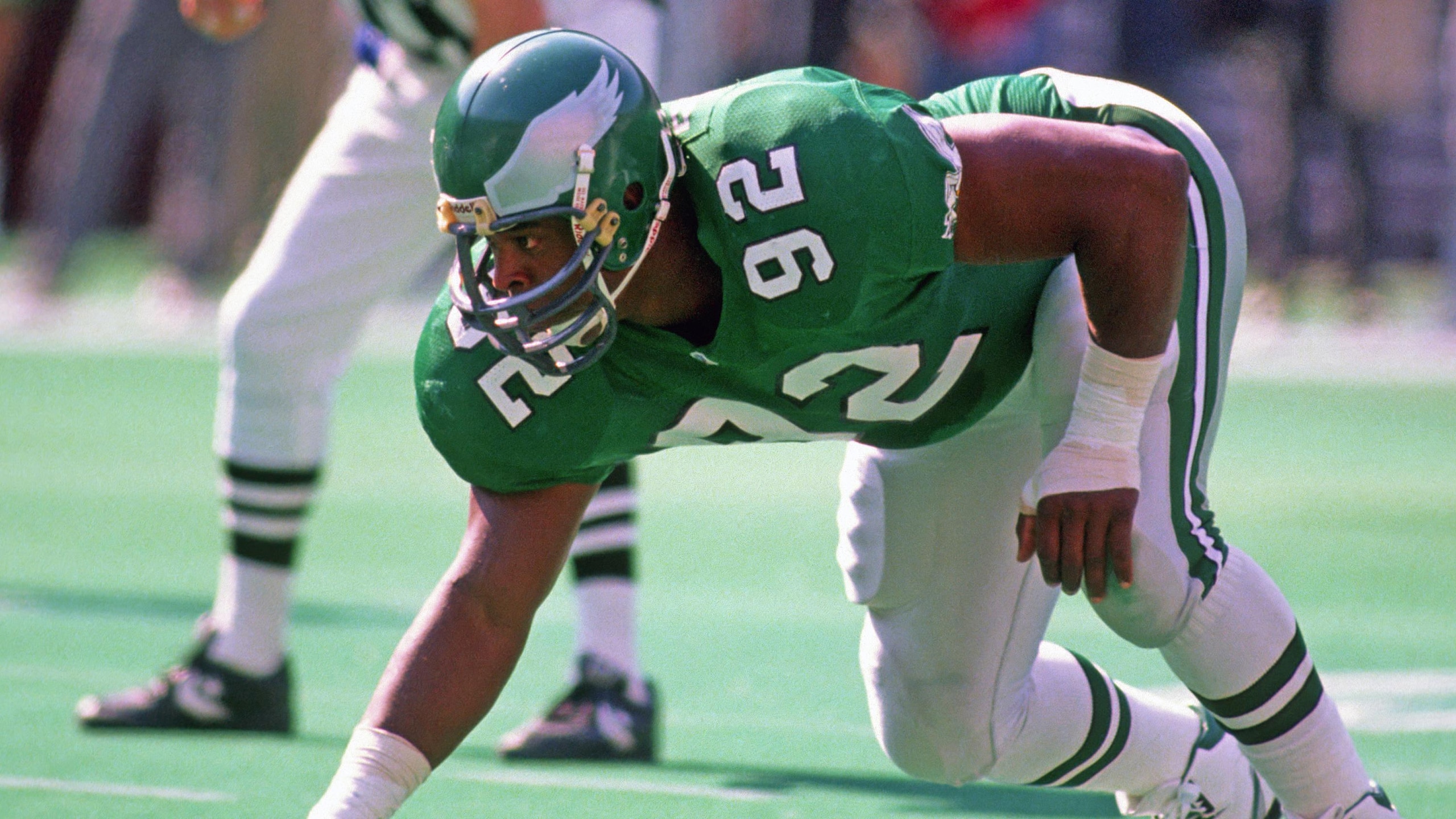
A Baptist minister first and an edge-rusher second, Reggie White once said he set out each Sunday to put the fear of God into opponents.
"When I'm on the field, I'm gonna do my best to intimidate the guy in front of me," he told NFL Films, "and I'm gonna do my best to have him intimidated before I play him. That means this week I've gotta play a good enough game where he'll look at it next week and say, 'Oh man, look what he did to him.'"
White, whose nickname was The Minister of Defense, is known for winning a Super Bowl with the Packers during the 1996 season. But he actually played eight seasons in Philadelphia, two more than he did in Green Bay. He also recorded 124 of his 198 career sacks as an Eagle in 121 games.
That includes a career-best 21 sacks in a 1987 season shortened to 12 games by a players' strike. That earned him the first of the two Defensive Player of the Year awards he would accrue in his career. He also had 18 sacks in 1986 and 1988 along with 15 in 1991.
White was inducted into the Pro Football Hall of Fame in 2006, two years after his death at age 43. On his HOF page, he is quoted as having once said that his goal was to be the best to ever play his position.
"I believe," he added, "I've reached my goal."
2. Mike Schmidt
10 of 11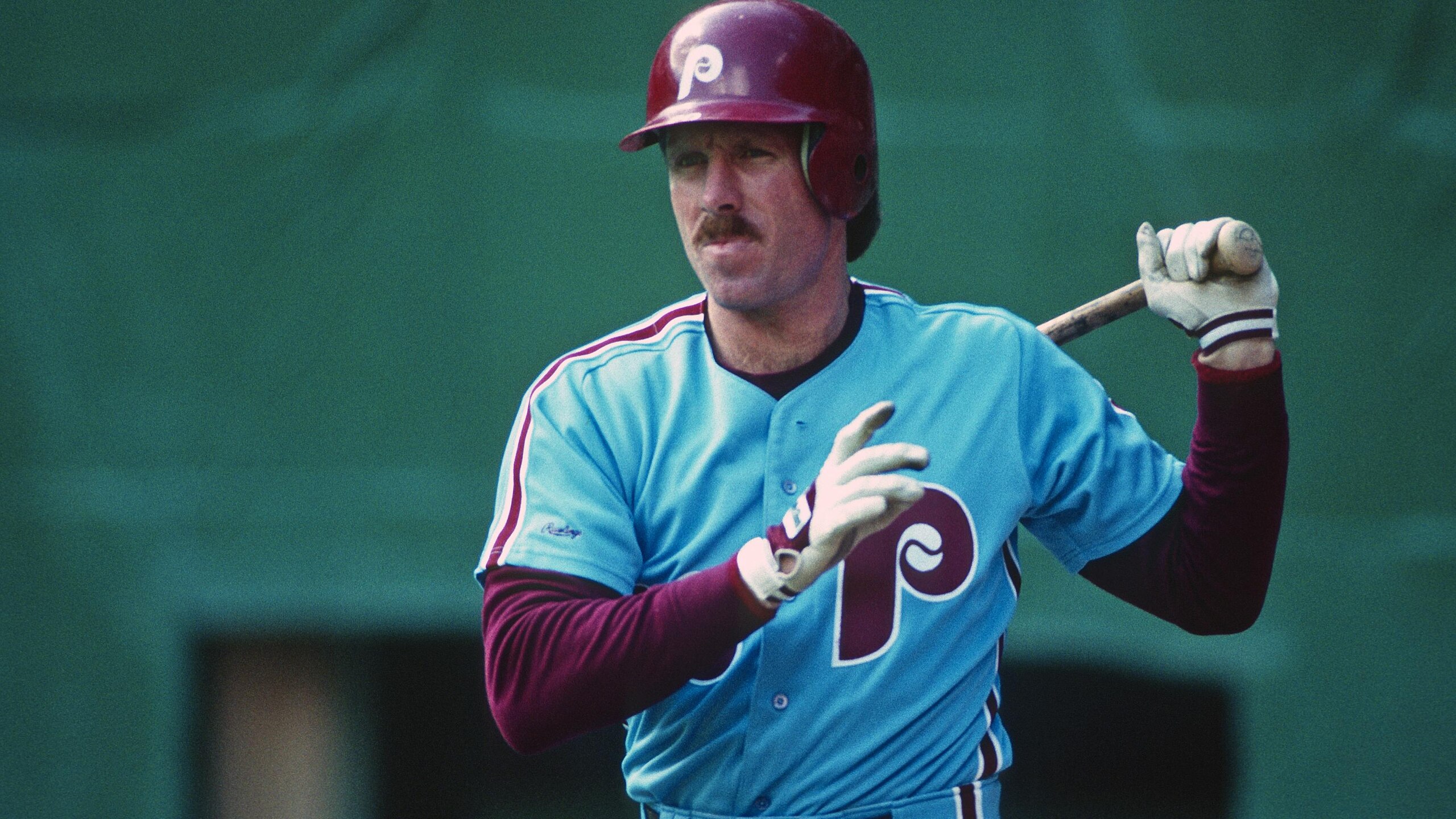
Michael Jack Schmidt—as he will forever be known thanks to the home run call by Harry Kalas, the Phillies' legendary play-by-play voice—was talented but tormented. He grappled with the expectations placed upon him while playing for 18 years in a notoriously tough city.
Widely considered the greatest third baseman in major league history, Schmidt went deep 548 times while making 12 All-Star teams, earning 10 Gold Gloves and collecting three National League MVP awards. (The first came after he led the Phils to the 1980 world championship.)
But even as he was unfurling one great season after another, he said the following, as noted in The Great Philadelphia Fan Book: "Only in Philadelphia do you have the thrill of victory and then the agony of reading about it the next morning."
Even as he was about to enter the Hall of Fame in 1995, he told Philadelphia Magazine the following: "It's hard for me to have good things to say about a town that never did anything for me and made life miserable for me."
He admitted on a 2025 podcast that he regretted the latter statement, adding that he had mended fences and come to love the city. And no less a legend than Julius Erving said in a 2024 MLB Network documentary that Schmidt belongs on the city's Mount Rushmore of sports heroes.
That's inarguable.
1. Wilt Chamberlain
11 of 11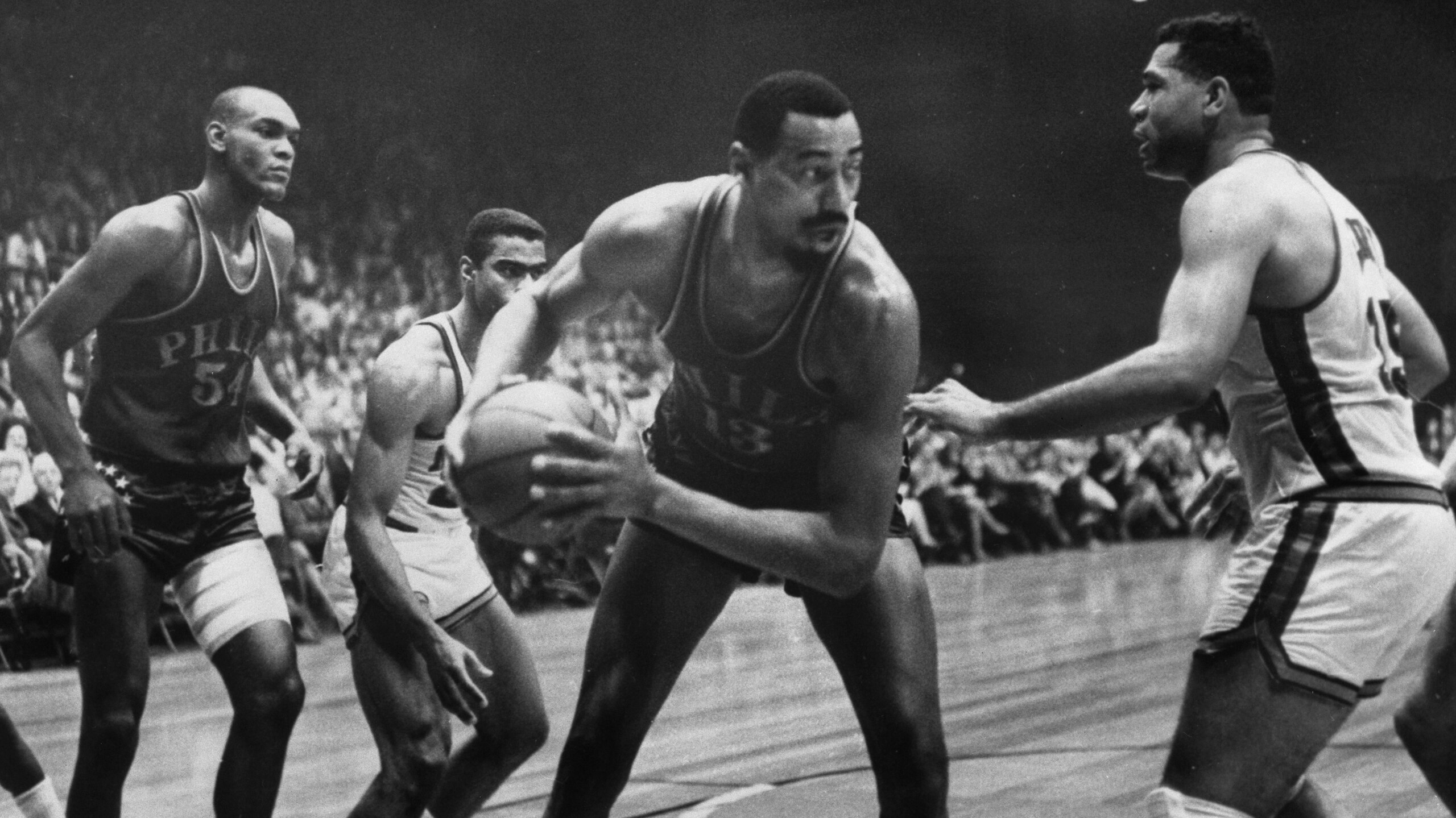
Wilt Chamberlain was the first of the one-name NBA superstars, well before Kobe, LeBron, Luka and the rest. And now, 53 years after his retirement and 27 years after his death, he remains a singular presence.
When Oklahoma City Thunder star Shai Gilgeous-Alexander topped the 20-point mark in his 127th consecutive game early in the 2025-26 season, he broke one of Wilt's records, established 63 years earlier. And more recently, when Bam Adebayo of the Miami Heat notched 83 points against the Washington Wizards, the only name above his on the single-game scoring list was you-know-who with an even 100.
It is fair to question whether Wilt—a product of Philadelphia's Overbrook High who began his career with the Philadelphia Warriors and later played for the Sixers—was too obsessed with individual accomplishments, at the expense of team achievements. After all, he played on just two championship teams in his 14 NBA seasons, though both are among the greatest clubs of all time—the 1966-67 Sixers and the 1971-72 Lakers.
But his place in league history is beyond question.
According to The Athletic, Wilt still holds 79 individual records, most of which are as outsized as the man himself. (Consider, for example, that during that '61-62 season—the season of the 100-point game, for the Warriors against the Knicks—he averaged over 50 points and 48 minutes per game.)
"There's only one Big Fellah," former NBA player and coach Fred Carter once told me. "Everybody else was just tall. When it comes to basketball, Wilt was the Colossus of Rhodes."
.jpg?w=2560 "Steelers Browns Football")
.jpg?w=2560 "Cam Ward Says He's Not A Loser")
.jpg?w=2560 "Buzz: MHJ Hired Agents for Trade")
.jpg?w=2560 "Chargers Fall to 0-5 🤢")
