

Predicting the NBA's 10 Best Scorers In 5 Years
What will the cream of the NBA scoring crop look like five years from now? Let's see if we can find out.
I could note that this exercise is excruciating, bordering on impossible. I could also note there is no Seer blood in my familial line.
Or I could just pretend my crystal is no longer on the fritz and soldier onward.
This isn't to say I am chaperoning you through the mission at hand wearing a blindfold. Available information mixed with a dab of common sense can help us all make somewhat educated guesses.
Some notes to consider before we move forward. First and foremost: We'll be ranking players relative to points per game, not pure scoring ability. Everything from past track records and development to prospective roles and age will be taken into account.
Speaking of age: Kevin Durant was the only player last season older than 30 to crack the top 10. Keep that in mind when you don't see Age 44 LeBron James populating this list. Everyone in the top 10 was also working through at least their sixth season. Please consider this when you don't see your favorite 15-year-old prospect.
None of which means elder statesmen and 2024-25 rookies or imminently bound prospects can't make the cut. They can. They might. You'll have to scroll on to find out.
10. Reed Sheppard
1 of 10
2028-29 Season Age: 24
2023-24 PPG: N/A
The No. 10 spot on this list is reserved for taking risks. I don't make the rules. (OK, yes I do.)
Oodles of names deserve consideration. It would not surprise me if age-34 Giannis Antetokounmpo or age-40 Kevin Durant were still floating around here. I'd be a little more taken aback if age-35 Joel Embiid is playing at this level but far from floored.
Paolo Banchero (age 26), De'Aaron Fox (age 31) and Donovan Mitchell (age 32) were tough cuts. Age didn't derail inclusion for Fox and Mitchell. They'll still be absurdly good. But I'm skeptical either one will continue carrying as much scoring responsibility a half-decade from now.
Excluding Banchero is more about the belief his role will be streamlined over time. Orlando will probably have to put a more ball-dominant offensive organizer in place at some point. Leaving him off will keep me up at night. There's a high probability I look back at this with intense regret in 2029.
Cade Cunningham incites similar self-loathing. If his 2024-25 campaign features more on-ball blow-bys and better foul-drawing, I may ask my editors to delete this article from the annals of the interweb.
Cooper Flagg will be entering Year 5 by this point. Roll with him if you like. But his draft comps so far don't paint a high-volume-scoring picture.
Reed Sheppard is electric enough both on and off the ball that I'm inclined to roll the dice. His comfort level getting into the lane and pulling up on backpedaling or frenzied defenses belies his age, and he's invariably going to set nets ablaze from long distance.
Envisioning him as the engine that drives the Houston Rockets offense can be a struggle. Skip ahead, and any one of Jalen Green, Alperen Şengün, Amen Thompson or an entrenched star they trade for could be operating with more touches.
That doesn't much faze me. Sheppard's scoring bandwidth is cut more from the Stephen Curry mold than the heliocentric model. This is someone who could blow up the scoring ranks without having to monopolize as many possessions as most of his contemporaries.
Also considered: Giannis Antetokounmpo; Paolo Banchero; Scottie Barnes; Jalen Brunson; Cade Cunningham; Cooper Flagg; De'Aaron Fox; Donovan Mitchell
9. Ja Morant
2 of 10
2028-29 Season Age: 29
2023-24 PPG (rank): 25.1 (18)
Ja Morant will be young enough in 2028-29 to consider bumping him up a spot or two. But his scoring portfolio is still incredibly dependent on his ability to blast through defenses. That's not a style guaranteed to sustain as he gets closer to 30.
To Morant's credit, he has steadily increased his three-point volume. But his efficiency hasn't followed suit. Does he have the counters necessary to alter his approach and remain as effective when he's not at the apex of his athletic prime?
Veering toward "no" ultimately feels premature. Twenty-nine is far from ancient, there's a chance all the time he's missed over his career aids longevity, and having just turned 25, he can still get better.
If we're being honest, I'm more worried about Morant's playmaking intruding upon his potential as a scorer. For all the posters and almost-posters he's authored, he's a passing magician. And there are times when his deference shines through more than his explosion and scoring.
That's not a bad thing in a vacuum. But it does render this placement a little risky. I'm choosing to believe that he's capable of wearing both high-volume playmaker and bucket-getter hats for the foreseeable future.
8. Devin Booker
3 of 10
2028-29 Season Age: 32
2023-24 PPG: 27.1 (7)
This year's points-per-game ladder left me hesitant to include too many players over the age of 30. Scrolling back through returns from 2022-23, when three of the top-10 entrants were 34 or older, makes including age-32 Devin Booker a lot easier.
Here's a dirty little secret, though: He would have made the cut anyway.
Team USA/Golden State Warriors head coach Steve Kerr heaped mountains of praise on Booker following the 2024 Olympics. His sentiments reflected what many of us already know: that Booker is among the most scalable superstars in the game.
It doesn't matter whether he's tasked with directing the offense, ferrying the bulk of the scoring burden or working off the ball, he finds a way to get buckets. The past seven years have validated this concept 10 times over.
Booker went from being the centerpiece of a flawed roster to ceding offensive reins to a pass-first Chris Paul for a couple of seasons to the unchallenged primary playmaker of a Phoenix Suns team with Kevin Durant and Bradley Beal. Through it all, his scoring average has seldom fluctuated, hovering somewhere between 25 and 28 points per game.
Time has a way of permeating production—in a bad way. Booker's game should age well, but he might find himself on a version of the Suns or another organization in which he's neither the No. 1 option nor primary playmaker.
And you know what? He'll score a bunch of points anyway.



7. Jayson Tatum
4 of 10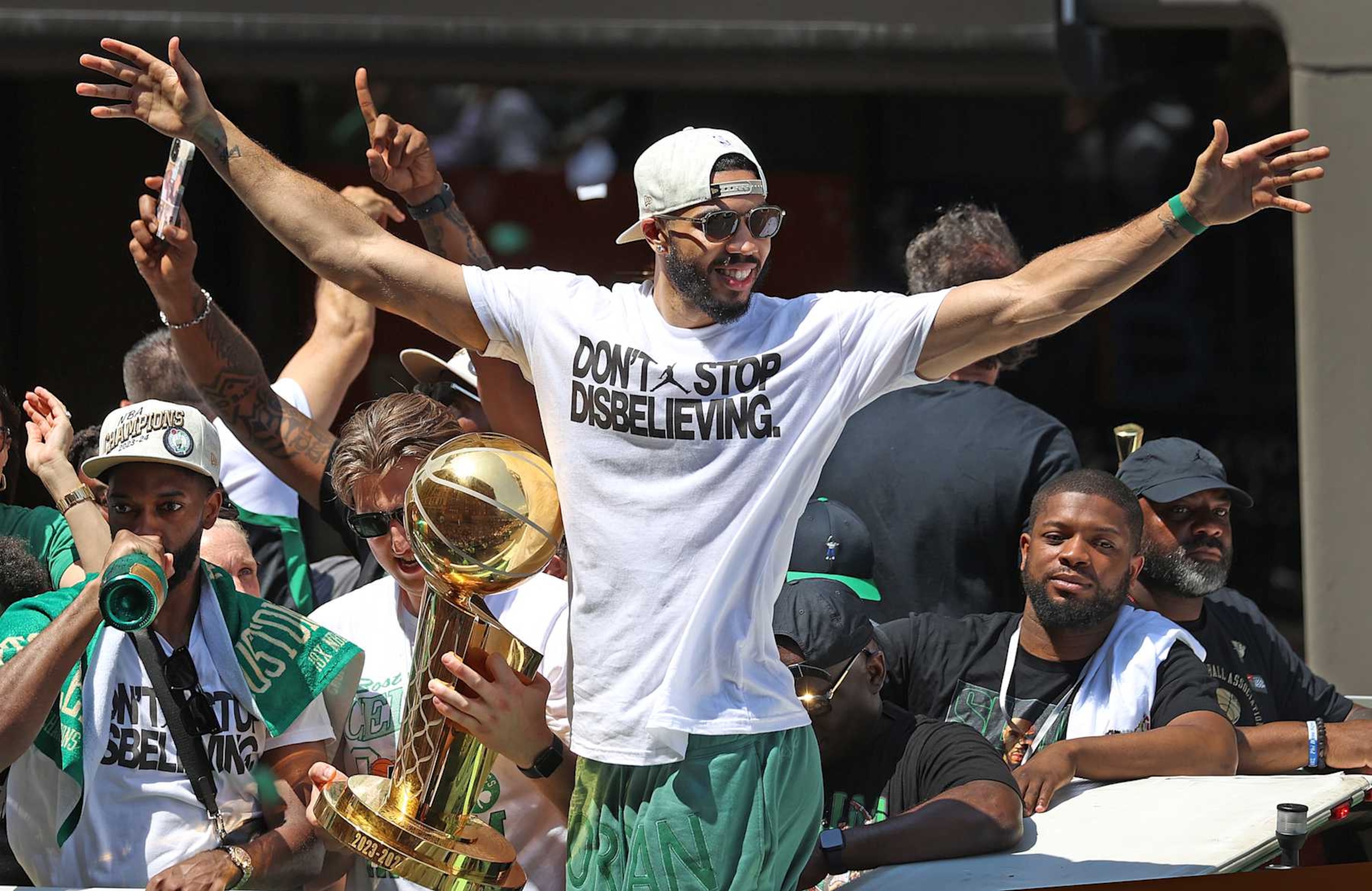
2028-29 Season Age: 19 30
2023-24 PPG: 26.9 (8)
Jayson Tatum catches a lot of flak for what he's not. It's weird, really. It probably has something to do with those highest on his beginnings shoehorning him into superstar debates. Social media discourse does not quickly forgive or forget rushes to coronate.
Regardless of how you feel about him, Tatum can flat-out score. His shot selection can be frustrating, but he's better equipped to generate buckets even when his jumpers aren't falling. And the idea that a 6'8" wing can effectively lean on an escape-dribble three-pointer like a crutch is patently ridiculous in its own right.
Tatum's scoring trajectory shouldn't descend at all over the next half-decade. If anything, his profile is more likely to rise.
Whereas he'll be playing out his age-30 crusade five years from now, the talent around him will be a combination of older or elsewhere. Jrue Holiday will be 38 by this time. Al Horford will be 42–and likely out of the league. Derrick White will be 34. Jaylen Brown will be a couple of years into his 30s. Kristaps Porziņģis will be 33.
Between second-apron concerns inviting turnover and a supporting cast that won't be in its collective heyday, Boston's reliance on Tatum will increase. So, too, should his scoring average.
6. Tyrese Maxey
5 of 10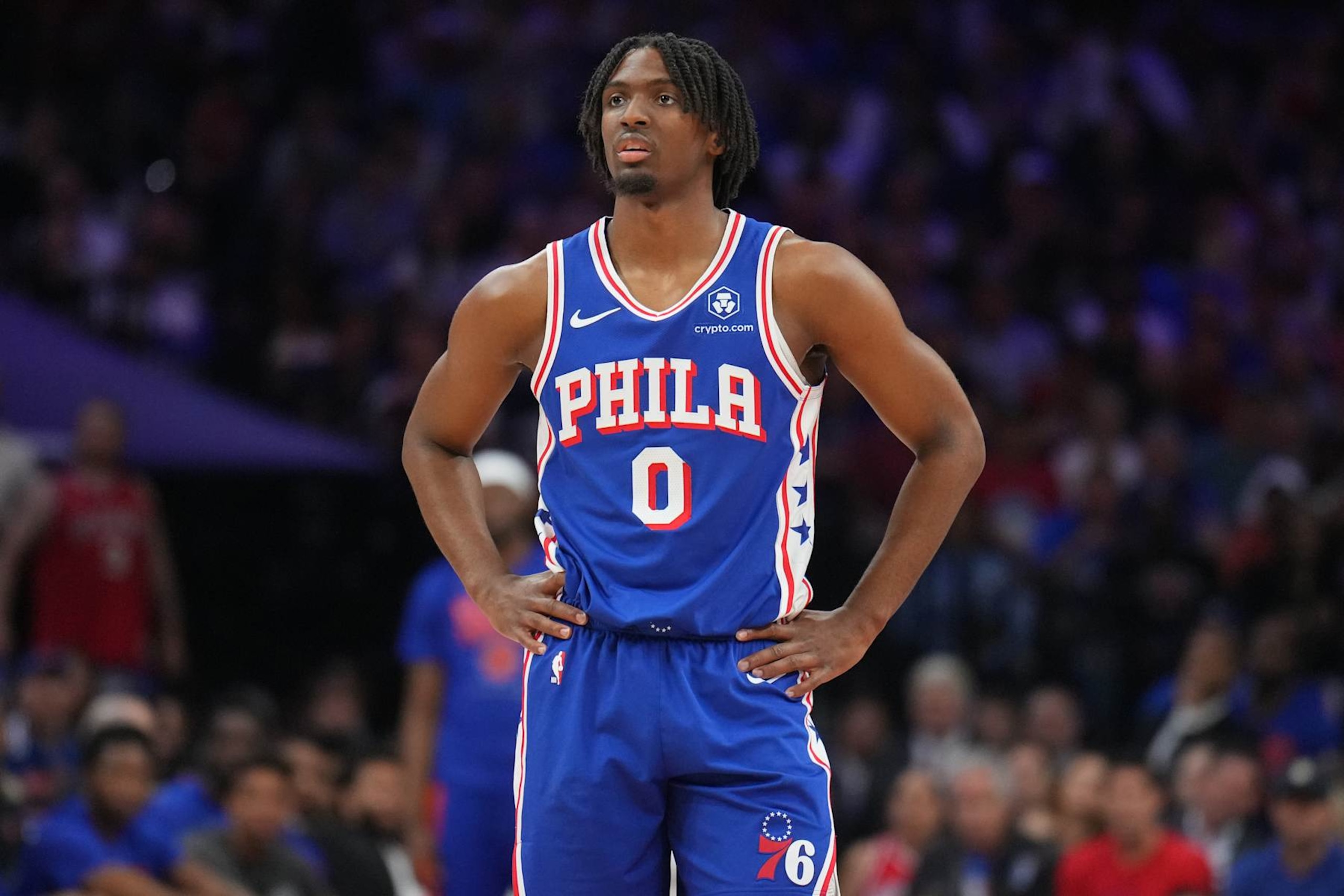
2028-29 Season Age: 28
2023-24 PPG: 25.9 (13)
Just 32 other players have averaged as many points as Tyrese Maxey last season prior to their 24th birthday. The vast majority of the list reads like a who's who of stars who would become or are currently scoring legends.
Projecting forward with Maxey is a little tougher than most others getting the nod. He isn't the No. 1 option on his own team, and his role figures to be scaled down with the arrival of Paul George.
That's also part of Maxey's appeal. His place in the Philadelphia 76ers' hierarchy has undergone numerous face-lifts. He's managed to increase his scoring output at every turn anyway.
High-volume three-point shooters with next level catch-and-attack instincts can get buckets in any setting. Plus, Maxey's big-picture stock is buoyed by the age of those around him.
George is heading into his age 34 season while Joel Embiid enters his age-31 campaign. Assuming Maxey remains with Philly into 2028-29, he will likely be the fulcrum around which they structure their offense.
5. Trae Young
6 of 10
2028-29 Season Age: 30
2023-24 PPG: 25.7 (15)
This is one instance where Trae Young's questionable fit alongside other creators works in his favor.
He has held near-total control over the Atlanta Hawks offense since entering the league. Attempting to play alongside Dejounte Murray shifted some of his usage, but that partnership ended in missed expectations and with Young once again standing as the team's lifeline.
Perhaps his game will undergo wholesale adaptations over the next half-decade. Never say never and whatnot.
But trying to spot the scenario in which taking the ball out of his hands actually makes sense could be a fool's errand. For all of Young's flaws, he is a witty passer and devastating off-the-dribble shot-maker, from both beyond the arc and floater range.
Marginalizing those skills in any way doesn't track. Effectively building around him should entail stockpiling offensive complements who double as secondary creators (and who bust their butts on defense). While he's still playing out the heart of his prime, that's not going to change—in Atlanta or elsewhere.
4. Victor Wembanyama
7 of 10
2028-29 Season Age: 25
2023-24 PPG: 21.4 (39)
Good luck coming up with an argument against slipping Victor Wembanyama into the top five.
Skeptics will point to his agency over the San Antonio Spurs offense. There will always be a player or two saddled with more on-ball creation than Wemby.
So what?
Wemby just cleared 21 points per game...while averaging under 30 minutes...with nearly three-quarters of his buckets coming off assists. Even if he becomes more of a play-finisher than play-starter over the next few years, he is hard-wired to eventually flirt with if not surpass the 30-points-per-game threshold.
The continued development of his outside shot will be key either way. If his first season is any indication, that's horrific news for the rest of the league. He swished 38.7 percent of his pull-up treys, on real volume, once San Antonio began using him as the primary big.
Framed another way: Rookie-year Wembanyama was a terror—a Defensive Player of the Year finalist on the All-NBA periphery. Just imagine what Year 6 Wemby will be like.
3. Shai Gilgeous-Alexander
8 of 10
2028-29 Season Age: 30
2023-24 PPG: 30.1 (4)
Shai Gilgeous-Alexander should be torching defenders with his bionic handles and angles and changes of speed and direction well into his 30s. Including him is non-negotiable.
Yet, if you asked me whether he's closer to first or second place or dropping near the bottom to entirely off this list, I might be inclined to roll with the latter.
And it has almost nothing to do with SGA himself.
The Oklahoma City Thunder have two other ascendant stars in Chet Holmgren and Jalen Williams. Both could eventually lighten the scoring burden upon SGA..
Rosters and pecking orders change, usually dramatically, over the course of five years. That's also sort of the point, too. Oklahoma City remains the gold star for trade assets. It's possible they cash some of them in on another high-impact player who lessens the load of every other individual building block.
Embracing more three-point volume can help Gilgeous-Alexander offset potential usage dips. I could also just be overthinking this entire exercise.
In the end, no version of the Thunder (or another team) over the next five years should wind up deploying SGA as someone less than their No. 1 option. Oklahoma City's long-term position is enough to question where he'll slot relative to the tippy top but nowhere near a deterrent for plopping him inside the top three.
2. Anthony Edwards
9 of 10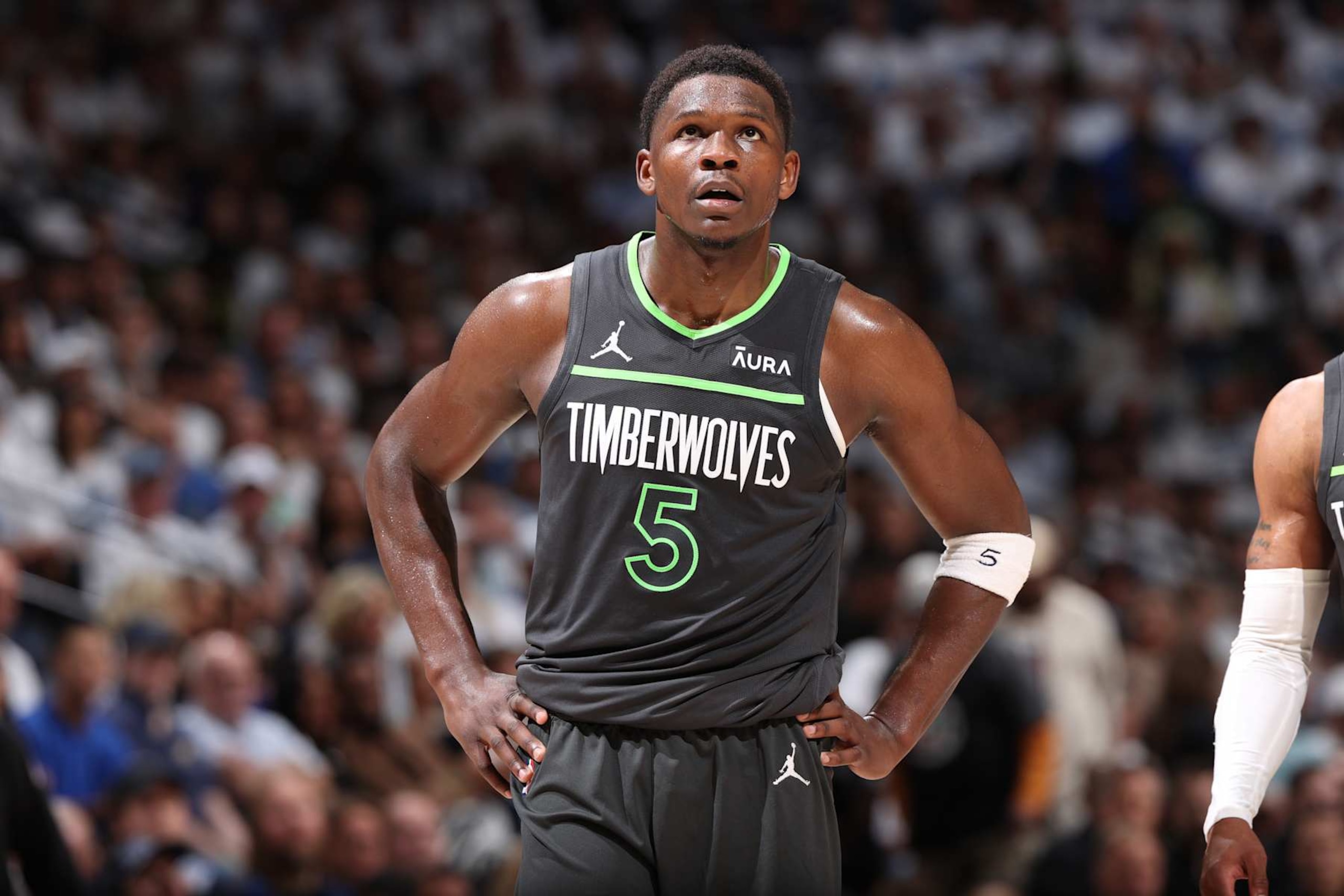
2028-29 Season Age: 27
2023-24 PPG: 25.9 (14)
Anthony Edwards could just be entering his prime-most years when 2028-29 rolls around. That's a wild proposition when he's already the face of a Western Conference finalist and an All-NBA elective.
The currently 23-year-old Edwards has upped his scoring in every season so far. And he's not done yet.
Whether it's the continued development of his pull-up three (38.1 percent last season), improving his shot selection on live dribbles and/or just generally capitalizing on inevitably better spacing around him, this is someone who should become a mainstay in the 30-plus-points-per-game conversation.
Push-back will laser in on the playmaking role he'll always have to shoulder for the Minnesota Timberwolves. Some might wonder if the development of Rob Dillingham will infringe upon Edwards' long-term value.
Eh.
There is no version of the Timberwolves that does not orbit around Edwards. And given the financial and timeline realities in Minnesota, the roster will look loads different by the time Dillingham is ready for prime time.
Ant's superstardom will be the Wolves' guiding force, and their biggest constant, until or unless he decides otherwise.
1. Luka Dončić
10 of 10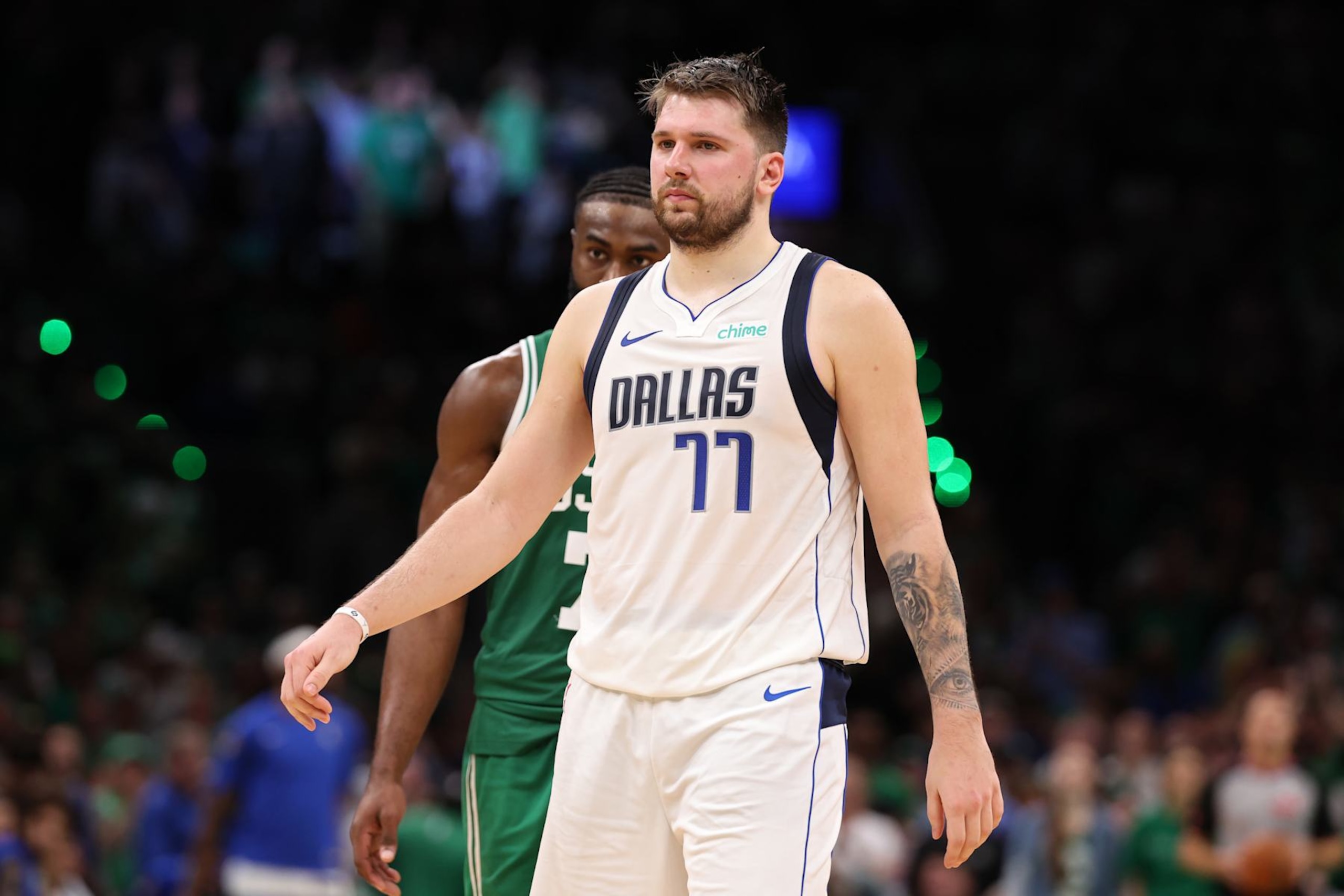
2028-29 Season Age: 29
2023-24 PPG: 33.9 (2)
Luka Dončić will still be firmly in his prime five years from now. And while his placement at the top is somewhat debatable, he ranks among the most no-brainer inclusions overall.
Sticking him ahead of everyone else is a nod to his usage. Neither the Dallas Mavericks nor any other team figures to view him as anything other than the focal point of the offense. The shot attempts and the makes that come with them will always be available.
Granted, the workload Dončić has shouldered so far could be cause for pause. He doesn't rely on athleticism to get by, but over a decade's worth of generating separation on his step-backs and taking licks in the lane could extract a toll.
Concern would win out if we were fast forwarding into the 2030s. We're not. Luka should absolutely be one the most lethal, if not outright best, scorers for 2028-29.
Dan Favale covers the NBA for Bleacher Report. Follow him on Twitter (@danfavale), and subscribe to the Hardwood Knocks podcast, co-hosted by Bleacher Report's Grant Hughes.
Unless otherwise cited, stats courtesy of NBA.com, Basketball Reference, Stathead or Cleaning the Glass. Salary information via Spotrac. Draft-pick obligations via RealGM.


.jpg?w=2560 "Love's Body Already 'Tired'")
.jpg?w=2560 "Tyreek Deal May Come Soon")
.jpg?w=2560 "Ward Nearly Walks Out of Presser ▶️")

.jpg?w=2560 "NFL investigating 2 referees for separate viral exchanges")



