
USA Women Gymnasts Forge Own Path to Redemption with Team Gold at 2024 Paris Olympics
PARIS — Team USA is back on top.
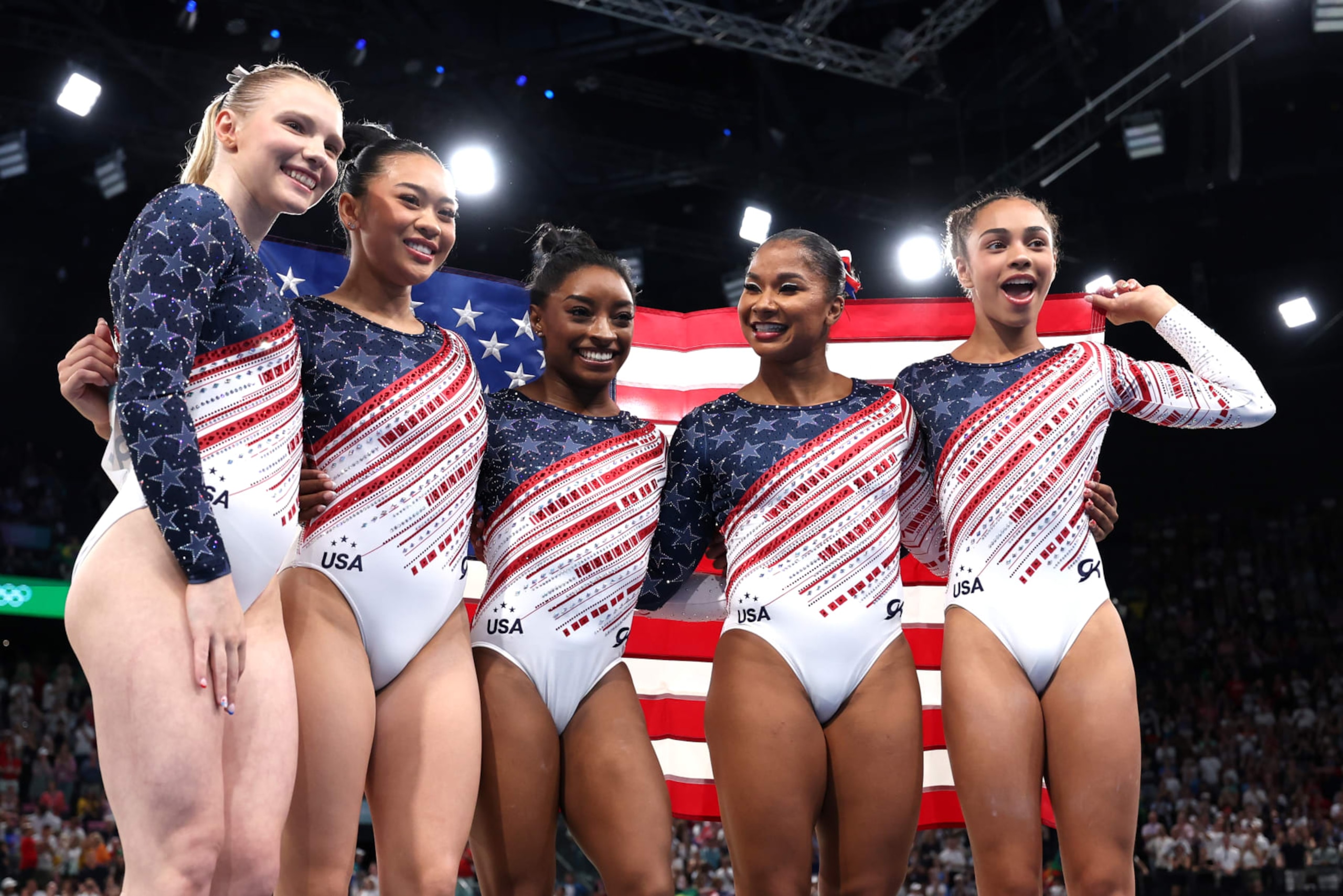
On Tuesday, the five-woman U.S. gymnastics team had a dominant performance, scoring 171.296 to take the team final win. With Simone Biles at the helm, they finished the competition nearly six points ahead of Italy despite counting a beam fall.
It was the result we expected from a team that looks very similar to the one that took silver in Tokyo behind Team Russia. Three members of this squad—Biles, Sunisa Lee and Jordan Chiles—were on the team in 2021, and Jade Carey had competed there as an individual. Sixteen-year-old Hezly Rivera rounded out the team here, though she didn't make lineups for this final, instead acting as an alternate.
TOP NEWS

Seahawks trade for Colts' All-Pro OL

New NFL Power Rankings 📊
Report: Colts 'Actively Shopping' Buckner
Some things were different about this competition. For one, there was a raucous crowd there to appreciate it. The team's governing body USA Gymnastics has a new leadership structure, a new logo, and, supposedly, a healthier culture following the biggest abuse scandal in sports history.
In a sport where the team medal is, historically, considered emblematic of the strength of a program, it would be tempting to credit USAG's efforts with this team's success. But make no mistake: These women are responsible for all the good that has happened to them.
This gold is an incredible achievement considering all these women have had to overcome in their careers and in their personal lives. After winning the all-around gold medal in Tokyo, Lee struggled to adapt as a student-athlete at Auburn University, and left the program after coming down with two unspecified kidney diseases that threatened to take her out of the sport entirely. Chiles alleges that she faced body shaming at her old gym before moving to Texas to train with Biles at the World Champions Center in 2019. Tokyo floor gold medalist Carey is struggling with illness at these Games, and balked her floor routine in qualifications, in an unfortunate moment reminiscent of her vault final performance in Tokyo. Biles, of course, deals with the trauma of the abuse she faced early on in her career, as well as the fallout—including criticism from armchair experts who dubbed her a quitter—following her withdrawal from several events at the Tokyo Olympics. Not to mention, she injured her calf in qualifications.
Their ability to rise above these issues and take the win looks great for USAG. Here, "the 2024 women's artistic team is back with two goals – to compete happy and healthy, and to hear the Star-Spangled Banner on the podium after the team final," read USAG's press release announcing the Olympic team. The message was clear: For the new USAG, athlete well-being comes first, and medals happen to follow.
Indeed, there is evidence to suggest that we should believe that. The national team leadership has been decentralized into three positions, including two Olympians. Lee credits, of all people, the national team doctor for helping her power through her health difficulties. Aly Raisman, historically one of USAG's biggest critics, made a surprise appearance at U.S. Trials this year. Also in attendance: therapy dogs.
Much has been made, as well, of the longevity of the athletes competing in these Games. Team USA's average age is 22.2. Athletes are more likely to compete in NCAA gymnastics as well as at the elite level, and a professional league is expected to launch in 2025. These are all signs that athletes are no longer chewed up and spit out at an early age, and that they can continue to compete on their own terms.
It would be easy to argue that this culture shift has translated well into success for the national team. Many of the women's gymnastics teams at these Games are made up almost entirely of athletes who also attended the 2023 World Championships; not so with the gold-medal-winning United States, for which Biles is the only repeat—such is the program's depth. Several of the USA's top athletes withdrew from team contention with injuries, and yet, the team here is still one of the strongest ever fielded. The team is so strong, in fact, that it can't even fit in the finals: Thanks once again to the two-per-country rule (#justice for Jordyn Wieber), Chiles, who placed third in qualifications, won't even compete in the all-around final.
But if we learned anything from the Larry Nassar scandal, it's that we really don't know anything about what's happening behind the scenes here. In the past, the shiny gold medals have obscured that fact. Despite the successes so far, there's evidence that there is still work to be done: the U.S. Center for SafeSport, created in the wake of the Larry Nassar scandal, struggles to handle cases with limited resources; meanwhile, coaches are still out there abusing athletes. Elite coach Valeri Liukin is at the Olympics while an investigation of his coaching methods remains open (he didn't respond to requests for comment from the Washington Post). When retired U.S. Olympian MyKayla Skinner implied on YouTube that members of this team aren't hard workers and that the new culture was to blame, the gymternet eviscerated her. And yet, Biles' coach Laurent Landi seemed to echo that sentiment in a recent interview with the Associated Press, stating that "those kids don't even know anymore how to really push themselves to that limit."
Maybe all we can trust is what we see and hear: Biles laughing off an injury during qualifications, instead of trying to hide it; Chiles brushing off a beam fall to hit the floor routine of her life; Lee hitting her difficult bars and beam routines and jumping up and down with glee.
In a win-lose situation like the Olympics, it's easy to forget that redemption and rebirth don't happen overnight. They don't happen with one vault, one final, one Olympics. The culture was rotten at its core, and it will take time to fix it. But one thing is certain: These five women did something incredible in Paris today, and the victory should be theirs alone.