

Making player comps for perspective MLB Draft picks has never been easy. It's become increasingly difficult in 2024, when there's seemingly a new stock of pitchers who throw 100 mph and hitters who look like they were built in a lab each year.
There's only so many people you can compare a pitcher who is 6-foot-6 and throws 101 mph to — they weren't making humans like this 25 years ago.
At the same time, you don't want to compare every pitching prospect to Paul Skenes, nor every super-human looking slugger to Aaron Judge. There's a balance here of seeing what a player has done either at the high school or college level, but understanding that doesn't always necessarily translate to the pros.
So, while player comps are fun, they should be taken with a grain of salt. Teams hope that top-10 picks end up being All-Star level players or better, but probably only a percentage of them will.
Still, we've taken the top picks in Joel Reuter's latest B/R Mock Draft and, ahead of Round 1 of the MLB Draft on July 14, attached professional comps to the most intriguing prospects.
Travis Bazzana: 2B, Oregon State
1 of 9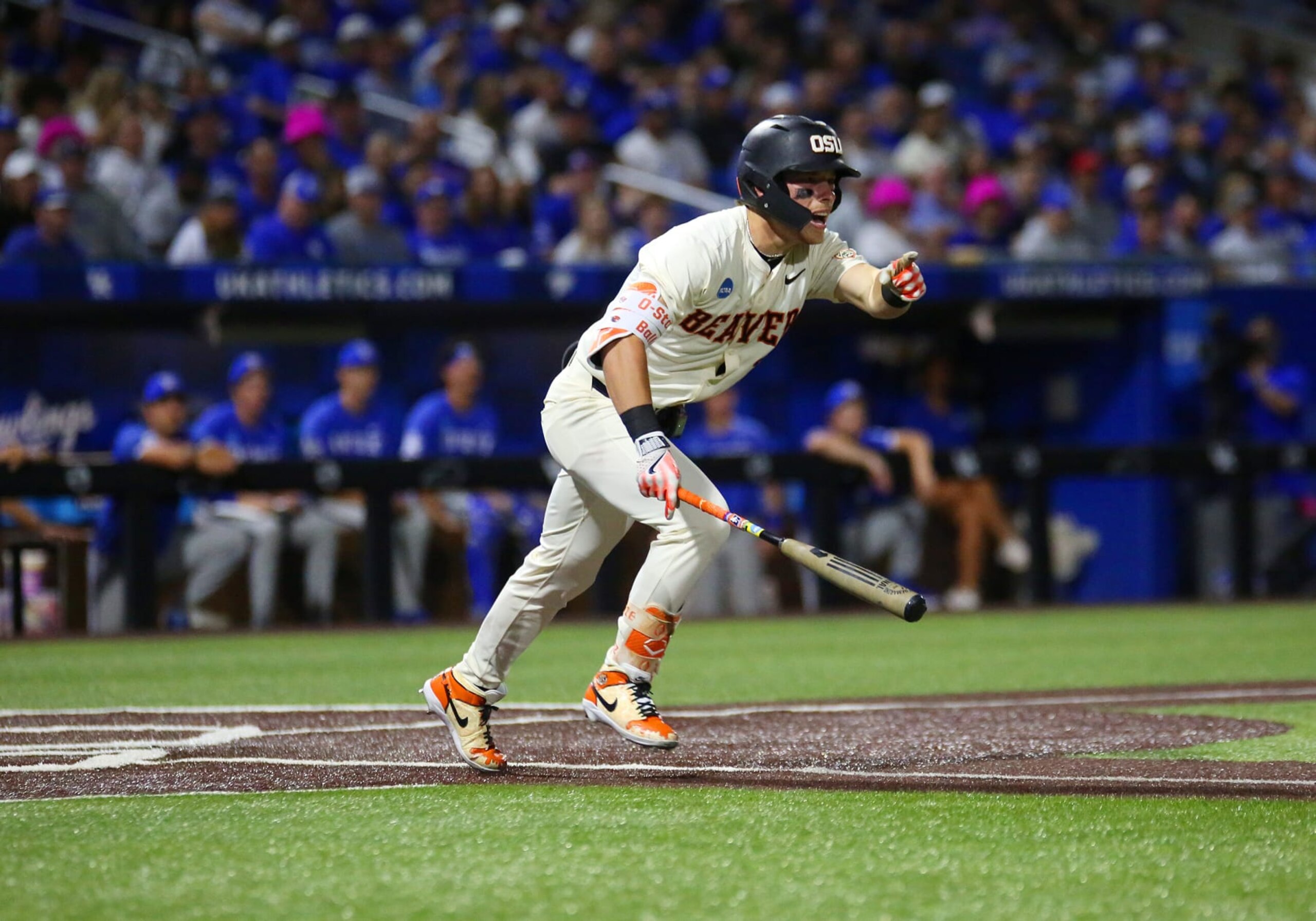
Player Comp: Grady Sizemore
The Australian-born Travis Bazzana told Sports Illustrated's Tom Verducci that he's modeled his swing after Corbin Carroll and Juan Soto, with the former the player he's most frequently been compared to as a hitter.
Bazzana hit .407 with 28 home runs, 66 RBIs, 16 stolen bases and a staggering 1.479 OPS over 60 games at Oregon State this past season. The 21-year-old has some experience in the outfield, but he'll be announced as a second baseman when drafted, and that's probably going to be where he makes his name at.
MLB Pipeline describes Bazzana as having "an advanced approach at the plate, with a ton of raw power," adding that he's a "legitimate basestealing threat." He's 6-foot, 199 pounds and his combination of power and speed is reminiscent of three-time All-Star Grady Sizemore, who played at 6-foot-2, 205 pounds.
Fittingly, Reuter currently projects that Bazzana will be the No. 1 overall pick by the Cleveland Guardians, the same franchise that Sizemore spent the first eight seasons of his career with.
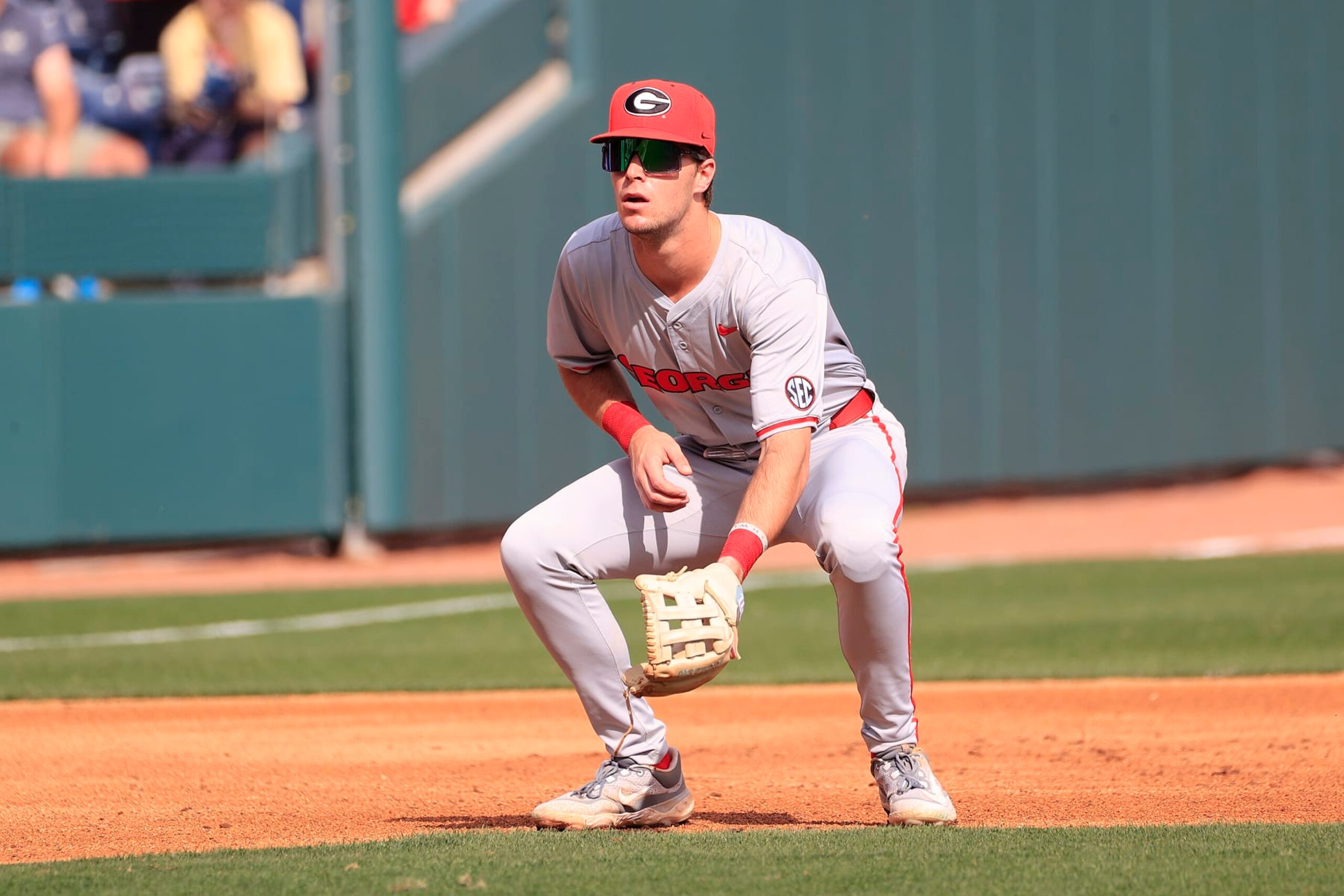
Charlie Condon: OF, Georgia
2 of 9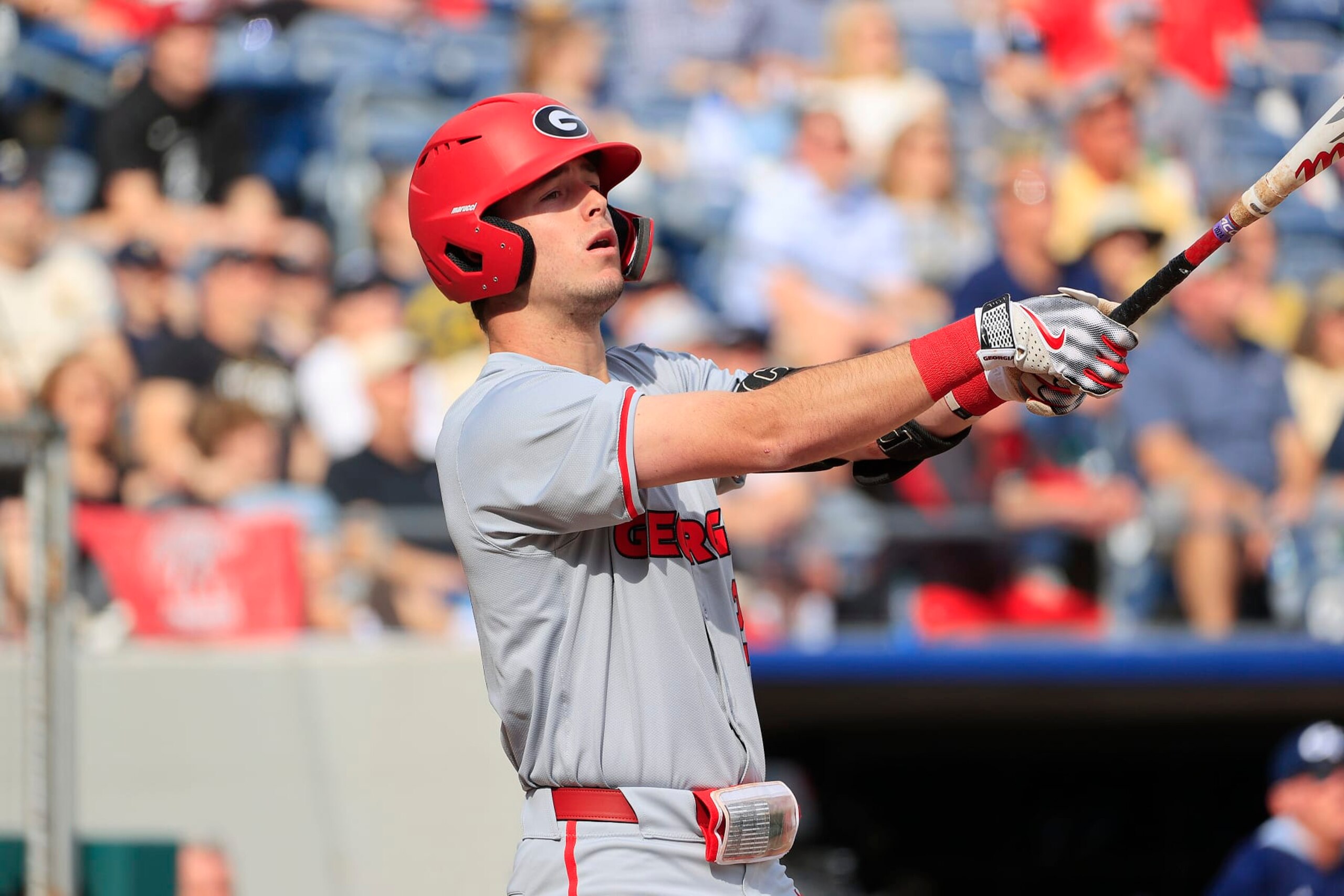
Player Comp: Frank Howard
Charlie Condon is a 6-foot-6, right-handed hitter with prodigious power, so naturally he draws comparisons to Judge. Considering Judge has a chance to break his own American League single-season record of 62 home runs this season, it feels particularly unfair to compare a 21-year-old to him right now.
That shouldn't be taken as a dis of Condon, though, because he might be the best prospect in this class. Forget an OPS over 1.000, Condon finished his final season at Georgia with a 1.009 slugging percentage after clubbing 37 home runs and 20 doubles in 60 games.
Whether he ends up a corner outfielder, first baseman or some combination, Condon possesses the type of power where he could lead the league in home runs and RBI. His size will immediately make him one of the league's most physically-intimidating hitters.
So while we'll leave the Judge comparisons to others, Frank Howard — a 6-foot-7, OF/1B that hit 172 home runs for the Washington Senators between 1967 and 1970 — is a fun comp for Condon.
Chase Burns: RHP, Wake Forest
3 of 9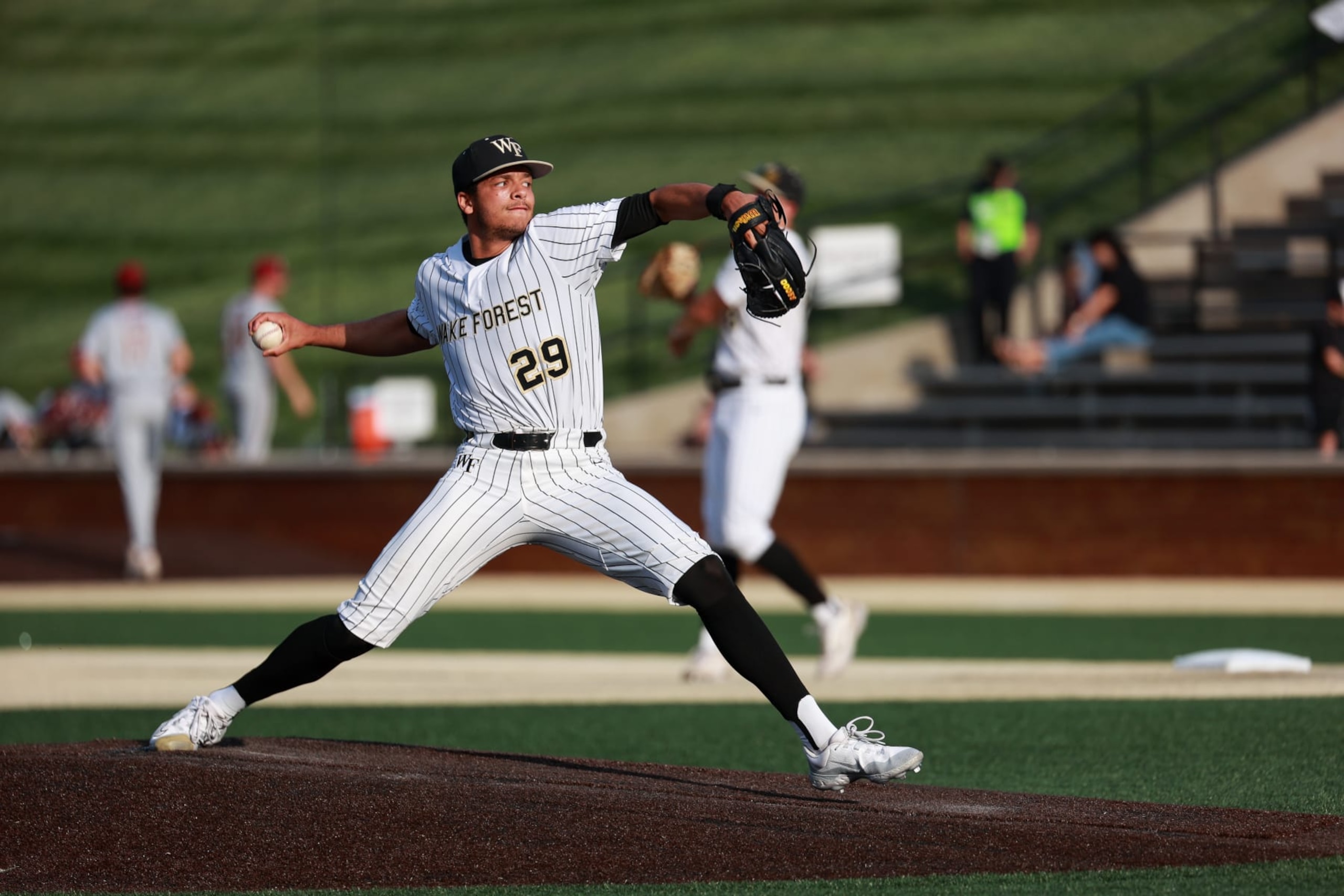
Player Comp: Hunter Greene
Chase Burns transferred from Tennessee to Wake Forest prior to his junior season, and became one of the most dominant pitchers at the collegiate level for the Demon Deacons.
Across 16 starts in 2024, Burns went 10-1 with a 2.70 ERA and 191 strikeouts over 100 frames. According to MLB Pipeline, Burns' arsenal includes a fastball that's topped out at 102 mph, and regularly sits at 97 to 99 mph. Additionally, "his tight slider is a true beast," and for good measure he has a "plus low-80s curveball."
Burns also has good size at 6-foot-3, 210 pounds. By the time the 21-year-old reaches the MLB level, he'll likely have added additional muscle. Again, that combination of size and incredible stuff is rare throughout baseball history. There aren't examples of pitchers with that profile from the 1960s.
So, at the risk of being uncreative, we'll go with a Hunter Greene comp for Burns. At 6-foot-5, 242 pounds, Green is bigger than Burnes, but he relies heavily on a fastball, slider combination. And while he continues to develop from a thrower into a pitcher, Greene is an All-Star for the first time this season, seven years after the Cincinnati Reds took him No. 2 overall out of high school.


Jac Caglianone: 1B/LHP, Florida
4 of 9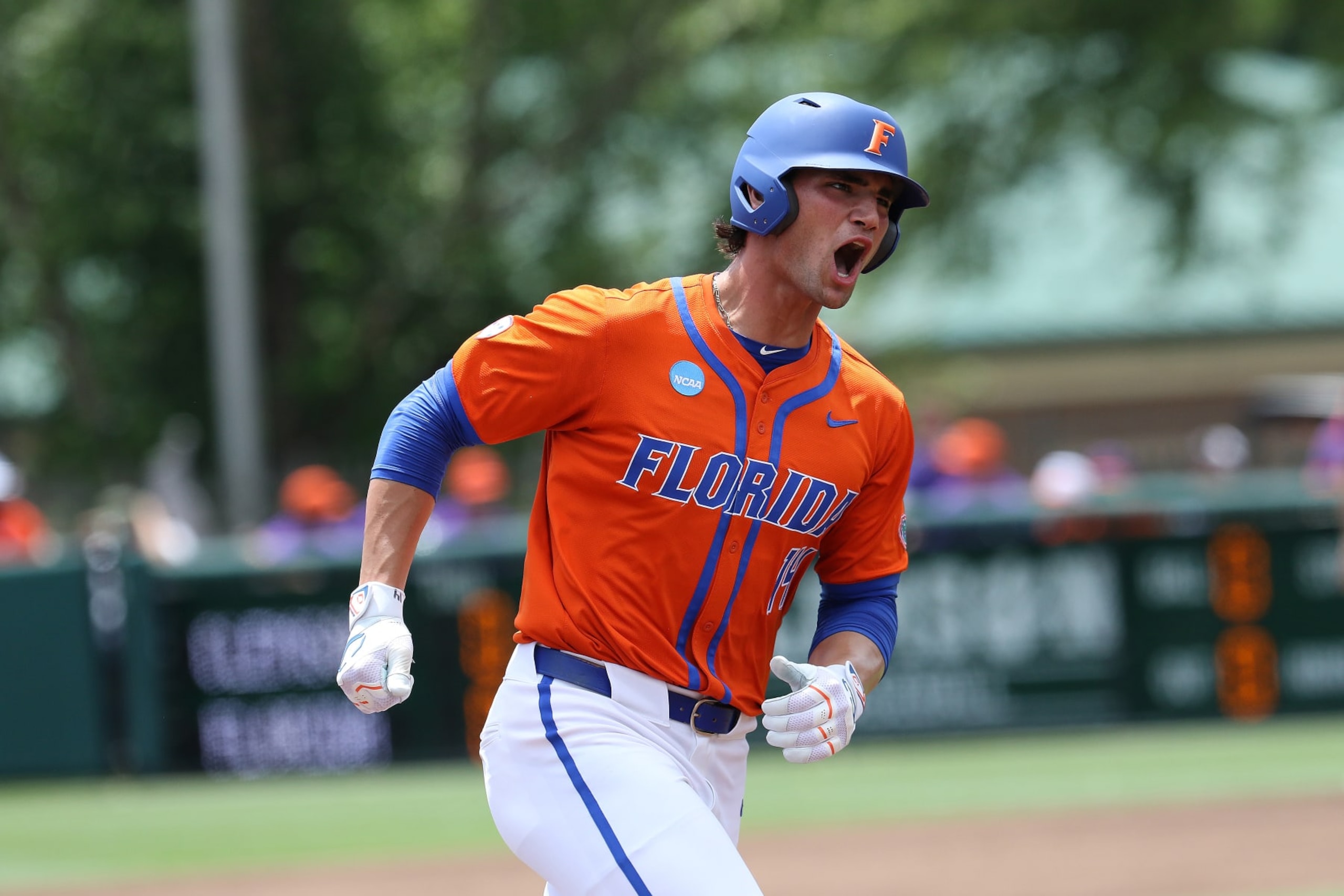
Player Comp: Matt Olson
Because Jac Caglianone was a left-handed hitter with power both at the plate and on the mound for the Florida Gators, he's been compared to Shohei Ohtani. We should all do ourselves as a favor as observers of baseball and stop trying to find another Ohtani — there's only one.
The Athletic's Keith Law says that Caglianone has "80 raw power," quite the compliment on the 20-80 scouting scale. That's backed up by the fact that he crushed 68 home runs and drove in 162 runs over his final two seasons in Gainesville.
Think about how terrifying Matt Olson is when he steps into the batter's box for the Atlanta Braves. At 6-foot-5, 225 pounds with long arms, it doesn't feel like there's a spot in the zone that you can throw a pitch to Olson where he won't have a chance to hit a tape-measure home run. A year ago, Olson led baseball in both home runs (54) and RBI (139).
Well, Caglianone is also 6-foot-5. The difference is he has 25 pounds on Olson, as he's listed at 250 pounds. And this isn't 250 pounds like Pablo Sandoval, this is 250 pounds like a body builder. And it could make him one of the scariest hitters in the league in just a few years.
JJ Wetherholt: 2B/SS, West Virginia
5 of 9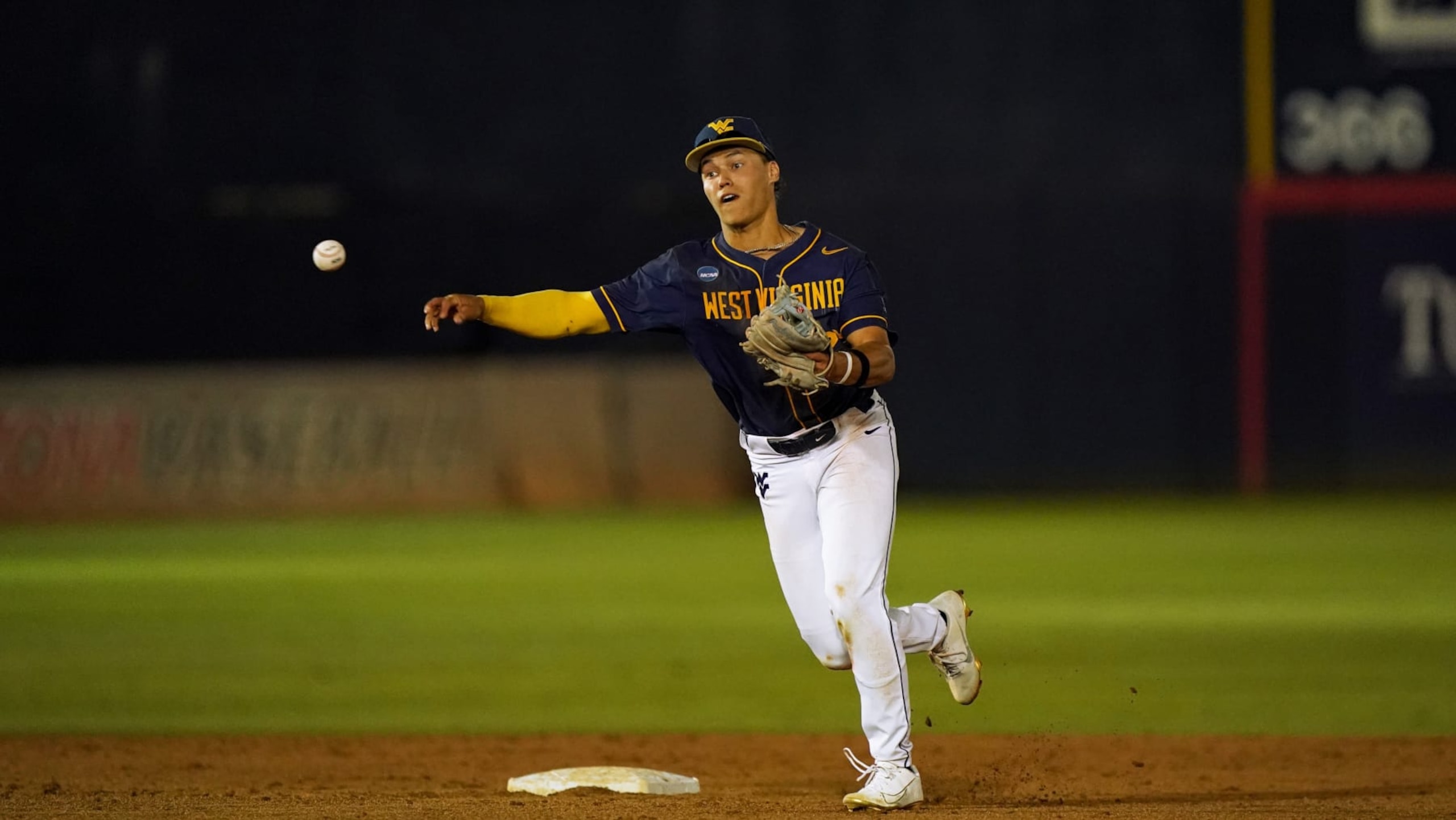
Player Comp: Chase Utley
According to MLB Pipeline, JJ Wetherholt "might be the best pure hitter in the class." A hamstring injury limited him to only 36 games for West Virginia, but he made those games count, hitting .331 with eight home runs, eight doubles, 30 RBI and a 1.061 OPS.
Perhaps the most impressive part of Wetherholt's final season for the Mountaineers is that he walked 30 times in 36 games. Over that same period, he struck out only 17 times. "There are some area scouts who think Wetherholt is the best amateur bat they've ever seen," per that same scouting report from MLB Pipeline.
There's some concern about how good of a defender Wetherholt will be, but it's clear his bat is going to play at the next level. That sounds pretty similar to what was thought of Chase Utley when the Phillies selected him with the 15th overall pick out of UCLA in 2000. Utley had just hit .382 during his final season with the Bruins, but there were questions about him as a second baseman.
As it turned out, Utley's bat transferred to the MLB level, and with a ton of hard work, he became a really good defender at second base, finishing his 16-year career with 123 defensive runs saved. Wetherholt may not be that level of defender at his best, but if he delivers Hall of Fame-caliber offensive production at his peak like Utley did, his employer will be thrilled.
Bryce Rainer: SS, Harvard-Westlake High School (CA)
6 of 9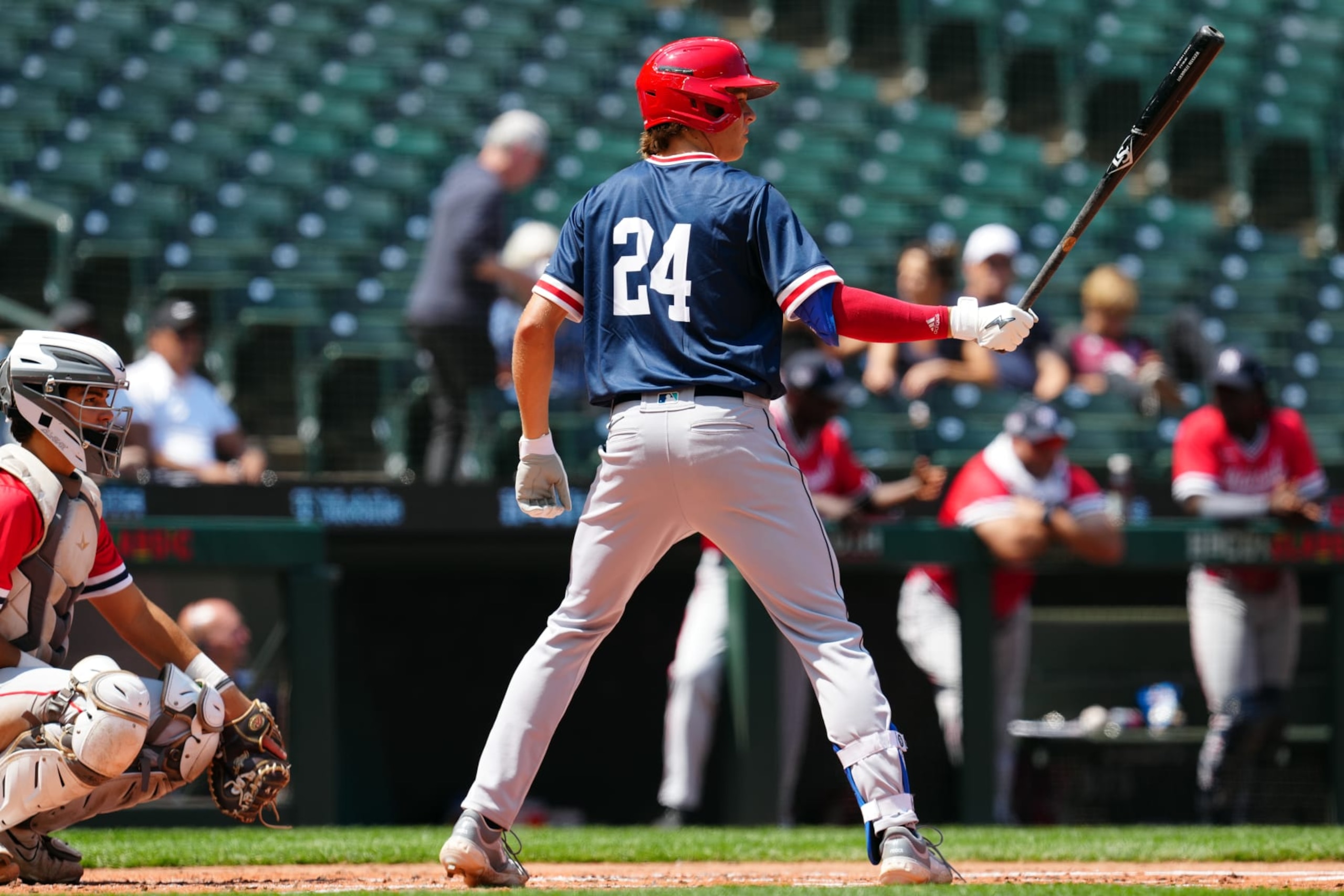
Player Comp: Kyle Seager
Not only does Bryce Rainer have a matching first name, but he's worn No. 34 at times and clearly modeled his batting stance off of two-time NL MVP Bryce Harper.
However, it's another notable baseball family that Rainer compares most to. At 6-foot-3, 195 pounds coming out of high school, he could end up similar in stature to Corey Seager, who is 6-foot-4, 215 pounds. And as MLB Pipeline noted, any left-handed hitting shortstop with length gets compared to Seager.
There is some thought that Rainer could really thrive defensively at third base, though. And he may not have the power ceiling of Seager. Or at least, the most notable Seager. But what about Corey's older brother, Kyle? Not only did Kyle win a Gold Glove in 2014, but he hit 20 or more home runs nine times in his career. That may be a fairer offensive comp for Rainer, even if he sticks at shortstop defensively.
Hagen Smith: LHP, Arkansas
7 of 9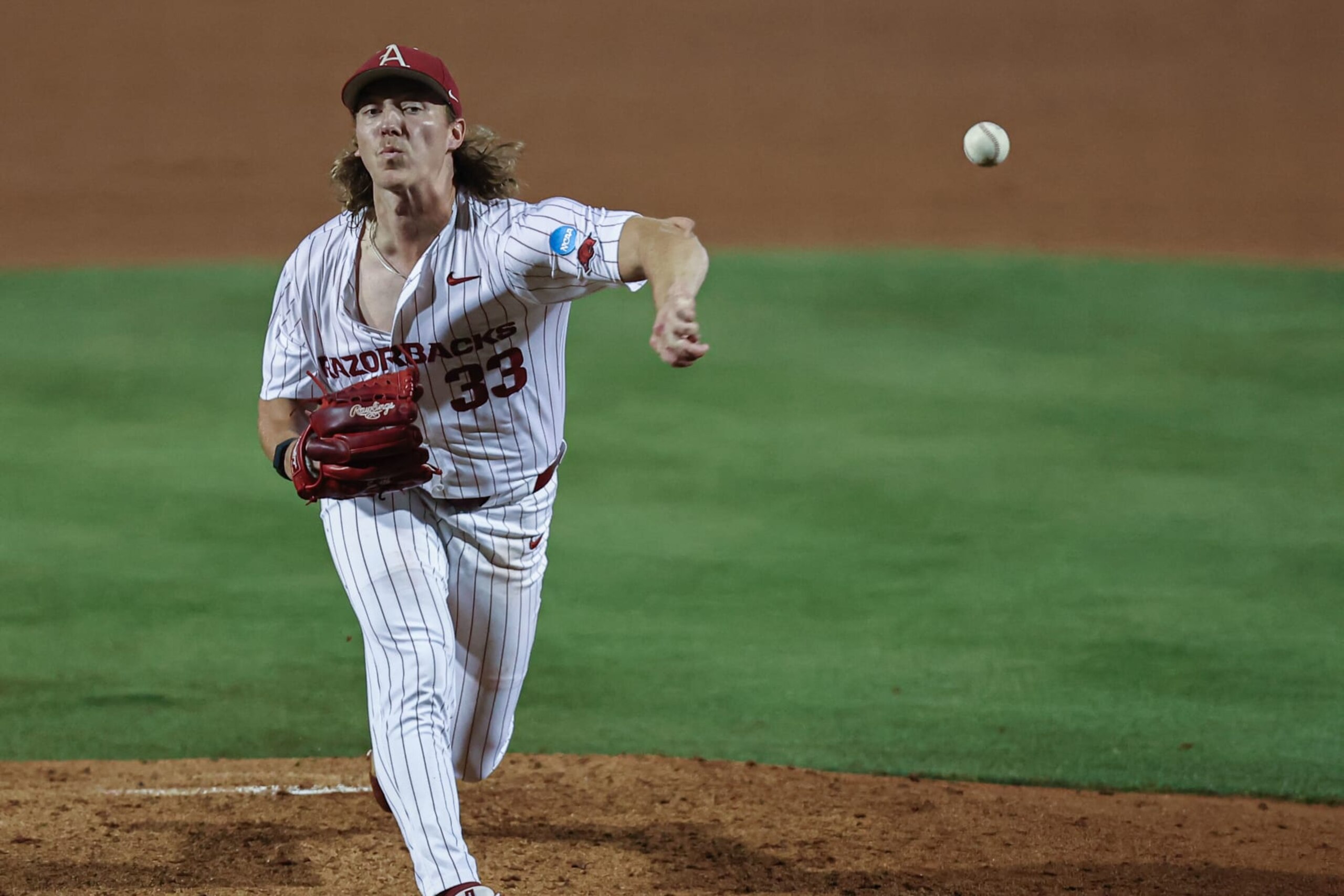
Player Comp: John Smoltz
Hagen Smith was dominant in his third and final season at Arkansas, going 9-2 with a 2.04 ERA, 161 strikeouts and a 0.893 WHIP across 84 innings pitched. It's mildly concerning that Smith already had Tommy John surgery once as a high schooler, but he can flat-out pitch and will be a top-10 pick because of it.
Smith's delivery reminds you a bit of seven-time All-Star closer Billy Wagner. But at 6-foot-3, 225 pounds, Smith is much bigger than Wagner. And while a high-90s fastball, nasty slider, cutter and splitter would certainly shine late in games, the four-pitch mix will make him a starter.
Hall of Famer John Smoltz had a high-90s fastball before seemingly every team had five or six guys pushing 100-mph. He also operated with a four-pitch mix — fastball, slider, splitter and curve — that made him dominant both as a starter and a closer.
Perhaps comparing Smith to someone with a plaque in Cooperstown is unfair. But again, there aren't many pitchers in MLB history who have a repertoire like Smith. Whether he's able to hold up physically is fair to wonder, but if he does, Smith figures to be special.
Braden Montgomery: OF, Texas A&M
8 of 9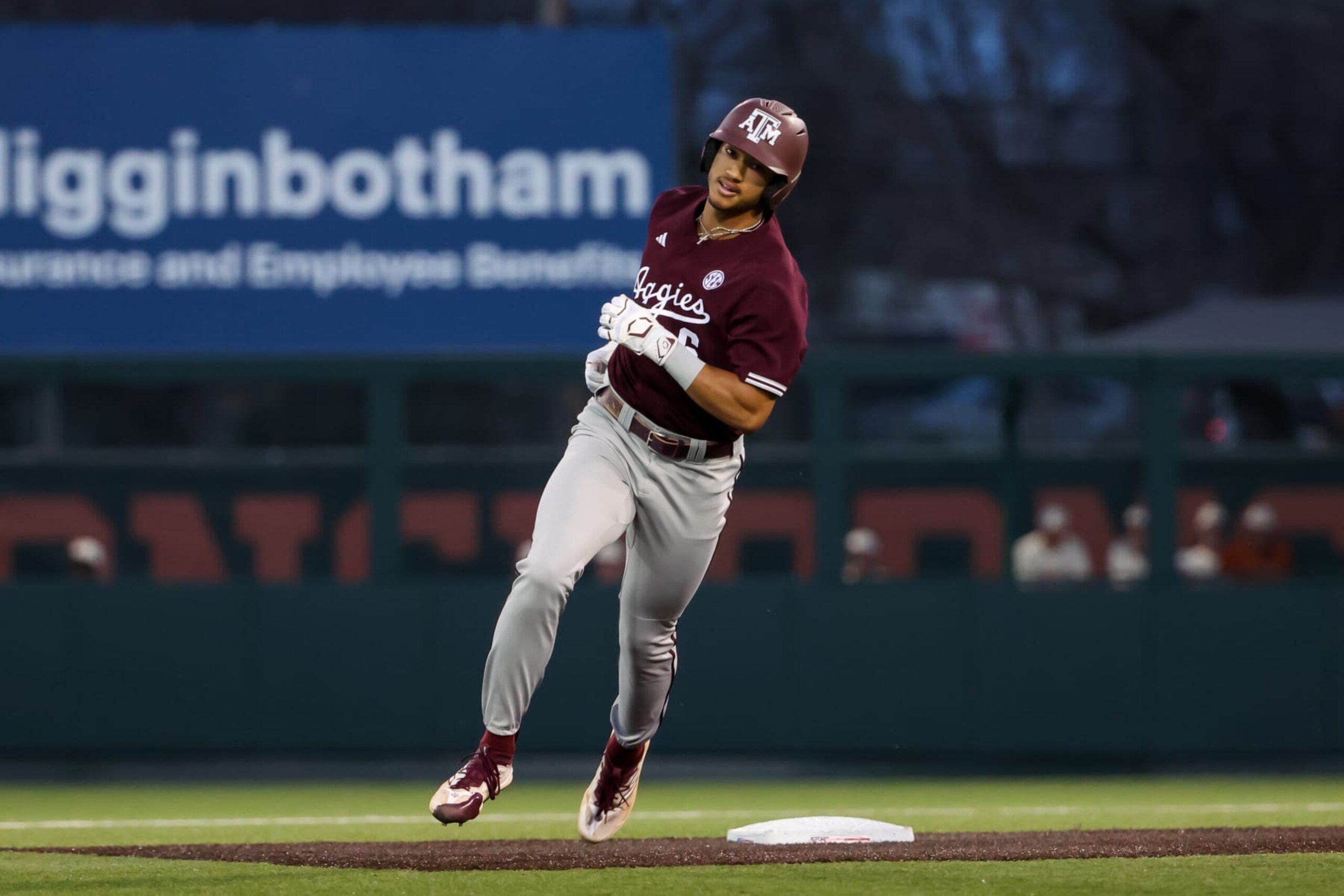
Player Comp: José Guillén
In his lone season at Texas A&M after transferring from Stanford, Braden Montgomery homered 27 times, drove in 85 runs and drew 53 walks, while striking out only 59 times across 61 games.
Law says that Montgomery "has 30-homer upside," which is particularly valuable when you consider he's a switch hitter. What's more, Montgomery possesses what's close to an 80-grade arm in right field.
While he wasn't a switch hitter, Guillén feels like a good comp here because he had a pretty legendary right field arm and had five seasons of 20+ home runs over a 14-year MLB career.
Konnor Griffin: SS/OF, Jackson Prep (MS)
9 of 9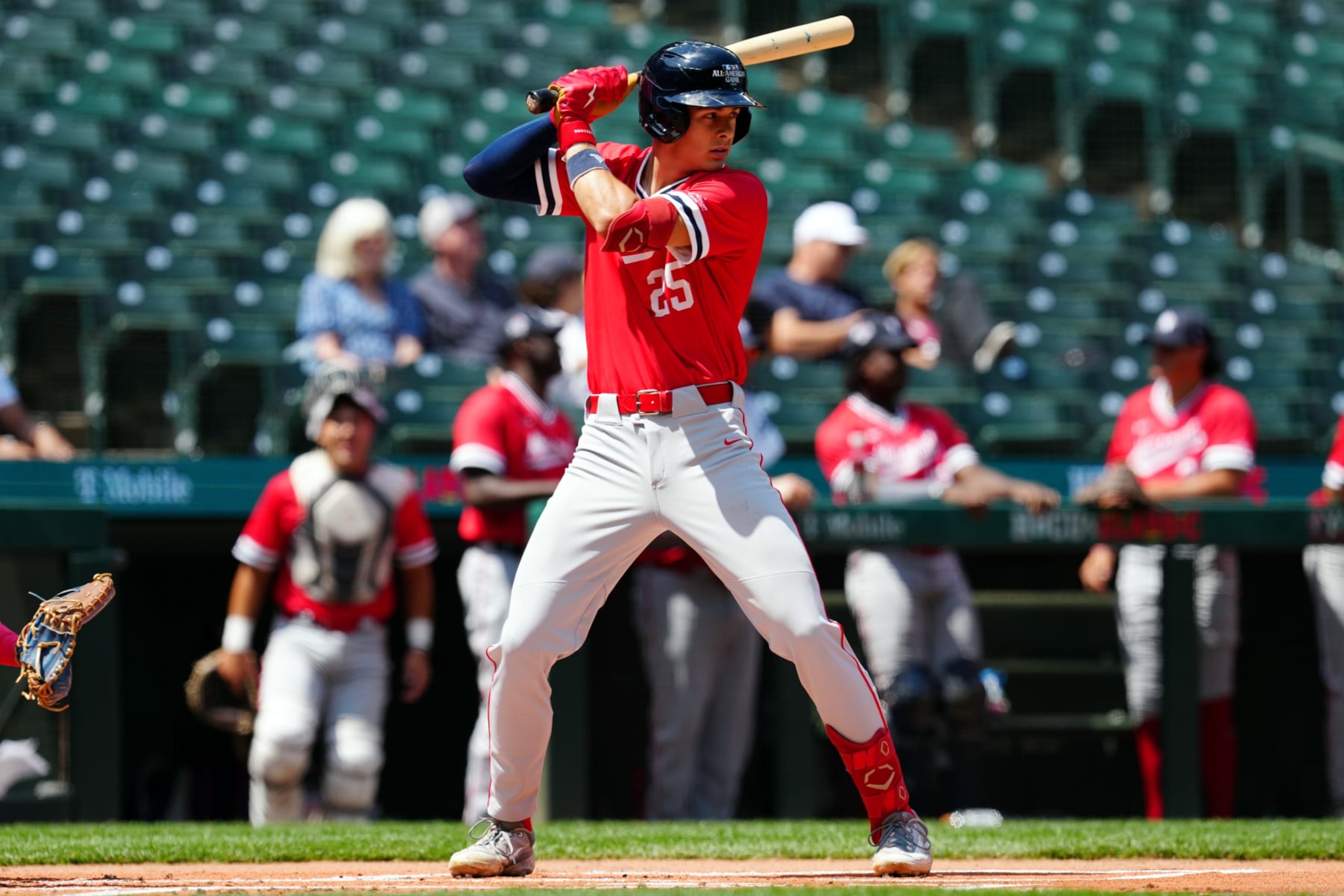
Player Comp: Mike Cameron
Konnor Griffin hit a staggering .559 in his senior high school season, swatting nine home runs and driving in 39 across 43 games. Already 6-foot-4 and 215 pounds, Griffin is one of the top prep prospects in this year's class.
According to MLB Pipeline, not only do scouts believe that Griffin has "30-30 upside," but they "project him as a plus defender at shortstop and a possible Gold Glover in center field."
Cameron was never quite a 30-30 player, but hit 278 home runs, stole 297 bases and won three Gold Glove Awards over a 17-year MLB career. If Griffin ends up in center field, Cameron would be a good player for him to model his game after.
.jpg?w=2560 "Mahomes Told Teammate to Leave Meeting")
.jpg?w=2560 "🚨 Week 8 AP Top 25 Poll")




.jpg?w=2560 "Updates from EVERY NFL Game 🏈")
.jpg?w=2560 "Baker Gets Glove From Rays 🧤")