


Most NBA teams strive to get materially better between the end of one season and the beginning of the next. But this mission, while almost universal, is much harder for some than others.
That's especially true entering the heart of the 2024 offseason, as the league rolls out more restrictive policies for squads cannonballing into certain levels of the luxury tax.
Second-apron teams, specifically, are beholden to new rules that limit their ability to do more than trot out the same product or worse. Most notably, organizations in danger of blowing past the $190 million marker will be unable to aggregate salaries in trades, send out more money than they receive in deals, spend any version of the mid-level exception or use a traded player exception created in the previous season.
Squads that already or could fall into this bucket will be the focus here. Teams that punt on improvement or actively opt against it will be spared.
Think along the lines of the Portland Trail Blazers. They are working off a low baseline but begin the offseason inside the luxury tax and remain in the infancy of their rebuild. They could aggressively seek out upgrades via trades, but they'll likely opt to cut operational costs and contemplate jettisoning veterans.
Ditto for the Chicago Bulls. Their Alex Caruso-for-Josh Giddey trade sends all sorts of mixed messages, none of them particularly inspiring. Chief among them: The organization might be reluctant to run it back or make win-now moves and hope a healthier Lonzo Ball elevates their product.
Those situations involve active choices. Standing pat, moving off certain players, leaning further into rebuilding mode or changing course entirely may end up being the wrong decision. But it's their own to make.
This exercise is more about spotlighting the franchises with limited means of improvement. And not every projected second apron squad will warrant inclusion. Some have the singular salaries and future draft equity to do something(s) meaningful.
The teams you're about to see and read about, though? Not so much.
Honorable Mentions
1 of 5
Boston Celtics
Good luck improving upon a team that just won the NBA championship, posted the fourth highest net rating through the regular season and playoffs in league history and is slated to sit comfortably above the second apron.
Still, very few of the Celtics' most important players are on the downswing, and their two main stars, Jaylen Brown and Jayson Tatum continue to get better. Boston is also out just one future first-round pick (2029). It won't be able to aggregate salary, but attaching draft equity to a Payton Pritchard or Jaden Springer could feasibly land them rotational upgrades like Kenrich Williams or Santi Aldama.
Denver Nuggets
The Nuggets will clear the second apron unless they unload salary or losing Kentavious Caldwell-Pope (player option) in free agency. Improving via the addition of new faces is limited to hitting on minimum contracts or pairing their No. 28 pick and/or 2031 first-rounder with the salaries of Zeke Nnaji ($8.9 million) or Reggie Jackson ($5.3 million player option) in trade negotiations.
Unlike most other second-apron squads, though, Denver can realistically hold out hope for internal growth. Christian Braun and Peyton Watson are already rotation staples and nowhere near finished products. Getting anything from soon-to-be sophomores Jalen Pickett, Julian Strawther or Hunter Tyson would be an upgrade. And we cannot completely write off getting more layered offense from (an almost) 26-year-old Michael Porter Jr.
Golden State Warriors
Conceptually speaking, the Warriors don't belong here. They have the ability to retain basically everyone from last year's roster, and players like Jonathan Kuminga, Brandin Podziemski, Trayce Jackson-Davis and Moses Moody are all on upward trajectories.
And yet, Golden State's nucleus is old enough that core regression could outstrip in-house development. The best versions of Stephen Curry, Draymond Green, Chris Paul, Klay Thompson and maybe even Andrew Wiggins are in the rear view, and this says nothing of how the organization will handle the futures of CP3 (non-guaranteed) and Klay (unrestricted).
Absence of improvement, though, feels like it'll wind up being a choice. The Warriors don't have to duck the tax entirely. But they might. And while their top-of-the-line trade packages aren't enough to win sweepstakes involving Oklahoma City, New Orleans or a smattering of other teams, they have the picks and prospects to do something consequential. Whether they use the tools at their disposal is a different story.
Minnesota Timberwolves
Keeping the Timberwolves out of the meat and potatoes of this list was the toughest call among honorable mentions. They will be a second-apron team even if they let both Kyle Anderson and Monte Morris walk in free agency, and you cannot, under any circumstance, convince me they come out of a Karl-Anthony Towns trade, or a Nickeil Alexander-Walker trade, or a Naz Reid trade, looking better for wear.
But!
League-minimum fliers could go a long way for this team. Finding a playable floor general at that price point will be difficult, but adding a higher-volume shooter looking to boost his future stock by contributing to a contender is on the table.
More than anything, though, the Timberwolves have an All-NBA cornerstone in Anthony Edwards who is both a candidate for the Association's best two-way player title and still on the ascent. His trajectory alone is enough to render next year's team significantly better than the one that just made the Western Conference Finals.
Miami Heat
2 of 5
Better health and internal development (Jaime Jaquez Jr., Nikola Jović) could set up the Miami Heat for a much better 2024-25 campaign.
Counterpoint: It might not.
Jimmy Butler is approaching his age-35 campaign and seemingly always dealing with something. And even if he's suddenly a perfect portrait of good health, the team could have issues keeping its own talent.
Between Kevin Love (player option), Caleb Martin (player option), Haywood Highsmith, Delon Wright (non-Bird) and the fresh off shoulder surgery Josh Richardson (player option), the Heat have a number of rotation players, of varying importance, who can or will hit the open market. Retaining most of them is well within the realm of possibility—provided Miami is prepared to pony up, not just in salary but luxury taxes.
Assuming Love picks up his option and the Heat guarantee Orlando Robinson's deal, they'll have $175-plus million on the books entering free agency. That's before potentially paying Martin and Highsmith, let alone anybody else.
Framed another way: Miami is essentially one realistically sized Martin raise away from belly flopping into the second apron. Getting measurably better while diving into that territory is difficult. The Heat would need to swing the perfect single-salary-plus-picks trade.
Improving while skirting the second apron? That's an impossibility.
Completely ducking that line will cost Martin or a player under guaranteed contract. Never mind using the mini mid-level exception ($5.2 million) to replace someone of that caliber. The Heat will have a tough time replicating a fully healthy Martin's value even if they have the non-taxpayer mid-level ($12.9 million).
Milwaukee Bucks
3 of 5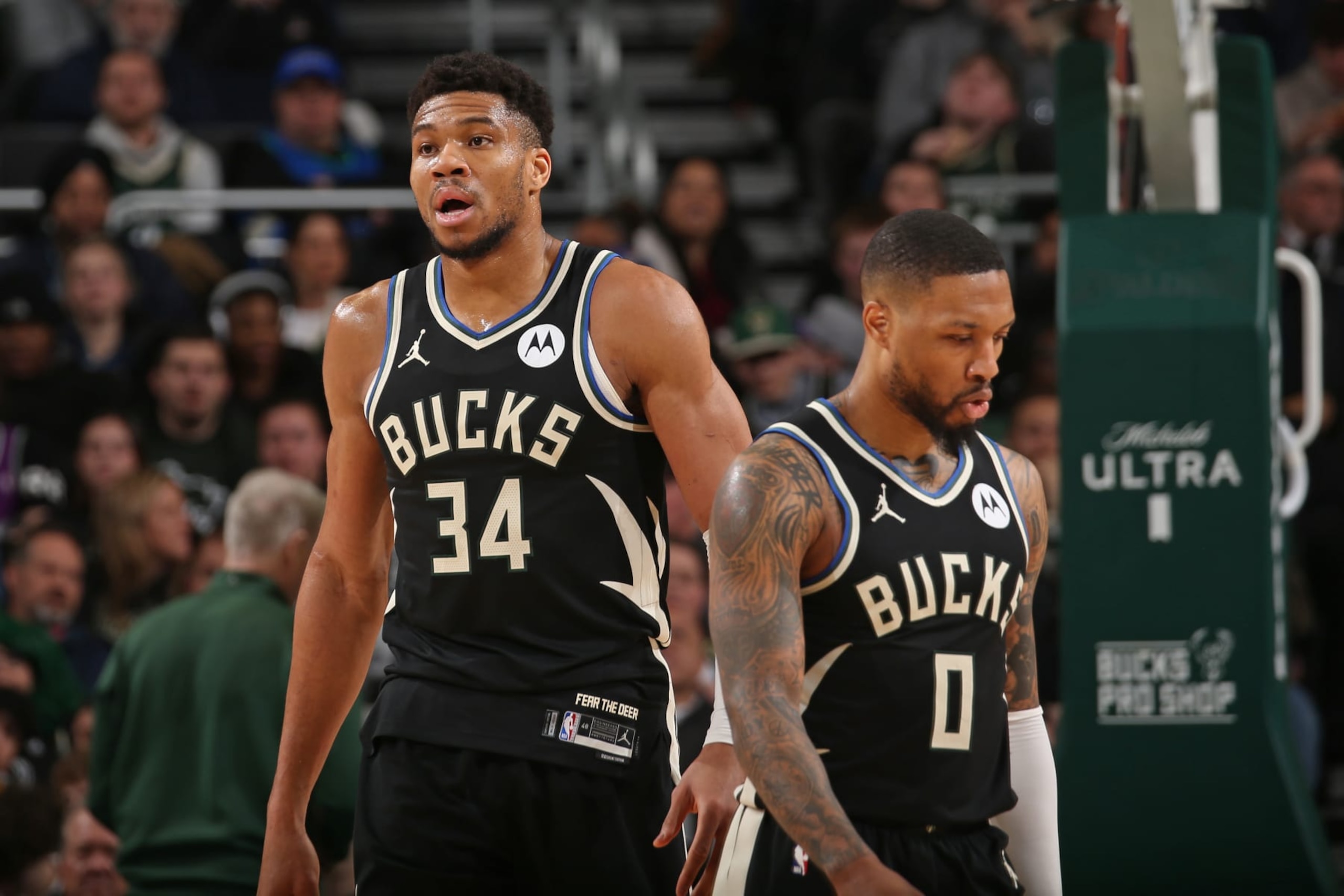
Figuring out the Milwaukee Bucks' pathway to appreciable improvement is pretty easy, but only because they have a finite number of avenues to explore. There's the chance they get a healthier Khris Middleton, even better synergy between Giannis Antetokounmpo and Damian Lillard, and then, um, yeah.
Counting on internal development is a lofty proposition. MarJon Beauchamp, A.J. Green, Andre Jackson Jr. and Chris Livingston didn't see the court nearly enough to warrant immediate optimism. Perhaps Milwaukee turns the No. 23 pick into a nifty flier, but teams with championship aspirations generally don't have the stomach for rookie learning curves.
There's actually a chance the Bucks get, gulp, worse. Malik Beasley is a lock to leave in free agency, because they don't own his Bird rights. And while Middleton could be healthier, neither he at age 33 nor Brook Lopez at age 36 are guaranteed to be as good moving forward. The same can even be said for Lillard, who is gearing up for his age-34 campaign.
Milwaukee also profiles as a second-apron squad. Capably filling out the rotation will require at least one or two home-run minimum signings. Its payroll likewise limits what they can do in trades. The Bucks can attach No. 23 (before it counts as salary) and/or their 2031 first-rounder to another player, but they're light on dispensable ballast.
Recent reporting suggests head coach Doc Rivers is open to moving anyone other than Giannis or Dame. Maybe Milwaukee improves by breaking up Lopez or Middleton into multiple role players. But that's a tall order. Even more financially flexible contenders will have trouble upgrading the talent while moving one of their top-four players. Doing so with little draft equity and no chance of aggregating other salaries seems virtually impossible.
Add Middleton and Lopez to the list of no-gos, and the Bucks are left to see who and what they can bag for the salaries of Pat Connaughton ($9.4 million) or Bobby Portis Jr. ($12.6 million). Neither, though, is at a standalone price point that typically brings back a big-time difference-maker.
The Bucks could explore staying out of the second apron. Greasing the wheels of a Connaughton salary dump would do the trick and grant them access to the mini MLE while also (potentially) letting them aggregate salaries in trades. But those are not undeniably value resources. Mini MLE signings are seldom needle-movers, and Milwaukee will be even shorter on expendable salary-matchers if Connaughton is moved elsewhere first.
Is there a deal out there that lets the Bucks aggregate Connaughton and smaller salaries or even Portis, deepen the rotation and drag them outside the second apron? I mean, almost anything's possible. But the specificity of this scenario speaks to the challenges facing Milwaukee as it looks to reposition itself as a viable threat to Boston.



Los Angeles Clippers
4 of 5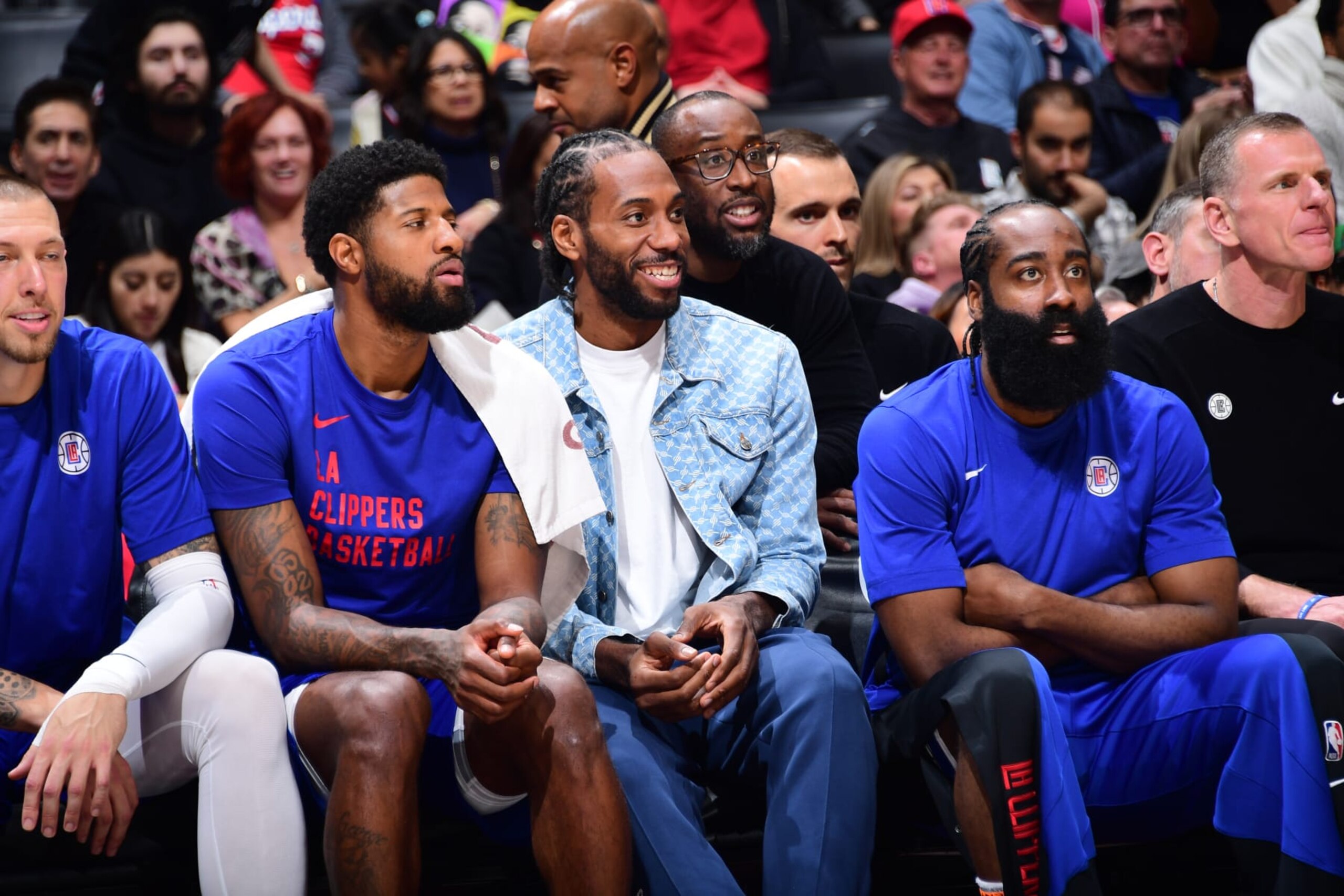
Second-apron realities loom over the Los Angeles Clippers' offseason like a butter-thick smog. If they keep Paul George (player option) and James Harden, there's no avoiding it. And while retaining them is their most ideal outcome for next season, bringing both back doesn't lock in improvement—or even a lateral performance.
George just turned 34 in May. Harden turns 35 in August. Kawhi Leonard will be 33 by the end of this month and never finishes a season healthy anymore. Running back the same team in what should be an even tougher Western Conference assures them of nothing.
Los Angeles does have the ability to dangle a 2030 first-round swap and 2031 first-round pick in trade talks. But those assets have finite values to front office regimes that, frankly, won't be around long enough to make those selections.
And even if select teams place a premium on those assets, the Clippers can only send out one salary as part of any package. Can P.J. Tucker ($11.6 million player option) or Terance Mann ($11.4 million land a closing-lineup member at their price points? If not, what about Norman Powell's $19.2 million salary?
Mind you, we haven't considered the alternative scenario: that one of Harden or, more likely, George leaves. The Clippers could figure out ways to access exceptions if one or both bolt, but there's no way the on-court product ends up better off as a result.
Phoenix Suns
5 of 5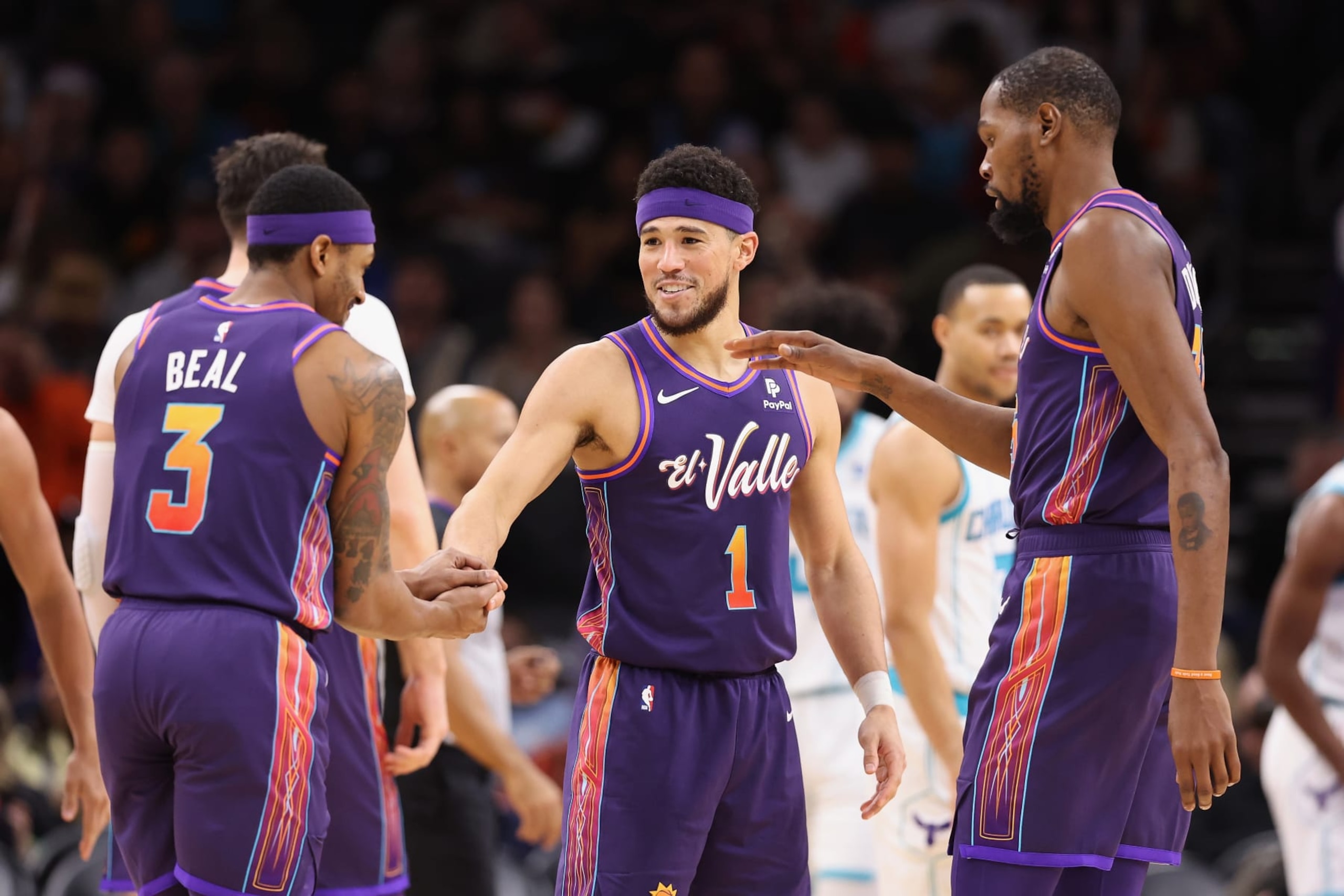
The Phoenix Suns begin the offseason with more than $200 million on the books...without factoring in a new deal for Royce O'Neale. There is no sidestepping the limitations of the second apron.
On the bright side, team governor Mat Ishbia seems brash enough to deal the No. 22 pick and the Suns' 2031 first-rounder. On the not-so-bright side, what does that actually do?
Phoenix isn't teeming with expendable players at convenient (standalone) price points. Bradley Beal (no-trade clause), Devin Booker and Kevin Durant aren't going anywhere. The Suns will be hard-pressed to upgrade the roster while shipping out Grayson Allen. Nassir Little's salary ($6.8 million) is too small to net a needle-nudger.
Breaking up Jusuf Nurkić into multiple players is worth exploration. But you need to bag a starting center as part of that deal, and there isn't a single team that'll treat the two years and $37.5 million remaining on his contract as a positive asset. Any picks Phoenix includes must go towards both getting trade partners to take on his money and convince them to send out a regulator rotation player or two in return.
So many of those prospective deals will require a third team and/or the Suns to roll the dice on a distressed asset or health risk. (Think: Robert Williams III.) Pinpointing players who are worth the first-round equity they must give up and gettable is a maddening thought exercise.
Complicated still, Beal is about to turn 31 and Durant will be 36 when next season tips off. The Suns could feasibly get worse versions of both in 2024-25. And, you know, what then? Another batch of minimum contracts isn't guaranteed to deepen or improve the best version of the current team. Hoping they can also offset any regression from two aging stars less of a pipe dream and more of a delusion.



.jpg?w=2560 "Jonathan Taylor Landing Spots 📍")
.jpg?w=2560 "Mahomes Asked OT to Leave Meeting")


