More Playoff Expansion, Recruiting Changes, Other Top CFB Storylines Entering March
The college football offseason is upon us, but February wraps up a busy month of news and notes from across the sport. Arguably the biggest news is that the NCAA is prohibited from enforcing NIL restrictions as it relates to recruiting.
A judge in Virginia issued a temporary restraining order following a lawsuit filed by Tennessee and Virginia earlier this month. The lawsuit was filed in response to the NCAA investigating Tennessee for potential recruiting violations regarding booster groups.
But there has been other news as well. The college football recruiting calendar may be changing, the 12-team College Football Playoff could be expanding yet again and some of college football's biggest stars from 2023 will be participating in the NFL combine all week in Indianapolis.
As we enter March later this week, let's run through the top college football storylines heading into next month.
Helmet Communication Seems to Be (Finally) Coming to the Sport
1 of 7
It's about time college football caught up with modern helmet communication technology, which has been used in the NFL for decades. And following a season with Michigan's sign-stealing scandal, changes and modernization can't come soon enough.
It sounds like the NCAA is close to approving it, following experimentation with it during the non-CFP bowls last season. Per The Athletic, the NCAA could come out of NCAA Football Rules Committee meetings this week with proposals allowing teams to use helmet communication and sideline tablets, if they so choose.
Sporting News also confirms that the topic will be discussed this week. One of the logistics to be figured out is coming up with a cutoff time for communication to stop. Unlike the NFL, there wasn't one implemented during bowl season, and coaches were allowed to communicate with players up to the snap.
"It has to," Maryland head coach Mike Locksley told Sporting News of adopting helmet communication. "We're following the same path of the NFL game, from the time model of it and now the player-coach comms. There's no doubt it's something that benefits the games; helps with some of the things that happened in college football a year ago with taking signals and stuff like that."
Maryland beat Auburn 31-13 in the Music City Bowl. Bowl teams were also allowed to use tablets on the sidelines, which per Locksley were "unbelievable" to have. It seems as though having helmet technology and tablets, just like the NFL has, would be a huge benefit to coaches. It would help college players transition to the NFL a lot easier, too. We'll see if the NCAA implements the technology as soon as next season.
There Could Be Some Changes Coming to the Recruiting Calendar
2 of 7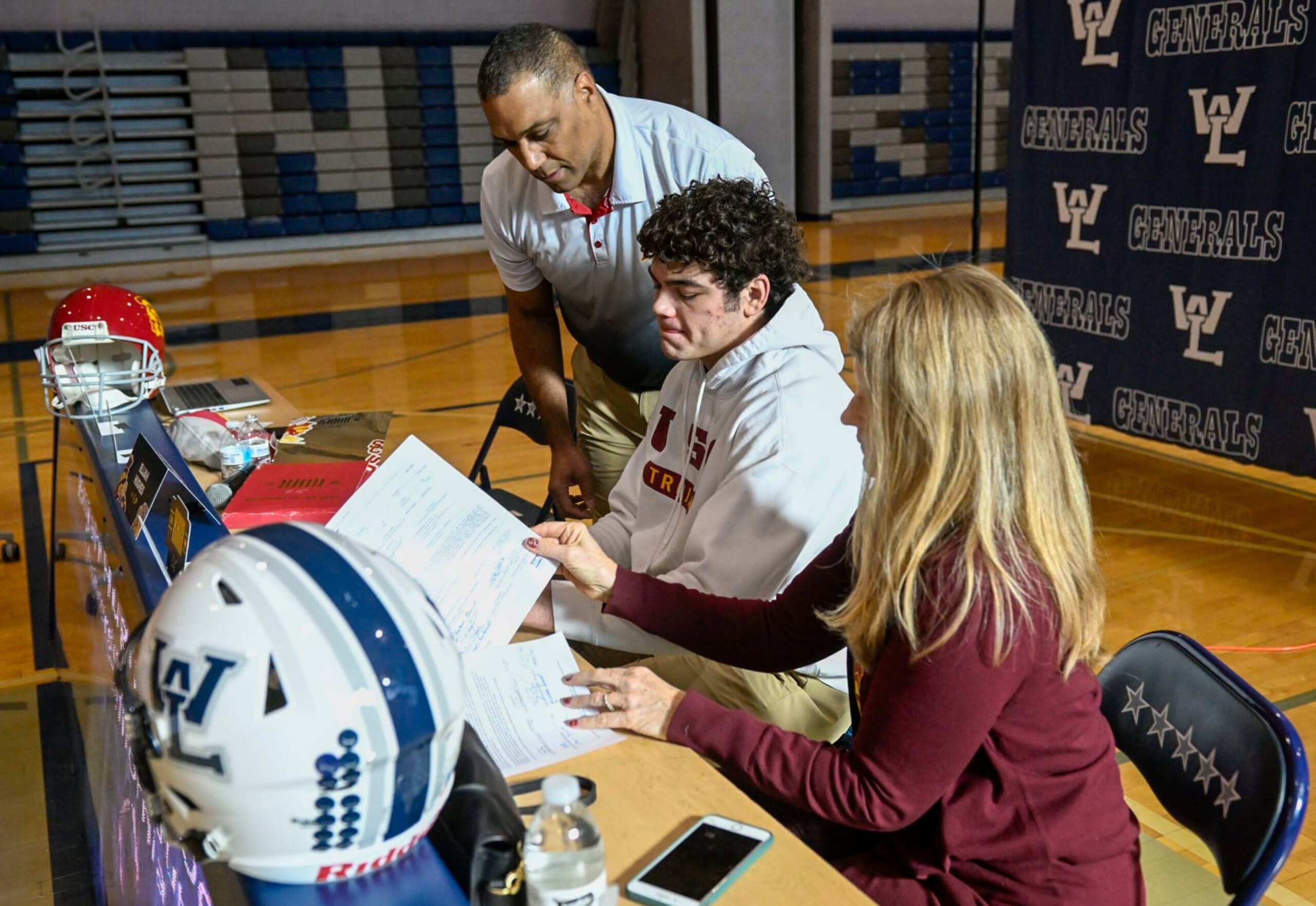
The early signing period in mid-December for recruits makes it a lot easier to sign with their respective schools while not having to wait for signing day in February. But with bowl season, the transfer portal opening and the end of the season coming for most teams around this time, it makes the month chaotic for coaches trying to build their rosters.
One potential solution could be coming to that, as the NCAA is expected to shift the ESP to earlier in December. The move would make the ESP come prior to the transfer portal window opening for players to opt in. Here's more, via The Athletic:
"Big Sky commissioner Tom Wistrcill, who chairs the National Letter of Intent subcommittee of the Collegiate Commissioners Association (CCA), told The Athletic on Thursday that the group has had advanced discussions to move the December signing period up to the Wednesday before FBS championship games, which this year is Dec. 4."
On Wednesday, ESPN's Pete Thamel reported that NCAA officials are meeting this week to discuss having three separate signing periods—one in June, December and February.
Having one in the summer might help alleviate the chaotic December roster-building period for a lot of coaches.
As EA Sports Prepares to Make Its Return, Thousands of Players Opt in
3 of 7
Is it summer yet? EA Sports is preparing to bring its long-awaited NCAA video game back sometime in the coming summer months. And last week, we heard what players who agree to be featured in the video game are receiving.
For players that choose to be featured in the game's first return since 2013, they will receive $600 and a copy of the game. As of last week, EA Sports had over 5,000 players opt in to the game across all 130 FBS teams.
Per reporting from ESPN, athletes that opt in are expected to be in the game for their entire careers, but they have the option to opt out of future editions of the game. Athletes who remain in the game will be paid annually, and those that transferred will as well, as long as they are still on a roster.
While the list will certainly grow as the game gets closer, some of the biggest names to opt in include Alabama quarterback Jalen Milroe, Texas signal-caller Quinn Ewers, Colorado's Travis Hunter, Ohio State running back Quinshon Judkins and Georgia quarterback Carson Beck.

.png?w=2560)
.png?w=2560)
Playoff Already Expanding to 14 Teams? Plus, Potential Changes to Army-Navy Week
4 of 7
Wait, we haven't even seen what the 12-team playoff looks like, and we're already talking about expanding it? Apparently so. According to ESPN's Pete Thamel, the possibility of expanding the field to 14 teams in 2026 was discussed during the meetings between officials last week.
Here's more from Thamel's reporting:
"The bump from 12 to 14 teams, as opposed to 16, would mostly address the issue of access rather than finances. Officials will still need to discuss how a 14-team playoff would split up automatic qualifiers -- for example, could the Big Ten and SEC get as many as four automatic bids? Those early discussions were had Wednesday, with no definitive conclusions."
Per reporting from Ross Dellenger on Wednesday evening, the committee is weighing one possible format with respect to conferences and bids. It includes giving three automatic qualifier bids to the SEC and Big 10, two to the Big 12 and ACC and one Group of Five at large with three other at-large bids.
I'm not sure how throwing an extra two teams into an already-expanding playoff helps anyone. But it's clear that the committee sees potential issues arising with how many automatic bids each league gets. Expanding the current system might not be the best solution to that, but tweaking for format just may. Speaking of a format!
The news of possible further expansion comes on the heels of the playoff confirming the 5-7 model being formally put in place for 2024. That means that the 12 participants will include the five highest-ranked conference champions, followed by the next seven highest-ranked teams.
And finally, we could see changes to Army-Navy weekend with respect to that being the only game played that Saturday. For the last 15 years, the game has been the standalone FBS game the Saturday after Championship Saturday. But Ross Dellenger of Yahoo Sports reports that CFP officials are weighing starting bowl season a week earlier, when Army-Navy is typically played, or if the game should share its date with another game.
It sounds like a number of details still have to be worked out with the playoff expanding.
Georgia State Hires Dell McGee, and the 2024 Coaching Carousel May Stop Spinning
5 of 7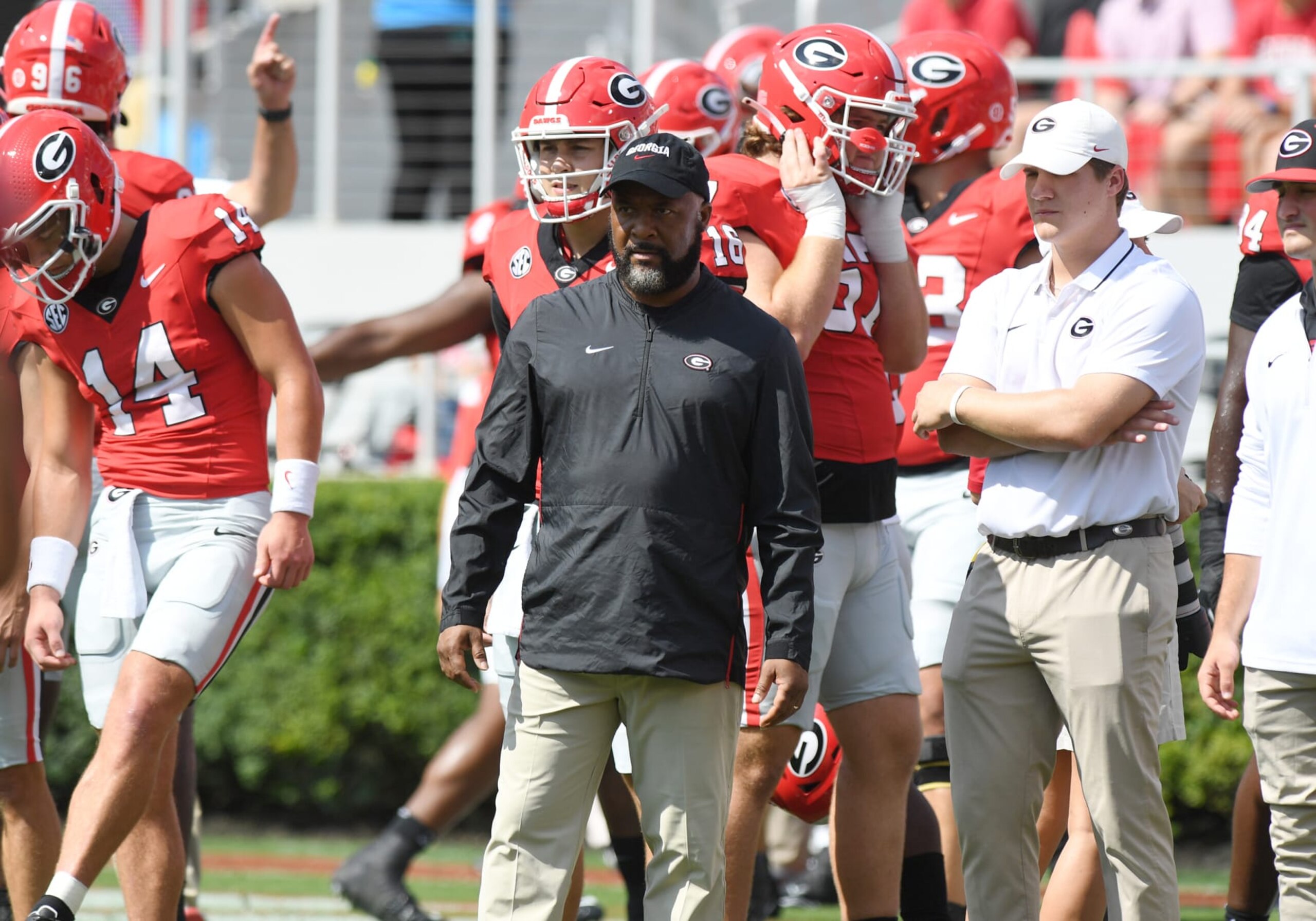
2024 gave us an uncharacteristically late-ending coaching carousel in college football. Nick Saban's retirement in January paired with the likes of Boston College's Jeff Hafley going to the NFL and Georgia State's Shawn Elliott resigning to join South Carolina's staff had the carousel spinning late into February.
Georgia State has since hired former Georgia running backs coach Dell McGee to replace Elliott. He had been the Bulldogs' running game coordinator since 2019 and had been in Athens since 2016. McGee has strong ties to the state of Georgia—prior to going to Athens, he spent three seasons at Georgia Southern.
With McGee's hiring, it seems that the 2024 coaching carousel is finally done spinning—for now. Here's a look back at some of the biggest moves we saw this cycle.
- Former Washington head coach Kalen DeBoer replaces Nick Saban at Alabama
- Jedd Fish replaces DeBoer at Washington after three seasons at Arizona
- UCLA's Chip Kelly joins Ohio State's staff as offensive coordinator
- Former Alabama OC Bill O'Brien is named Boston College head coach
- UCLA hires running backs coach DeShaun Foster as head coach
- Sherrone Moore replaces Jim Harbaugh at Michigan
Sure, we saw a few college football head coaches leave their posts for assistant gigs in college and the NFL this cycle. This has spurred conversations about possible causes to this, with college football's NIL and the transfer portal being easy targets.
But with the cases of Hafley and Kelly, there was a very good chance they would get fired after next season. Avoiding that to take a job that's arguably a better fit elsewhere a year earlier is what I'd call thinking one step ahead.
NFL coaches leave the league for college football jobs—and vice versa—every year. Longtime assistant Eric Bieniemy just joined UCLA's staff over the weekend, too. Unless we see college coaches leaving at higher rates consistently for the next couple of years, I see the ultra-busy 2023-24 coaching carousel as more of a one-off than an actual trend.
NFL Combine Storylines, Big Names to Watch
6 of 7
Speaking of college football players going into the NFL, hundreds of former stars are in Indianapolis this week for the NFL Scouting Combine.
The week is a chance for players to meet with coaches and scouts for the first time and do various drills and workouts. As for the bigger names, there are some notable signal-callers opting to not throw. Three of the believed-to-be top quarterbacks in USC's Caleb Williams, UNC's Drake Maye and LSU's Jayden Daniels will not throw this week.
The three of them are presumably opting to throw at their respective pro days instead next month. At these events, unlike the combine, they oftentimes can throw to their former receiver teammates. Plus, they get the added comfort of throwing at their respective schools.
Speaking of Williams, it seems he doesn't care which team he ends up with. The Chicago Bears, which currently hold the No. 1 overall pick, could draft the signal-caller or trade the pick elsewhere. Williams told ESPN that he will be excited regardless if he goes to the Bears or somewhere else.
But quarterbacks aren't the only playmakers in Indianapolis this week. Big names we'll see compete in drills include receiver Rome Odunze, quarterback J.J. McCarthy, edge-rushers Dallas Turner, Jared Verse and Laiatu Latu and cornerback Terrion Arnold.
Here's a look at the schedule for the week, with events airing on NFL Network and streaming via NFL+
- Thursday, February 29, 3 p.m. ET – Linebackers, Defensive linemen
- Friday, March 1, 3 p.m. ET – Defensive backs, Tight ends
- Saturday, March 2, 1 p.m. ET – Quarterbacks, Running backs, Wide receivers
- Sunday, March 3, 1 p.m. ET – Offensive linemen
The NCAA Is Prohibited from Enforcing Its NIL Recruiting Restrictions—for Now
7 of 7
A federal judge in Virginia temporarily blocked the NCAA from enforcing NIL rules on Friday. The court order, signed by Judge Clifton L. Corker, is the result of a case filed by the states of Tennessee and Virginia against the NCAA.
The antitrust suit was filed after the University of Tennessee was reportedly under investigation by the NCAA for possible recruiting violations with respect to using booster collectives. The New York Times reported in late January that the NCAA was looking into a booster group being used to charter a private plane for Vols quarterback Nico Iamaleava when he was a recruit.
The NCAA contends that the NIL rules put in place are to safeguard athletes from specifically being recruited using NIL inducements. But since athletes are not classified by the NCAA as school employees, there are antitrust issues at play if the NCAA tries to enforce employee-like restrictions on how and when they can make decisions about respective schools. Here's more on the lawsuit from Ralph D. Russo and Teresa M. Walker of the Associated Press:
"The attorneys general of Tennessee and Virginia filed an antitrust lawsuit against the NCAA on Wednesday that challenged its ban on the use of name, image and likeness compensation in the recruitment of college athletes, and in response to the association's investigation of University of Tennessee.
"The lawsuit filed in the Eastern District of Tennessee seeks to undercut NCAA rules against recruiting inducements and claims the association is 'enforcing rules that unfairly restrict how athletes can commercially use their name, image and likeness at a critical juncture in the recruiting calendar."
As a result of the judge's order, the NCAA is prohibited from enforcing any NIL restrictions or rules in place until the suit is settled or goes to trial. Additionally, the judge stated that the NCAA cannot enforce its "rule of restitution" that would allow for retroactive punishments during this period.
The judge's decision is a crushing blow to the NCAA's fight to still classify athletes as amateurs. We'll see how quickly this can go to trial, unless a settlement is reached.

.jpg?w=2560)

.jpg?w=2560 "Cardinals Finalizing MHJ Trade")
.jpg?w=2560 "Grading Wild MITB PLE 😮💨")
.jpg?w=2560 "DK Shades Sauce Gardner 👀")
.jpg?w=2560 "Report: Cowboys Open to More Trades")