
10 NBA Starters Who Don't Deserve Starting Role Right Now
NBA teams may not always put their five most talented players into their starting lineups, but they do trot out quintets designed to get them started on the right foot.
That's why we're wondering why the following 10 players have held onto their opening gigs through the early portion of the 2023-24 campaign. Because based on what the numbers show, they clearly aren't pulling their weight.
Remember, lineup decisions are fluid, so saying someone isn't deserving of starting now isn't the same as saying they should be benched all season. Still, demotions should be in order—or at least considered—for this group of underperforming or ill-fitting (or both) starters.
Malik Beasley, Milwaukee Bucks
1 of 10
The Bucks willingly made their roster top-heavy. And if they guessed right on how dominant the Giannis Antetokounmpo-Damian Lillard duo can be (with time, clearly), they won't have any major complaints about their setup.
It does have drawbacks, though. Like having to start Malik Beasley due to a dearth of alternatives, for instance. Luckily, he's got it going with his three-ball (career-high 40.8 percent splash rate), but that's the extent of his on-court contributions. And you'd have to think even a top-heavy team could do better than plugging a shooting specialist (who's usually streakier than this) into a starting spot.
He is, by default, Milwaukee's backcourt stopper, but only because he lines up alongside the traffic cone known as Damian Lillard. Beasley can have some offensive utility in the open court, but that hasn't amounted to much with the Bucks averaging the fourth-fewest fast-break points. While Milwaukee may reasonably conclude it doesn't have a superior option at the moment, that's less an argument for sticking with Beasley and more a push to go find his replacement.
Torrey Craig, Chicago Bulls
2 of 10
The case for the Bulls to start Torrey Craig seems to be as simple as this: Hey, at least he's not as bad as Patrick Williams was in that spot. That's about as unconvincing as an argument can get, especially when Williams is the Bulls' only rotation regular sporting a single-digit player efficiency rating.
Now, Craig is the kind of player whose presence is most felt through hustle and defense, things which don't necessarily show up on the stat sheet. Even still, he's been particularly quiet by his own standards. His 38.2 percent field-goal shooting is the worst of his career, and his 4.8 points per game are his fewest since his rookie season of 2017-18.
While turning back to Williams probably wouldn't help much, it might be time for the Bulls to promote Alex Caruso to the starting unit and slide DeMar DeRozan to the 4 spot. That's where DeRozan primarily played in 2020-21 and 2021-22, which were two of his best three seasons by PER.
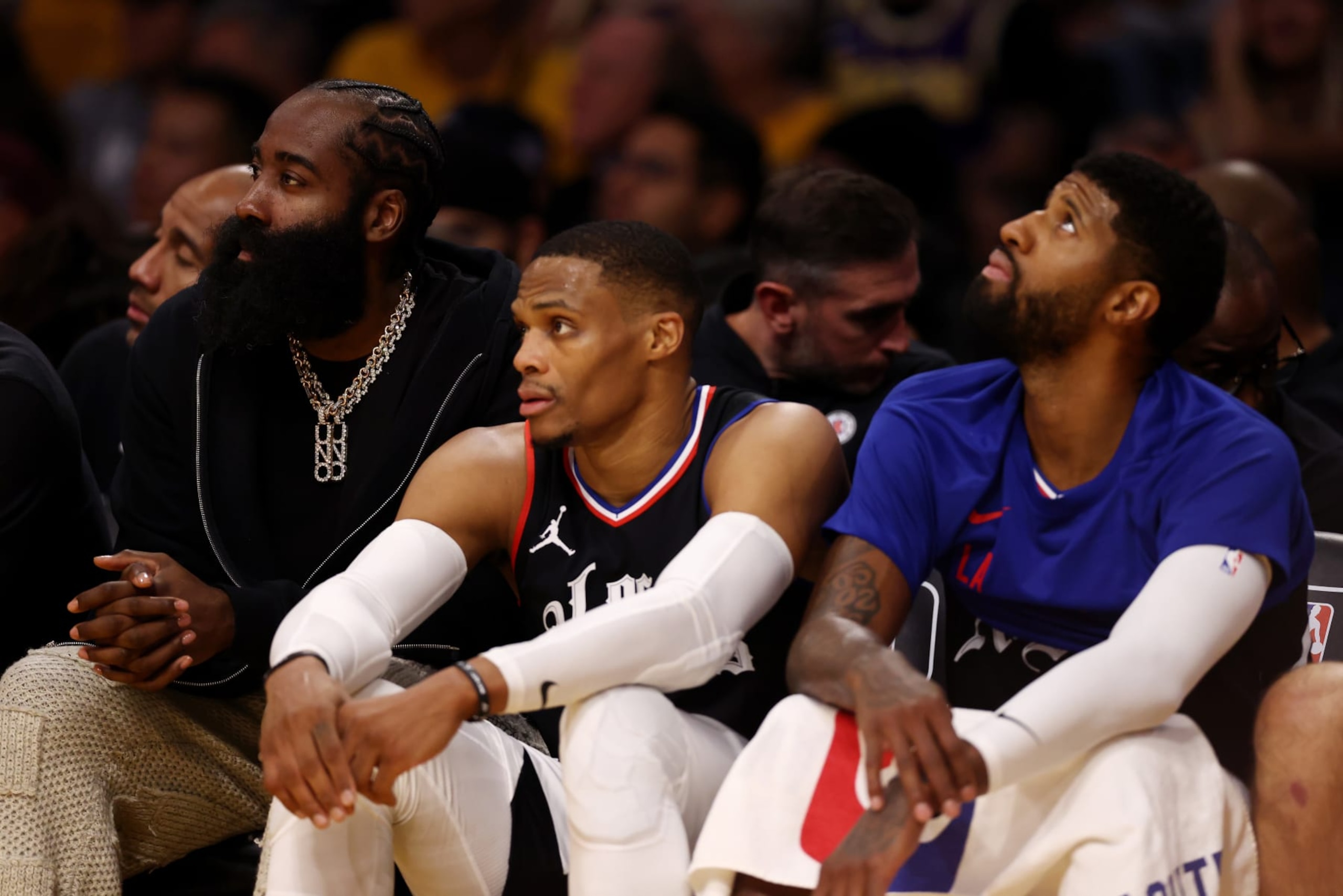
James Harden, Los Angeles Clippers
3 of 10
Prior to James Harden's debut on Nov. 6, the Clippers were 3-2 with the league's third-best net rating. With the Beard in the lineup, though, they've gone 0-4 with the NBA's third-worst net rating. While you can't pin all of these struggles entirely on him, clearly things were clicking without him in ways they haven't since his arrival.
Considering L.A. essentially banked its championship hopes on him being the proverbial missing piece, there might be a zero percent chance he actually gets benched. But the numbers say it's clearly something they need to consider. So far, the Clippers have lost the 125 minutes he's played by a staggering 32.6 points per 100 possessions.
Something's gotta give if the losses keep piling up, and while some will argue for Russell Westbrook or Ivica Zubac as the odd-man out, Harden is the one having the most difficult time of figuring out his fit. With Westbrook, Kawhi Leonard and Paul George on the floor, the Clippers have thumped opponents by 19.6 points per 100 possessions. Add Harden to the mix, though, and that number tumbles all the way to minus-15.4 points per 100 possessions.


Killian Hayes, Detroit Pistons
4 of 10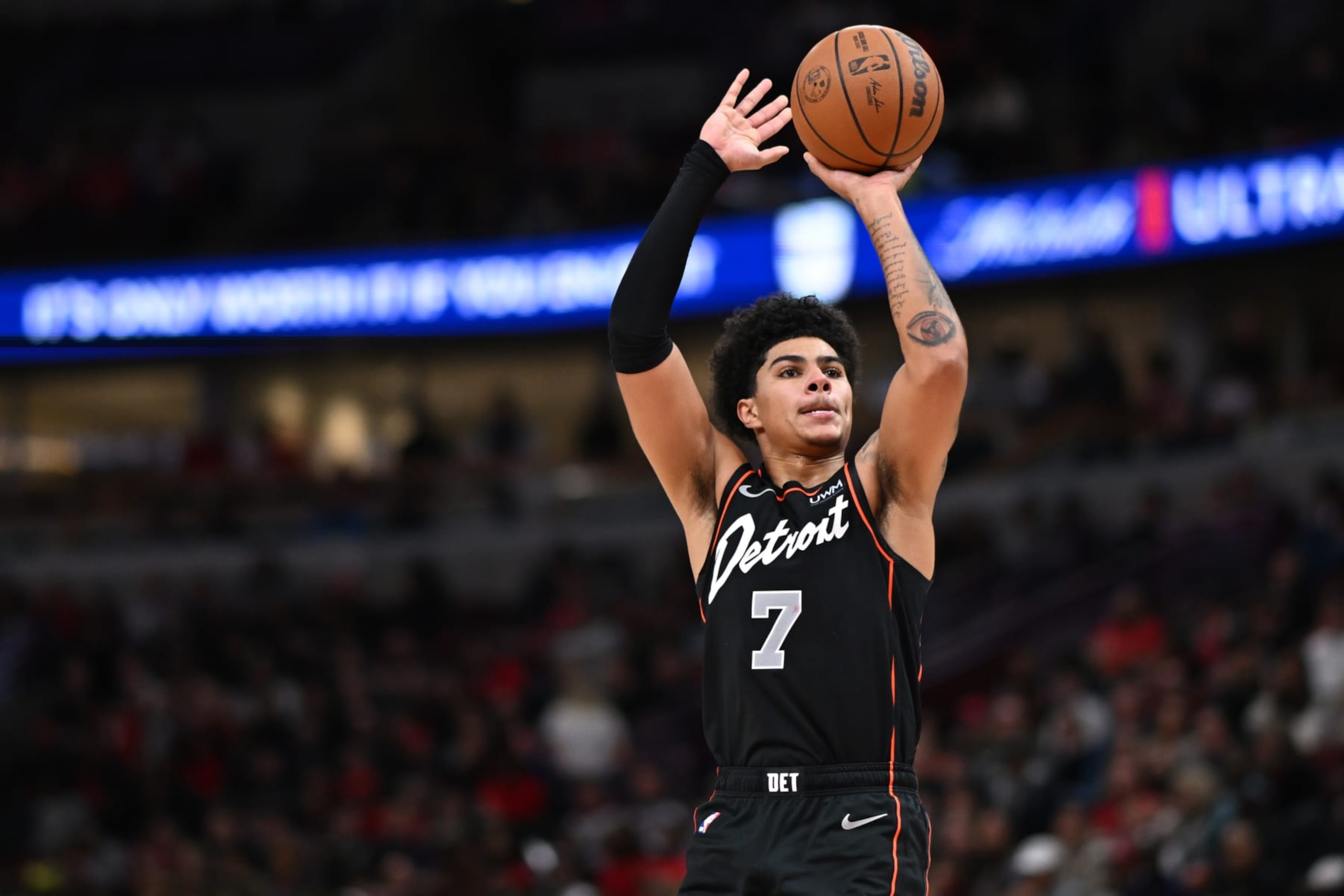
This might pain however many Killian Hayes believers are left to read, as the No. 7 pick of the 2020 draft is displaying some of the best offense of his career, but that's kind of the point. This might be as good as it gets, and it's just not very good: 10.9 points on 40.2/32.5/77.3 shooting.
No matter how much Pistons coach Monty Williams values Hayes' defense and distributing, those don't offset the problems he presents as a non-scoring threat. He shrinks the offensive end—which is plenty cramped to begin with as Jalen Duren doesn't take threes and Ausar Thompson rarely makes them—and forces franchise centerpiece Cade Cunningham to operate in tight spaces. Even worse, Detroit has viable alternatives who could alleviate that issue in Jaden Ivey (the No. 5 pick in 2022) and Marcus Sasser (this year's No. 25 pick).
"Hayes is a good passer ... but it is hard to justify playing him over Sasser and Ivey with his offensive limitations," B/R's Mo Dakhil wrote. "There has not been a significant defensive difference with Hayes, Sasser or Ivey on the court."
The Pistons need to gain some kind of traction on their rebuilding effort. That means putting Cunningham in the best developmental situations possible and identifying players who can fit with him long-term. That can't happen as long as Hayes sticks with the starting five.
Josh Okogie, Phoenix Suns
5 of 10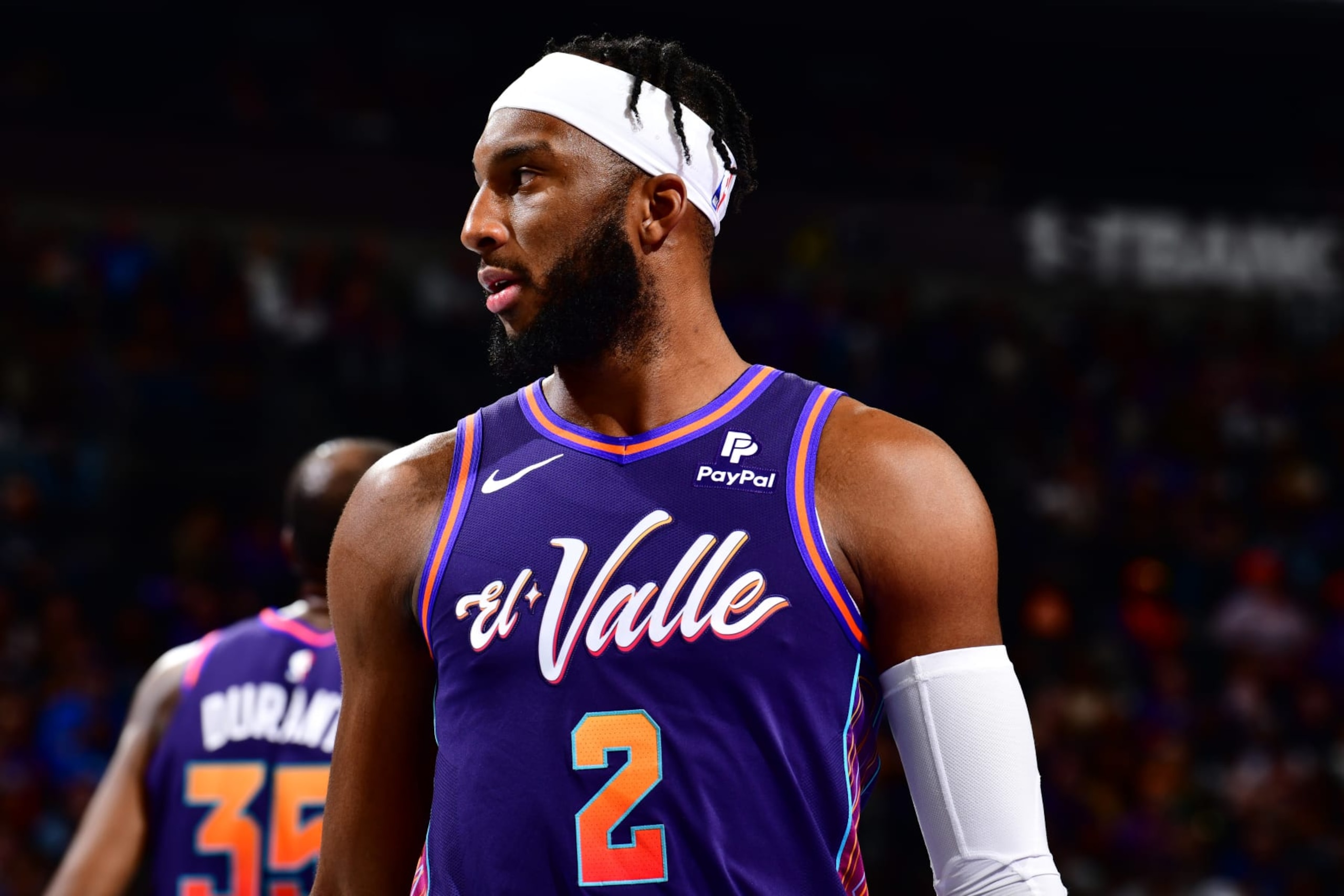
While it's been tricky to get a good grasp on the Suns given their early injury issues, one thing is clear: The debate over who should fill the fifth starter spot is ongoing.
Josh Okogie has had the most opportunities to secure the role, but he's yet to make them count. The idea is essentially that Phoenix has enough offensive firepower between Kevin Durant, Devin Booker and Bradley Beal (and Jusuf Nurkić if you're feeling generous toward the big fella) to live with Okogie's shortcomings at that end. If he played even passable offense, it just might work.
The fact he's listed here shows he's fallen beneath that bar. His 41.1 field-goal percentage is forgettable, and his 17.4 three-point percentage is objectively awful. He's at least making his foul shots (89.7 percent) and close-range chances (73.7 percent inside of three feet), but he's still a negative presence on that end who prevents the Suns from doing what they're built to do best.
Jordan Poole, Washington Wizards
6 of 10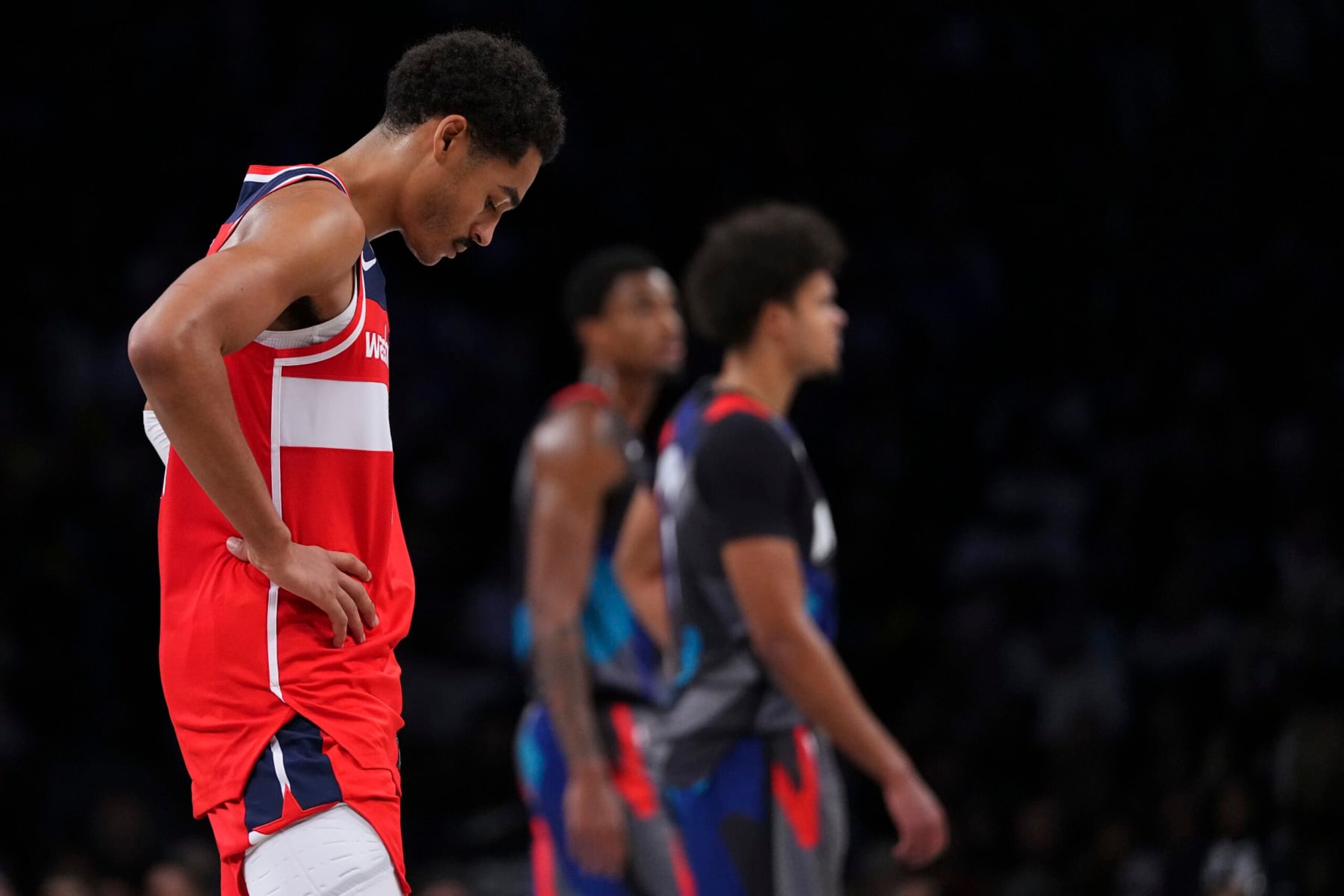
Among the 462 players to hit the hardwood this season, none have a worse plus/minus than Jordan Poole's minus-131. While some of that comes with the territory in Washington—Tyus Jones and Kyle Kuzma are next up on that list—Poole has contributed to a lot of this mess.
He is a dreadful defender, which means his offense must be so spectacular that it more than compensates for all he gives up at the less glamorous end. He has been...uh...less than spectacular so far, posting a 41.2/30.3/76.9 slash line that makes his ambitious shot selection unforgivable. He's also nearly wiping out his 3.7 assists with 2.8 turnovers while averaging his fewest rebounds (2.4) and free-throw attempts (2.6) in three seasons.
These are the opposite of winning habits, which makes you wonder whether Washington has any fear of his poor tendencies trickling down to its younger players. He might view the Wizards as "my own team," but they might see him as a trade candidate. If they don't plan on keeping him, they don't need to let him steer this starting unit into a brick wall over and over.
Cam Reddish, Los Angeles Lakers
7 of 10
In the Lakers' latest attempt to find their footing, they demoted the struggling Austin Reaves to the second unit and promoted Cam Reddish to the opening group. On the surface, the swap looks great, as Reddish has supplied 35 combined points over back-to-back Lakers wins.
Dig even a half-inch deeper, though, and the foundation starts to crack. If the idea is that Reddish can thrive in a three-and-D role with this group, then L.A. is chasing false hopes. He hasn't lived up to either end of that label. He's shooting just 29.6 percent from range and has somehow fared even worse on catch-and-shoot threes (28). On defense, his matchups are shooting 16.2 percentage points better against him than they do on average.
There's a reason the Lakers are his fourth NBA team in the last three seasons. His physical tools might impress, but he has never consistently shown the skills needed to capitalize on them. If L.A. wants a long-term solution for this starting spot, it should continue searching for answers, because this ain't it.
Obi Toppin, Indiana Pacers
8 of 10
Obi Toppin is one of the most electric dunkers in the entire Association. That's not at all reason enough for the Pacers to keep him in their starting lineup.
So, what, exactly, has allowed him to stick with the first five? Because once you get past his aerial antics, there isn't much left in his arsenal. He isn't a rebounder (5.1 per 36 minutes), or a passer (0.8 assists per 36 minutes) or a floor-spacer (30.4 three-point percentage). He's also on course to post the worst defensive box plus/minus of his career (minus-1.4).
Indiana has been slightly worse with him on offense (minus-1.7 points per 100 possessions) and way worse on defense (plus-11.9 points per 100 possessions). Add it all up, and you have a disastrous minus-13.5 net differential, which is the worst among Pacers regulars and the only negative mark from one of their starters.
Andrew Wiggins, Golden State Warriors
9 of 10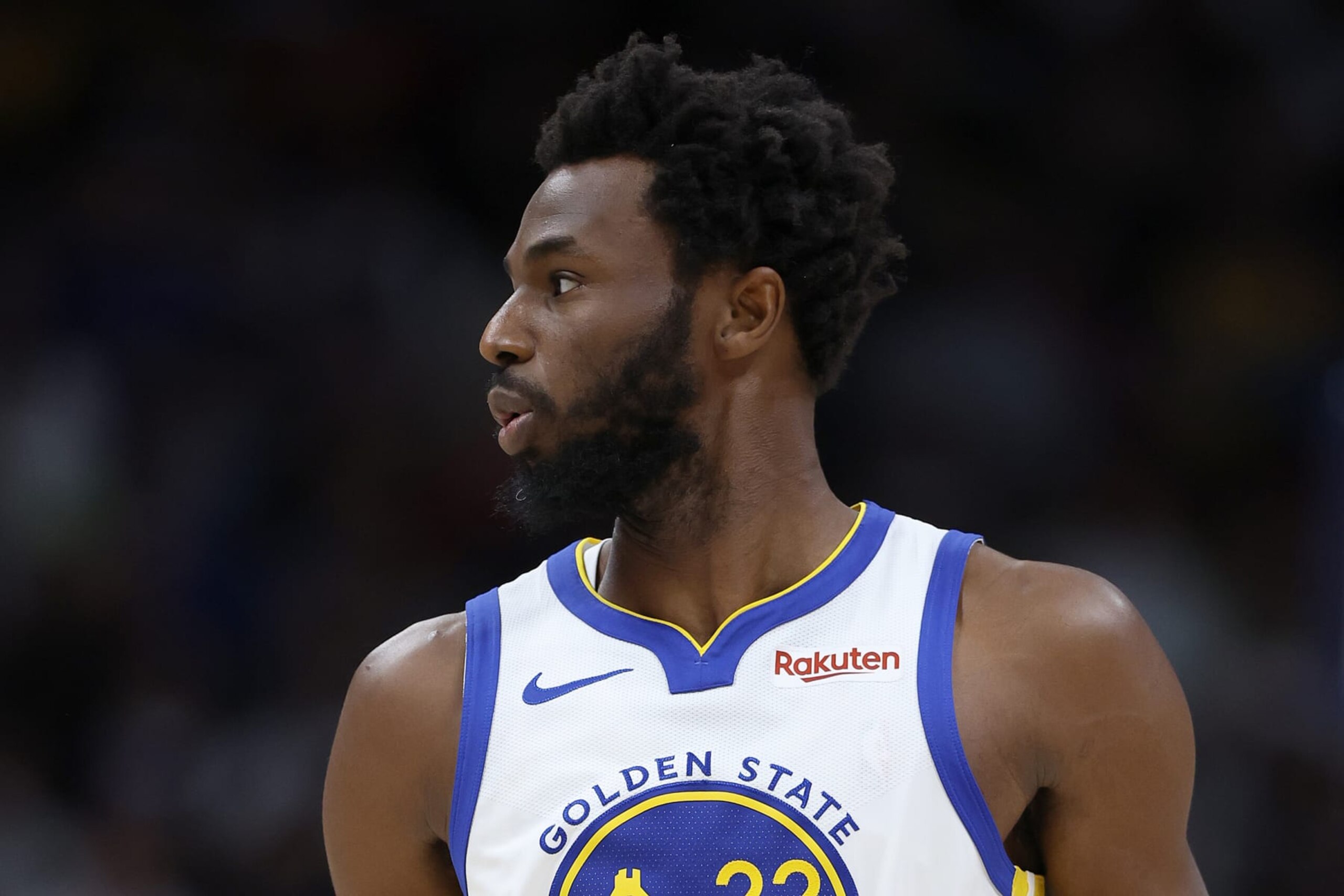
Warriors coach Steve Kerr has already ruled out a demotion for the slumping Andrew Wiggins, but what's the argument for keeping him in the first five?
Sure, he's supposed to be the second option supporting MVP candidate Stephen Curry, but Wiggins is piling up enough bricks to build a fortress. His shooting slash line is a grotesque 41.2/15.4/50. He's averaging more turnovers (1.4) than assists (1.0). His 6.8 PER ranks dead last among the 118 players who've logged 250-plus minutes this season.
The Dubs are counting on him to be—and compensating him as—a difference-maker, but all he's doing is putting them deep in the red whenever he hits the hardwood. His net differential is an absurdly awful (and easily team-worst) minus-30 points per 100 possessions. Even if Golden State thinks he'll snap out of this, sitting him until he shows any evidence of that happening could help this club recover from its recent funk (four losses in five games entering Tuesday).
Ziaire Williams, Memphis Grizzlies
10 of 10
So, this might be cheating, as Ziaire Williams came off the bench his last time out. But considering he missed the previous game with a hip injury, logged just nine minutes in the outing and was replaced in the starting lineup by someone on a two-way contract (Jacob Gilyard), it's fair to question whether the demotion is intended to be permanent.
If it isn't, it should be. Williams, the No. 10 pick of the 2021 draft, has been about as ineffective as anyone, evidenced most clearly by the fact he has this season's fifth-worst plus/minus (minus-91). Nothing from his stat sheet is easy on the eyes, whether it's his 37.7 field-goal percentage, 28.9 three-point percentage, negative assist-to-turnover ratio (1.2 to 1.7) or his career-worst minus-1.0 defensive box plus/minus.
Memphis may not want to quit on his theoretical upside, as this roster would become infinitely more formidable if the 6'8", 215-pound swingman suddenly became a two-way difference-maker. But when the leap obviously (still) isn't happening, you wonder how much longer the Grizzlies can keep the faith—assuming they haven't abandoned it already.
Statistics courtesy of Basketball Reference and NBA.com and current through games played on Nov. 13.
Zach Buckley covers the NBA for Bleacher Report. Follow him on X, @ZachBuckleyNBA.
.jpg?w=2560 "2 NFL Officials Suspended")


.jpg?w=2560 "Mahomes' Wife Trolls Kubiak 💀")
.jpg?w=2560 "Love's Body Already 'Tired'")
.jpg?w=2560 "Injury-stricken Seahawks signing veteran RB")