Every NBA Team's Biggest Regret From the Year 2023
Everybody knows the New Year is about resolutions, but you can't commit to improvement in the future without understanding the missteps of the past. Bleacher Report NBA Staff writers Grant Hughes and Dan Favale are here to look back at the calendar year of 2023 to find one choice every team would make differently with the benefit of hindsight.
Some of these regrets stem from specific games or on-court events, but most will focus on larger issues: team-building decisions, hirings and firings, draft picks and organizational pivot points.
Let's lay out what went wrong for every NBA team in 2023. Hopefully, that'll help them determine how to get things right in 2024.
Atlanta Hawks: Believing in the Core
1 of 30
The Atlanta Hawks are on pace to win fewer games than they did a year ago, a surprising development. It turns out Quin Snyder can't fix everything.
Last season's coaching change was supposed to solve problems on both ends, and some key numbers suggested better days were ahead. Trae Young, Dejounte Murray, De'Andre Hunter, John Collins and Clint Capela outscored opponents by 6.0 points per 100 possessions last season. Replacing Collins (traded to the Utah Jazz for peanuts in July) with Jalen Johnson was supposed to juice that differential into elite territory and turn the Hawks into a 48-win team.
Instead, the returning core has regressed on defense, going from 21st to 26th in points allowed per 100 possessions. Though Atlanta's offense has improved, the franchise is no closer to rediscovering whatever magic led to that improbable 2021 Eastern Conference Finals appearance.
This year has shown the Hawks' core is too one-dimensional and lacks the defensive oomph necessary to compete against the league's best. Murray isn't shutting down the opposition's top backcourt scoring threat, Hunter isn't anything close to a wing stopper and Capela's rim-protection has slipped.
Atlanta didn't use its mid-level exception to sign reinforcements over the summer, didn't consider busting up the Young-Murray backcourt (instead extending Murray) and ultimately failed to recognize the team's key pieces weren't capable of playing quality two-way ball.
All's not lost. Murray is movable, and Capela, Hunter or Onyeka Okongwu could be offloaded without much trouble. But the better time to do that would have been prior to the season when virtually everyone but Murray would have returned more value in trade.
—Hughes
Boston Celtics: Not Adding One More Wing
2 of 30
We need to be careful discussing regrets for a team as good as the Boston Celtics. Any changes to the recent past might result in a different present, and this top-flight contender shouldn't want anything different than what it has right now.
That said, a lack of wing depth behind Jayson Tatum and Jaylen Brown looks like it could be an issue, relatively speaking.
Sam Hauser is a capable seventh man whose elite three-point shooting and better-than-you-thought defense work well during the regular season. But is he up to the task in the playoffs, when matchups get tougher and opponents are even more likely to pick on weak(er) links?
The other options, Oshae Brissett and Dalano Banton, barely play. They don't figure to see upticks in minutes when the games matter more.
The minimum-signing market is always a crapshoot, but the Celtics would be in a better spot if they'd grabbed Derrick Jones Jr., Malik Beasley or Lonnie Walker IV on the cheap.
—Hughes
Brooklyn Nets: Holding Onto Dorian Finney-Smith
3 of 30
Timing is everything when it comes to trades, and it looks like the Brooklyn Nets missed their window with Dorian Finney-Smith.
The 30-year-old combo forward is shooting it better than ever from long range this season, but DFS' defense, once his calling card as the all-position stopper for the Dallas Mavericks, has slipped. He's toting a negative Defensive Estimated Plus-Minus for the first time in his career, and it's not a coincidence that the Nets, despite loads of rangy wings, have been a disappointment on D this season.
Finney-Smith is still switchable, and his shooting spike means he'll retain value in trade. But according to Brian Lewis of the New York Post, the Nets could have had their choice among offers including two first-round picks at the 2023 trade deadline. It's hard to imagine the packages will be that enticing this time around, with DFS regressing on D and one less year remaining on his team-friendly contract.
—Hughes
Charlotte Hornets: Bringing Bridges Back
4 of 30
It's tempting to double down on the common refrain that the Charlotte Hornets set themselves back a decade by choosing Brandon Miller over Scoot Henderson at No. 2 in the 2023 draft. But Henderson has underperformed to an alarming degree in the early going, while Miller has been a quietly effective three-and-D wing.
Henderson still has the higher upside, but he doesn't look better than Miller at the moment.
Better to shelve the draft woulda-coulda's for now and choose a more obvious option: Charlotte's decision to keep Miles Bridges around after a criminal summons issued in October based on charges of misdemeanor child abuse, injury to personal property and a domestic violence protective order violation.
Per Paige Masten of the Charlotte Observer, "the charges stem from an incident that reportedly happened during a recent custody exchange with the mother of his children ... Bridges threw pool table balls at her vehicle while the children were in the car and allowed his current girlfriend to scream and kick the car. Bridges also allegedly threatened the woman by saying that if she told the police he would 'take everything from her and withhold child support.'"
Bridges missed all of last season and served part of his suspension after pleading no contest to a felony domestic charge at the beginning of 2023-24, but the Hornets re-signed him in July, saying in a statement that he had shown remorse and "learned from this situation and expressed it will not happen again."
Something similar has allegedly happened again, and the Hornets continue to play Bridges anyway.
—Hughes
Chicago Bulls: Standing Pat at the 2023 Trade Deadline
5 of 30
If you don't like where the Chicago Bulls are today, there's only one logical choice for their biggest regret: It was the last time they had a chance to get out of this middle-tier rut...and didn't.
The 2023 trade deadline was Chicago's best opportunity to hop off its go-nowhere treadmill. Nikola Vučević was ticketed for free agency, DeMar DeRozan would have been more than the partial-year rental he is now, and Zach LaVine, well...maybe his contract wouldn't have looked quite so cumbersome if the Bulls had dealt him when he was actually healthy.
If the Bulls had blown things up at the 2023 trade deadline 10 months ago, they wouldn't have inked Vučević to his new three-year deal, and they wouldn't be stuck looking for takers on their costly veteran wings. Sure, DeRozan's expiring contract could bring back a protected first-rounder at the 2024 deadline. But it stands to reason he would have commanded a larger return package last time around.
Chicago still could have extended Coby White and Ayo Dosunmu in July, two of its better recent decisions. The difference: Today, those two would be playing for a team stripped of bad contracts, one toting more draft assets and, critically, embracing a long overdue commitment to rebuilding.
—Hughes
Cleveland Cavaliers: Waiving Kevin Love
6 of 30
If Kevin Love was good enough to stick in the rotation of a Miami Heat team that made the 2023 Finals, then he certainly should have been able to help the Cleveland Cavaliers avoid a first-round elimination.
Love fell out of the Cavs' rotation, because head coach J.B. Bickerstaff determined the veteran big man's offensive contributions (38.9 percent from the field but a solid 35.4 percent from deep) weren't significant enough to offset his poor defense. In fairness to Cleveland, Love asked to be bought out.
The Cavs' lack of perimeter shooting allowed the New York Knicks to focus on Donovan Mitchell and Darius Garland, clog the lane and expose Evan Mobley's inability to finish over size at the rim. Had Cleveland gone away from two-big looks, trusted Love to space the floor alongside either Mobley or Jarrett Allen and forced the Knicks to extend their defense, maybe the first round would have ended differently.
It's possible Love's shooting wouldn't have changed the outcome against New York. But it's harder to believe that after watching him play a meaningful role and shoot 37.5 percent on 88 three-point attempts during Miami's run to the Finals.
—Hughes
Dallas Mavericks: The Cost of Grant Williams
7 of 30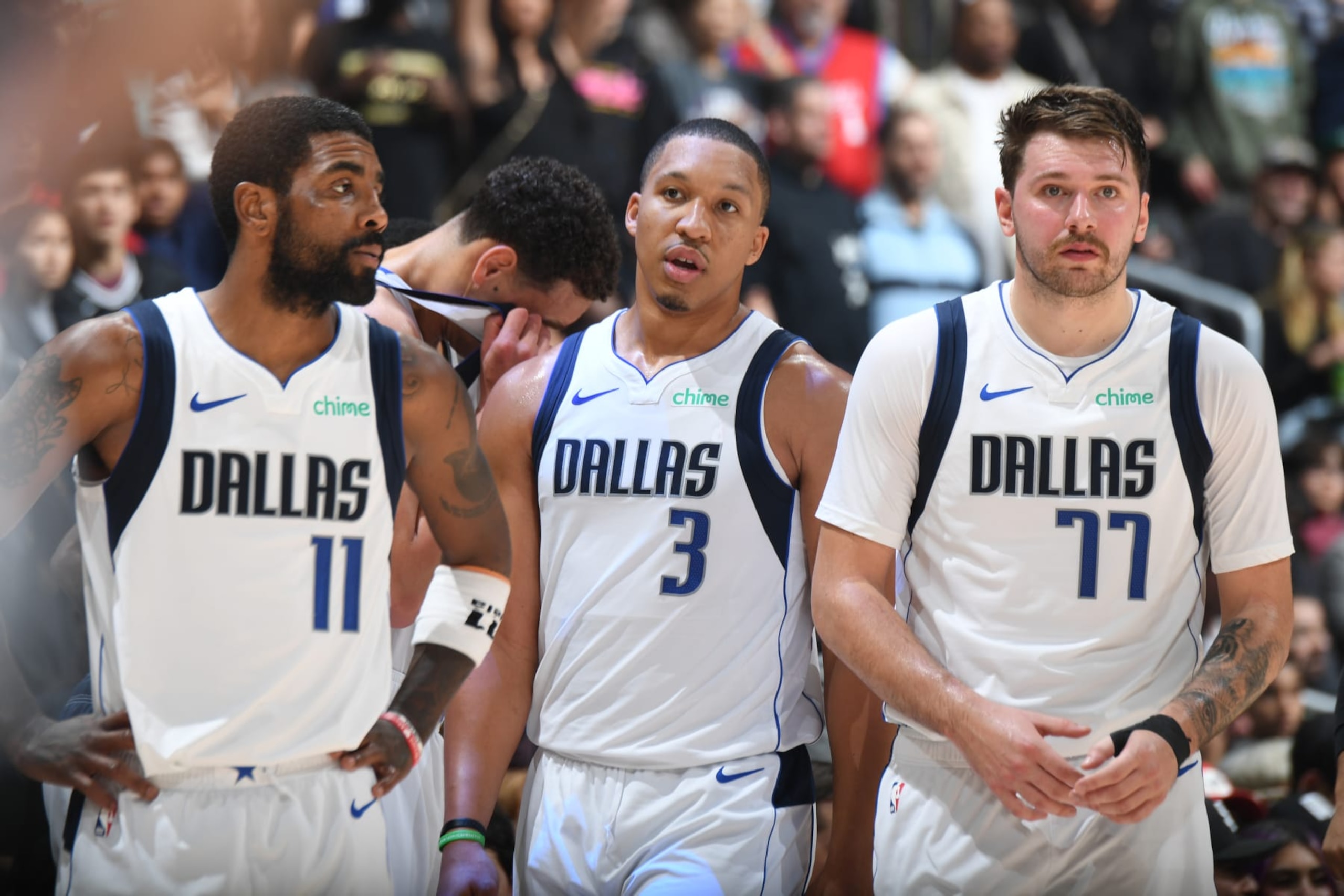
Landing Grant Williams on a four-year, $53.4 million deal in a sign-and-trade was considered a small coup for the Dallas Mavericks. That sentiment held through the start of the regular season.
It is now on life support.
To be sure, Williams is not suddenly on a back-breaking contract. It is #fine. And it's also not like he was the Mavs' first choice. They signed Matisse Thybulle to an offer sheet that was matched by the Portland Trail Blazers. But pivoting into Williams as a contingency came with a steeper opportunity cost than his salary: a 2030 unprotected first-round swap to San Antonio (and 2030 second-round pick to Boston).
Distance swaps are too often romanticized. Perhaps I'm doing that here. But that 2030 obligation is a big deal for a Dallas team that can currently only trade one tangible first-rounder in any subsequent deals.
Using such a juicy sweetener on someone who doesn't seriously boost the wing defense or rim protection during non-Dereck Lively II minutes is at least somewhat regrettable. It's even more tenuous, in hindsight, when Williams is neither starting nor assured a spot in the closing lineup:
Maybe Williams ends up flipping the script by hustling more on defense or increasing his shot volume. Or maybe his role gets diminished even further if Maxi Kleber is ever healthy. That this is even a discussion underscores the problem.
—Favale
Denver Nuggets: Leaning Too Far Into Youth on the Bench
8 of 30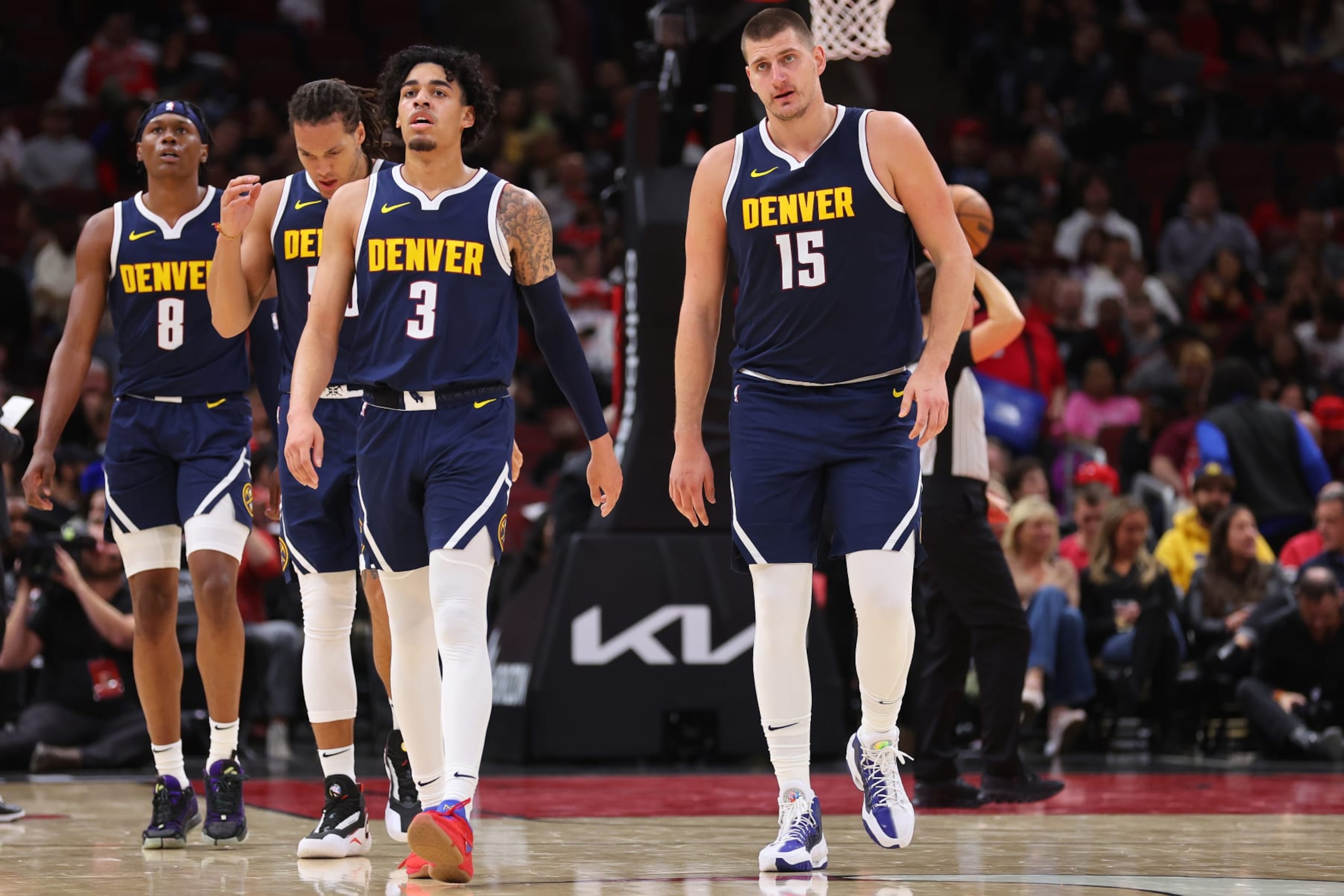
If there was ever a #NoRagrets situation, it belongs to the reigning champion Denver Nuggets. But I have to pick something.
Options are sparse. I considered the interview general manager Calvin Booth did with The Ringer's Kevin O'Connor, but I ultimately appreciated the candor and peek behind the curtain more than I disliked the former's weirdo comments on Michael Porter Jr. and Bruce Brown.
Failing to acquire a backup big who could play more minutes than DeAndre Jordan and remain part of the rotation for longer than Zeke Nnaji quickly became my default. But focusing on the bit role behind Nikola Jokić felt a little hollow, even cheap. That's when I sought the consult of Mile High Sports' Ryan Blackburn, who aptly pointed me in this broader direction.
There is a level of admirability to what the Nuggets are attempting to do. Grooming youth outside the starting five with genuine opportunity could set up a deeper rotation in the future and a more extensive competitive window. But using guaranteed contracts and, thus, roster spots on three rookies who aren't logging many minutes also feels like an unnecessary risk.
Again: This is nitpicky. Julian Strawther has appeared in most of the Nuggets' games, and prioritizing spots for Hunter Tyson and Jalen Pickett may pay long-term dividends more valuable than any short-term gains gleaned from using those slots on veteran minimum contracts.
Still, as Aaron Gordon gets set to miss extensive time after requiring 21 stitches because of a dog bite, and as the backup-big rotation behind Jokić remains fragile, it's worth wondering whether Denver's immediate title chances would be boosted by housing another vet or two to soak up minutes—even if only as regular-season innings-eaters.
—Favale
Detroit Pistons: Hiring Monty Williams
9 of 30
The Detroit Pistons extended general manager Troy Weaver's contract over the summer of 2022, and news of which didn't leak until December of that year. That move falls outside the 2023 calendar year we're considering, but it should go without saying that Weaver's extension would easily take the cake as the team's biggest regret if it were eligible.
Virtually every blown draft pick, developmental failure, hiring, firing and decision that contributed to the Pistons becoming the league's ultimate sad-sack franchise owes to him.*
If forced to pick just one mistake among many, let's go with Weaver's decision to hire Monty Williams as head coach. Williams was fresh off leading a fractured Phoenix Suns team to consecutive playoff collapses and didn't profile as an ideal leader in such an obvious rebuilding situation.
So, naturally, Detroit gave him a then-record six-year, $78.5 million contract.
Once Weaver is inevitably shown the door, Williams will inherit a new lead executive who'll probably want to hire his own head coach. That'll trigger more turnover, more wasted money and more time spent in wheel-spinning mode before the next rebuild can get underway.
*Unless you want to zoom all the way out and blame owner Tom Gores, who's ultimately responsible for Detroit last winning a playoff game in 2008.
—Hughes
Golden State Warriors: Taking Too Long to Properly Embrace the Youth
10 of 30
Jonathan Kuminga spotlighted one of the Golden State Warriors' biggest issues during a conversation with The Athletic's Marcus Thomspon following the team's Christmas Day loss to the Denver Nuggets:
"I'ma keep it real with you...Me without the ball, nobody's guarding me...But sometimes,I've gotta take that away to make sure my OGs get the ball. That's where it's confusing. Sometimes, I come out the game not knowing what I did. And that messes with my head. It's like, 'What they want me to do?' I can pass and I can do different s--t."
For an organization that relentlessly touted a two-timeline approach over the past few years, the Warriors have done very little to advance their incumbent kiddies. Kuminga and Moses Moody are currently the strongest forms of collateral damage.
Moody is basically out of the rotation. Kuminga is starting now, but Draymond Green will soon rejoin the fold. And it's not like head coach Steve Kerr has given him a much longer runway in the interim. Neither Moody nor Kuminga has been afforded the same freedom to fail or #playthroughit once upon a time bestowed to Jordan Poole.
A mentality shift does appear underway. Rookies Brandin Podziemski and Trayce Jackson-Davis are playing more prominent roles than newbies of years past.
But what happens to TJD's minutes when Green returns? And how much responsibility is Kerr willing to give Podz in crunch time and, possibly, playoff games if his court time must infringe upon Klay Thompson or Andrew Wiggins or Chris Paul? Do the Warriors even have the stomach to roll with Kuminga and TJD over the suddenly-tired-looking Kevon Looney? Is Golden State willing to play Kuminga with Wiggins, like, ever?
The Warriors needn't be absolute in their direction. This isn't a James Wiseman 2.0 situation. They also can't afford to be much less creative or explorative. And if they're not prepared to more thoroughly plumb the skill sets of the kids at the expense of struggling or less-effective vets, they need to suss out consolidation trades before their meld of stubbornness and equivocation marginalizes the value and mystique of everyone involved.
—Favale
Houston Rockets: Poor Handling of Kevin Porter Jr.
11 of 30
Kevin Porter Jr. was exiled from the Houston Rockets after being charged with felony assault and strangulation following an incident in a Manhattan hotel on the morning of September 11 in which he allegedly hit his girlfriend, Kysre Gondrezick, multiple times and placed his hands around her neck. He has since rejected a plea deal from the Manhattan Assistant District Attorney and no longer faces a felony second-degree assault charge after evidence determined Gondrezick's fractured neck was the result of a congenital defect.
Houston eventually traded Porter in October to the Oklahoma City Thunder along with two second-round picks in exchange for Victor Oladipo's expiring contract and Jeremiah Robinson-Earl, whom the Rockets waived. Oklahoma City immediately waived Porter.
Turning Porter's off-court allegations into a bookkeeping expedition was and remains inherently cringey. No team—including the Thunder—should get to hide behind the veil of "It's a business!" And the Rockets don't get to play the hoodwinked card. There's a reason Porter's contract was so loosely guaranteed in the first place.
That's the other element I'm considering here. This isn't just about how Houston responded to the domestic violence allegations by essentially turning Porter into a pair of trade exceptions (Oladipo's expiring and an actual $4.5 million TPE.)
According to a report from ClutchFans, the Rockets repeatedly covered up for and enabled issues off the court while planning around Porter's on-court presence as if he was a can't-miss cornerstone. That is nothing if not a nod to larger organizational issues (at least until this season)—even if you're inclined to "only focus on basketball."
This regret is bigger than the games being played and any potential or actual transactions, and so it supersedes any other alternatives: taking too long to understand what the team has in Alperen Şengün, getting used as a stalking horse in the Brook Lopez negotiations, not acquiring more adults in the room sooner, something-something Jalen Green, etc., etc., etc.
—Favale
Indiana Pacers: The 2023 Lottery Swap
12 of 30
To judge a draft-night trade just a few months after its execution is to invite ridicule. There's nothing riskier than making proclamations about prospects with less than a year of NBA experience.
Having said that, the Indiana Pacers probably wish they could take back the trade that brought in No. 8 pick Jarace Walker and two future second-rounders for No. 7 selection Bilal Coulibaly. Justifiable at the time on the grounds that Walker filled a need as a defensively versatile 4 who could rebound, roll to the rim and make plays in space, the deal looked like a mistake in a hurry.
Coulibaly was viewed as the less polished prospect, but in addition to the elite physical tools (6'8", 7'2" wingspan and high-end athleticism) that have already flashed on D, the teenage wing showed up with a surprisingly developed offensive game. He's hitting 41.0 percent of his threes and 60.8 percent of his twos while routinely playing over 30.0 minutes per game since the middle of November.
Granted, it's not hard to carve out a role on a putrid Washington Wizards team. But couldn't we also argue Coulibaly's scoring efficiency and effort level are more impressive with so little talent around him?
Walker may yet become what the Pacers hoped he'd be on draft night, but he's only appeared in eight games and hasn't impressed. For now, Coulibaly looks to have the higher floor and ceiling. He would have been perfectly at home sprinting up and down the court in Indy's uptempo offensive system while also giving the Pacers the potential shutdown wing they lack.
—Hughes
LA Clippers: Not Extending Kawhi Leonard or Paul George
13 of 30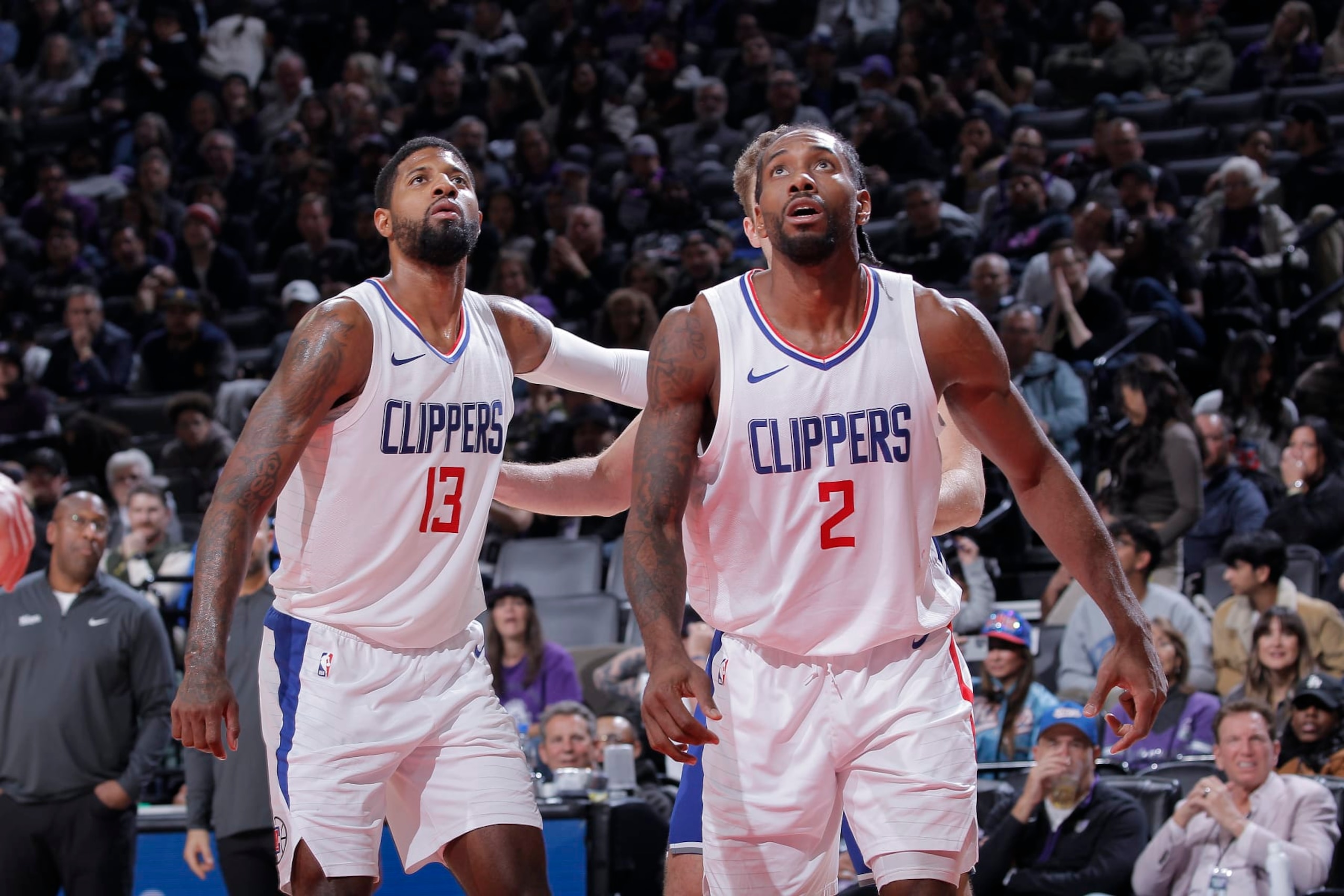
[Gestures wildly toward an unimpressive smattering of alternatives.]
Extending Kawhi Leonard (who has recently missed time with a hip injury) and Paul George would have seemed ludicrous to many given their collective availability over the past four-plus years. But could their fragility prior to this season have allowed the L.A. Clippers to broker more team-friendly terms? Perhaps a shorter deal? Slightly below-max salaries? I'm genuinely asking.
Failing that, it would be nice if the Clippers weren't on course to have three of the five most-coveted free agents in the summer of 2024. George (player option), Leonard (player option) and Harden all clearly want to be in Los Angeles, but having so many expiring superstar contracts begets an uncomfortable uncertainty.
On the bright side, the Clippers can still address this to kick off 2024. Whether they will is a different story. And they certainly have less leverage in negotiations than they did before.
For anyone is demanding an alternate regret, I'm all ears. The other options that sprang to mind didn't do it for me.
Trading for Harden sooner is certainly a possibility, but foregoing the prolonged song and dance may have cost them more first-round equity or Terance Mann. Taking on P.J. Tucker as part of that deal becomes more lamentable with each and every DNP. Once again, though, it's tough to imagine them coming to alternate terms with Philadelphia that didn't mandate the inclusion of another first or Mann.
Head coach Tyronn Lue certainly waited too long into the latter half of last season to pull the Marcus Morris Sr. ripcord. But to what end that matters given how injuries derailed the Clippers in the playoffs is debatable. Some sticklers will insist L.A. should not have dealt for Harden at all. That's an unreasonable stance to take given the team's post-trade surge—though, it could certainly be revisited depending on how this season (and free agency) shakes out.
—Favale
Los Angeles Lakers: Choosing D'Angelo Russell Over Mike Conley
14 of 30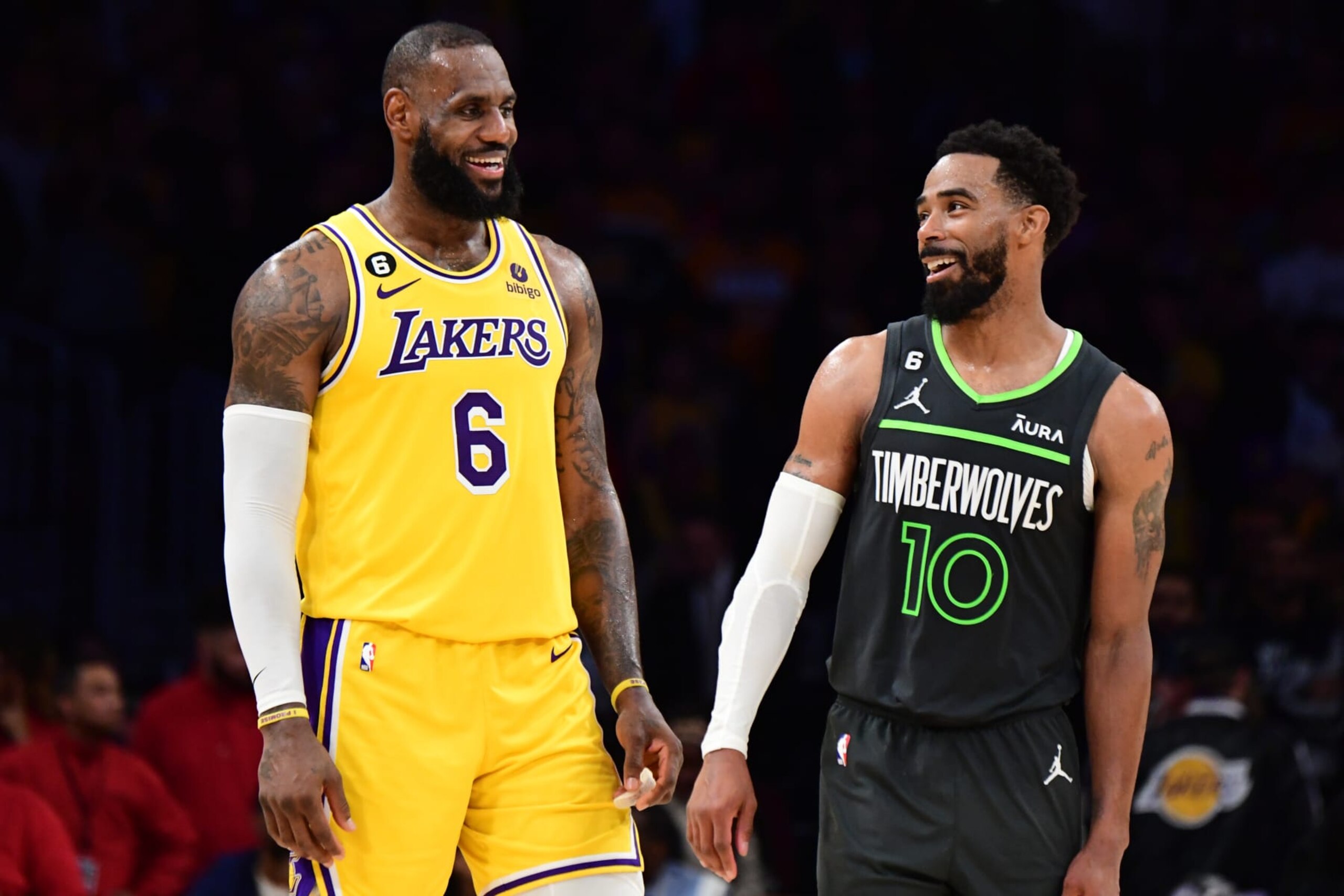
Many will be inclined to deride the Los Angeles Lakers for not trading Russell Westbrook sooner. That's fair. Sort of. They moved him less than six weeks into 2023. Any issues with his stay in Los Angeles are more central to the 2022 calendar—or the decision to acquire him in the first place.
Nearly one year later, the terms of Westbrook's departure are more regrettable. Speaking with HoopsHype's Michael Scotto after the trade, Jovan Buha of The Athletic said the Lakers "could've potentially had Mike Conley" but that they "looked at D'Angelo Russell as someone who could be their point guard of the future and potentially that lead ball-handler and third-star type of guy that could fit around Anthony Davis and LeBron [James].]"
This logic did not age well. And full disclosure: I wholeheartedly subscribed to it at the time, believing that Russell's off-the-dribble shot-making was the secondary boon desperately needed by Los Angeles' offense.
As it turns out, the Lakers, myself and probably many others were wrong. Russell has turned in some really nice stretches for L.A., and his contract remains eminently tradable. But the scalability of Conley's passing and shooting knows no limitations and are critical to the Minnesota Timberwolves' top-of-the-Western-Conference success.
Relative to how and where the Lakers struggle the most on offense, this looms as a missed opportunity. And it's exacerbated, in hindsight, by Gabe Vincent appearing in only five games this season. Preferring a younger option is not unwise, but in this case, given the urgency of L.A.'s timeline, it's clear the front office overthought last February's return.
—Favale
Memphis Grizzlies: Waiting Too Long for a Consolidation Trade
15 of 30
Declaring the Marcus Smart trade an outright failure goes a touch too far. He missed most of the season with a sprained left foot, and Ja Morant wasn't available for the Memphis Grizzlies' first 25 games. Entering play on Dec. 28, the quartet of Morant, Smart, Desmond Bane and Jaren Jackson Jr. has made exactly one appearance together.
This is different from saying time remains on the Grizzlies' side. It doesn't. Their decision to consolidate assets into a singular player came at least one, probably two, summers too late. And there's no guarantee they made the correct consolidation.
Memphis has long needed a bigger wing, preferably with some ball skills. Acquiring Smart was a half-measure—a move made to try filling a variety of holes (backup point guard, wing defense and minutes, shooting) for a player approaching 30 who, for all his defensive versatility, does not typify the wing archetype.
More than anything, though, the Grizzlies simply waited too long to do...anything. And when they did something, it generally didn't pan out, wasn't splashy enough and/or reflected the ebbing value of players they held onto for too long:
Ahem:
Yikes.
Fortunately for the Grizzlies, their cupboard is far from barren. Unfortunately for the Grizzlies, they are no longer armed with the assets to outbid rivals for the most coveted and well-fitting targets. And this presumes, of course, they're willing to make aggressive bids at all when they are still on the outside looking in at the West's top 10.
—Favale
Miami Heat: Missing Out on Damian Lillard
16 of 30
The Miami Heat seemed like the favorites to land Damian Lillard...until they didn't.
When Dame requested a trade from the Portland Trail Blazers, he made it abundantly clear that Miami was his preferred destination. Lillard's agent, Aaron Goodwin, told organizations outside of Miami that "trading for Lillard is trading for an unhappy player," per ESPN's Adrian Wojnarowski. You could forgive Miami for acting as if it had Dame in the bag.
The Heat let Gabe Vincent walk, watched Max Strus go to the Cleveland Cavaliers and made no other significant additions, perhaps in anticipation of onboarding a very costly All-NBA point guard. Those losses have hardly crippled Miami, which has predictably filled gaps from within. The franchise is going to recover.
But if the Heat had gotten Lillard, they'd be in a far more exciting position. It would have kept Dame from joining Giannis Antetokounmpo in Milwaukee and Jrue Holiday from supercharging the Boston Celtics, weakening two key rivals. Down the line, Miami could have had a shot to land Antetokounmpo, assuming he wouldn't have extended with the Bucks after Lillard joined up.
For the Heat, Dame is the one that got away.
—Hughes
Milwaukee Bucks: Game 5
17 of 30
If there'd been a way for the Milwaukee Bucks to add Damian Lillard without Jrue Holiday landing on the rival Boston Celtics, it would have been worth pursuing. But Milwaukee relinquished control over Holiday's destination when it sent him to the Portland Trail Blazers, and the results with Dame have been good enough to justify the exchange overall.
Plus, the Lillard move probably had something to do with Giannis Antetokounmpo signing a three-year, $186 million extension in October. Any series of events leading to that were, by definition, not regrettable.
Game 5 of their series against the Miami Heat, though? Yeah, the Bucks definitely want that one back.
Up 16 heading into the fourth quarter and facing elimination with a loss, Milwaukee was just 3-of-19 from the field across the final 12 minutes of regulation, and Antetokounmpo went painfully cold from the foul line. Basically everything went wrong as the Bucks failed to generate good looks on offense, didn't change up their approach on a scorching Jimmy Butler, inexplicably left Brook Lopez off the floor to defend Butler's game-tying lob at the end of regulation, mismanaged their timeouts and gagged the game away in overtime.
The result was one of the more embarrassing first-round upsets in memory, one that resulted in head coach Mike Budenholzer's firing and significant changes to the roster. If Milwaukee collects a title in 2024, all will be forgotten. Until that happens, everyone will remember Game 5 of the first round as a low point.
—Hughes
Minnesota Timberwolves: Jaden McDaniels vs. The Wall
18 of 30
All injuries are regrettable. Whether they're also preventable is debatable—in most cases.
Just not this one.
After picking up his second foul with about a minute to go in the first quarter of the Minnesota Timberwolves' 2023 regular-season finale against the New Orleans Pelicans, a frustrated Jaden McDaniels punched a makeshift wall-type thing inside a Target Center tunnel. He sustained a fractured right hand...that would sideline him for the rest of the season:
(Aside: This incident preceded Rudy Gobert attempting to punch Kyle Anderson on the Timberwolves bench. Yes, last season's squad was a mess.)
Minnesota won the game, advanced past the Oklahoma City Thunder during the play-in tournament and bagged a postseason spot anyway. A healthy McDaniels most likely would not have changed the team's fate in the first round against the Denver Nuggets.
At the same time, the Timberwolves put up one hell of a five-game fight versus the eventual champs. McDaniels' exhaustive defense would have added an interesting wrinkle to the series. Maybe Minnesota picks up another win or two, extending the best-of-seven set and potentially weakening Denver for its subsequent later-round matchups. If nothing else, a healthy McDaniels would have given the Wolves an opportunity to more extensively evaluate the core of himself, Gobert, Anthony Edwards, Mike Conley and Karl-Anthony Towns.\
Everything, of course, is working out now. And there's a chance Minnesota saved some money in extension talks with McDaniels without his having a standout-postseason sample to leverage. But that doesn't make his unceremonious end to last year much less regrettable.
—Favale
New Orleans Pelicans: Neglecting the Offense
19 of 30
Interpret this as "the New Orleans Pelicans" needed to swing a big trade if you must. That is, in fact, certainly one way to have leaned more into offense. But it's not just about what this team doesn't have. The Pelicans employ the talent necessary to rank better than 16th in points scored per possession. They're just not deploying it properly.
Changing up the starting lineup should be a given. The current quintet is getting outscored by more than six points per 100 possessions while posting an embarrassingly low three-point-attempt rate, shooting under 29 percent from distance and notching an overall offensive rating in the 23rd percentile.
No one player, per se, is the problem. The Pelicans need better spacing overall to make defenses pay for gumming up looks from Zion Williamson at the rim and Brandon Ingram from mid-range.
This offensive infusion should at the very least come in the form of starting Trey Murphy III over Herb Jones (or maybe even Jonas Valančiūnas). Never mind the attempt to insulate Zion, BI and CJ McCollum (defending well in his role, FYI) on the less glamorous end. This team needs to be more focused on optimizing its two best scorers (Zion and BI) and ensuring they look more like top 15 to 20 players rather than settling into the top 30 or lower range they're hovering around at the moment.
And, no, a biggish swing on the trade market should not be off the table. Additional offensive space and pizzazz can assume many forms: a floor-spacing big who takes more threes than Valančiūnas, a lead guard who fires up triples in volume, another wing or motion shooter who glitzes up the top seven of the rotation, etc.
Spare me the attachment to mystery picks and this idea that Jordan Hawkins (not part of the rotation) or the injured Matt Ryan offer immediate solutions. The Pelicans have blown double-digit leads in nine of their losses, and only the Detroit Pistons and Washington Wizards have a lower winning percentage in games in which they are tied or leading by up to five points in the final three minutes. Whatever head coach Willie Green and executive vice president David Griffin envision for this exact roster, it's neither working nor anywhere near enough to reach the heights to which the organization must aspire.
—Favale
New York Knicks: Playmaking Depth Behind Immanuel Quickley
20 of 30
The New York Knicks' biggest regret of 2023 was going to be their failure to ink Immanuel Quickley to a preseason extension. That went by the wayside when New York sent Quickley to the Toronto Raptors in a package for OG Anunoby.
The Knicks no longer have to worry about what it might have taken to match an offer for Quickley in restricted free agency (though their new top-line concern will be re-signing Anunoby as an unrestricted free agent), and they also don't have to fret over losing Quickley for nothing.
The new issue: a decent-sized playmaking void where Quickley used to be.
Quickley was second in Sixth Man of the Year voting last season for a reason. His impact on the second unit and in the closing lineup will be hard to replace, though the extension Miles McBride signed the same day Quickley was dealt suggests the Knicks think he's ready to step up.
Still, if New York had a sense a deal involving Quickley was possible after extension talks fell off, maybe a little more depth at the position should have been a priority.
—Hughes
Oklahoma City Thunder: Opting Out of Mid-Rotation Upgrades
21 of 30
Settling on a regret for the Oklahoma City Thunder proved painstakingly difficult. I consulted the fine folks of The Uncontested Podcast amid my rampant hair-pulling. They collectively suggested rolling with OKC's performance against the Minnesota Timberwolves during the play-in tournament or with team president Sam Presti holding onto Tre Mann and Aleksej Pokuševski for too long.
I can't get there on either of them. Regretting the play-in loss is fair but undersells how much credit goes to Minnesota for coaxing the Thunder out of their guiding principles. And failing to move either Mann or Pokuševski during the 2023 calendar year is akin to missing out on second-round equity—of which Oklahoma City has plenty, if not too much.
Some will argue in favor of not dealing Josh Giddey. That's too spicy. The investigation into his alleged improper relationship with a minor looms, but it's tough to focus on without further information or anything resembling a resolution. Looking to deal him in a vacuum didn't make much sense given how well he played last season.
Sticking with their conservative team-building approach over the summer winds up being my fall. The Thunder are so good that it's time to start splitting hairs. They parlayed their flexibility into further salary-cap leases rather than chasing immediate upgrades.
That approach resulted in Cason Wallace, a rookie already cracking the rotation. But Oklahoma City showed the flashes necessary last season to think bigger, even before knowing what it had in Chet Holmgren—not star-sized, not even closing-lineup-staple-sized, just someone capable of playoff minutes who nudged up the three-point volume or frontline bounce or heft.
—Favale
Orlando Magic: The 2023 NBA Draft
22 of 30
We did it with Indiana, and now we're doubling down on the ill-advised move of criticizing draft decisions that are only a few months old. What could go wrong?
The Orlando Magic were right to target guards and wings with their pair of 2023 lottery picks, but early returns suggest they went with the wrong ones. Anthony Black was their pick at No. 6, and he hasn't assuaged concerns about his jumper by attempting just 1.6 treys per game. Big guards are exciting in theory, but Black doesn't have the ability to break down his man in isolation, doesn't leap out on film athletically and generally feels more like a connector than a real difference-maker.
Bilal Coulibaly was sitting right there at No. 7, but Cason Wallace (No. 10), Keyonte George (No. 16) or Brandin Podziemski (No. 19) would also have provided more of what Orlando needs. Wallace, in particular, would have been a brilliant fit. He's hitting 43.9 percent of his threes and already projects as a dynamite defender.
Then there's Jett Howard at No. 11, an even bigger reach who has appeared in only nine games and is shooting 31.3 percent from the field. Billed as a movement shooter, Howard often looks overwhelmed athletically and clearly needs more G League seasoning.
Jordan Hawkins, George, Jaime Jaquez Jr. and Podziemski all came off the board after him, and each of them would have made more sense at No. 11.
—Hughes
Philadelphia 76ers: Free-Agency Holding Pattern
23 of 30
It's been messy, but the Philadelphia 76ers mostly got their moves right over the past year. They wisely replaced head coach Doc Rivers with Nick Nurse, didn't cave to James Harden's trade demands until they found a suitable offer from the L.A. Clippers and managed to preserve maximum flexibility for the 2024 offseason by holding off on an extension for Tyrese Maxey.
Philly is one of two teams with a net rating greater than plus-10.0 points per 100 possessions so far this year, Joel Embiid continues to play like an MVP and Maxey is a legitimate star. That means we need to get nit-picky in our search for regrets.
How about the relative free-agent stasis while the Harden saga played out?
The 76ers let Georges Niang, Shake Milton and Jalen McDaniels walk while only bringing in Kelly Oubre Jr. and Patrick Beverley as minimum signees of consequence. Niang and Milton might not have had major roles, but McDaniels' length and athleticism could have been useful defensively. Considering the Sixers gave up Matisse Thybulle and a second-rounder to acquire McDaniels at the 2023 deadline, you'd think retaining him would have been a priority.
—Hughes
Phoenix Suns: The Kevin Durant Trade Negotiations
24 of 30
Emphasis on negotiations.
When you have the opportunity to acquire Kevin Durant, you pretty much need to pounce. Whether that also means you should concede everything in the process of getting him is a separate matter.
The Phoenix Suns did. As ESPN's Ramona Shelburne wrote following last February's mega trade:
When [Brooklyn Nets general manager Sean] Marks followed up with [Suns general manager] Jones, though, the ask was just as sky-high as it was last summer. It was take-a-deep-breath high:
- Four unprotected first-round picks. No negotiation.
- An unprotected pick swap in 2028, likely after Durant is retired. No negotiation.
- Mikal Bridges, the forward who hadn't missed a game in three seasons, is a lock for [an] All-Defensive team, is having the best offensive season in his career and is deeply loved by everyone in the organization. No negotiation.
- Cameron Johnson, the long defensive specialist who can defend multiple possessions and handle the ball. No negotiation.
Phoenix, per Shelburne, tried to negotiate anyway. It failed. And not only did the Suns fail to bring the price down, Shelburne said they also obliged to throwing in Jae Crowder at the last minute. The decision to meet the initial ask and then include Crowder was reportedly spearheaded by new team governor Mat Ishbia.
It is much too early to say Phoenix lost this trade. It has Kevin Freaking Durant! But this was also a one-team negotiation. Failing to win any other aspect of the deal is a letdown. Keeping Bridges was never in play, but brokering pick protections, the retention of Johnson or the ability to flip Crowder for seconds or someone else all could have gone a long way.
Others will point to the Bradley Beal trade as the bigger asset drain. That's not accurate. The Suns didn't give up an outright first in that deal. They were never getting more value than an All-Star offensive player for what they sent out. The Durant trade set in motion what has fast become a limited-asset and makeshift-rotation existence. While a steep opportunity cost was unavoidable, Phoenix went above and beyond relative to Brooklyn's leverage.
—Favale
Portland Trail Blazers: How the Damian Lillard Era Ended
25 of 30
Trading Damian Lillard and hitting the "rebuild" button is not a course of events the Portland Trail Blazers should regret. On the contrary, this transition is long overdue, a development everyone in and around the league understood needed to happen before the organization ever seriously considered it, let alone consigned to it.
And yet, the way it all went down was, frankly, disastrous.
One of the NBA's most profoundly meaningful player-team relationships devolved into a contentious divorce that unfolded in a smog of public posturing and stubbornness and warring agendas. It was an ending unfit for the partnership, and one still subject to unresolved division.
Was Lillard unfairly hamstringing the Blazers by initially insisting on a trade to the Miami Heat and only the Miami Heat? Did Portland owe it to him, after 11 years of franchise iconicism, to adhere to his one-team wish list? Did general manager Joe Cronin invite a bitter end by fibbing, misleading or flat-out lying to Lillard? Did the Blazers collectively, and deliberately, pretend they couldn't see the Sharpie-writing on the wall in hopes Dame would initiate a trade so they didn't have to make the decision themselves?
Both parties are currently better off. Lillard has the chance to legitimately contend for a title with the Milwaukee Bucks. Portland is embarking on a gradual rebuild around Scoot Henderson and Shaedon Sharpe, with a deeper asset chest and an open-ended trajectory. But the biting awkwardness with which these two sides dissolved their partnership remains a certified bummer—and was definitely avoidable.
—Favale
Sacramento Kings: Not More Aggressively Seeking Defensive Upgrades
26 of 30
The Sacramento Kings can be forgiven for not more aggressively targeting defensive upgrades at the 2023 trade deadline. They were in the middle of a franchise renaissance. The vibes were immaculate. Pursuing a seismic shakeup midstream could have compromised chemistry and continuity.
Playing it safe over the summer is less understandable. The Kings positioned themselves, if they so chose, for over $30 million in cap space. They instead re-signed Harrison Barnes and Trey Lyles, brought over Sasha Vezenkov and renegotiated and extended the contract of Domantas Sabonis. Sacramento signed Keon Ellis to a two-way contract and added JaVale McGee and Chris Duarte, as well.
Lampooning the Kings for modest offseason rings somewhat hollow. They were at the behest of the market. Jerami Grant landed outside their price range by getting a fifth year from Portland. Would Kyle Kuzma have been enough of an upgrade? The list of viable options wears thin after those names.
Still, this team didn't even take a swing on anyone—free agent or trade target—with noticeably more defensive upside than the players already in place. Its biggest developments on the less-glamorous end have come in the form of improvement from De'Aaron Fox and Keegan Murray. That matters, but it's not enough to slot Sacramento inside the upper-echelon of contenders.
Equally complicated: It's not clear whether the Kings are positioning themselves to more urgently search for defense in 2024. They have most recently been linked to Zach LaVine, for the right price, cursory interest that suggests they want another every-level shot-maker (valid!) and believe they'll flip a defensive switch in the postseason (less valid!).
—Favale
San Antonio Spurs: Glossing Over the Importance of a True Floor General
27 of 30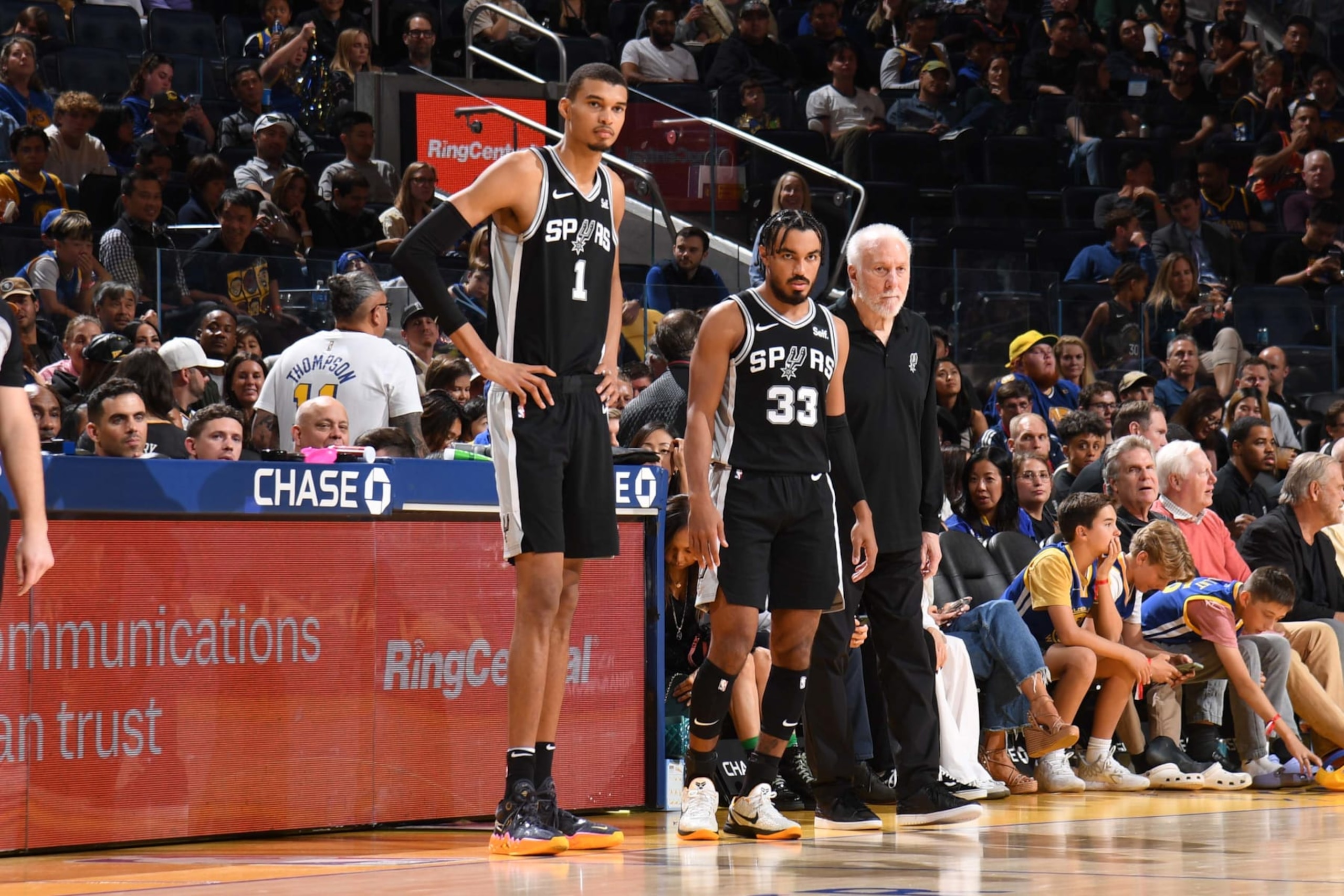
As bad as the San Antonio Spurs are, they have limited twinges of regret. Everything they did last season led them to Victor Wembanyama. Their biggest failure came after the draft, during free agency and offseason trade talks and persists into this very moment: the curious, if not inexplicable, decision to punt on floor-general play that can simplify and optimize the offense for everyone—but especially Wemby.
Self-discovery is important for teams in transitional eras. To that end, I understand the Spurs testing the playmaking boundaries of Jeremy Sochan. But even as they about-face into alternatives, they have yet to lean noticeably more on Tre Jones or basically admit Devonte' Graham exists.
San Antonio likely doesn't view either as the long-term solution. It may prefer not to poke around veteran rentals such as Tyus Jones. That's all justifiable. It doesn't excuse a failure to look beyond the temporary or wildly experimental.
As Noah Magaro-George of the Vic-and-Roll Substack pointed out to me when I consulted him on my overarching issue, the Spurs could have tried to move ancillary assets—Charlotte's lottery-protected first, Toronto's top-six-protected pick, Chicago's 2025 first (top-10 protection), seconds, cap space—for someone they considered worthy of a bigger-picture evaluation.
This is presented with the usual caveat of "OK, who?!" It's not my job to answer. That's on the Spurs. But could they have scooped up an additional first and gone after Cason Wallace? Keyonte George? Could they have pried Immanuel Quickley from New York amid scuttled extension talks? Or, hell, even rolled the dice on a Killian Hayes flier? Or on someone, anyone, who does anything to ease the burden on everyone during non-Tre Jones minutes?
—Favale
Toronto Raptors: The Jakob Poeltl Trade
28 of 30
It turns out Jakob Poeltl, a perfectly serviceable mid-tier center, couldn't solve the 2022-23 Toronto Raptors' myriad offensive problems.
I know, I know. It's hard to believe a paint-bound big man whose range extends to about eight feet and whose free-throw shooting is so bad he has to be taken off the floor in crunch time couldn't singlehandedly reform one of the worst half-court attacks in the league.
Poeltl, 28, has his uses. He's among the NBA's better passing centers, he's a load on the offensive boards and he's a legitimate deterrent to offensive players at the rim. Opponents attempt 3.9 percent fewer shots at close range when he's in the game this season, an elite figure.
That said, the Raptors erred mightily in sending a top-six-protected 2024 first-round pick to the San Antonio Spurs for Poeltl. Worse still, they doubled down by extending him on a four-year, $80 million contract this past offseason. The encumbrances on the pick mean the earliest first-rounder the Raps can trade at this year's deadline is their 2028 selection, which limits their ability to make win-now trades. That possibility looks less likely in the wake of the deal that sent OG Anunoby to the New York Knicks in a package for Immanuel Quickley, RJ Barrett and a 2024 second-rounder, but reduced flexibility persists.
Toronto's actions (and, sometimes, inaction) have been confounding for a couple of years, but the Poeltl acquisition remains the hardest to understand.
—Hughes
Utah Jazz: The John Collins Trade
29 of 30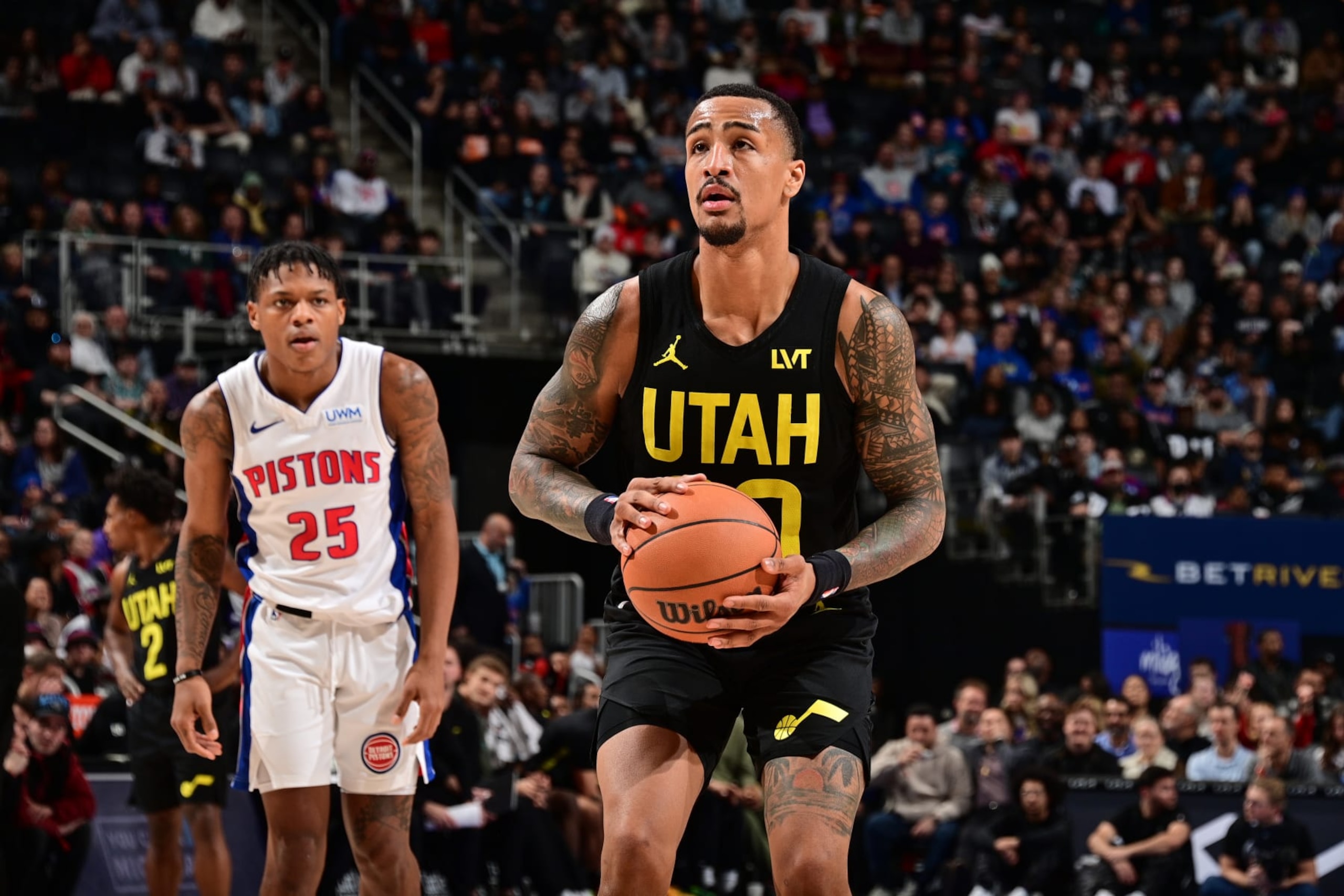
In the interest of transparency, I lauded the Utah Jazz for taking what I deemed a zero-risk flier on John Collins. It cost nothing more, I thought at the time, than financial flexibility they wouldn't otherwise meaningfully use. And having salary anchors to match money in subsequent moves is an asset unto itself.
WELP.
Utah is already looking to trade Collins and the two years and $52-plus million remaining on his contract, according to The Salt Lake Tribune's Andy Larsen, who cited an organizational "frustration" with the 26-year-old at both ends of the floor. Good luck to team CEO Danny Ainge and general manager Justin Zanik. They need it.
Collins' deal is hardly immovable and remains useful as a salary-matcher. But it is a decided net negative overall. Utah is unlikely to get off his money without including additional draft compensation on top of whatever else it is sending out in a prospective trade—unless it's taking back an equally unsavory contract.
The Jazz can always hold on to Collins until his value rebounds or he becomes an expiring contract. They are not on a timeline that necessitates urgency. But there is an untold opportunity cost to deciding he was worth this flier.
How much more information would we have on rookie Taylor Hendricks if Collins wasn't in town? And better yet, who else could the Jazz have bagged with their cap space? A lead guard to streamline the offense and limit the initial reliance on Keyonte George? A real, live, actual wing? Another contract attached to draft equity that further deepened Utah's asset armory?
We'll never know. Roughly half a year later, though, it's evident the Jazz should have found out.
—Favale
Washington Wizards: Trading for Jordan Poole
30 of 30
At the time, it made perfect sense for the Washington Wizards to turn Chris Paul into Jordan Poole and a handful of young prospects. The Wizards were rebuilding in earnest after moving Bradley Beal in the deal that brought Paul and his $30.8 million expiring contract aboard (non-guaranteed $30 million in 2024-25), and Poole seemed an obvious buy-low candidate.
Surely he'd rebound once liberated from a franchise that sided with the puncher over the punchee, and surely Poole's four-year, $123 million contract would look just fine once his production ticked back up with a change of scenery.
Unfortunately for Washington, Poole has been even worse than he was a year ago and has failed to fulfill even his many skeptics' expectations of big scoring totals in losing efforts. Not since his rookie season has Poole shot the ball worse from the deep and the field overall, and his defensive effort is just as atrocious with the Wizards as it was with the Warriors.
If Washington had it to do over again, it would have either kept Paul and dealt him for someone else at this year's trade deadline or used the veteran as an adult in the room until allowing his contract to expire at the end of the year.
Either would have been better than taking on what looks like one of the league's worst contracts.
—Hughes
Unless otherwise noted, stats come courtesy of NBA.com, Basketball Reference, Stathead or Cleaning the Glass and are accurate entering games played on Thursday, Dec. 28. Salary information via Spotrac. Subscribe to Dan and Grant's NBA podcast, Hardwood Knocks.


.jpg?w=2560 "Shedeur Hires 1st Agent")