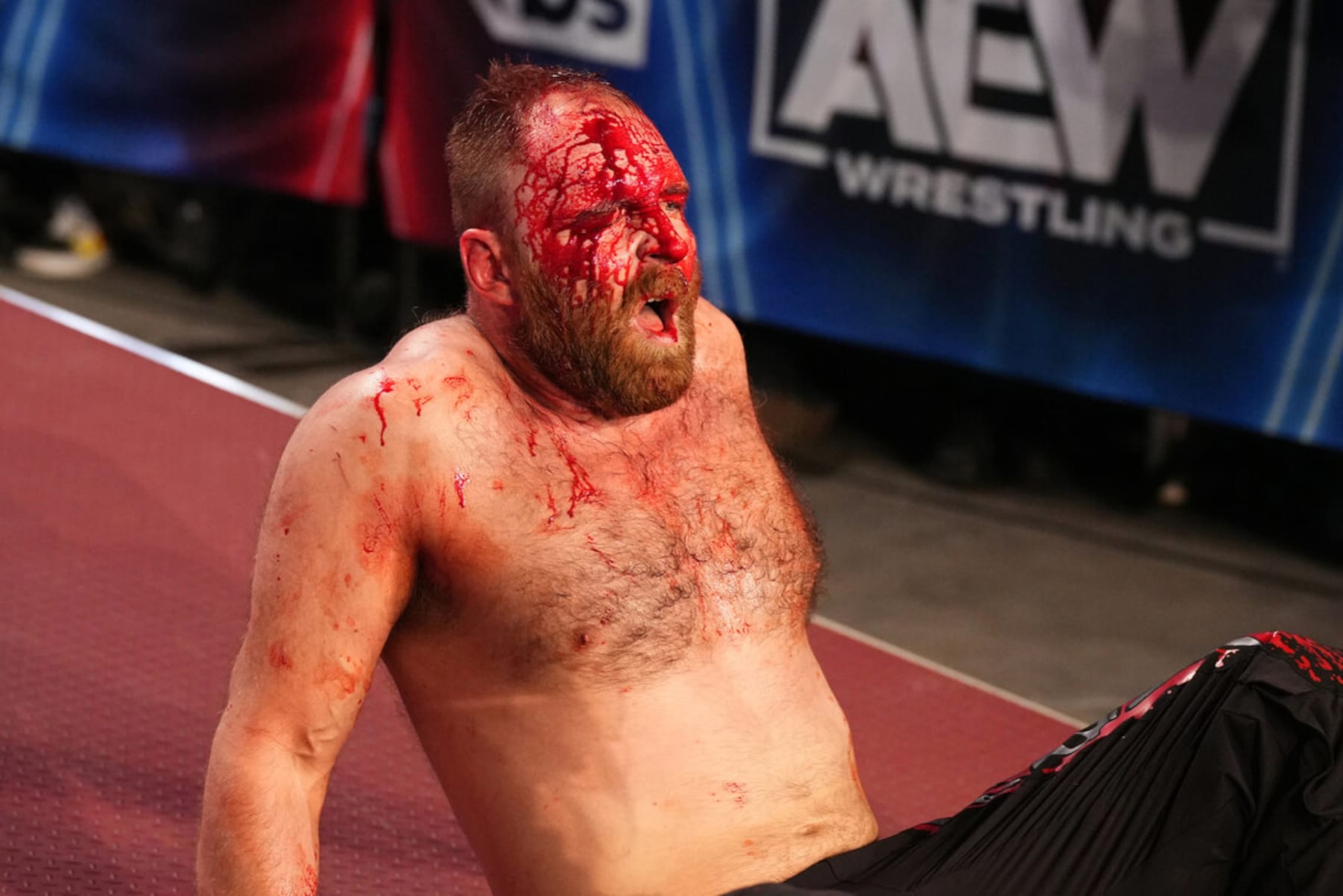


There is such a thing as too much of a good thing, and All Elite Wrestling has flirted with that line of late in regard to the use of blood on its shows.
Too often, stars are left sporting a crimson mask in an attempt to put over the grueling nature of a match, and the result has been not only a growing apathy to it but also running jokes across social media about the frequency of its usage.
When used sparingly, blood has its place in professional wrestling. When overutilized, it becomes a parody and falls short of the dramatic impact it hoped to create.
.jpg?w=2560)
.jpg?w=2560)
The Argument For
Throughout wrestling history, there have been few images more powerful than a babyface fighting through a bloodied visage as they mount an electrifying comeback against a ruthless villain.
It breeds drama when done correctly. It creates a sympathetic hero for fans to invest in and presents a visible story for even the most casual viewer to follow.
It can also ramp up the cool factor of any show. Instantly, it becomes more adult-oriented thanks to the violence that accompanied it while kids who had not previously been exposed to such a thing will identify it as cool or awe-inspiring.
Look no further than "Stone Cold" Steve Austin's iconic performance in the No Disqualification Submission match at WrestleMania 13 and the effect the blood played on both him and the contest as a whole.
Austin went from being a tenacious pitbull of a wrestler who had begun winning over the audience to a double-tough badass who refused to give up despite spilling blood all over the mat while trapped in Bret Hart's trademark Sharpshooter.
The image of Stone Cold trying to fight out of the hold while blood dripped onto the canvas was an unforgettable moment and made a bigger star and antihero out of The Texas Rattlesnake.
It took a match that was already destined to be remembered as an instant classic and elevated it to one of the most important of an entire generation.
Not only was it Austin's performance, the layout of the match and the drama that the blood drummed up, but it was the fact that fans had not been exposed to it on a regular basis that ensured it meant more than it otherwise would have.
Now imagine if WWE produced shows in 1997 where blood was a weekly occurrence, and fans had grown accustomed to the idea of a competitor spilling claret on the canvas each time they stepped through the ropes.
Would Austin's defining moment have had the impact that it did in turning him babyface and creating the biggest star the industry has seen?
To paraphrase Stone Cold, "Aw, hell no!"
The Argument Against
The problem is not that AEW utilizes blood to enhance stories. There are a few matches and feuds in WWE that would have benefited from its use to enhance a story the participants were attempting to tell.
The issue is that, like some of the other elements of the promotion's shows, it is done to excess.
Jon Moxley built a career on being a rugged and tenacious performer whose work was wholly different than those around him. Even as Dean Ambrose in WWE, he stood out from others as a frenetic ball of energy who could bring the fight to any opponent.
Now, though, he risks turning into the butt of jokes across social media because every match ends with him busted open.
The result is not greater interest in his match or an uptick in drama but, instead, a roll of the eyes and snarky comments. "Oh look, Mox is bleeding again" or "Take a shot every time Mox bleeds" are becoming commonplace because it takes the viewer out of the contest.
At the Revolution pay-per-view Sunday night, Moxley battled "Hangman" Adam Page in a Texas Death match that probably would have been even better had fans not witnessed him bleeding every week leading into the show.
Rather than the effects of Page's attack on the former AEW world champion hitting home with audiences, it instead felt like business as usual, something that particular storytelling device should never be.
Former Impact world champion and one of the innovators of Extreme Championship Wrestling in the 1990s Bully Ray spoke out on Moxley's overutilization of blood on the Feb. 24 edition of Busted Open Radio on Sirius XM (h/t Dominic DeAngelo of Wrestling Inc):
"I'm in agreement with a lot of people where Moxley is bleeding a little too much and it's a little too much cause it really doesn't mean anything. Imagine if Jon Moxley had not bled one time in the past month but he would have bled last night. It would have meant so much more."
He added: "It seems like lately, blood has become commonplace with Jon Moxley as if Jon's the bleeder. 'He's gonna bleed every night like Terry Funk or Dusty Rhodes or Abdullah The Butcher.' I just want it to mean something."
As Bubba Ray Dudley in ECW, where violence was a trademark of the promotion, Ray understands the positive effect blood can have on any given show. He also knows when it can be gratuitous and lack meaning.
The issue with the overuse of blood in AEW does not start and stop with Moxley, though. Even if he had not bled a single time leading into Revolution, his match with Page would have been hampered by the fact that fans had already seen crimson in the first match of the night, when "Jungle Boy" Jack Perry defeated Christian Cage.
By the time MJF and Bryan Danielson rightly utilized blood to ramp up the drama in their excellent Iron Man match for the AEW World Championship, the desired effect was lost because the audience had already witnessed three other guys bleed during the show.
There is such a thing as moderation, something AEW must learn to prevent certain spots from failing to generate the desired reaction because fans have been overexposed to it.
Blood should be utilized as part of a defining moment, an indicator to fans that things have escalated; not in a throwaway match third from the top on Dynamite.
Sparsely used, bleeding can serve as an announcement to the audience that things just got real.
Sure, there may be some who see these as the ramblings of a writer who "fails to see what they're doing" or doesn't realize "AEW is just trying to provide a mix of violence and athleticism to cater to all fans of all tastes." No argument against something their favorite promotion does is likely to land.
In reality, this writer wants an old-school element of wrestling storytelling to mean something in the way that it did when Austin exerted all of his remaining energy to fight out of the Sharpshooter but failed because of blood loss or Shawn Michaels fighting through a crimson mask in an attempt to win him and Marty Jannetty the AWA tag titles.
Blood absolutely has a place in pro wrestling. History tells us that, but not when it is used in excess and threatens the emotional elements of a live-action story and the efforts of those who are bleeding for their art.





.jpg?w=2560 "Reported Details of Seahawks-K9 Split")