

The NHL has a long history of great teams that finished atop the overall standings and marched to a Stanley Cup championship. However, being the top team during the regular season is no guarantee of playoff success.
Thirty-six teams have won the Presidents' Trophy since it was introduced in 1985-86 to honor the team that finishes with the best regular-season record. Only eight of them went on to win the Stanley Cup, with the last being the 2012-13 Chicago Blackhawks.
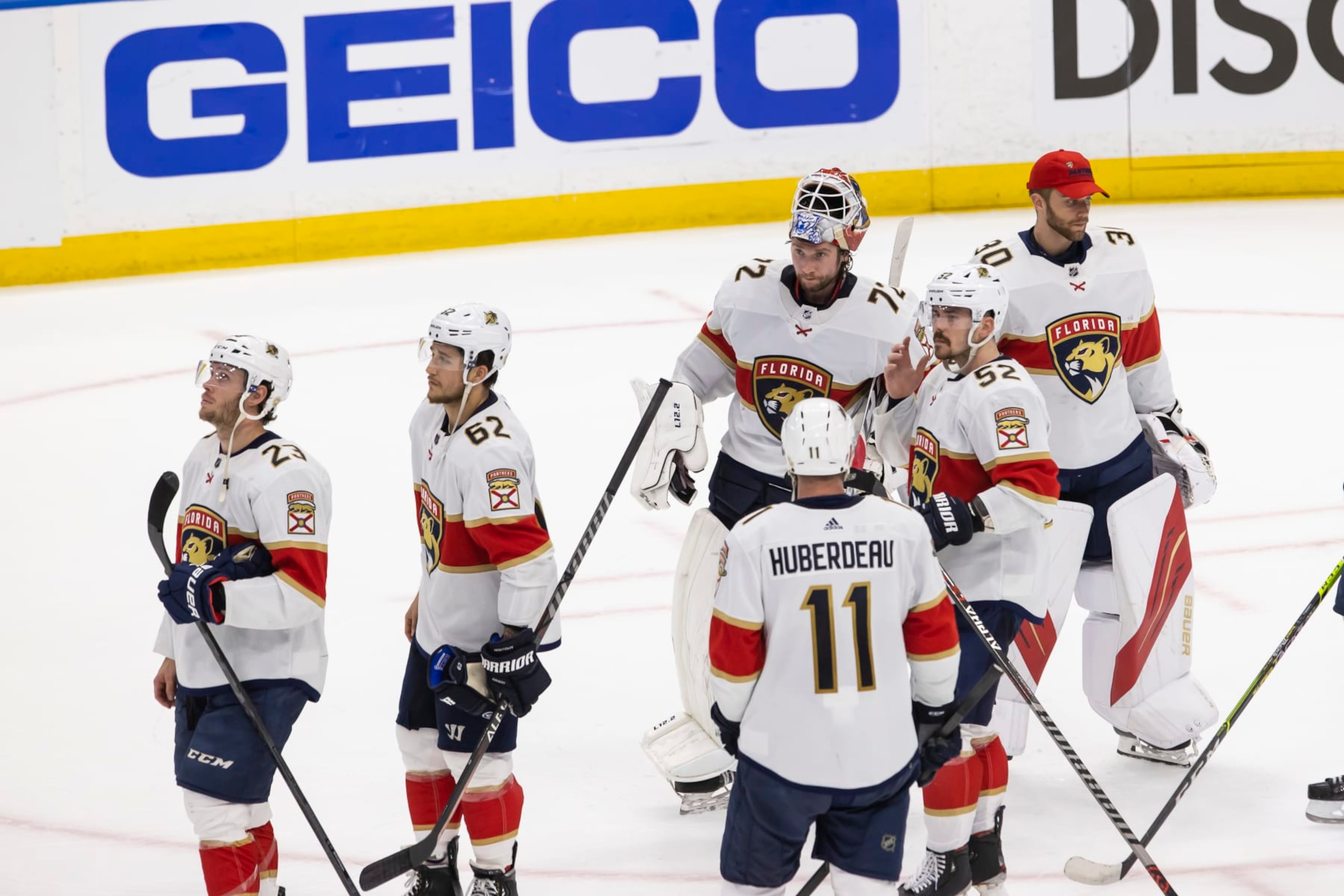
Over the post-expansion era starting in 1967-68, several NHL teams so dominated the regular season that they seemed sure to win the Stanley Cup, only to fall short in the postseason. They included defending Cup champions such as the 1985-86 Edmonton Oilers and recent Presidents' Trophy winners like the 2021-22 Florida Panthers.
Which of those teams was the best to rule the regular season but failed to win the Stanley Cup? We'll determine that with the following ranking based on points, wins, point percentage and depth of talent.
Is there a team you believe should or shouldn't belong on this list? Feel free to let us know in the comments section below.
10. 2021-22 Florida Panthers
1 of 10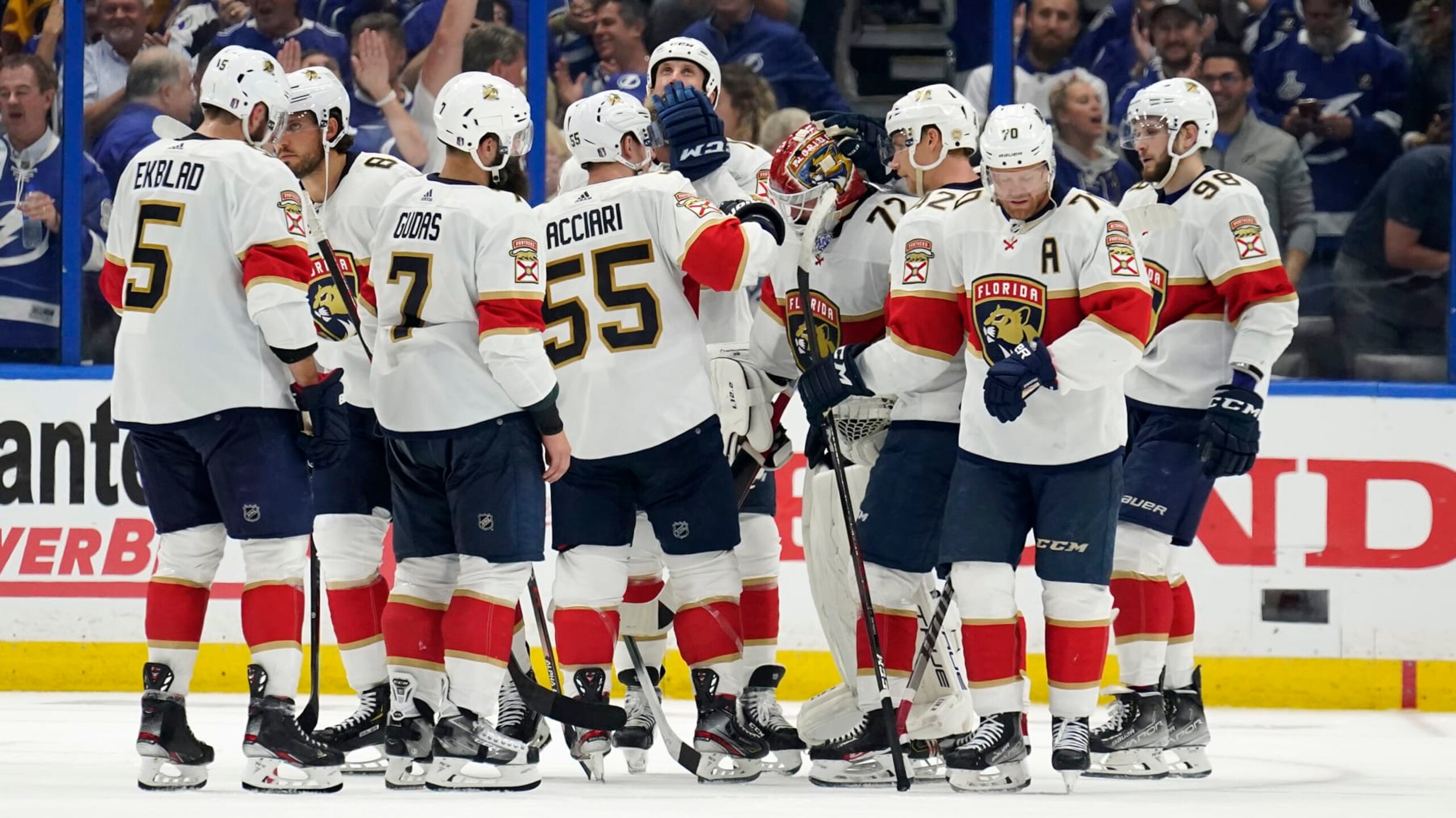
After years of rebuilding, the Florida Panthers enjoyed the greatest regular-season performance in franchise history in 2021-22. With a record of 58 wins, 18 losses and six overtime losses, they won their first-ever Presidents' Trophy with 122 points, ranking seventh on the all-time single-season points list.
A potent scoring punch was behind the Panthers' stunning rise to dominance last season. They led the league with 4.11 goals per game, and their 337 total goals were the most since the salary-cap era began in 2005-06. The Panthers also achieved this under interim coach Andrew Brunette after Joel Quenneville resigned earlier in the season.
Several Panthers enjoyed career-best performances. Winger Jonathan Huberdeau led the club with 115 points, while captain Aleksander Barkov tallied a team-leading 39 goals. Sam Reinhart netted 82 points, Carter Verhaeghe enjoyed a breakout performance with 24 goals and 55 points and Anthony Duclair had 31 goals and 58 points.
The Panthers blueline was led by Aaron Ekblad and MacKenzie Weegar, plus they had solid goaltending from Sergei Bobrovsky and Spencer Knight. Mason Marchment and the promising Anton Lundell were part of their supporting cast. They also bolstered their depth at the trade deadline, bringing in playmaker Claude Giroux and rugged defenseman Ben Chiarot.
After eliminating the Washington Capitals in the opening round for their first playoff series win since 1996, the Panthers faced their long-time rivals in the two-time defending Stanley Cup champion Tampa Bay Lightning. Their vaunted offense was no match for the experienced Lightning's smothering defensive play, as they were swept in four games.
The Panthers shook things up in the offseason by trading a package that included Huberdeau and Weegar to Calgary for Matthew Tkachuk. Salary-cap constraints, however, led to the departures of Giroux, Chiarot and Marchment, plus they replaced Brunette as head coach with Paul Maurice. They're now jockeying for a wild-card spot in the Eastern Conference.
9. 2010-11 Vancouver Canucks
2 of 10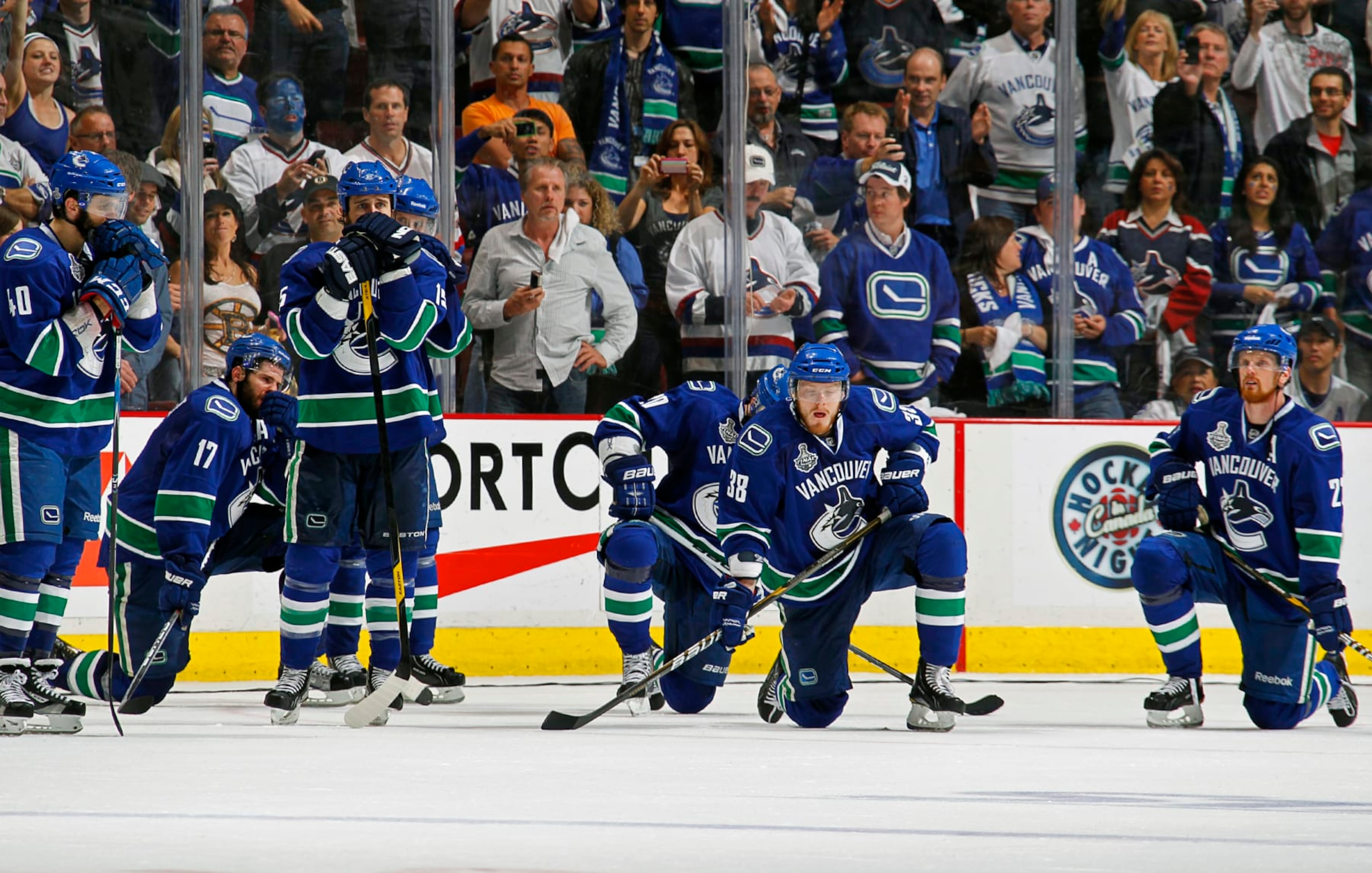
Throughout most of their history, the Vancouver Canucks were rarely among the NHL's dominant teams. Underdog rosters reached the Stanley Cup Finals twice but fell to the New York Islanders in 1982 and the New York Rangers in 1994. In 2010-11, however, they won the Presidents' Trophy with 54 wins, 19 losses and nine overtime losses for a record for 117 points.
They were led by Hall of Fame twins Daniel and Henrik Sedin, who finished first and second in team scoring. Daniel (league-leading 104 points) won the Art Trophy Trophy and the Ted Lindsay Award, and Henrik led the league with 75 assists.
Vancouver had another Hall of Famer in goalie Roberto Luongo, who led the league with 38 wins and won the William M. Jennings Trophy with backup Cory Schneider.
Two-way center Ryan Kesler tallied a career-high 41 goals and took home the Frank J. Selke Trophy. They also possessed a deep blue line led by Kevin Bieksa, Christian Ehrhoff, Dan Hamhuis and Alexander Edler.
The Canucks' supporting cast included a 50-point winger in Mikael Samuelsson and an agitating 26-goal scorer in Alexandre Burrows. In Schneider, they had a promising young goalie who would eventually become a starting goalie with the New Jersey Devils.
In the 2011 playoffs, the Canucks defeated the defending Stanley Cup champion Chicago Blackhawks and rolled over the Nashville Predators and San Jose Sharks. Facing the Boston Bruins in the Cup Final, they held a 3-2 series lead but eventually fell in seven games.
The Canucks rebounded to win the Presidents' Trophy the following season with 111 points, but they were bounced from the opening round of the 2012 playoffs by the Los Angeles Kings. A rapid decline soon began amid roster, coaching and management changes. Since 2011, the Canucks have reached the playoffs just four times.
8. 2015-16 and 2016-17 Washington Capitals
3 of 10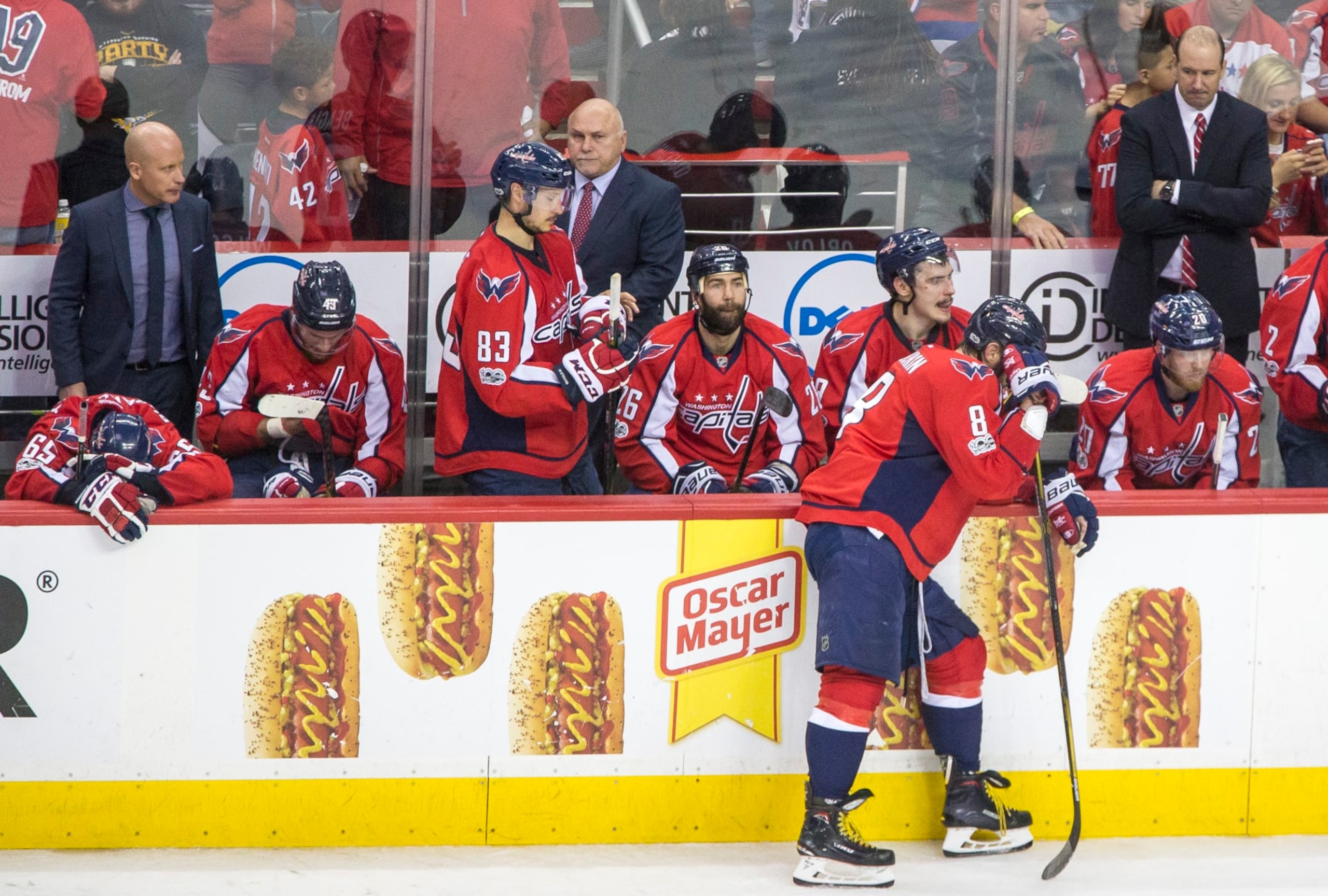
The Washington Capitals are among just seven teams in Presidents' Trophy history to win the award in consecutive seasons and are also the last to do so. In 2015-16, they finished with a record of 56 wins, 18 losses and eight overtime losses for 120 points. Their performance the following season was nearly identical at 55-19-8 for 118 points.
They were led by captain Alex Ovechkin, who took home his sixth Maurice Richard Trophy in 2015-16 with his seventh 50-plus-goal season and was named to the Second All-Star Team. Goaltender Braden Holtby won the Vezina Trophy and made the First All-Star Team, while head coach Barry Trotz won the Jack Adams Award.
Ovechkin's goal production tumbled to 33 the following season, but Holtby remained stellar, finishing second for the Vezina and winning the William M. Jennings Trophy for the lowest goals-against average. He was named to that season's Second All-Star Team.
The Capitals' roster depth in both seasons played a crucial role in their regular-season success. Nicklas Backstrom was among the league's best centers, while Evgeny Kuznetsov was coming into his own. John Carlson anchored the blue line, winger T.J. Oshie provided invaluable secondary scoring and winger Tom Wilson was developing into an agitating power forward.
And yet, it was their archrival, the Pittsburgh Penguins, who won the Stanley Cup in both seasons. The Capitals failed to reach the Eastern Conference Final, falling to the Penguins in the second round in 2016 and 2017. Up to that point, they hadn't gotten past the second round since reaching the 1998 Stanley Cup Final.
By 2017-18, the Capitals finished sixth overall but remained dogged by their failures of the previous two seasons. However, Ovechkin and company silenced their doubters in the spring of 2018 by finally winning the franchise's first Stanley Cup.

.jpg?w=2560)
7. 2005-06 Detroit Red Wings
4 of 10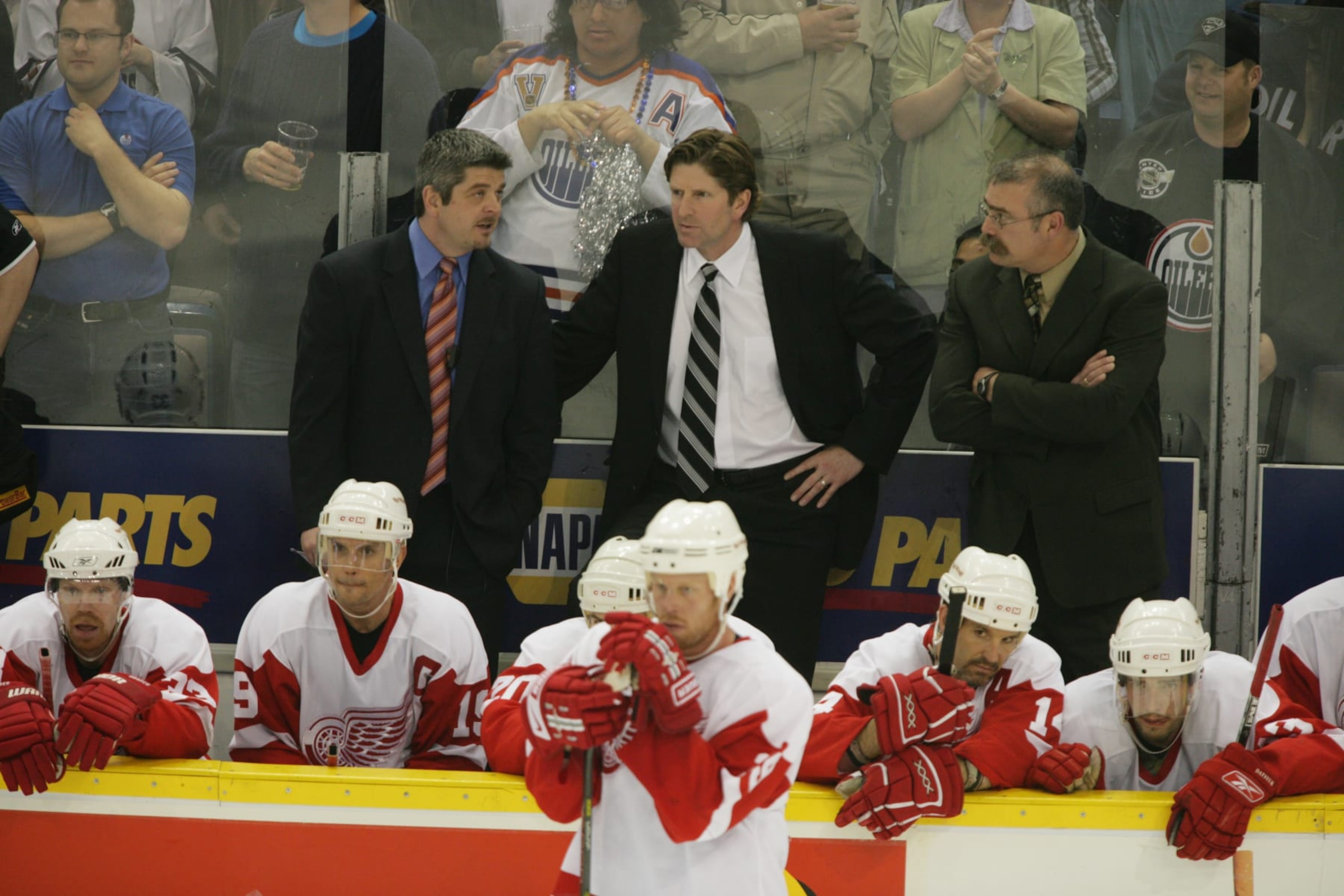
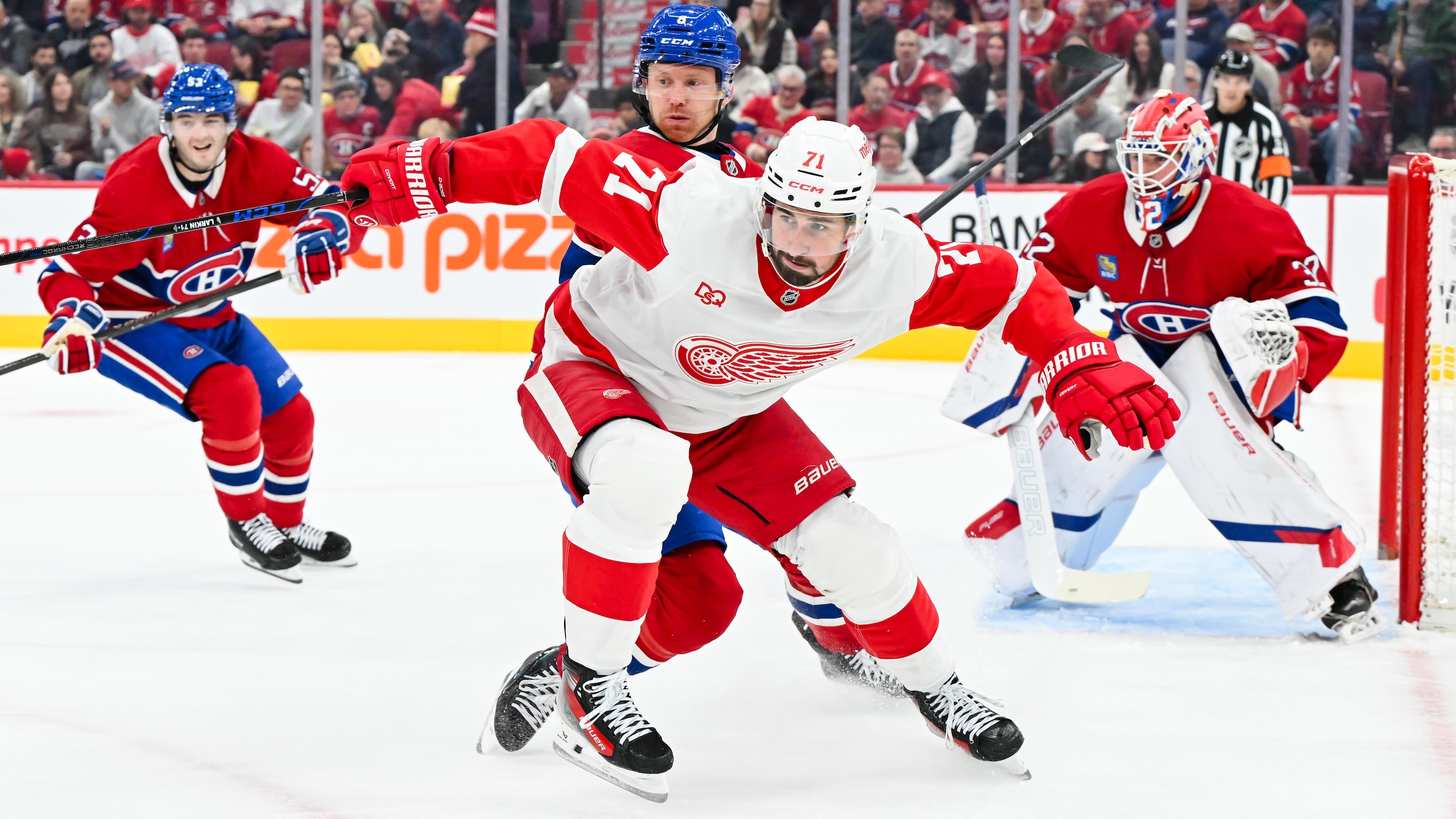
Four years after winning the 2002 Stanley Cup, the Detroit Red Wings emerged as the dominant team in the NHL's first season under its new salary cap following a season-killing lockout. With a record of 58 wins, 16 losses and eight overtime losses, the Wings finished with 124 points, which remains the sixth-highest in league history.
This was a Wings team in transition. Long-time captain Steve Yzerman would retire following this season while power forward Brendan Shanahan would depart via free agency to the New York Rangers. Aging Chris Chelios was a shell of the once-dominant defenseman he had been in his youth.
However, defenseman Nicklas Lidstrom was in his playing prime and would eventually take over the captaincy from Yzerman. He finished that season with a career-high 80 points, winning his fourth James Norris Memorial Trophy in a career that would see him take home this award seven times. He was also named to the First All-Star Team.
A new core of young talent featuring two-way forwards Pavel Datsyuk and Henrik Zetterberg led the way. Datsyuk enjoyed a breakout performance with his team-leading 87 points, winning the Lady Byng Memorial Trophy for the first of what would be four straight seasons. Zetterberg finished second in points with 85.
Detroit's opponent in the conference quarterfinals was the Edmonton Oilers, who finished 29 points behind the Wings. Led by Chris Pronger and trade deadline acquisition Dwayne Roloson, the Oilers clipped the mighty Wings in six games as they eventually reached the 2006 Stanley Cup Final.
That seemed to signal the end of the Red Wings' tenure as a dominant franchise. Two years later, however, Lidstrom, Datsyuk and Zetterberg led the club to its fourth Stanley Cup in 11 seasons.
6. 2009-10 Washington Capitals
5 of 10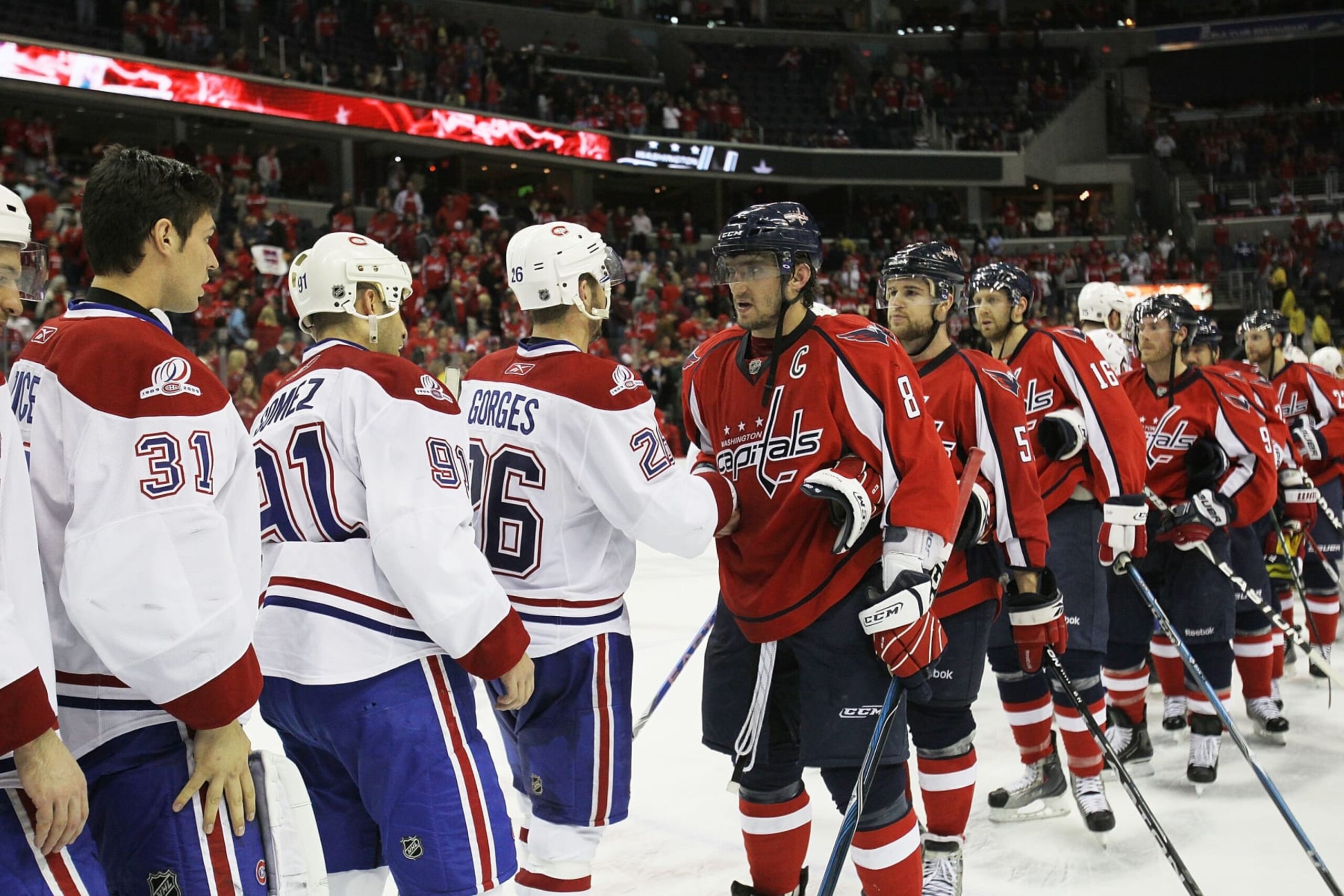
Four years after Alex Ovechkin joined the Washington Capitals, they won their first Presidents' Trophy in franchise history with a record of 54 wins, 15 losses and 13 overtime losses. Their 121 points set a team record that still stands today.
Along with the Pittsburgh Penguins and Chicago Blackhawks, the Capitals were among the exciting young teams establishing themselves among the league's elite franchises during that season. Ovechkin scored 50 goals for the fourth time in five years, winning the Ted Lindsay Award. He was also named to the First All-Star Team.
Other Capitals had emerged from Ovechkin's shadow during that season. Nicklas Backstrom had a career-best 101 points. Mike Green led all defensemen with a career-high of 76 points, while winger Alexander Semin's career reached its peak with 40 goals and 84 points.
Coached by Bruce Boudreau, the Capitals led the league with 313 goals and a goals-per-game average of 3.82. Seven players scored at least 20 goals that season, including depth forwards such as Tomas Fleischmann, Mike Knuble, Brooks Laich and Eric Fehr. They also had solid goaltending in Jose Theodore and a young Semyon Varlamov.
Facing the Capitals in the opening round was the underdog Montréal Canadiens, who finished with 88 points in the final Eastern Conference wild-card berth. Up 3-1 in the series, the Capitals had the Canadiens at their mercy. However, the stellar goaltending of Jaroslav Halak carried the Habs to a seven-game upset.
This wasn't the first time the Capitals would find themselves on top of the overall standings in the coming decade only to come up short in the playoffs. However, it may have been their most painful disappointment, given their regular-season performance. It would take eight more seasons before they would finally win the Stanley Cup.
5. 1992-93 Pittsburgh Penguins
6 of 10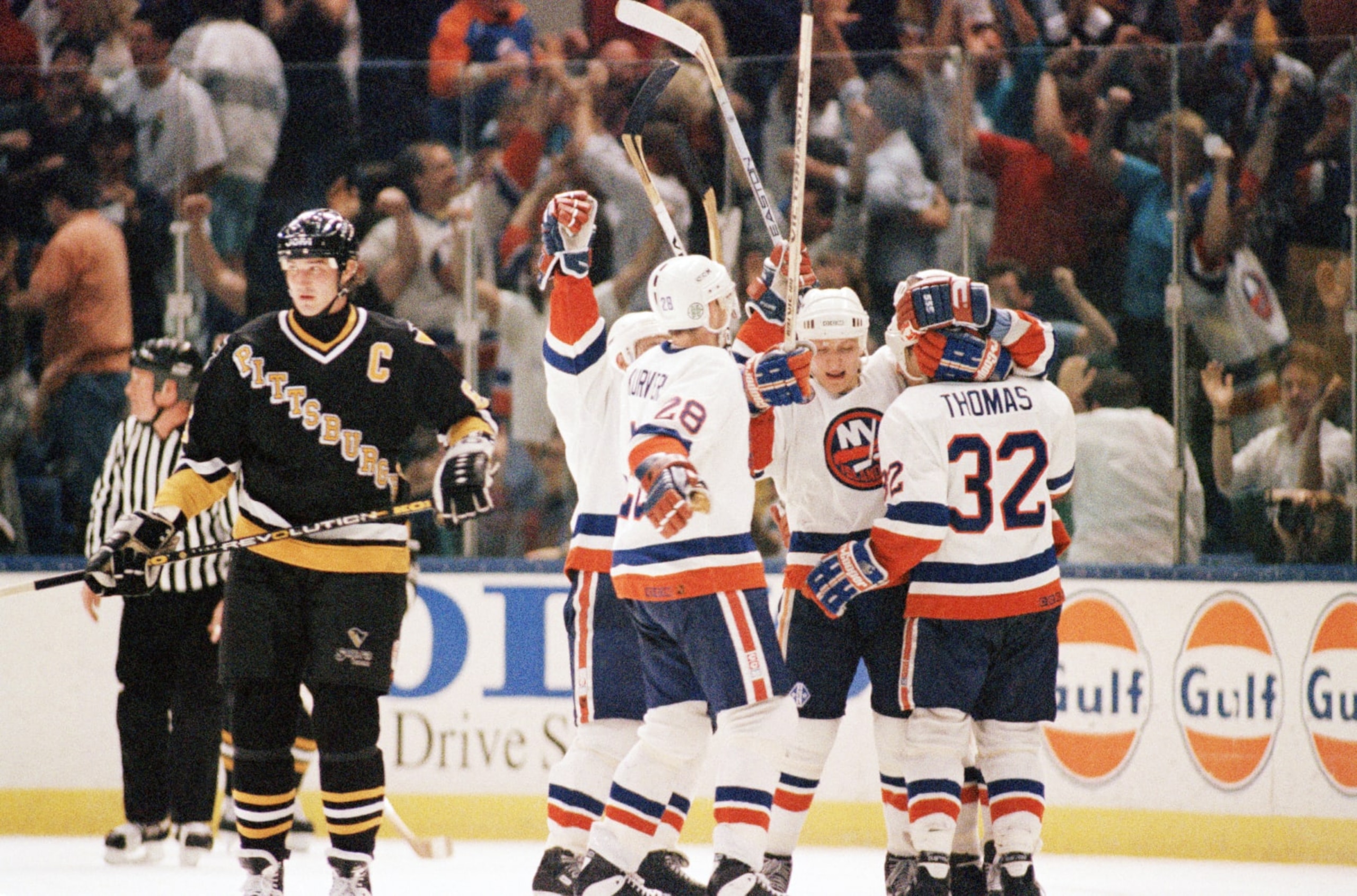
Despite winning back-to-back Stanley Cups in 1991 and 1992, the Pittsburgh Penguins had never finished with the NHL's best regular-season record. That changed in 1992-93, as they sported a record of 56 wins, 21 losses and seven ties for 119 points. It remains the only Presidents' Trophy that the Penguins have won in their history.
More remarkable is the Penguins did it while team captain Mario Lemieux was sidelined for 24 games receiving treatment for Hodgkin lymphoma. In one of the greatest individual comebacks in NHL history, Lemieux returned and went on to win the Art Ross Trophy, Hart Memorial Trophy, Ted Lindsay Award and the Bill Masteron Memorial Trophy.
The '92-'93 Penguins also possessed a deep, talented roster. Four players (Lemieux, Ron Francis, Larry Murphy and Joe Mullen) would be inducted into the Hockey Hall of Fame. So would their coach, Scotty Bowman. They also had a young superstar named Jaromir Jagr, who became one of the NHL's greatest scorers and is a future first-ballot Hall of Famer.
They also possess a rugged scoring forward in Rick Tocchet, a 111-point winger in Kevin Stevens, and a former Vezina Trophy winner in goaltender Tom Barrasso. There was a promising young scorer in forward Martin Straka, plus a mean, physical shutdown defenseman in Ulf Samuelsson patrolling their blue line.
Buoyed by Lemieux's stunning return and with the confidence of a two-time Stanley Cup champion, the Penguins eliminated the New Jersey Devils in five games in the division semifinals. They were expected to make short work of the New York Islanders in the division finals but were upset by the determined underdogs in seven games.
The Penguins declined after that season, and Lemieux retired for the first time in 1997. He returned in 2000-01 and helped the Penguins reach the Eastern Conference Final before falling to the defending champion Devils in five games. Lemieux hung his skates for good in 2005-06, passing the torch to a rising young Penguins star named Sidney Crosby.
4. 1970-71 Boston Bruins
7 of 10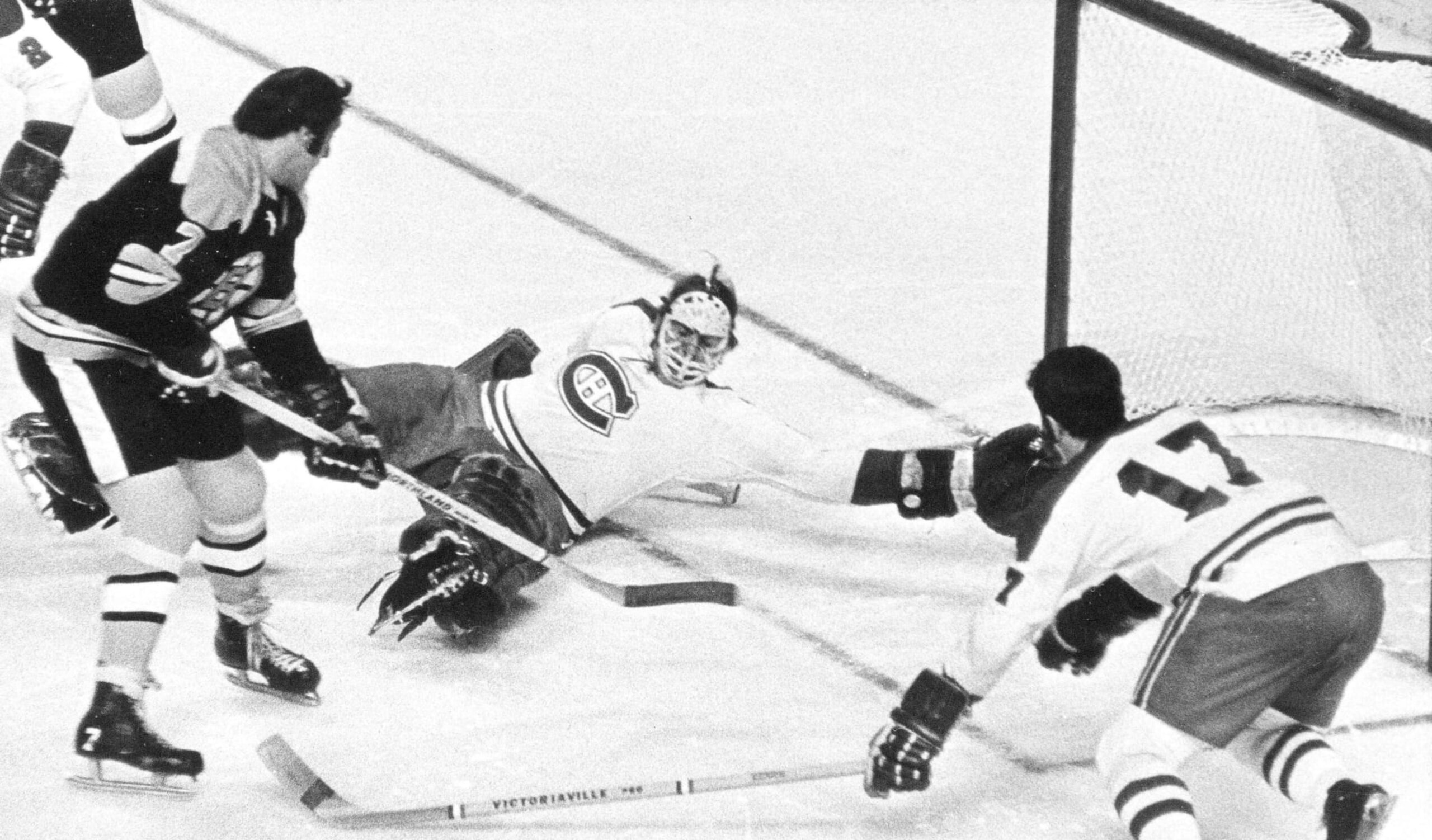
Led by the best defenseman in hockey history in Bobby Orr and a record-breaking scorer in Phil Esposito, the Boston Bruins won the Stanley Cup in 1970 for the first time in 29 years. In 1970-71, they appeared poised to do so again with one of the greatest regular-season performances in league history.
The Bruins scored a then-astonishing 399 goals, a record that stood until the 1981-82 Edmonton Oilers netted 417 goals. They finished the season with 57 wins, 14 losses and seven ties for 121 points. Their wins and points totals also stood as league records until the 1975-76 Montréal Canadiens reached 58 wins and 127 points.
Orr finished the season with a career-high 139 points and became the first player to reach 100 assists with 102. Those assist and point totals remain single-season records for defensemen. He won the James Norris Memorial Trophy for the fourth of what would be eight consecutive seasons and the second of his three straight Hart Memorial Trophies.
Esposito, meanwhile, smashed the NHL record for goals with 76 and points with 152 on his way to winning his second Art Ross Trophy and the first of four straight between 1970-74.
Those Bruins also had a talented roster. John Bucyk won the Lady Byng Memorial Trophy with a career-best 116 points, while winger Ken Hodge had 105 points. Gerry Cheevers and Eddie Johnston gave them solid goaltending. Wayne Cashman, John McKenzie and Derek Sanderson gave them secondary scoring and the moniker of The Big Bad Bruins.
The Bruins had the look of a dynasty when they faced off against the Montréal Canadiens during the 1971 quarterfinals. However, they were eliminated in seven games thanks to a tall goaltender named Ken Dryden. The Bruins would win the Cup again the following season but never became a dynasty like Dryden's Canadiens later in the decade.
3. 1985-86 Edmonton Oilers
8 of 10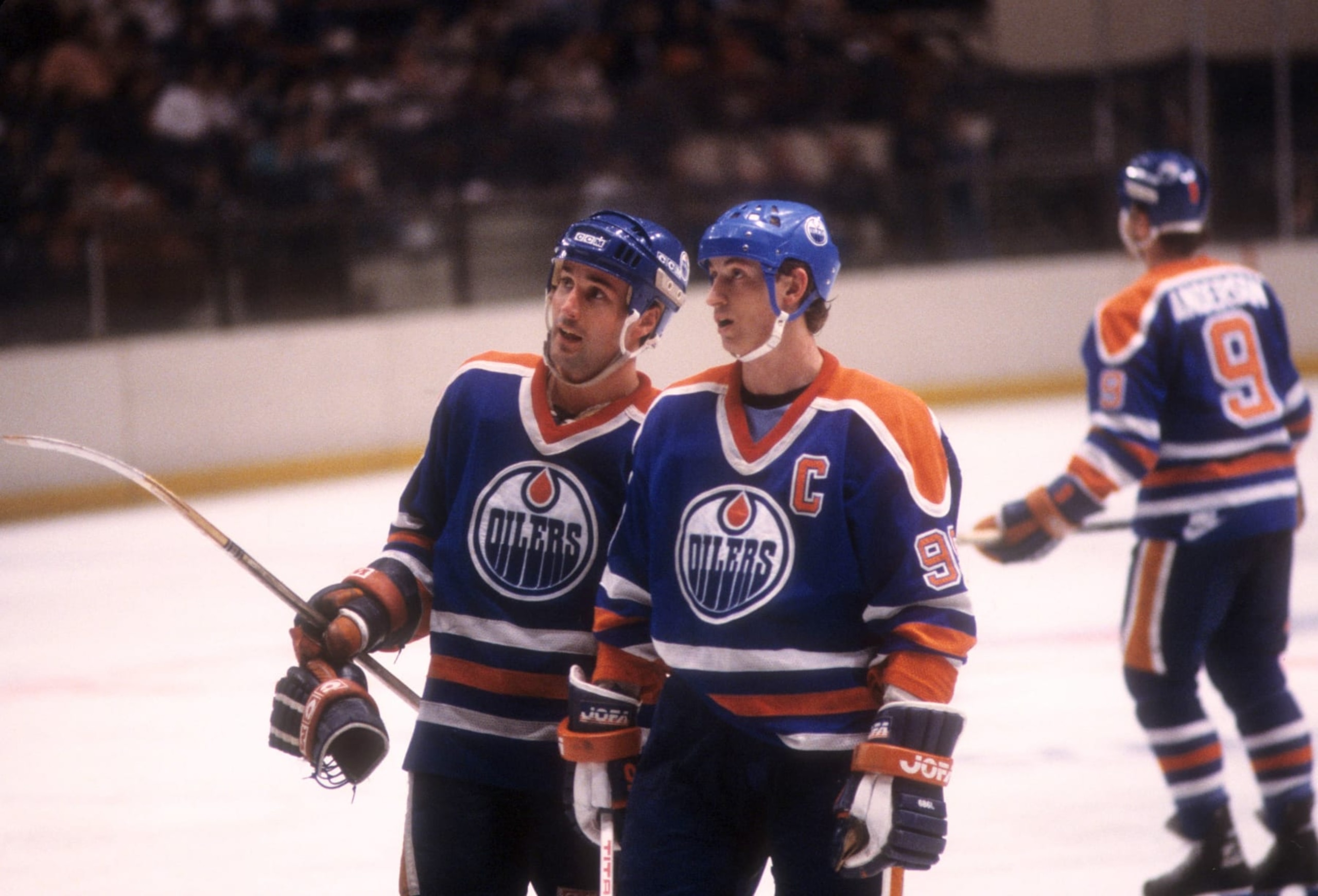
By 1985-86, the Edmonton Oilers were the NHL's dominant team. Having won their second straight Stanley Cup the previous season, they appeared poised to join the Montreéal Canadiens, New York Islanders and Toronto Maple Leafs as the only teams in league history to win three straight Cups.
The greatest offensive team in NHL history, the Oilers scored 426 goals in '85-'86, marking the second-highest total behind their all-time leading 446 in 1983-84. With a record of 56 wins, 17 losses and seven ties, they won the Presidents' Trophy in its inaugural season.
That was the season that saw Oilers captain Wayne Gretzky, at the peak of his awesome offensive skills, lead the league with a career-high 215 points, which remains the league's single-season points record. The Great One won the Hart Memorial Trophy for the seventh straight year and the Art Ross for the sixth straight time.
The Oilers also featured future Hall of Famers such as forwards Mark Messier, Jari Kurri, and Glenn Anderson, defensemen Paul Coffey and Kevin Lowe and goaltender Grant Fuhr. Coffey tallied 138 points and won the James Norris Memorial Trophy for the second straight season. Kurri had 131 points, while Anderson netted 102.
Sweeping the Vancouver Canucks in the division semifinals, the Oilers faced the Calgary Flames in what became one of the most memorable chapters in The Battle of Alberta. The series went the full seven games, but it was the Oilers who were eliminated after defenseman Steve Smith accidentally banked an attempted pass off the pad of Fuhr into his own net.
Smith and the Oilers redeemed themselves by winning the Stanley Cup in 1987 and 1988. However, the opportunity of winning three straight Cups was again thwarted when Gretzky was traded to the Los Angeles Kings in the summer of 1988. Oilers fans can only wonder what might've been if not for that upset in 1986.
2. 1995-96 Detroit Red Wings
9 of 10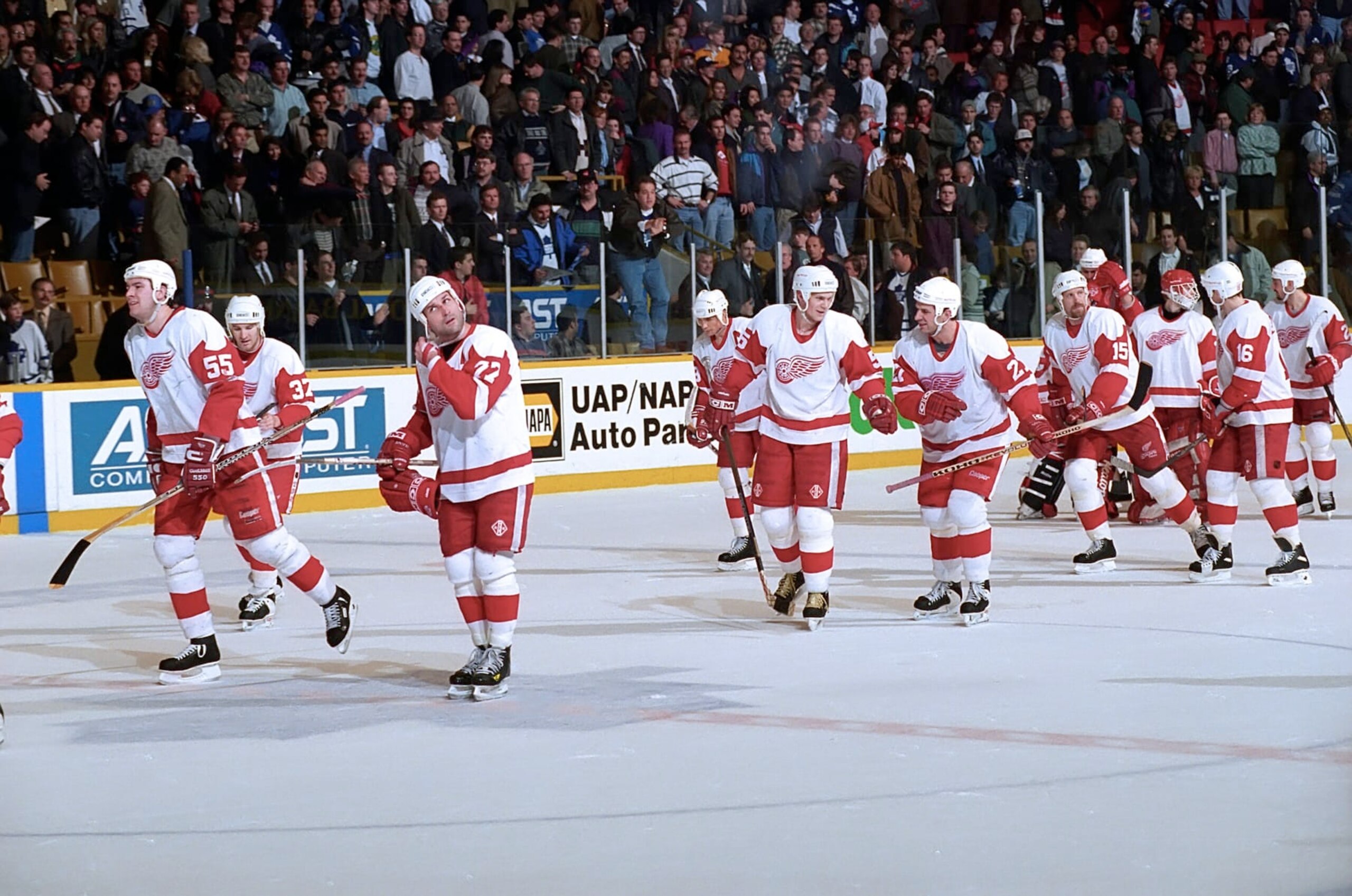
The 1995-96 season appeared to be one of destiny for the Detroit Red Wings. They set the NHL single-season record for the most wins with 62 while losing just 13 and tying in seven. With 131 points, they finished with the second-most in league history, one behind the 1976-77 Montréal Canadiens with 132.
This Red Wings roster was among the greatest in NHL history. Seven players (Steve Yzerman, Nicklas Lidstrom, Paul Coffey, Sergei Fedorov, Viacheslav Fetisov, Igor Larionov and Dino Ciccarelli) would end up in the Hockey Hall of Fame along with their head coach Scotty Bowman.
Their stars were augmented by a strong supporting cast. They had a good goalie tandem in Mike Vernon and Chris Osgood. Vladimir Konstantinov was in his prime as a physical shutdown defenseman, while Keith Primeau and Vyacheslav Kozlov contributed to Detroit's scoring depth. Kris Draper, Darren McCarty and Kirk Maltby provided the checking-line grit.
Fedorov would win the Frank J. Selke Trophy for the second time as the league's top defensive forward. Osgood and Vernon, meanwhile, won the William M. Jennings Trophy for the lowest combined goals-against average.
Looking to win the franchise's first Stanley Cup since 1955, the Red Wings reached the Western Conference Final by eliminating the Winnipeg Jets and St. Louis. However, they were eliminated by the Colorado Avalanche in six games. Led by future Hall of Famers Joe Sakic, Peter Forsberg and Patrick Roy, the Avalanche went on to win their first Stanley Cup in franchise history.
The Red Wing slipped in the standings in the 1996-97 season, finishing fifth overall with 94 points. However, they had learned the lessons from the bitter end of the previous season, eliminating the defending champion Avalanche in the conference finals and sweeping the Philadelphia Flyers in the Stanley Cup Final.
1. 2018-19 Tampa Bay Lightning
10 of 10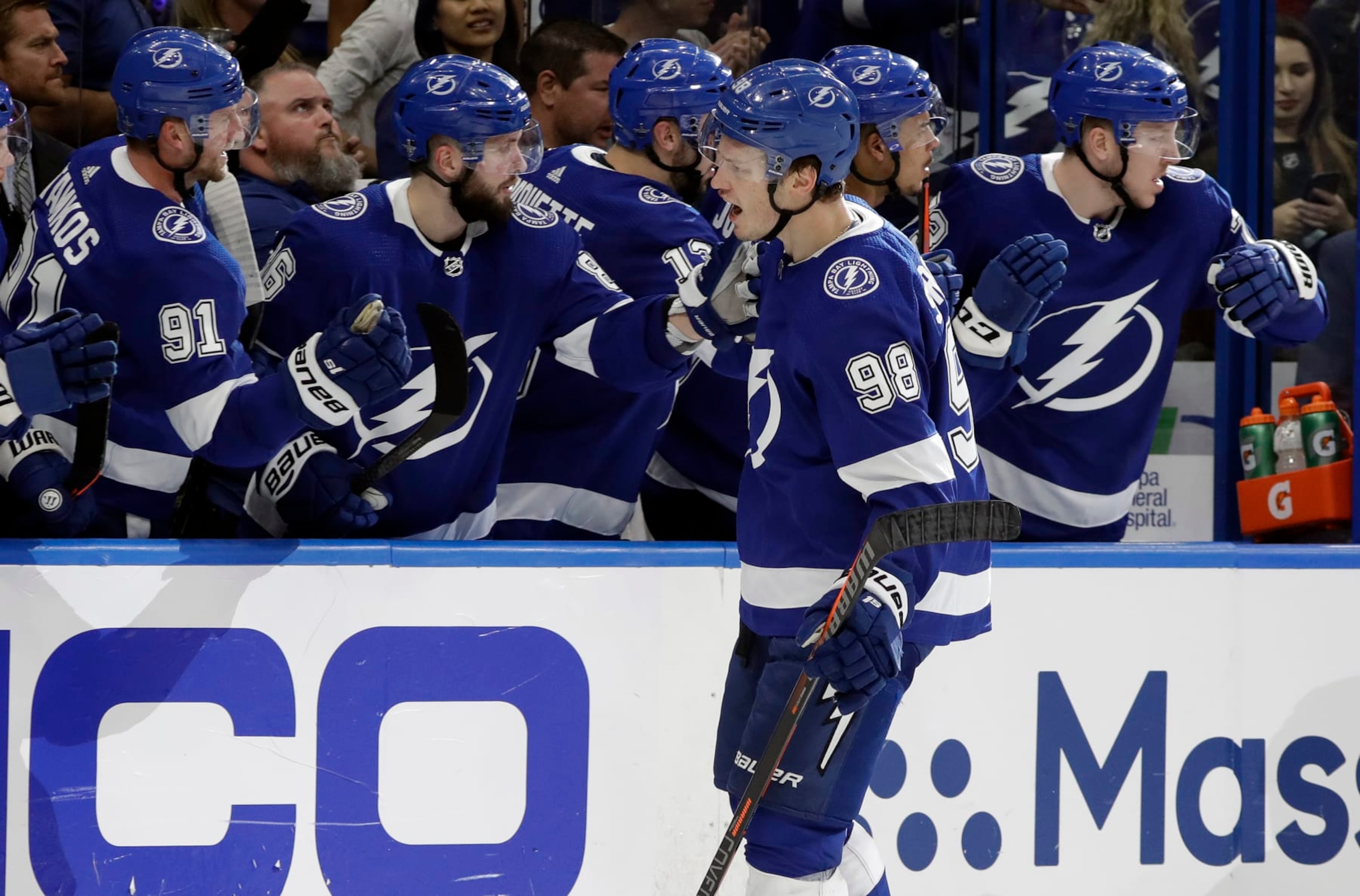
After reaching the Stanley Cup Final in 2014-15 and the Eastern Conference Final in 2015-16 and 2017-18, the Tampa Bay Lightning established themselves in 2018-19 among the most dominant regular-season clubs in NHL history.
With a record of 62 wins, 16 losses and four overtime losses, the Lightning finished atop that season's overall standings with 128 points, a full 21 points ahead of the second-overall Calgary Flames. They tied the league record for most wins in a season and finished with the fourth-most points in league history, while their .781 point percentage was the fifth-best.
Lightning winger Nikita Kucherov had a career-best performance that season. He won the Art Ross Trophy (128 points), Hart Memorial Trophy and the Ted Lindsay Award. Teammate Andrei Vasilevskiy took home the Vezina Trophy as the top goaltender. Both players were also named to the First All-Star Team.
Defenseman Victor Hedman finished third among voters for the James Norris Memorial Trophy and made the Second All-Star Team. Team captain Steven Stamkos and center Brayden Point each finished with over 40 goals and 90 points. Yanni Gourde, Tyler Johnson, J.T. Miller, Ryan McDonagh and Alex Killorn all reached or exceeded 40 points.
The Lightning entered the 2019 playoffs as the heavy favorites to win the Stanley Cup. Instead, they were swept from the first round by the underdog Columbus Blue Jackets, who finished 30 points behind the Bolts. It was one of the biggest upsets in Stanley Cup playoffs history.
As painful as that defeat was for the Lightning, it also proved a good lesson for their players, coaching staff and management. They've never taken an opponent lightly since then, winning consecutive Stanley Cups in 2020 and 2021 and reaching last season's Cup Final before falling in six games to the Colorado Avalanche.
Stats via NHL.com and Hockey-Reference.com.

.jpg?w=2560 "A.J.'s Message to Hurts 🙏")
.jpg?w=2560 "NFLPA Makes Hurts Statement")
.jpg?w=2560 "Rams to Sign New Kicker")