
Why the Raiders Should Not Make a Run at Aaron Rodgers amid Latest NFL Trade Rumors

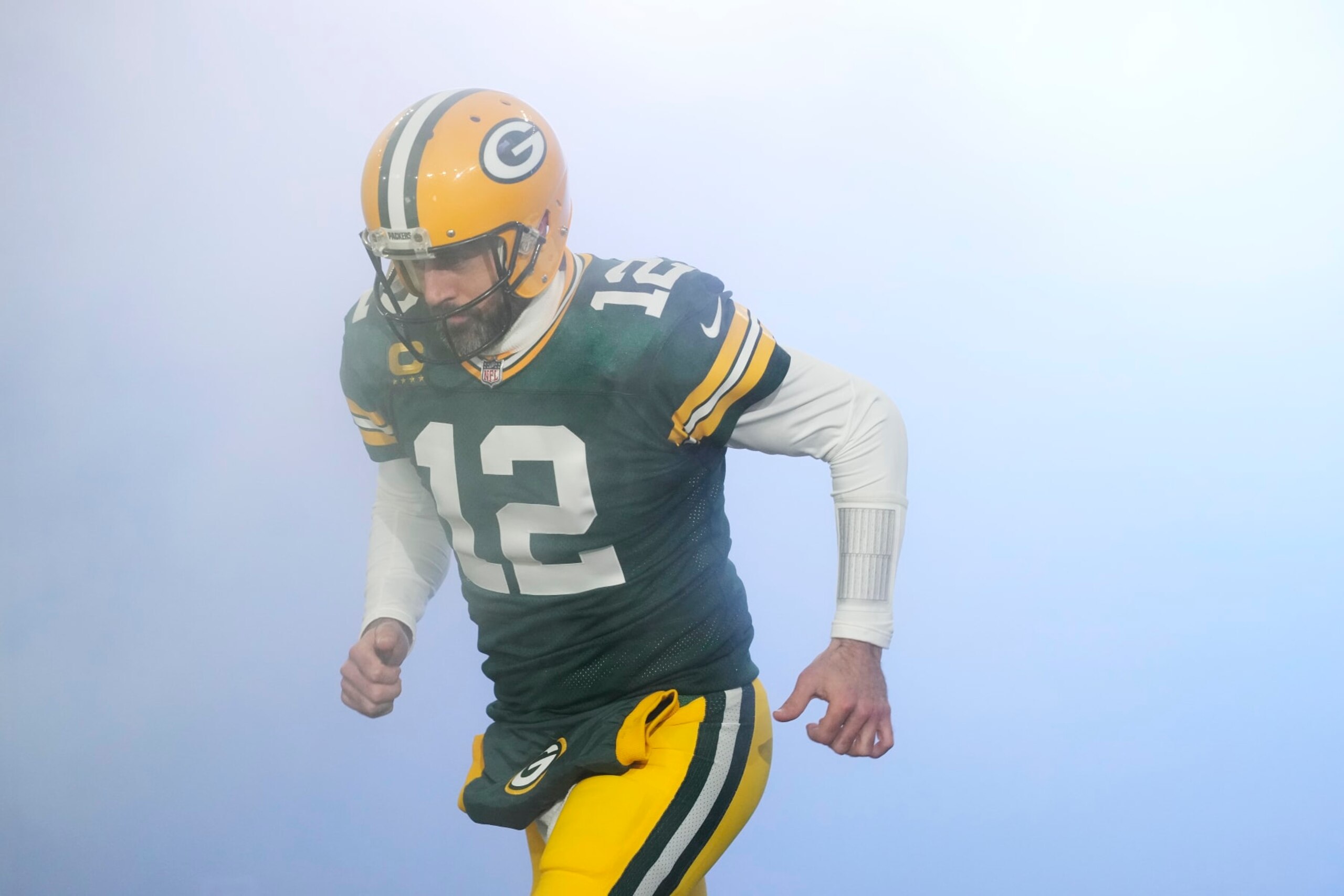
Green Bay Packers quarterback Aaron Rodgers will likely be a first-ballot Hall of Famer. While he has brought only one Lombardi Trophy to Green Bay, he is a 10-time Pro Bowler, a four-time first-team All-Pro and a four-time league MVP.
However, Rodgers did not play at a Pro Bowl level in 2022, he turned 39 in December, and the Packers appear willing to start their next quarterback chapter.
"League sources believe the franchise prefers to move on from Rodgers, just as it once did with Brett Favre," ESPN's Adam Schefter wrote Jan. 29. "Those sources also believe that Rodgers is well aware of the Packers' feelings on the situation."
TOP NEWS
.jpg?w=2560 "Bills Rams Football")
Myles Garrett Got Warning 👀
Hurts Out Sunday Due to Blood Clot
.jpg?w=2560 "Raiders Saints Football")
Every Team's Biggest Surprise So Far 😲
One team that could be interested in Rodgers is the Las Vegas Raiders. They are turning the page on their own quarterback, but while the idea of Las Vegas' adding Rodgers is intriguing, it is not the right move for a franchise headed toward a huge transition.
That transition will likely begin in the coming days.
Why the Raiders May Make a Run at Rodgers
Derek Carr's team tenure carries a deadline of Feb. 15. That's when his 2023 base salary of $32.9 million and $7.5 million of his 2024 salary become fully guaranteed.
Carr, who was benched for the final two games of the 2022 season, does have a no-trade clause in his contract but will almost certainly be traded or released before then. The split may not yet be official, but head coach Josh McDaniels began the process when he named Jarrett Stidham the starter Dec. 28. Carr has since been given permission to pick his destination.
With Carr's exit imminent, the Raiders have begun searching for their 2023 starter—and they appear high on the idea of adding an experienced veteran. According to The MMQB's Albert Breer, Las Vegas was kicking the tires on Jimmy Garoppolo and interested in Tom Brady in early January.
"I can tell you unequivocally—this is a fact—the Raiders are looking into it. The Raiders are looking into going and acquiring Tom Brady," Breer said on The Dan Patrick Show. "... This is something that ... the Raiders are doing their research on. Same goes for Jimmy Garoppolo."
With Brady no longer an option after his retirement Wednesday—unless, of course, he reverses course again—Rodgers could become a top target. He wasn't dramatically better than Carr in 2022 (Rodgers posted a 91.1 passer rating; Carr's was 86.3), but he was the MVP just one season ago.
It's not outlandish to think Rodgers could recapture his Pro Bowl form with Darren Waller, Hunter Renfrow and, of course, former Packer Davante Adams at his disposal.
A reunion with Adams is just one reason why Las Vegas could be attractive to Rodgers.
"[Rodgers] was his QB for eight years, they were close when it counted, and money talks—Nevada is a tax-free state," a source close to Adams told ESPN.
Money is part of the reason why Green Bay may want to move on from Rodgers. He's set to carry salary-cap hits of $31.6 million in 2023 and $40.7 million in 2024. While he has $99.8 million in dead money on his contract, it's structured in a way that gives the Packers an out.
Rodgers is due a $58.3 million option bonus in 2023, but that doesn't have to be exercised until the end of the offseason. If Green Bay trades him before exercising the option but after June 1, it can save $15.8 million against the 2023 cap.
Las Vegas would be on the hook for cap hits of $15.8 million next season and $32.5 million in 2024, with Green Bay picking up a $40.3 million dead-cap charge spread over the next two years.
Paying Rodgers just $15.8 million next season would be more than reasonable, but his salary is not the only financial factor the Raiders must consider. Las Vegas is not a quarterback away from a championship. It has a roster to rebuild, and that will be costly.
Adding Rodgers Alone Won't Make the Raiders a Title Contender
Even if we assume Las Vegas views Rodgers as a clear upgrade over Carr—predicated on the idea that he and Adams will rekindle their chemistry—that alone won't put the Raiders in the playoff mix.
While the early lack of chemistry between Rodgers and Packers receivers such as rookie Christian Watson hampered Green Bay's postseason chances, the team had several playoff-caliber pieces, including a tremendous running back duo in Aaron Jones and AJ Dillon plus a defense that ranked sixth against the pass and 17th in points allowed—though it did finish 26th against the run.
The Raiders had an atrocious defense that ranked 19th in rushing yards allowed, 29th in passing yards allowed and 26th in points allowed.
Las Vegas will have to make significant additions to its defense to even sniff the Super Bowl conversation. And while the Raiders have their own star running back in Josh Jacobs, he is scheduled to become a free agent March 15.
Retaining Jacobs won't be cheap, as he has a projected market value of $12.9 million annually. Letting Jacobs go would create a huge hole at the position and potentially leave the next Raiders' quarterback without the support of a strong ground game.
Now, Las Vegas is projected to have $17.5 million in cap space, and it will gain another $29.3 million when it dumps Carr.
However, adding Rodgers and re-signing Jacobs could cost upward of $28 million, depending on how Jacobs' contract is structured. That would leave Las Vegas with about $18 million with which to reload one of the worst defenses in the league.
Could it be done? Perhaps if general manager Dave Ziegler is creative enough with his contract structuring, but it's far from a guarantee. The defense could benefit from adding multiple top-tier free agents—namely James Bradberry, Daron Payne and Lavonte David—but doing that, retaining Jacobs and adding Rodgers is unlikely.
If the Raiders don't significantly improve their defense, they will struggle to challenge the Kansas City Chiefs and Los Angeles Chargers in the AFC West.
The Denver Broncos may emerge as a serious divisional threat too, now that they have paired quarterback Russell Wilson with Super Bowl-winning head coach Sean Payton. That's just in the AFC West; the rest of the conference is replete with playoff-caliber squads.
If adding Rodgers won't make Las Vegas a title contender in 2023, there's little point for it to pursue him. There's a chance he won't want to play in 2024 (if he even comes back this season), and he'd most likely offer nothing beyond that.
Rodgers Is Not the Right Quarterback for Las Vegas in the Long Term
Wherever Rodgers lands, his Super Bowl window will close quickly. His skills appeared to be on the decline in 2022, and he'll turn 40 during the 2023 campaign. While Brady may have made it look easy to play past 40, it isn't.
Rodgers isn't even 100 percent sold on continuing to play now.
"I am taking time with my decision," Rodgers said Jan. 24 on The Pat McAfee Show (via Safid Deen of USA Today). "And I'm not egomaniacal thinking I should be able to play wherever I want as long as I want."
By targeting Rodgers, the Raiders might get only a year—two if they're lucky—of above-average quarterback play.
Additionally, the Raiders would be out valuable draft capital. Acquiring Rodgers would likely cost at least a first-round pick—possibly this year's No. 7 selection, if the Raiders could be convinced to deal it in a trade that isn't finalized until June.
That's a hefty price for a quarterback who won't lift a middling roster to the top tier of the AFC.
Teams such as the Chiefs, Chargers, Cincinnati Bengals, Jacksonville Jaguars and Buffalo Bills are poised to be perennial contenders because they've built around elite young quarterbacks. Rodgers no longer appears to be on par with Patrick Mahomes, Justin Herbert, Joe Burrow, Trevor Lawrence or Josh Allen. He certainly doesn't possess their potential longevity.
Adding Rodgers might make Las Vegas better in 2023, but it won't make the Raiders a contender in the long term. Targeting a quarterback in this year's draft might.
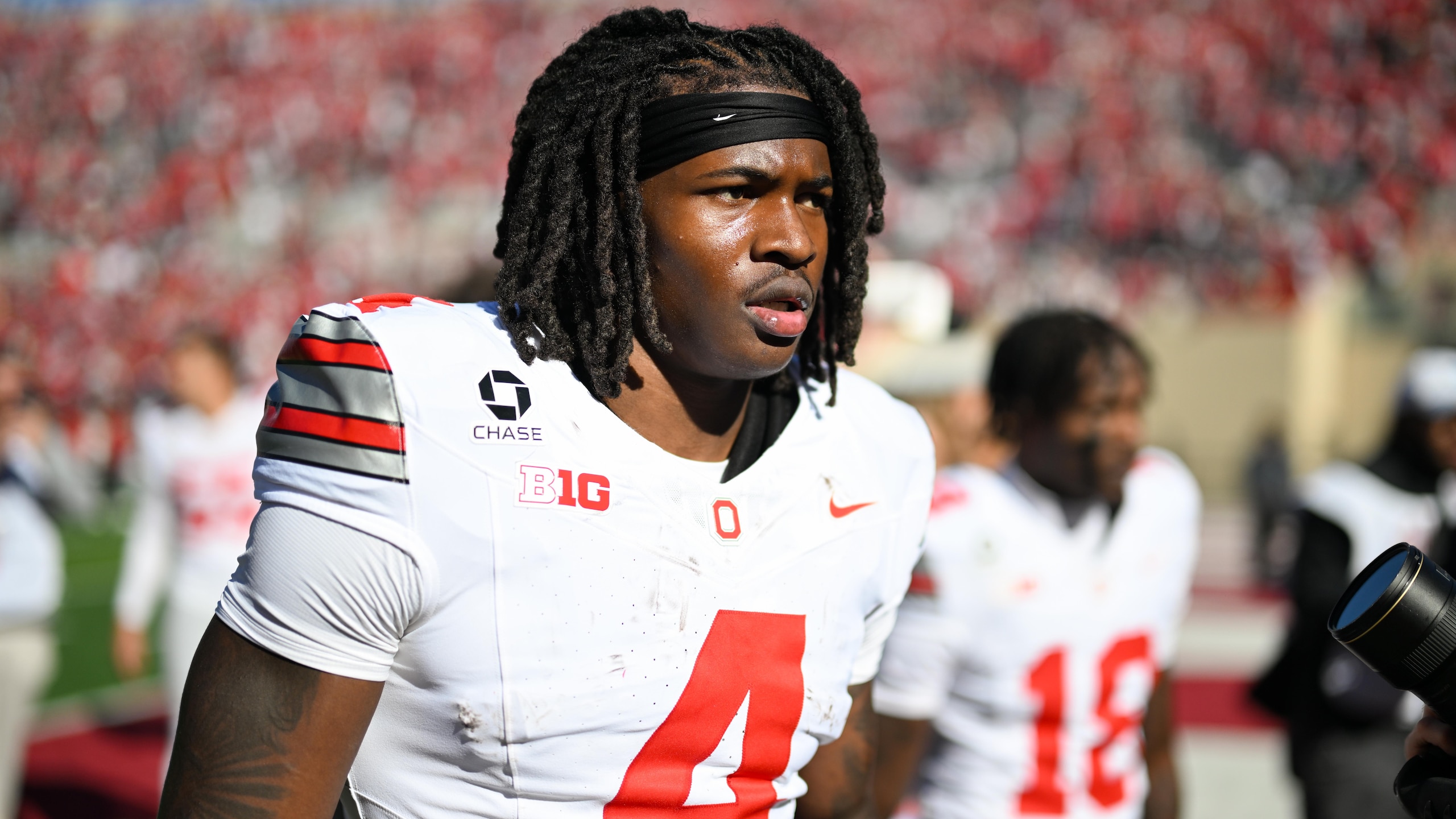
While there's no such thing as a sure thing in the draft, quarterbacks such as Ohio State's C.J. Stroud and Alabama's Bryce Young have potential. Stroud, Young and Florida's Anthony Richardson are ranked inside the top 32 prospects by the Bleacher Report Scouting Department.
Stroud, the Scouting Department's eighth-ranked prospect, would be a tremendous fit in McDaniels' offense.
"In the right environment, Stroud will raise the floor of an offense right away," Bleacher Report's Derrik Klassen wrote. "He's got the pre-snap vision, arm talent and accuracy to be functional sooner rather than later, and the progress he showed as the year went on suggests he has a capacity to improve rapidly."
In possession of that seventh pick, the Raiders are at least within reasonable trade range of acquiring a top quarterback prospect in the draft. Selecting a rookie and bringing back Stidham or adding a journeyman such as Garoppolo or Jacoby Brissett as insurance would give Las Vegas a much better shot at solving its quarterback dilemma in the long term than adding Rodgers would.
Could Ziegler acquire Rodgers and draft a quarterback? Maybe, if Las Vegas can keep its top pick. However, that would still leave the Raiders short on future draft capital, eyeing a good-not-great 2023 season and delaying the development of said rookie quarterback.
The Packers still don't know what they have in 2020 first-round pick Jordan Love because Rodgers has rarely come off the field.
The Raiders need to focus on the big picture and find their quarterback of the future instead of chasing a year or two of Rodgers. Teams such as Kansas City and the Philadelphia Eagles—the two participants in next week's Super Bowl—are likely to remain in the title hunt for years because they have built around talented young signal-callers.
Sustained success is what Las Vegas should strive to find, and it's not going to find it by adding a 39-year-old quarterback whose best days are behind him.
Salary-cap, contract and market information via Spotrac.
.jpg?w=2560 "AEW WrestleDream Live Grades 🔠")