

Assigning Panic Levels to Five Underachieving NHL Teams
The NHL season is roughly 10 percent complete. That leaves plenty of room for hot teams to lose steam or for losing teams to right the ship. Still, having things go wrong early in the season can be devastating. For one, it creates a sizable hole to climb out of the rest of the way. Other teams have a head start up the standings, and little margin for error exists the rest of the way for those off to a slow start.
The consternation and tension this creates early within the media, the fanbase or even the locker room can be a major issue too. First impressions, for better or worse, affect perception. A three-game losing streak would be considered merely a bump in the road in January, but at the start of the season it can lead to beliefs that the sky is falling.
For some teams, a poor start could be a fluke occurrence. For others, it might foreshadow a terrible season to come. Parsing out the difference could be what determines whether a general manager stays calm versus one who starts to make changes. And, of course, a look under the hood should tell fans whether they should wait and see or if it’s time to panic.
Here are five NHL teams who have underachieved to start the season and how worried the fans of each should be.
Pittsburgh Penguins
1 of 5
Record: 4-4-1
Background: The Penguins finished last season with 103 points and came within one goal of advancing past the Rangers in the first round despite missing a bevy of important players. General manager Ron Hextall successfully retained most of that roster for 2022-23, re-signing Evgeni Malkin, Kris Letang, Bryan Rust, Rikard Rakell and Danton Heinen. Despite this, Pittsburgh has struggled out of the gate.
Why It’s Time to Panic
Penguins goaltenders Tristan Jarry and Casey DeSmith have been steady, combining for a .914 save percentage through those nine games. Despite this, the Penguins have given up over three goals per game and rank joint-22nd in the NHL by that metric.
The culprit here is the defense. All of Letang, Jeff Petry, Chad Ruhwedel, Brian Dumoulin and Pierre-Olivier Joseph have struggled immensely. John Marino, traded to New Jersey in the offseason, is one of the better shutdown defensemen in the NHL, and the Penguins miss his presence; Evolving Hockey puts him in the 78th percentile by defensive impact over the previous three seasons.
That so many defensemen are struggling indicates that this problem is beyond one or two players having a rough month. The Penguins have evolved from a team with overwhelming talent during their Cup years to one now with a few superstars and a remaining group whose sum has been greater than the individual parts. If that structure has broken down, then they are going to have to scratch and claw to even earn a wild-card spot. The Metropolitan Division is ruthless, and they need to get the train back on the tracks quickly.
Why Everything Might Be Okay
Although the Penguins are bleeding goals, they have actually been staunch at five-on-five; their 2.24 goals against average ranks eighth in the NHL. The penalty kill, which has given up nine goals on 31 penalties (71 percent efficiency) is singlehandedly tanking them. While that’s certainly not good news, special teams are usually incredibly flukey in short spans. The Penguins finished last season with the third-best penalty kill in the league. This could easily be noise.
Mike Sullivan is also one of the top coaches in the NHL, and if anyone can adjust lines and solve tactical problems, it's him. Perhaps as the season goes on, the issues on defense get fixed. If so, the Penguins will get to the finish line. The offense is certainly living up to expectations, with Sidney Crosby, Malkin, Rust and Jake Guentzel producing at the top of the lineup.
Panic Level: Low
Nashville Predators
2 of 5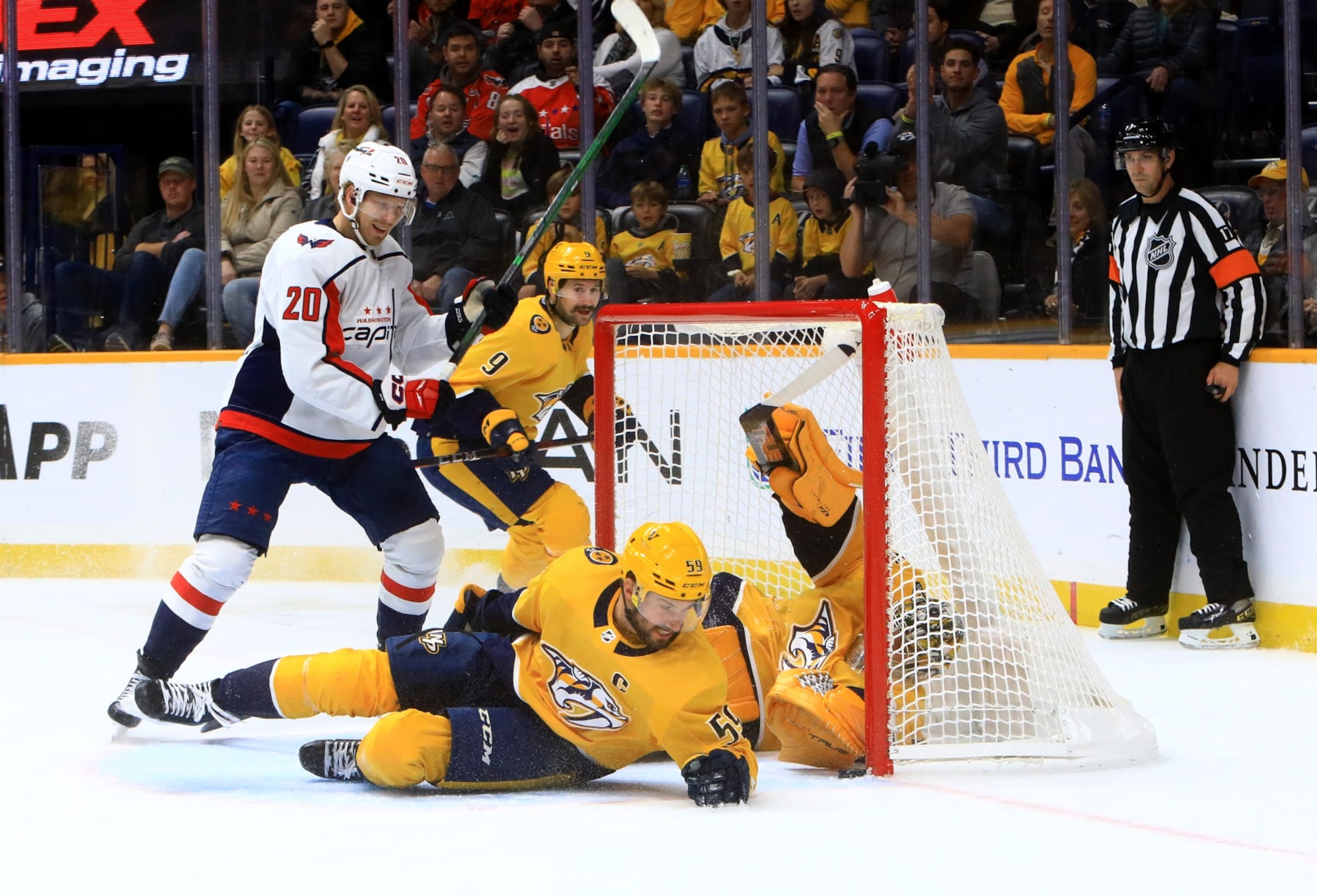
Record: 3-5-1
Background: The Predators barely made the playoffs last season, earning the final wild-card spot in a weak Western Conference with 97 points. They got hammered by the Avalanche in a four-game sweep during the first round of the playoffs. When a team has that kind of season, management has to make a decision. Hovering in the middle isn’t helpful, so either building for a better future or cranking things up to win now.
General manager David Poile chose the latter. The Predators re-signed Filip Forsberg and Jérémy Lauzon, and acquired Ryan McDonagh and Nino Niederreiter. Those are moves by a GM who thinks his team is near contention. Yet the Predators have stalled out of the gate.
Why It’s Time to Panic
The Predators just simply have not been good this season. They rank 20th out of 32 teams in expected goals percentage and 27th in actual goals percentage. The defense in particular, which should be a strength, has been holding the team back. Their depth is miserable, and the group of Alex Carrier, Dante Fabbro and Lauzon are just not good NHL defensemen; unlike Pittsburgh, for instance, this is not a team with talent in hibernation. If Juuse Saros wasn’t once again playing out of his mind, the Predators would be fortunate to have even one or two wins.
By the same measure, their depth at forward has done the team no favors, either. Only five forwards have more than one goal through nine total games; to compare, the rebuilding Montreal Canadiens have seven.
In fact, the Predators really weren’t that good last season. Saros bailed them out with a Vezina-worthy performance in his 67 games. Maybe the Predators just aren’t that good. And if that’s the case, this is a team in no-man’s land with no easy path to either quickly contending or tearing down the structure and revamping.
Why Everything Might Be Okay
It comes down to the Preds’ top players. Forsberg and Matt Duchene have only two goals each. Roman Josi has just four points. Ryan Johansen has five points. There are better things to come, and if those four can play as they did last season, then the Predators could stay in the race long enough to acquire reinforcements at the trading deadline; they have a bevy of draft picks and, per Cap Friendly, an anticipated $4.17M in cap space at the deadline.
Panic Level: High
Toronto Maple Leafs
3 of 5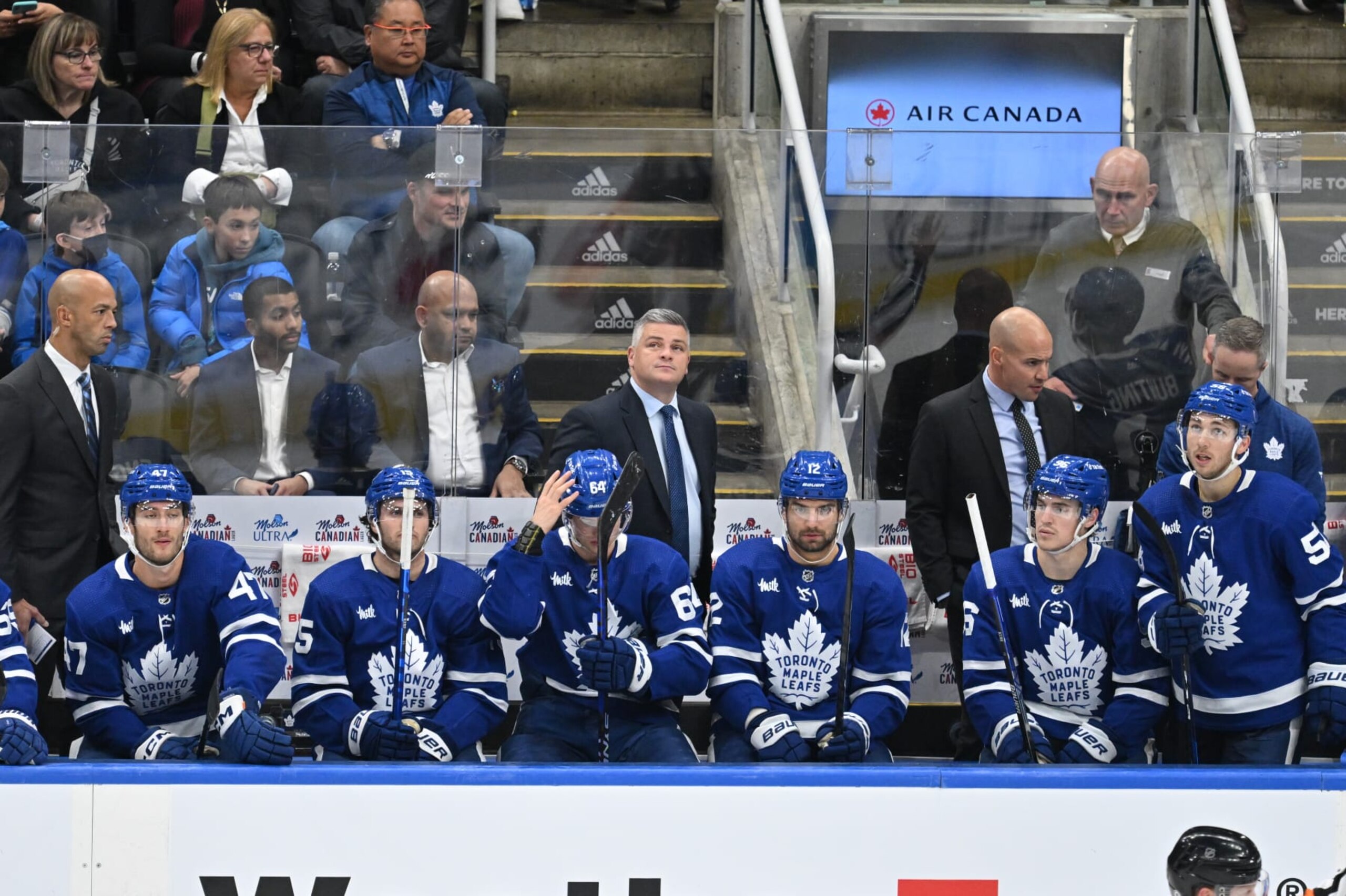
Record: 4-4-2
Background: The Leafs amassed 115 points during the 2021-22 regular season and were bona fide Stanley Cup contenders. Alas, they lost in the opening playoff series for the sixth straight season. The pressure is on this group to finally get over the hump, but 10 points through 10 games isn't going to get anyone off their backs.
Why It’s Time to Panic
Small samples are small samples, but the Leafs have not performed well this season even beyond the wins and losses. There are individual issues, such as Auston Matthews scoring just three goals and Justin Holl providing the lone goal from the Leafs defensemen.
But the biggest worry should be that the team is underperforming when looking under the hood. Last season, the Maple Leafs ranked third in the NHL by expected goals percentage at five-on-five. This season, they’ve fallen to 13th. And despite all the firepower, they rank 14th at five-on-five in expected goals for. Those would be solid numbers for a young team trying to scratch and claw its way to a wild-card spot. Those are definitely not the numbers a surefire contender would aspire to.
They’re not getting any breaks, either. Goaltending was a question mark to begin with. Matt Murray, perhaps predictably, is already injured, and third-string call-up Erik Källgren is not up to snuff. Lynchpin defenseman Jake Muzzin suffered a neck injury, and the outlook doesn’t look great.
But the biggest reason to panic is that it’s always time to panic in Toronto. The team is in a no-win position. If they play well, the cynics will insist on waiting to see what happens in the playoffs. When the team is losing, it has to go into crisis management given the spotlight on the organization.
Mitch Marner has already shown frustration. These are humans, and the immense pressure is inevitably going to get to them. The longer this cold streak lasts, the worse the tensions and criticisms are going to get. Other theoretical contenders like the Colorado Avalanche (nine points in nine games) and the Tampa Bay Lightning (10 points in nine games) are having similarly mediocre starts without Chicken Littles running around to say the sky is falling. The Toronto scene is different, and perception is reality.
Why Everything Might Be Okay
Aside from Matthews, the team’s top players are getting the job done. The bottom six is where the issues lie. General manager Kyle Dubas made a number of additions, and the new group that includes usually reliable depth players such as Calle Järnkrok, Zach Aston-Reese, and Nicolas Aubé-Kubel hasn't caught its bearings.
Head coach Sheldon Keefe, assuming he holds that position, will continue to tinker until he finds the right combinations of players. The team has enough star power to buoy the team temporarily until the depth issues are sorted.
Panic Level: Business As Usual

.jpg?w=2560 "NHL Trade Grades Connor Hellebuyck")
St. Louis Blues
4 of 5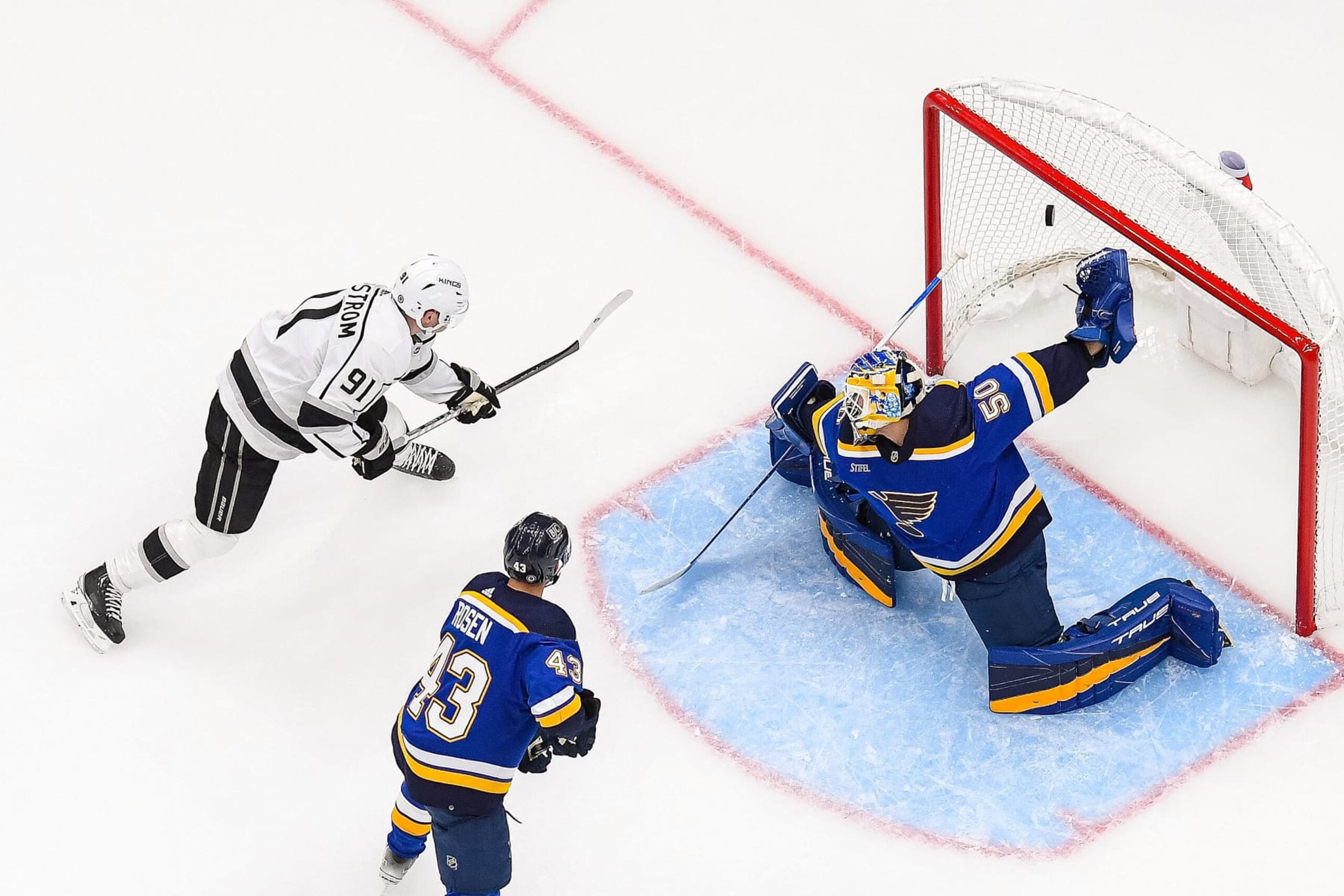
Record: 3-5-0
Background: The Blues amassed 109 points last season. While they may not be anyone’s idea of an elite contender, this should be a team that comfortably reaches the playoffs and, from then, puts up a fight. Six points through eight games is well below expectations. Following a disastrous 5-1 loss against the Los Angeles Kings on Monday, the Blues have now lost five games in a row.
Why It’s Time to Panic
The Blues have a pathetic 19 goals through eight games. There are a handful of causes, but the most notable is the complete lack of production from their defensemen, who are supposed to comprise one of the better offensive groups in the NHL. Justin Faulk is flying with nine points, but Torey Krug (three points), Nick Leddy (two points) and Colton Parayko (two points) have just one goal between them.
Others aren’t living up to their talents, either. Robert Thomas has one goal. Ivan Barbashev, last year’s breakout player with 60 points, has only two. Ryan O’Reilly, one of the best two-way centers in the league for the past decade, has one goal and zero assists through eight games.
Some of those players have the talent to do better, but maybe this aging group overachieved last season. Their 45.1 percent expected goals rate is among the worst in the league, and the duo of Jordan Binnington and Thomas Greiss in net isn't enough to erase the team’s mistakes.
Why Things Might Be Okay
Maybe one reason why the team is struggling to put the puck in the net is that they’ve missed some key players. Pavel Buchnevich, arguably the Blues' best forward, has played just three games. The same is true for Brandon Saad.
The Blues removed Buchnevich from the injured reserve list, and Saad’s injury was initially classified as day-to-day. Inserting both into the lineup will mean not only that the Blues will get their much-needed production, but also that the rest of the players on the team will have fewer responsibilities, easier matchups and better players with whom they can build offense.
Panic Level: Medium
Vancouver Canucks
5 of 5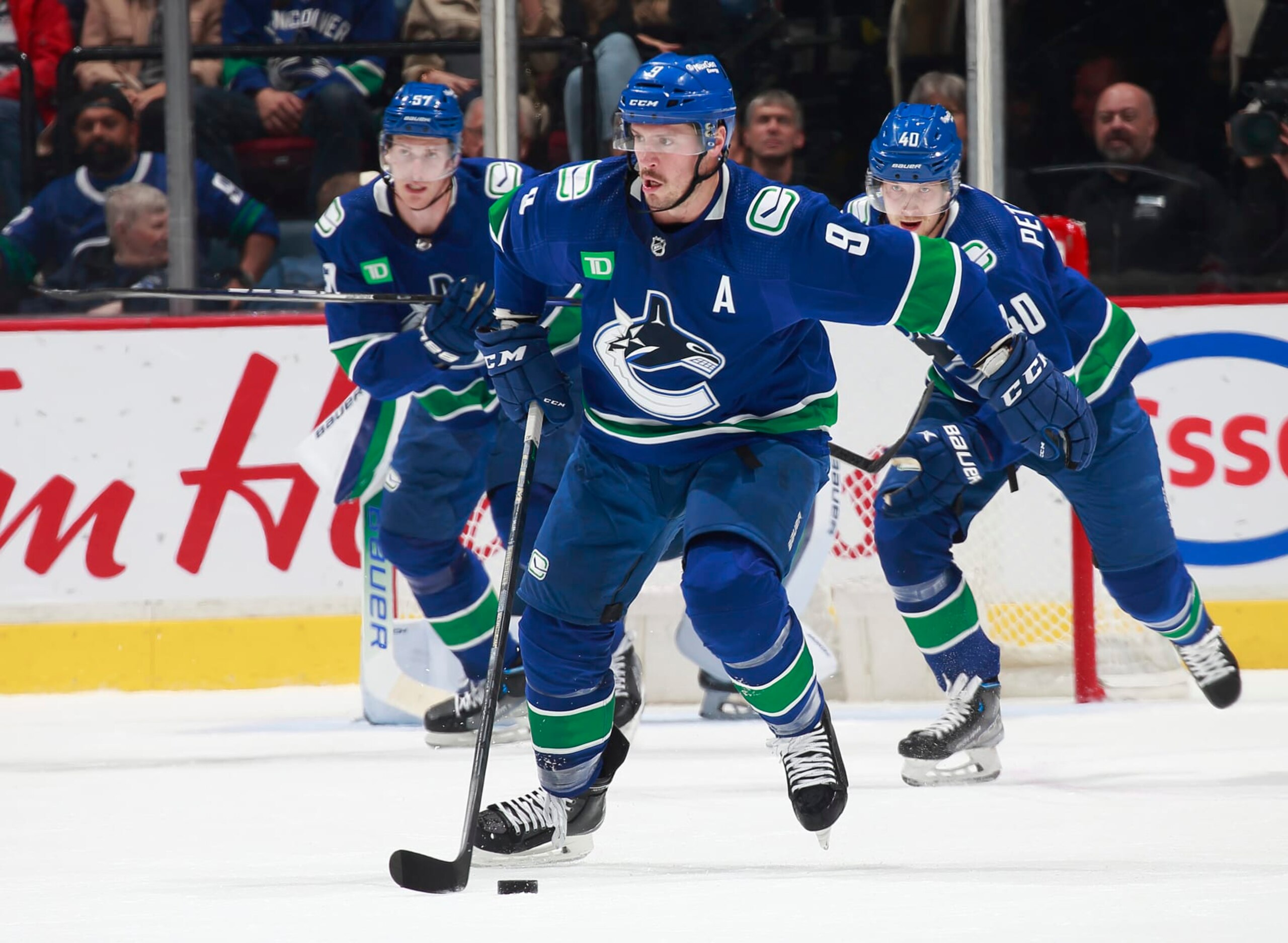
Record: 2-5-2
Background: New general manager Jim Rutherford went to work in the spring and summer, changing the complexion of the front office. Some changes were made to the roster between the margins, but after a trading deadline and summer in which there were serious rumors of moves for players such as J.T. Miller, Brock Boeser and Conor Garland, Rutherford instead re-signed Miller and kept the team in plausible position to win hockey games for 2022-23.
Why It’s Time to Panic
It’s not just that the team has lost games, but the group looks completely deflated. Of all the teams to struggle early in the season, none have been so devastatingly bad as the Canucks. The team held a players-only meeting just three games into the season. Head coach Bruce Boudreau appears to be hanging onto his job by a thread.
The defense outside of Quinn Hughes is an absolute train wreck with little room for improvement. Even the group's better players below Hughes would struggle to make the daily lineup for some NHL teams.
Youngsters who were supposed to take the next step and give the Canucks another layer of quality have instead stagnated or even taken steps back. Vasily Podkolzin, drafted 10th overall in 2019, is goalless in nine games. So Nils Höglander, the 2019 second-round pick who has just one point in seven games and was briefly demoted to the AHL.
The Canucks are better than they have shown, but the ceiling sure looks below the playoff standard.
Why Everything Might Be Okay
Quinn Hughes is healthy again, while J.T. Miller has four points over the last four games after a disastrous start to the season in which he didn’t produce much and became a major defensive liability.
Goaltender Thatcher Demko has been poor. He’s put up an .874 save percentage in his seven starts, but he is way too good of a goaltender to not rebound. He’ll probably return to his above-average NHL goaltending standard soon.
But among all the reasons to feel good about where the Canucks stand, the biggest is that this turmoil is for the best. Over the last decade, the Canucks have been mediocre in their best seasons and abhorrent in their worst. The moves the team made during that timespan almost exclusively reflected a plan that lacked foresight, with a number of terrible contracts awarded to fringe players. Draft picks have been sacrificed to no avail, and the prospect pool is barebones. The Canucks have acted like a win-now team for years despite having the makeup of a team that needed to prioritize a bigger picture.
It’s time for Rutherford to wave the white flag and blow it up. Hughes (23), Elias Peterson, (almost 24) and Demko (26) are still young enough to be the faces of the franchise for many years to come. Boeser, Bo Horvat, Garland and Tanner Pearson are tradable pieces who would bring in a haul of prospects and draft picks and knock a ton of cap space off the books. If the losing continues in Vancouver, Rutherford’s hand will be forced and the Canucks will finally do what they should have done long ago: rebuild.
Panic Level: Apocalyptic
All states cited are courtesy of Evolving Hockey.




.jpg?w=2560 "Jonathan Taylor Landing Spots 📍")





