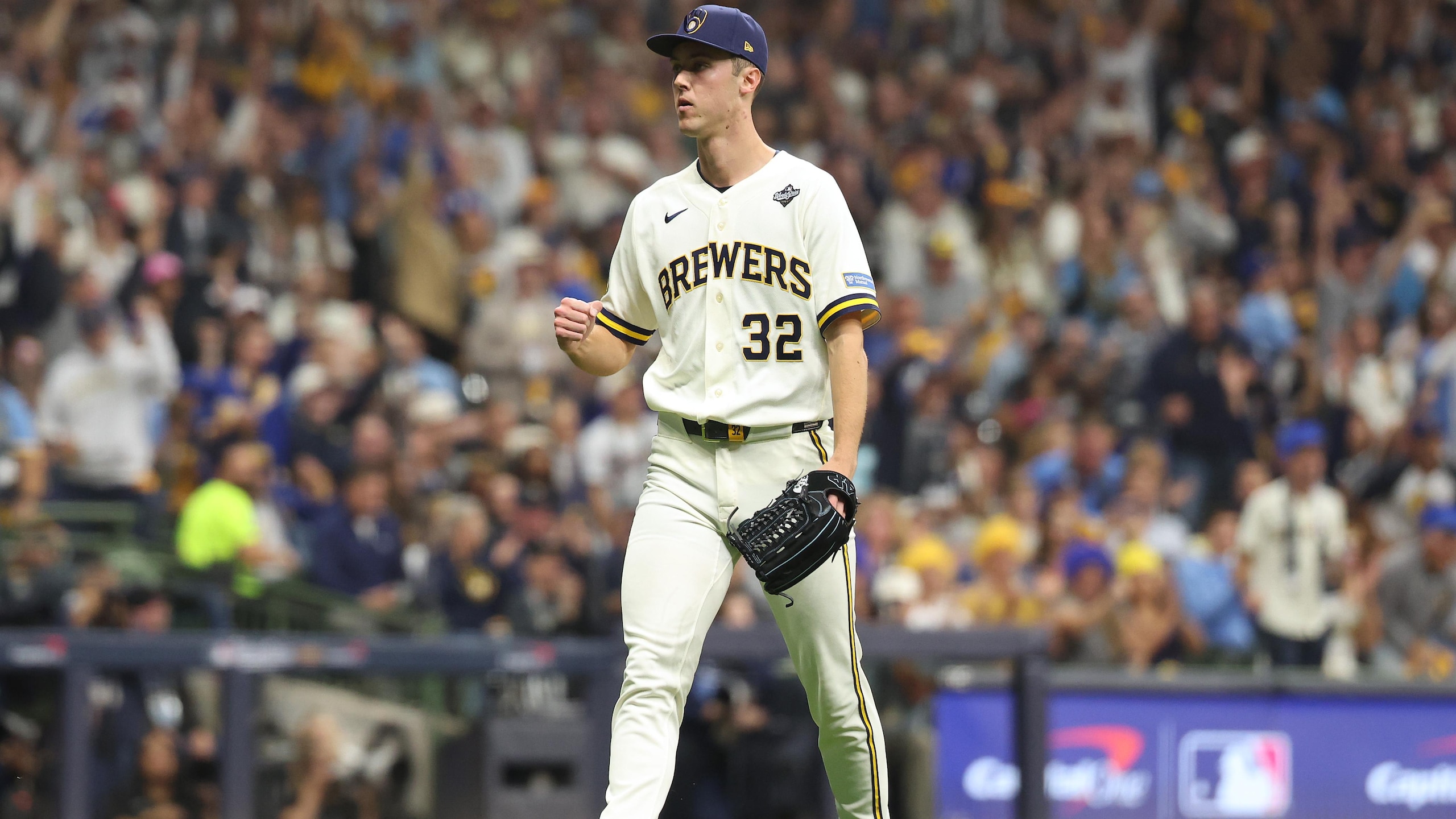
We're less than two weeks into the 2022-23 NBA season, and with a few exceptions, almost everything is upside down.
That seems about right.
Small samples, rust and high variance always combine to make October and November a little strange. Flash back to a year ago at this time, and you'd see the 64-win Phoenix Suns toting the same 1-3 record as a Houston Rockets team that'd go on to win 20 games. That's an indicator that most of the double-take-inducing stories we're following now will eventually align more closely with expectations. But we shouldn't let that detract from the oddities currently taking us by surprise.
And if nothing else, it'll be fun to look back at all this early-season strangeness in a few months. You know, when Lauri Markkanen and the Utah Jazz are hoisting the Larry O'Brien Trophy.
The Utah Jazz Are Too Good to Tank
1 of 5
We came into the season well aware that a handful of teams had no plans to compete for the playoffs, and nobody's intentions were clearer than the Utah Jazz's.
In June, the second-winningest head coach in franchise history, Quin Snyder, basically said "thanks, but no thanks" to the two years remaining on his contract. When Utah subsequently traded four starters (including two All-Stars) for a haul focused on future draft picks, you got the feeling that Snyder knew of the impending rebuild and had decided a year off sounded better than presiding over a 17-win season.
What remains of the strip-mined Jazz roster clearly feels differently. These guys aren't taking a single second off, let alone a full year.
The Rudy Gobert trade returned several rotation-caliber pieces, led by the relentless Jarred Vanderbilt, sharpshooter Malik Beasley and rookie defensive ace Walker Kessler. The deal that sent Donovan Mitchell to the Cleveland Cavaliers returned bucket-hunter extraordinaire Collin Sexton and apparent star Lauri Markkanen.
Those five players, plus Kelly Olynyk, another trade acquisition, have all averaged significant minutes this season, with Vanderbilt, Olynyk and Markkanen joining holdovers Jordan Clarkson and Mike Conley in the starting five. Collectively, they've produced a result no one—not Utah's fans, not the broader NBA community and certainly not even the Jazz themselves—saw coming.
Utah hammered the theoretically contending Denver Nuggets in their opener and then even more shockingly went into Minnesota and bested Gobert's Minnesota Timberwolves in overtime. Everyone's early-season darling New Orleans Pelicans went down next, and the Jazz were suddenly 3-0—an absurd mark for a team that many saw as front-runners in the race to the bottom of the standings.
We can pump the brakes on an 82-0 campaign; Utah fell to the more effectively tanking Houston Rockets and will absolutely sell off its many remaining quality pieces for future assets, perhaps in a hurry if the wins keep coming in larger-than-anticipated quantities. But still, Utah playing sound, respectable ball is a reminder that the best-laid front-office blueprints to tank can run into problems when the players don't go along with the plan. And perhaps the even more intriguing takeaway is the Jazz got so much valuable talent in addition to all the picks they coveted that they could win the Gobert and Mitchell trades a second time.
Maybe Markkanen and Vanderbilt are keepers, and Sexton got a four-year, $71 million contract upon arrival as part of the sign-and-trade agreement. But so many of the other players who came over in Utah's flurry of offseason action could be flipped again. In the end, the most surprising thing of all is that while everyone agreed the Jazz won their blockbuster trades, nobody realized just how extreme those victories were.
The Jazz can't rebound to save their lives, and opponents will eventually stop hitting threes at a clip that roughly equates to Russell Westbrook's career percentage. But these guys are playing hard, forcing loads of turnovers and generally operating as if winning is still the point.
The Blazers Appear Elite
2 of 5
Even the optimists didn't see the Portland Trail Blazers running this hot to start the year, and I can say that as someone who gave them an A-minus for their offseason moves. Portland's defense-boosting acquisitions (Gary Payton II and Jerami Grant) and Damian Lillard's return to health seemed likely, on paper, to help the team nose its way into the play-in race. In a best-case scenario, the Blazers would also get the same version of Anfernee Simons who closed 2021-22 on a tear, putting a top-six finish in play.
So far, all that and more broke Portland's way. The result was a 4-0 surge to start the year fueled by a combination of youth and experience, not to mention better two-way balance than we've seen from the franchise at any point in the Lillard era.
Yahoo Sports' Dan Devine covered one key reason for the Blazers' strong start on D, noting head coach Chauncey Billups "has ratcheted down the ball pressure early in Year 2—Portland has blitzed the pick-and-roll just eight times in its first four games, according to Second Spectrum’s tracking, after doing it nearly eight times per game last season—in favor of a return to the more conservative drop coverage aimed at funneling drivers into contested mid-range looks with Jusuf Nurkic lurking in the paint."
That conservative scheme has helped the Blazers keep opponents off the foul line better than almost any other team in the league. Coupled with the NBA's highest free-throw rate through its first four games, it's not an exaggeration to say Portland is sitting so high in the standings because it is making tons of free throws and surrendering so few.
Maybe that's shaky ground, and perhaps the Blazers will look ordinary if and when their advantage at the stripe normalizes.
Then again, Lillard earned Player of the Week Honors to kick off the season and looks very much like his best self. Simons is racking up quarters with a half-dozen made triples, Josh Hart is rebounding everything in sight, Shaedon Sharpe does three things every night that scream "future star," and Grant is the kind of multi-skilled gap-filler the Blazers have never had at the forward spot. Payton, without question Portland's most impactful defensive weapon, hasn't even played yet.
A lot of what we're seeing from this team is sustainable. Maybe they won't win the West, but the Blazers are going to be a bigger factor than anyone imagined.
Julius Randle Is New and Improved
3 of 5
Through his first three games, Julius Randle dribbled the ball just 1.48 times per touch and possessed it for an average of 2.64 seconds per touch. Those figures are down from 2021-22, when Randle averaged 2.20 dribbles and 3.25 seconds per touch.
We're dealing with a couple of niche stats and probably a few too many decimal points, but those numbers tell the biggest story of the New York Knicks' young season.
Randle, whose ascent to All-NBA status in 2020-21 propelled New York to the playoffs, and whose mostly abysmal follow-up in 2021-22 doomed it to the lottery, is proving he doesn't have to be the sole determinant of his team's fate.
It's an oversimplification, but the last two seasons depended far too much on whether Randle succeeded or failed in his top-option role. When he made a bunch of mid-rangers and threes two years ago, the Knicks thrived. When those shots didn't fall, and when Randle compounded the problem by forcing the issue even more, the Knicks struggled. Now that he's making quicker decisions and functioning as a piece—rather than the entirety of—the offense, the whole operation is running more smoothly.
Randle's ability to fit in is defying one of the more pervasive preseason narratives: The Knicks would rise or fall depending on which version of the lefty forward showed up, the 2020-21 edition or the one from 2021-22.
It turns out there's a third option, one that doesn't hinge on whether Randle, the ball-stopping hub, hits shots.
Nobody's going to confuse Randle for a member of the mid-teens San Antonio Spurs, who popularized the "0.5" theory of offense that demanded players either pass, attack off the dribble or shoot within a half-second of touching the ball. But this new, unselfish, decisive approach is a marked departure from the way Randle has played in the past.
The addition of primary ball-handler Jalen Brunson is a factor here, but most of the credit goes to Randle for meaningfully rewiring his game nine years into his career.

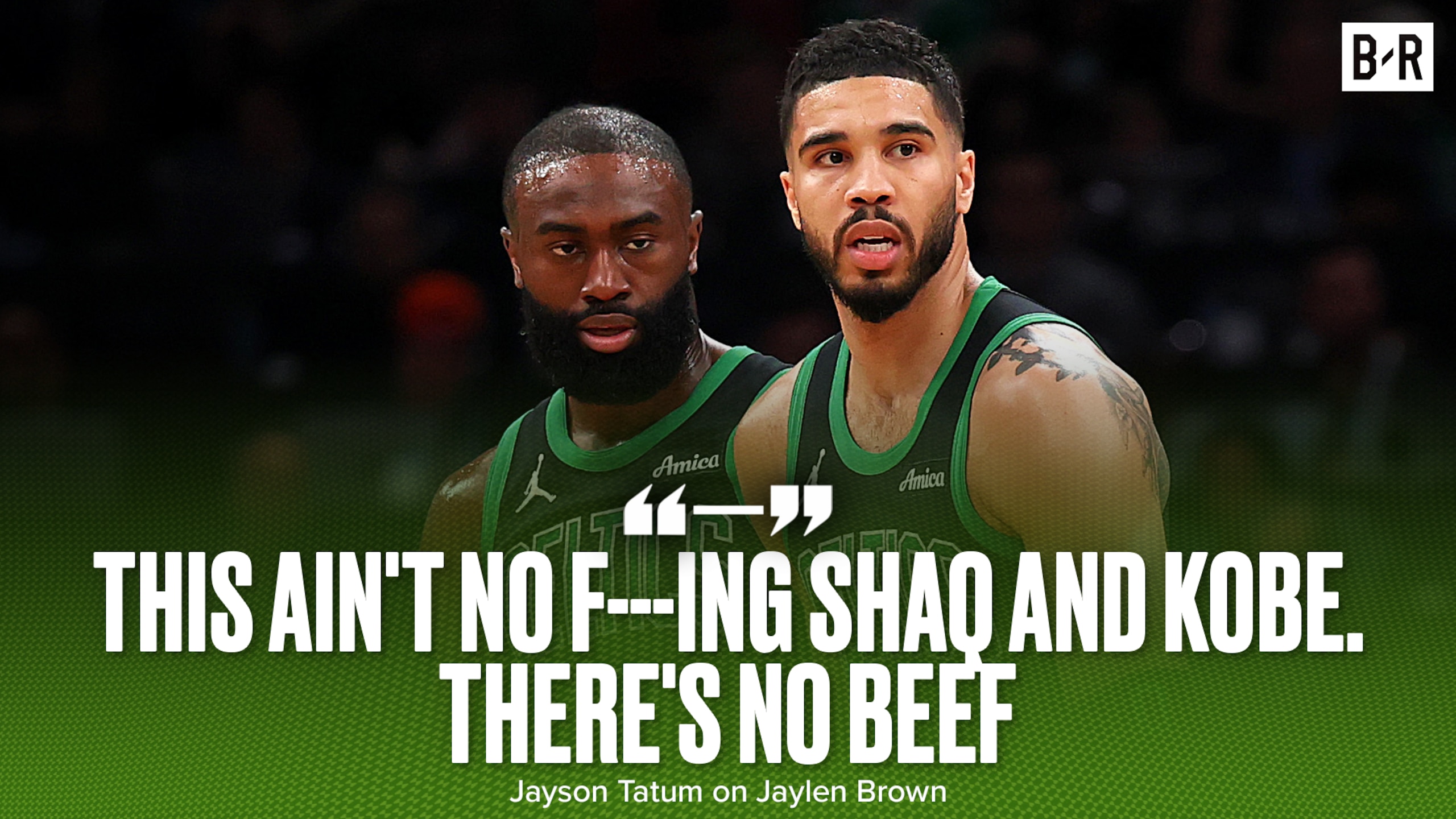
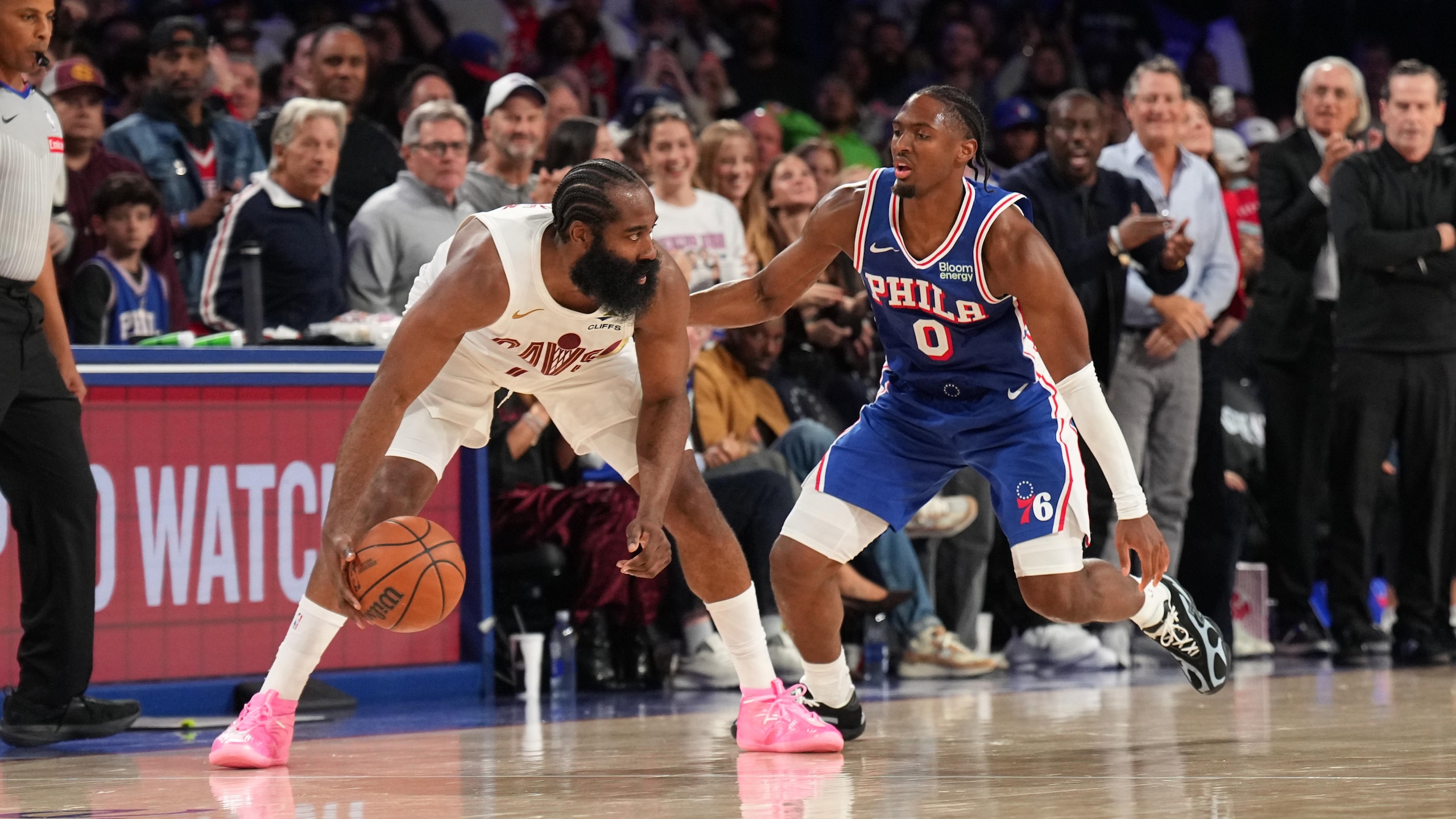
The Warriors Can't Stop Anybody
4 of 5
Through their first four games, the Golden State Warriors have surrendered 109, 128, 125 and 134 points, a stunning streak of defensive generosity that has the Dubs sitting 19th in points allowed per 100 possessions.
Gary Payton II wasn't supposed to matter this much.
Golden State's shoddy work on D owes to more than just the departure of Payton, an analytics darling and chaos-generator off the bench. The Warriors are getting run off the floor in transition, which is driving head coach Steve Kerr up a wall, and generally making mistakes you'd never expect from a group that finished last year ranked second on defense overall and first by a mile before Draymond Green went down with a back injury in January.
Excuses abound...sort of.
The Warriors are backfilling the minutes vacated by veterans Payton and Otto Porter Jr. with young players or new additions who aren't as familiar with the team's schemes and expectations on either end. Inexperience and unfamiliarity are partly to blame. But at the same time, you'd expect bouncy athletes and eager-to-please newcomers to excel at hustling back on defense and paying attention to basic assignments.
James Wiseman, Jonathan Kuminga, Moses Moody and Jordan Poole have all been around the Warriors for at least one full season now, so they understand the expectations. And with all of them in their early 20s, high energy should be a given. Donte DiVincenzo and JaMychal Green should be running themselves ragged to up their value in 2023 free agency and prove they deserve rotation roles this year.
Even the veteran starters have underperformed.
It was reasonable to expect the Warriors to coast through portions of the year in order to peak in May and June. But bad habits and a lack of focus can be hard to fix if they linger too long.
John Wall Looks Like Himself
5 of 5
Everyone loves a comeback story, but the idea of John Wall returning to the floor as essentially the same guy he was four years ago never felt realistic.
The five-time All-Star had the track record to inspire optimism, but prior to debuting with the Los Angeles Clippers this season, he'd played in just 40 games since December 2018. How could anyone expect a speed-based player to miss that much time because of a combination of injury and deliberate benchings and return to the floor with the same familiar jets still firing?
Wall is coming off the bench for the Clips, which has so far kept his minutes down. That's probably helping him max out over shorter stints, but the numbers are still remarkable. Per 36 minutes, Wall is averaging a career-best 24.4 points and 2.2 steals per game. He's earning trips to the foul line at a clip not seen since 2017-18 and finishing near the rim at career-peak rates.
Oh, and the highlights? Those are back, too.
Durability is an unknown here, and it may be the case that Wall will either need time off or a permanent cap on his minutes to sustain his current level of production. Still, it's as surprising as it is encouraging that when he's out there, Wall looks and moves like the guy we last saw play more than half a season when Barack Obama was president.

.jpg?w=2560 "NFL House in Paris Closes for Protests")
.jpg?w=2560 "Trevon Diggs Cut by Seahawks")
.jpg?w=2560 "Jonathan Taylor Landing Spots")