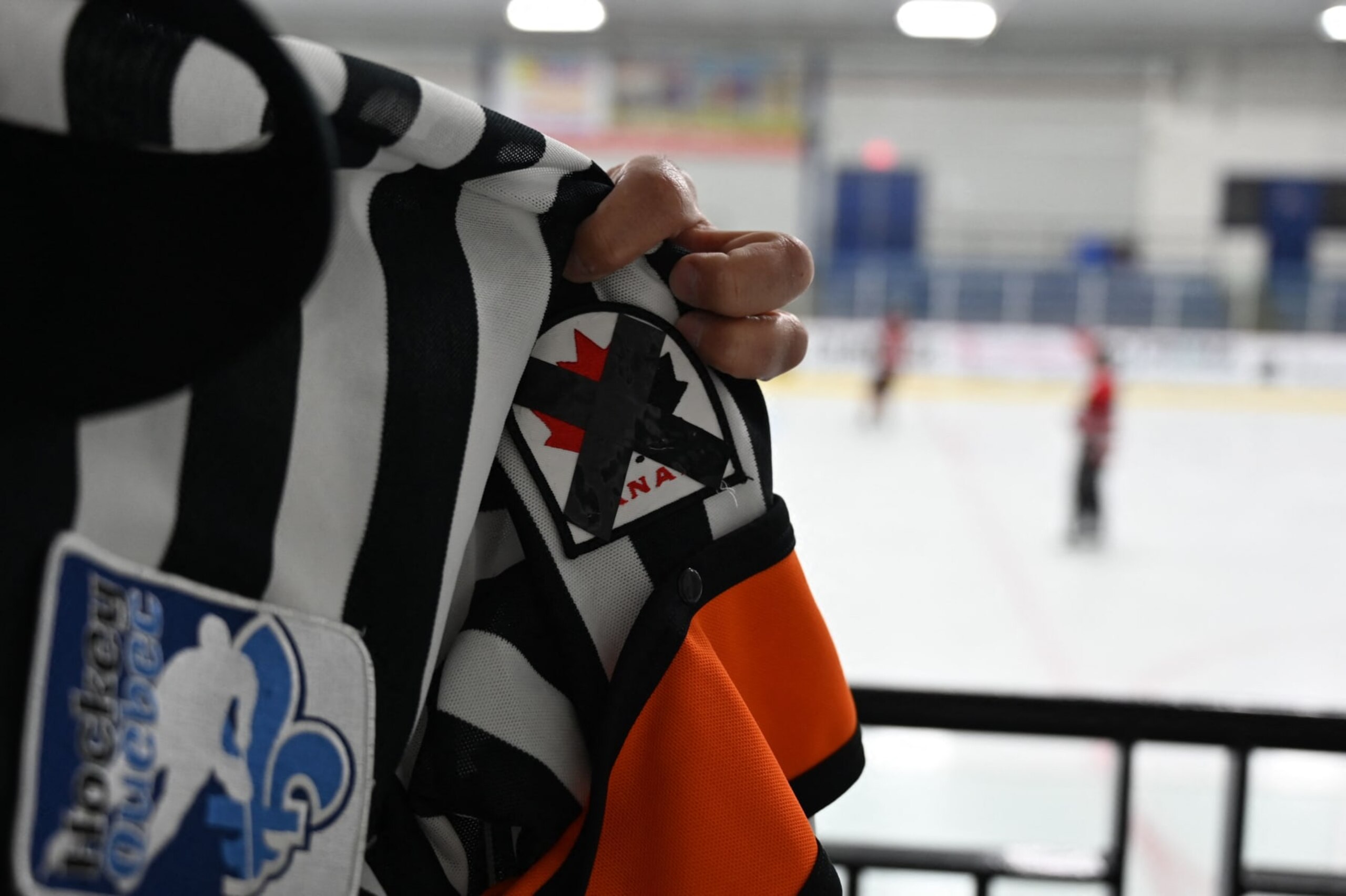

Making Sense of the Hockey Canada Situation and How It Needs to Change
Hockey Canada's mishandling of a 2018 sexual assault allegation has prompted an overhaul of the organization's leadership and sparked discussions about how to change the culture of hockey.
Many are left wondering how Hockey Canada can restructure in a way that best prevents this from happening again, or if that's even possible within the current culture. To consider the options, we need to make sure we understand the nuances of the situation. And to do so, we've called upon The Athletic's investigative reporter Katie Strang, who has been an authoritative voice throughout the investigation, and To Hockey, With Love co-creator Gabriela Ugarte, who lends a unique perspective with her research in hockey culture.
TOP NEWS
3-Way Trade Ideas for Hellebuyck 💡

Ovechkin's Greatest Moments 🎱

Mark Scheifele Landing Spots 📍
Their expertise will guide us as we walk through the timeline of events leading to Hockey Canada's leadership mass exodus and assess what the future could look like.
Hockey Canada reached a settlement in May with a woman who said she was sexually assaulted by eight players, including members of Canada's 2018 world junior team. Hockey Canada announced in July that it was reopening the investigation, acknowledging in a statement that it has "not done enough to address the actions of some members of the 2018 National Junior Team, or to end the culture of toxic behavior within our game."
"One of the things I think get underappreciated is the way that civil litigation works in the U.S. and in Canada," Strang told Bleacher Report. "It is one of the ways alleged victims can seek recourse when they have suffered harm. People don't always understand that if you are the victim of sexual assault, you will very likely as a result of that trauma incur a great deal of expenses. Whether that's in medical bills, therapy, loss of ability to work, loss of quality of life.
"So, a lot of people have this false misconception that when someone accepts a settlement, that they were motivated by money. That's essentially a myth. It's just one of the ways our North American legal system is able to provide a level of recourse."
The reopened investigation has uncovered even more disturbing details involving multiple secret reserve funds and an intentional lack of transparency regarding settlements.
The calls for change—coming from the public, Canadian political figures and sponsors (many of which have dropped their sponsorship)—intensified in early October in light of information that Hockey Canada put player registration fees toward a second fund "for matters including but not limited to sexual abuse," according to documents obtained by The Globe and Mail. Strang reported the existence of a third fund, this one for "uninsured claims," on Oct. 17.
Former interim board of directors chair Andrea Skinner appeared before the Canadian Heritage Committee the day after The Globe and Mail's initial report, saying she "fundamentally disagrees" with the report and the way it had been categorized in the media.
Skinner made several statements in defense of Hockey Canada leadership to the committee, calling reports "substantial misinformation and unduly cynical attacks" but offering little elaboration.
"Regrettably, toxic behavior exists throughout society. No segment of society is immune," she said. "Suggesting that toxic behavior is somehow a specific hockey problem or to scapegoat hockey as a centerpiece for toxic culture is, in my opinion, counterproductive to finding solutions."
Strang disagrees with Skinner's statements: "I think just chalking it up to a greater societal problem is, in my opinion, lazy, reductive and an attempt to deflect responsibility, accountability and blame rather than show a sense of accountability and introspection about why there are certain cultural issues within the sport of hockey. ... The first step to educate about and eradicate sexual violence is to have a real, hard look at why it's taking place."
"How can someone’s argument be, 'Well, your sport abused people, so why can't it happen in ours,' Ugarte added. "The real question is, why this is so common in organized sports?"
In the days following the new findings—and Skinner's statements in the third round of Hockey Canada hearings—sponsors such as Tim Hortons, Scotiabank, Telus, Canadian Tire, Imperial Oil, Skip the Dishes, Sobeys, BDO, Recipe, Nike and Bauer pulled support in varying capacities.
Amid growing financial pressure, Skinner resigned Oct. 8, and Hockey Canada CEO and President Scott Smith and the board of directors stepped down Oct. 11.
“I certainly think the hemorrhaging of corporate dollars played a huge role in the mass exodus that we got last week," Strang said. "I think money talks, and I think the fact that so many sponsors were not just cutting ties with the organization financially, but they were taking a symbolic stance. They're saying, 'This is untenable for us to be associated with you anymore, because the reputational damage we might incur from that association is no longer worth our while.' And I think Hockey Canada finally realized the impact the past few months have truly had."
The NHL is conducting its own investigation of the alleged sexual assault that took place in 2018, but there has been no word of a resolution, only that the investigation is "closer to the end," according to deputy commissioner Bill Daly.
Hockey Canada will create an interim management committee until a new board appoints a new CEO. The board has also asked members to select an interim slate of directors until a new board is elected. The virtual election is scheduled for Dec. 17.
The role of the interim management group will be managing day-to-day operations and continuing to implement Hockey Canada's action plan.
"I'm very curious to see who is on this interim management committee," Strang said. "I feel like Hockey Canada has not been really transparent about that—I have asked them. And that makes me really wonder how much they are truly committed to infusing the organization with people who are committed to driving change, versus how much is it them trying to salvage some level of institutional continuity."
Getting rid of the old Hockey Canada leadership group was a necessary step in changing the culture, but there's still work to be done between appointing an interim group and electing a new board. What should we be looking out for as new faces emerge in the organization?
"I think the fact that this board has for a long time traditionally been comprised of older, white men is problematic," Strang said. "Not just because you're getting a real homogenous sense of perspective, but because that does not accurately reflect the demographics of the hockey-playing community in Canada." She added, "You need someone on the board that is trained and has experience in dealing with sexual violence."
Ugarte added that it goes deeper than diversity for the sake of diversity.
"We need to see people of different gender identities, race, sexuality, ability, socioeconomic backgrounds and with an array of work experiences," she said. "The board would benefit from having scholars who've studied the sport, community organizers and people who have experience working with victims of violence. Having a diverse board and staff is not just the 'politically correct' move or whatever they want to call it. It protects an organization from creating these types of insular cultures."
None of this is easy to talk about, and much of it is difficult to understand. It will take hard work at every level to change hockey culture.
"These men did not flip a switch and suddenly think it was OK to assault someone at that Hockey Canada event," Ugarte said. "That was the result of the culture they were raised in, and the bulk of that development happens in junior hockey. We need to pay more attention to organizations like the CHL that are responsible for a lot of these men during critical periods of their emotional and social development."
Loving hockey means demanding the best from it. Skinner is correct that toxic behavior happens throughout society, and sexual assault and abuse must be addressed everywhere. But I specifically love hockey, and it's clear change is necessary.
-(2).jpg?w=2560 "Bleacher Report")

.jpg?w=2560 "2 NFL Officials Suspended")


.jpg?w=2560 "Mahomes' Wife Trolls Kubiak 💀")

.jpg?w=2560 "Injury-stricken Seahawks signing veteran RB")

.jpg?w=2560 "Love's Body Already 'Tired'")