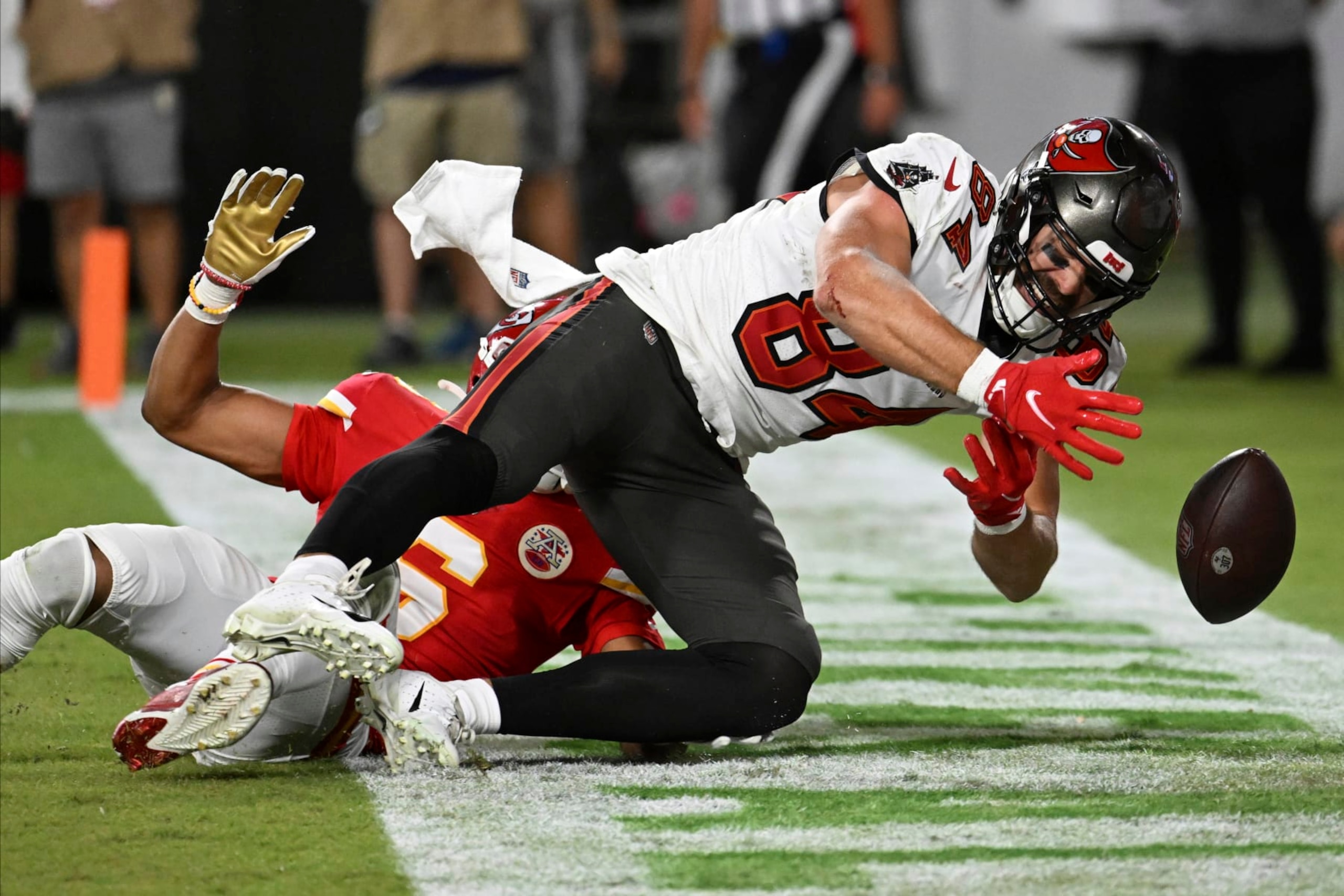

The way NFL teams handle concussions suffered by players during games has come under scrutiny in recent weeks, and the Tampa Bay Buccaneers have now found themselves under the microscope.
Bucs head coach Todd Bowles told reporters on Monday that tight end Cameron Brate was not checked for a concussion on the sideline before he re-entered Sunday night's game against the Kansas City Chiefs in the second quarter when he went down with an injury. It wasn't until halftime that Brate was placed in concussion protocol.
"[Brate] complained of shoulder discomfort," Bowles said. "He said nothing about his head on the sideline. Nobody called down. He was checked out three times. And he went back in until the end of the half. The concussion thing didn't come up until halftime."
TOP NEWS
.jpg?w=2560 "Chiefs Giants Football")
Mahomes Told Teammate to Leave Meeting

McCarthy Wins 1st Giants Start

Geno Explains Wilson Exchange
Once a player sustains a blow to the head, the league's "Concussion Game Day Checklist" goes into effect if the player shows signs of a concussion. There are multiple officials who can initiate the concussion protocol, but Bowles made it clear that no one did so.
"He complained of shoulder discomfort," Bowles said of Brate. "Nothing about his head. He was checked out three times. He just said give him a minute. Nothing came up. He went back in until the end of the half. At halftime, he started having symptoms. Obviously, they were delayed. He started complaining about that. They tested him, he’s in the protocol. We kept him out the rest of the game."
However, Bowles seemed to indicate that he wasn't aware that concussion protocol can be initiated even if the player doesn't report that he's suffering head trauma.
"He complained about his shoulder, not his head," Bowles said. "You can’t see a neurologist or talk about concussions if you’re only complaining about your shoulder. ... It was a noticeable hit. But again, it was on the shoulder. Nobody said nothing about the head. He got checked out three times. He said he just needed a minute for his shoulder to clear up, and that was it."
In the case that a player doesn't self-report, it's up to the Certified Athletic Trainer (ATC), the booth ATC, the team doctor, a game official, a coach, a teammate, the booth Unaffiliated Neurotrauma Consultant, or the sideline UNC to activate the protocol.
It may have taken until halftime for Brate to develop concussion symptoms, but any of those officials should have noticed something sooner. He was allowed to re-enter the game minutes after suffering the injury, which would have left him susceptible to a second head injury.
The Miami Dolphins were criticized for their handling of quarterback Tua Tagovailoa, who appeared to injure his head in Week 3 against the Buffalo Bills but was allowed to complete the game. The team said he was dealing with a back injury and cleared him for the Thursday Night Football game against the Cincinnati Bengals, but he suffered another blow to his head that caused him to be stretchered off the field.
It's starting to become clear that more needs to be done regarding player safety in the NFL.
.jpg?w=2560 "🚨 Week 8 AP Top 25 Poll")

.jpg?w=2560 "Baker Gets Glove From Rays 🧤")
.jpg?w=2560 "Updates from EVERY NFL Game 🏈")
