Peyton Manning Continues to be Confounded by the 3-4 Defense
To be fair to Manning, he doesn’t always struggle against the 3-4. But if you look at his worst playoff performances, it’s been against teams that run the 3-4.
What is it about the 3-4 that makes it so hard for the Colts offense, and in particular Manning and the offensive line, to be successful against it? To be fair, most quarterbacks struggle against the 3-4, it’s just a matter of degrees. Manning seems to struggle more than most.
Understanding the 3-4 and how it differs From the 4-3:
.jpg?w=3840 "Rams Browns Football")
.jpg?w=3840 "Jaguars Raiders Football")
.jpg?w=3840 "Cowboys Lions Football")
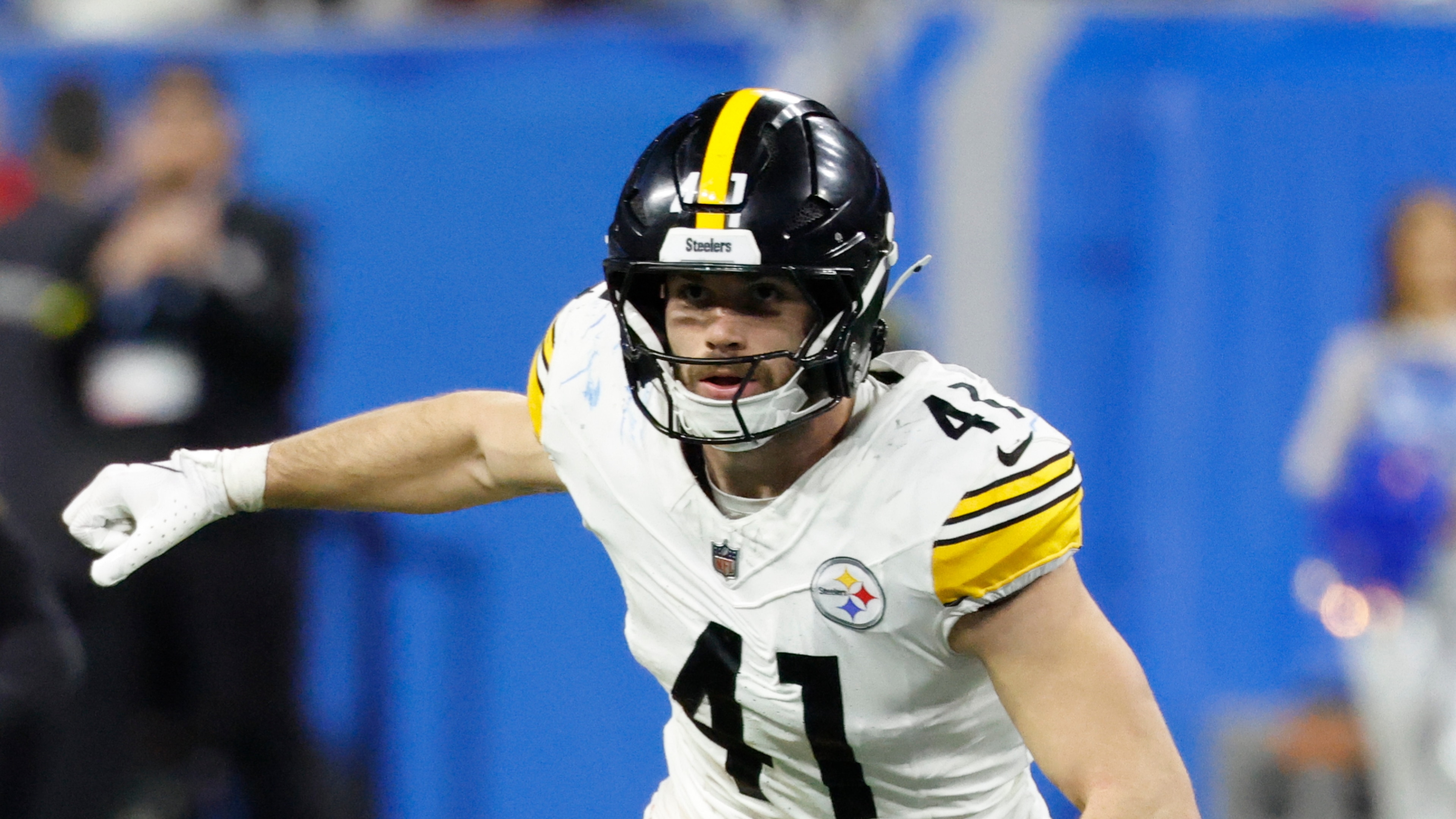
As the name implies, the 3-4 defense is comprised of three defensive lineman and four linebackers.
The Linemen:
The front three linemen are comprised of a nose guard and two defensive tackles. The nose guard is a huge player, weighing roughly 350 pounds. Not only does he have to be big, he has to be strong. His job is to take on the center and one or two of the guards simultaneously on every single play. Typically, a good nose guard is very hard to find. How many guys do you know that can take on three 300-plus pound guys in a fight?
Since talented nose guards are a rare breed when a team gets one, they pay him, and they pay him well. He is the anchor for the whole line. If he can’t control the center of the line, the whole system falls apart. Look no further then the San Diego Chargers to see what happens to a defense when a top-notch nose guard gets injured.
Depending on the scheme, the nose guard is responsible for controlling two gaps or one. The Patriots’ guard is a two-gapper, while the Chargers’ guard is a one-gapper.
The nose guard must be able to plug up the middle and make sure no running backs can make it through the A-gaps. His alignment is right in front of the center (which means he is playing a zero technique). When the ball is snapped, he must control both gaps, plus he must maintain his blocks. His job is to block the center and at least one of the guards; he must make sure that if the running back comes through one of the holes, he makes the tackle.
Also, he must make sure neither the center nor the guard gets through those gaps to the linebackers. Just like on a running play, he must sustain his blocks on the center and the guard on passing plays. His job is not to rush the passer, that’s what the linebackers are for. Instead, his job is to stand his ground, occupy the center and the guard, and not get pushed back into the linebackers.
The 3-4 also consists of two defensive ends whose jobs are similar to those of the nose guard. The ends are much bigger than the ends in the 4-3 defense; they typically weigh around 300 pounds. Their alignment is directly in front of the offensive tackles (in this case both defensive tackles are playing a six technique.) Their job, like the nose guard, is to cover two gaps.
In this case they are responsible for the B and C-gaps. If there is no tight end lined up next to the defensive tackle, he is responsible for blocking the outside edge. Again, they must hold their blocks; typically their responsibility is to keep the offensive linemen occupied and make sure no running backs get through the gaps they’re responsible for so the outside linebackers can rush the passer.
Before we move onto the linebackers, understand that in the 3-4 scheme all three DTs are responsible for every single gap on the line. Being a DT in a 3-4 system is a thankless job. When something goes wrong they get all the blame, but when they do something right nobody cares. They rarely get the big sack on the quarterback or any of the glory. These are really blue collar guys who don’t get the credit they deserve.
Linebackers:
The 3-4 defense has four linebackers: Two outside linebackers and two inside linebackers.
The two inside linebackers typically weigh around 240 pounds and must be very athletic. The two outside linebackers weigh somewhere between a linebacker and a defensive end. Because their weight is in between the two, you will sometimes hear them referred to as “tweeners.”
The inside linebackers are called upon to help in run support, as well as pass coverage and blitzing.
Even though the outside linebackers are bigger than the linebackers you will find in the 4-3 defense, they are still expected to be very athletic and very fast. The speed and athleticism of the outside linebackers makes it very difficult for quarterbacks to roll out of the pocket, or running backs to run to the outside.
The original reason the 3-4 was created was it was hard to find two athletic defensive ends and two large defensive tackles in the draft. The other reason was the development of running backs. As they became faster and shiftier, it made it much harder for the heavier defensive ends to chase them down.The answer to all of this was the 3-4.
Great, now a defense that can stop the run has been created. There is only one problem. The 3-4, as it was originally run, had a hard time in pass coverage. It was very hard for the three defensive tackles to collapse the five-man offensive line. So what was the answer to this problem? Dick LeBeau and the Zone Blitz.
Unfortunately for Peyton Manning, the answer to the problem became the problem that he, Tom Moore, and Howard Mudd have struggled to find an answer to.
Why Peyton and the Offensive Line Struggle Against the Modern Version of the 3-4:
One of the reasons Manning—and a lot of other quarterbacks—struggle against the 3-4 is they don’t see it as often as they do the 4-3. This is a huge factor, because the more you play against a certain type of defense, the better you get at it.
However, the biggest reason is you can do so much with the 3-4 to disguise coverages, and confuse the quarterback and the offensive line. It is much more versatile than the 4-3 in this area.
The first problem the offensive line faces when playing the 3-4 is they don’t know which outside linebacker is rushing the passer. Compare this with the 4-3 defense; the majority of the time the four down-linemen are lined up in a certain technique, and the offensive lineman are told by Jeff Saturday what their blocking assignment is.
In Sunday’s game, not only did the 49ers confuse Manning and the line—which linebackers were rushing the passer—but they also shifted their defensive tackles around. On one play, the nose guard was playing a zero technique (lined up directly over the center), while the other two defensive tackles were lined up directly in front of the strong-side guard and tackle. This left the weak side completely uncovered.
When you see the defense line up like this, how do you, as an offensive lineman, figure out your protection schemes? Who is coming on the weak side? Is it going to be one linebacker, two linebackers? Are they coming off the edge? Is one coming off the edge and the other attacking the A or the B-gap? Are they bringing an extra inside linebacker or maybe a safety on the weak side, creating an overload blitz? Hopefully, you are starting to see why this scheme is so difficult to defend.
On another down in Sunday’s game, the 49ers stood all of their defensive lineman up in two point stances, and had them just walk around the line. This creates complete confusion on the offensive line. Now you have no clue who is coming from where, so again, your protection schemes are much harder to set up.
Furthermore, the amount of blitz packages that can be run out of this defense are endless. Again, the reason they are so successful is you don’t know where the pass rush is coming from. On top of that, when you start bringing safeties and defensive backs on blitzes, or showing blitz and then having them drop back into coverage, you start to confuse the hell out of the offense. Instead of the offense attacking the defense, they’re put in the odd position of trying to protect themselves from it.
Like any defense, the 3-4 has its disadvantages. It can be beat by going to a spread formation. Since the base 3-4 formation has four linebackers, the best way to attack it is to go four or five-wide. Inevitably, this creates a mismatch between a speedy wide receiver and a slower linebacker.
Another problem is once you go to a spread formation, you have to drop your linebackers into coverage. This can open up the inside running game. If the defensive coordinator decides to start zone-blitzing to stop the pass, you risk giving up the big play. So, like any defense, it can be beaten.
In general, the 3-4 is much better against the run, and the 4-3 is much better against the pass.
As far as Sunday’s game goes, even though Manning had a bad game, when he got into a little bit of a groove in the second half, he was able to pick apart the 49ers' zone defense. However, because the 49ers were able to get pressure with their front seven and not have to blitz much, they were able to play a lot of cover-3, which kept Manning out of the end zone.
Here is the million-dollar question: Why does a quarterback as cerebral and talented as Manning play so inconsistently against the 3-4?
There are times, like last year against the Steelers, where he played brilliantly. Then there are other occasions, like last Sunday, when he has an awful game against a 49’ers team who is good on defense, but are nowhere near the level of the Steelers in terms of the complexity of their scheme.
Even more frustrating than the questions posed above are the lack of explanations as to why. Sure, we can all break down film and show examples of where things went wrong, but I have yet to hear anyone come up with a sound explanation as to what the mental block Manning and the coaching staff have when it comes to playing more consistently against this defensive scheme.
.png?w=3840 "Rams Bears Football")

.jpg?w=3840 "MLB Draft Grades 🔢")