
The 2016 Stanley Cup Playoff All-Postseason Team
For the Pittsburgh Penguins, it's been a great year. For the other 15 playoff teams, there's always next year.
Only two teams averaged more than three goals per game this spring, and it's no coincidence that those two landed in the Stanley Cup Final—the Penguins and San Jose Sharks.
While goaltending and defense were prominent in the playoffs, there were plenty of highlight-reel plays made by extremely talented people.
This list, however, isn't about one or two individual bursts of skill. The 2016 Stanley Cup Playoff All-Postseason Team looks at the body of work of all who took part. The more they played, the higher their point totals and the better the chances of their inclusion in the top three teams.
It goes beyond their point totals, of course. Leadership traits combined with their statistics and the role they played with their teams are taken into account here.
We've selected three teams with a center and two wingers, regardless of which side they play, a pair of defensemen and a goaltender. There are some honorable mentions as well.
Click ahead to see the first-, second- and third-team postseason all-stars.
Honorable Mentions
1 of 14
There were plenty of deserving performers who didn't make it past the first couple of rounds or fell short of the main selections because there were so many great players involved in the conference finals and the Stanley Cup series.
This is a list of players who were at least in consideration based on their production and value to their respective teams.
D Kevin Shattenkirk, St. Louis Blues: Finished sixth in scoring among defensemen with 11 points in 20 games, including six first assists—second-most at the position this spring.
D Roman Josi, Nashville Predators: Helped the Preds complete an awesome upset in the first round over the Anaheim Ducks. Totaled nine points in 14 games and averaged nearly 28 minutes a night.
D Brian Dumoulin, Pittsburgh Penguins: The first Maine native to win the Stanley Cup saw his role expand during the postseason. His opening goal in Game 6 in the final series got the Pens off to a solid start.
F Tyler Johnson, Tampa Bay Lightning: Johnson finished 10th in league scoring with 17 points in 17 games for the Bolts, teaming with Nikita Kucherov to form a deadly tandem. He was one of just 16 players to average a point a game while suiting up for at least four.
F Jamie Benn, Dallas Stars: Finishing 12th in the point standings, Benn was a force for the Stars and helped them bounce from a non-playoff position to the brink of the Western Conference Final. They fell just short, but imagine what Benn might have done with a healthy Tyler Seguin.
F Jonathan Drouin, Tampa Bay Lightning: Redemption was the word of the spring for Drouin. The Bolts needed production in the absence of Steven Stamkos, and Drouin came through with five goals and 14 points in 17 games, flashing his dynamic playmaking abilities along the way.
G Brian Elliott, St. Louis Blues: He finished third among all goalies with nine wins in the postseason, and his .921 save percentage ranked sixth. He backstopped the Blues into the Western Conference Final.
3rd-Team Selections
2 of 14
Winger: Vladimir Tarasenko, St. Louis Blues
Tarasenko finished tied for 12th in scoring with 15 points and averaged 18 minutes a game by the time the Blues were bounced in the Western Conference Final. Early sheltering against the Chicago Blackhawks sparked some controversy over his usage, but he saw a steady climb as things progressed. Nine goals in 20 playoff games is a nice run, and he established himself as a top forward this spring.
Center: Joe Thornton, San Jose Sharks
Jumbo Joe made magic happen with linemate Joe Pavelski and finished with 21 points in 24 games for the Sharks. They fell short of the franchise's first Stanley Cup but did make their first appearance in the final series, thanks in large part to Thornton's playmaking abilities.
His 18 assists were second-most behind teammate Logan Couture, and along with Couture, he gave the Sharks a solid one-two punch at center.
Winger: David Backes, St. Louis Blues
All this guy seemed to do was score big goals. He drove up his status as a big-ticket pending unrestricted free agent with a seven-goal, 14-point spring that saw him lead the Blues all the way to the Western Conference Final after a few years of playoff disappointment. Backes scored three game-winning goals, including a pair in overtime, and was a driving force behind the Blues' charge.
Defenseman: John Carlson, Washington Capitals
Carlson was a huge presence on the Caps blue line, producing at a point-per-game level through two rounds of play. He scored five times and had 12 points in 12 games, finishing two goals shy of first among blueliners despite playing half as many games as leader Brent Burns.
Carlson averaged almost 27 minutes per game and was a force to be reckoned with on the power play, scoring four of his five goals and eight of his dozen points on the man advantage.
Defenseman: Alex Pietrangelo, St. Louis Blues
Pietrangelo was a workhorse for the Blues, playing nearly 29 minutes per game despite the fact the Blues have a very deep defensive group. He was strong offensively with two goals and 10 points in 20 games, but he made more of an impact as a shutdown defender tasked with keeping the Chicago Blackhawks and Dallas Stars' top players in check on the way to the Western Conference Final.
Goaltender: Braden Holtby, Washington Capitals
The Capitals didn't make it out of the second round, but it wasn't because of a lack of effort from Holtby. The goaltender led all others at his position in both save percentage (a whopping .942) and goals-against average (1.72) while starting all 12 games his team played. Incredibly, the Caps advanced past the Philadelphia Flyers despite scoring just 14 times (six at even strength) in the six-game series.
2nd-Team Winger: Carl Hagelin, Pittsburgh Penguins
3 of 14
By the numbers
Carl Hagelin finished 11th in scoring with six goals and 16 points in these playoffs.
Considering the way he bounced from the New York Rangers to the Anaheim Ducks and then ended up with the Pittsburgh Penguins in the past year, few would have expected that kind of performance from Hagelin this spring.
He found great chemistry with Phil Kessel and Nick Bonino, and the trio combined for 56 points in the playoffs.
Why he's here
His speed set him apart in the Stanley Cup Final, where he helped the Penguins circle the Sharks with fleet feet.
Hagelin teamed with Kessel and Bonino to form one of the deadliest lines of the entire playoffs. He and Kessel had four points apiece, only behind defenseman Kris Letang for the Penguins.
Hagelin scored just one point on the power play, so most of his damage was done in five-on-five play. That contributed to his solid plus-nine rating. The HBK line always seemed to be on the attack and proved to be very difficult to contain.


2nd-Team Center: Logan Couture, San Jose Sharks
4 of 14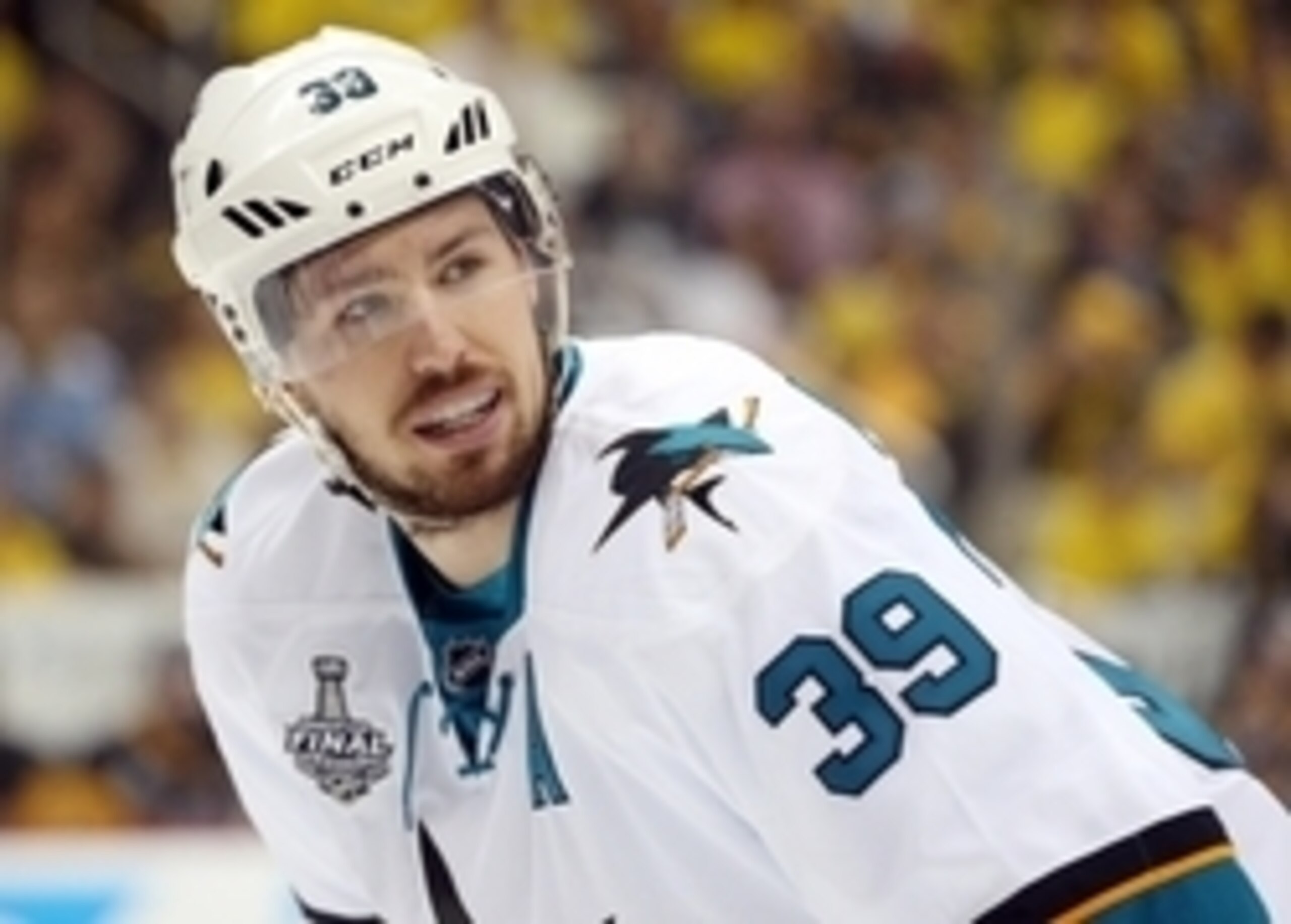
By the numbers
It's impossible to overlook the numbers Logan Couture posted for the Sharks this spring. He became just the fourth player in the last 20 years to hit the 30-point mark in a single playoff, joining Sidney Crosby and Evgeni Malkin from 2009 and Danny Briere of the Philadelphia Flyers in 2010.
Couture led all NHL scorers with 10 goals and 20 assists, playing for an average of more than 19:20 per night.
Why he's here
If the Sharks had somehow rebounded from a 3-1 series deficit, Couture would have been the likely Conn Smythe winner. He finished six points ahead of teammate Brent Burns in the scoring race and tied with Pittsburgh Penguins sniper Phil Kessel for third in goal production.
He is overshadowed on his own club by the likes of Joe Thornton and Joe Pavelski, along with Burns, but Couture may be the most well-rounded of the bunch. He not only puts up the offensive numbers but contributes with blocked shots and big faceoff wins.
Incredibly, he scored 13 of his points this spring in elimination contests. He had three-point games to close out victories in all three rounds the Sharks won and then added three more in the Game 5 win that staved off elimination against the Penguins. He scored the lone Sharks goal in Game 6.
2nd-Team Winger: Nikita Kucherov, Tampa Bay Lightning
5 of 14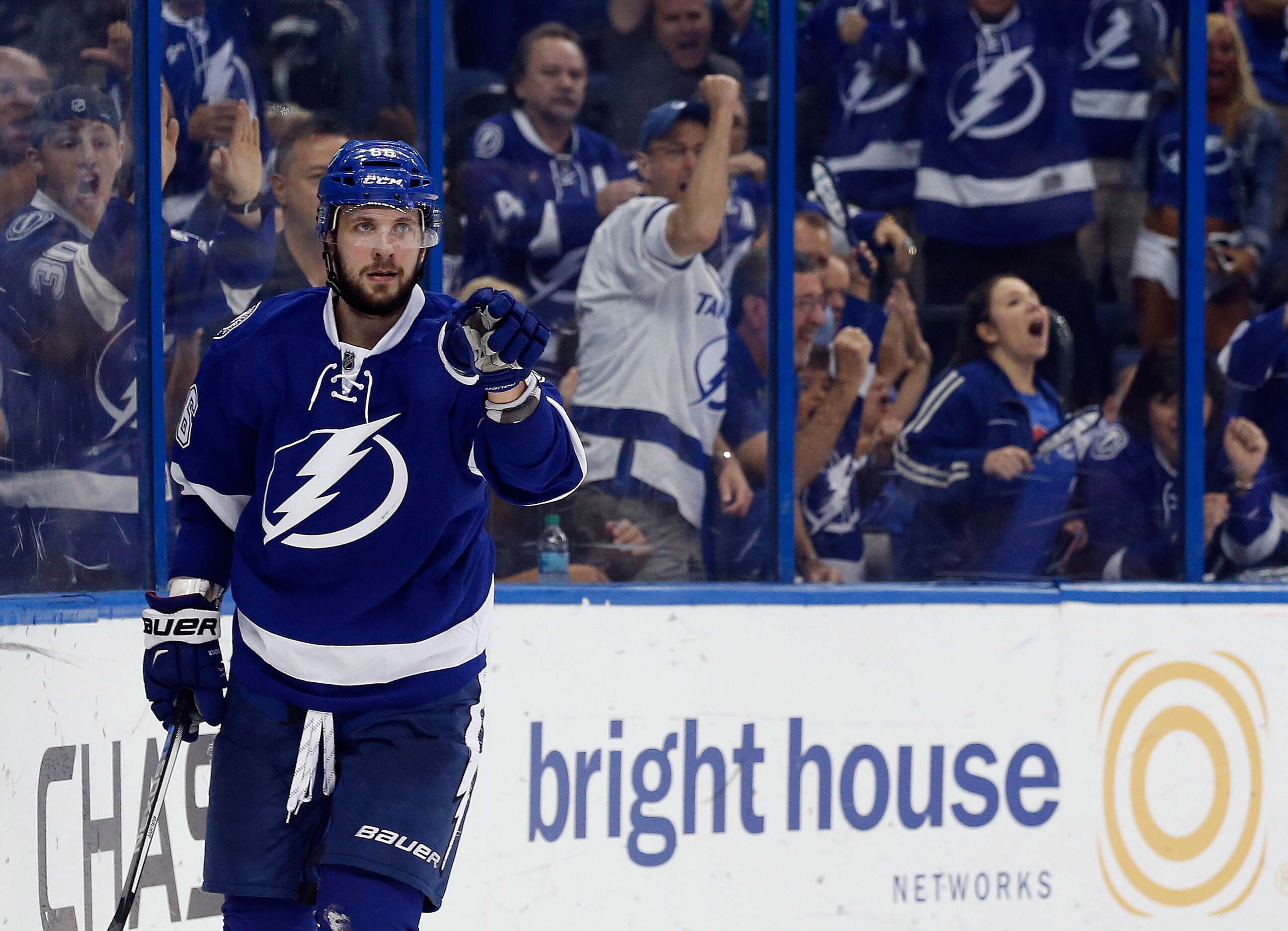
By the numbers
Despite not playing in the Stanley Cup Final, Nikita Kucherov finished second in goals and tied for sixth in the scoring race with Sidney Crosby, who played seven more games.
Kucherov's 11 goals and 19 points led the Tampa Bay Lightning and topped last year's impressive 10-goal, 22-point performance in 26 games.
This time around, he finished with a plus-13 rating, which was one off Marc-Edouard Vlasic's pace atop the NHL.
Why he's here
Kucherov is such a dynamic playmaker that even without Steven Stamkos, the undersized Russian was able to find space against other teams' top defensemen.
He scored overtime-winning goals for the Lightning last spring against the Montreal Canadiens and New York Rangers. This year, he scored massive third-period tallies to keep his team rolling.
In Game 3 against the New York Islanders in the second round, Kucherov tied the game with 39 seconds left. He tied Game 4 in the third period a few nights later, and the Bolts won both games in overtime.
2nd-Team Defenseman: Marc-Edouard Vlasic, San Jose Sharks
6 of 14
By the numbers
The most impressive aspect of Marc-Edouard Vlasic's statistical resume from the 2016 Stanley Cup playoffs is his league-leading plus-14 rating. The San Jose Sharks defender is dominant in the defensive zone and contributes enough offense to quietly rate among the leaders.
The 29-year-old netted just one goal this spring but added 11 assists to finish with 12 points in 24 contests. His four primary assists were the third-highest total among blueliners.
Why he's here
There is a reason the 6'1" blueliner nicknamed Pickles finds himself in the presence of much bigger names in international competitions like the Olympics. He is one of the best in the world at what he does with his ability to shut down some of the most talented forwards in the game.
In the Stanley Cup Final, Sharks head coach Peter DeBoer matched him against Sidney Crosby, and Vlasic fared well against the Conn Smythe winner for the most part. Crosby did get a pair of helpers in the clinching game but had no goals on the series and just two assists through the first five games against Vlasic.
Team Canada general manager Doug Armstrong, who named Vlasic to the World Cup team for this fall's tournament, called the Sharks defenseman a quiet assassin when talking to Michael Traikos of the National Post.
"He kills plays as well as anyone defensively in the game," Armstrong said. "He's a guy that has mastered the nuances of the game. I like to say that he's a quiet assassin. He quietly goes about his business and kills you."
2nd-Team Defenseman: Victor Hedman, Tampa Bay Lightning
7 of 14
By the numbers
Victor Hedman finished third in scoring among defensemen with four goals and 10 assists for 14 points through 17 games. His point-per-game average of 0.82 was also third-best this spring, with only Brent Burns of the San Jose Sharks and John Carlson of the Washington Capitals ahead of him with point-per-game paces.
Hedman logged a lot of important minutes, averaging 27:26 per contest, which was good for fourth among all players in the postseason. He did so against the other teams' top players and still finished with a plus-two rating. Only 25 blueliners who played at least 12 games were in the black in that category.
Why he's here
Hedman shut down John Tavares in the second round in as memorable a head-to-head matchup as any in these playoffs. The New York Islanders star tallied just a goal and an assist in the five-game series, with both points coming in the opening contest.
The 6'6", 223-pound Hedman staked his claim as one of the best two-way defenders in the league with wins over the Detroit Red Wings and Islanders before meeting his match in the Pittsburgh Penguins.
Offensively, Hedman was especially brilliant against the Isles. He scored four goals and eight of his points in the second-round series. He has such great vision that when he joins the rush, it makes the Lightning tough to predict and stop on the fly.
2nd-Team Goaltender: Martin Jones, San Jose Sharks
8 of 14
By the numbers
Martin Jones went neck-and-neck with fellow first-year playoff starter Matt Murray and finished tied with the Penguins goaltender with a .923 save percentage. Jones' mark was good for fifth among netminders this spring. He was also just behind Murray in GAA up near the top of the leaders list. Jones' 2.16 GAA put him fourth just behind Murray's 2.08.
The Sharks' prized offseason acquisition led the way with three shutouts in his 24 starts.
Why he's here
The Sharks weren't completely sure what they had in Jones after plucking him away from the division rival Los Angeles Kings. They pulled off a sneaky trade via the Boston Bruins that flipped a first-round pick to the B's after they grabbed Jones from the Kings as part of the Milan Lucic deal.
This spring, he showed the Sharks were shrewd by standing tall between the pipes and helping the franchise to its first appearance in the Stanley Cup Final in history.
He was tested with plenty of pressure and didn't get a lot of offensive support in the final series but was at his best in the first of the Penguins' elimination opportunities in the Final, making 44 saves to force a Game 6 at home in San Jose.
1st-Team Winger: Joe Pavelski, San Jose Sharks
9 of 14
By the numbers
Joe Pavelski was the definition of clutch for the San Jose Sharks this spring. He led the way with 14 goals in the playoffs. Four of them were game-winners—enough to lock up an entire series on his own.
The NHL's goal-scoring leader is one of just 10 forwards to play a minimum of 12 playoff games and average at least 20 minutes per contest.
He finished third in scoring this spring, and although he had a quiet Cup Final series, he was a huge contributor in big moments along the way to help the Sharks reach the Final for the first time in franchise history.
Why he's here
Pavelski and Joe Thornton had great success together and ultimately made team history, as mentioned above. His leadership in what might have been an awkward position while still playing with a pair of veteran players who had previously been stripped of the captaincy—Thornton and Patrick Marleau—was exactly what the team needed.
Small, smart and skilled, the 5'11" Pavelski's defining attribute is determination. He risks bodily harm by planting himself in front of the net in hopes of tipping a puck past the goalie. He competes with much larger defensemen in the corners and refuses to lose a battle without a fight.
His shot has proved lethal, and his ability to get it away quickly is one of the biggest reasons he led the way in goals scored despite great competition in that category this spring.
1st-Team Center: Sidney Crosby, Pittsburgh Penguins
10 of 14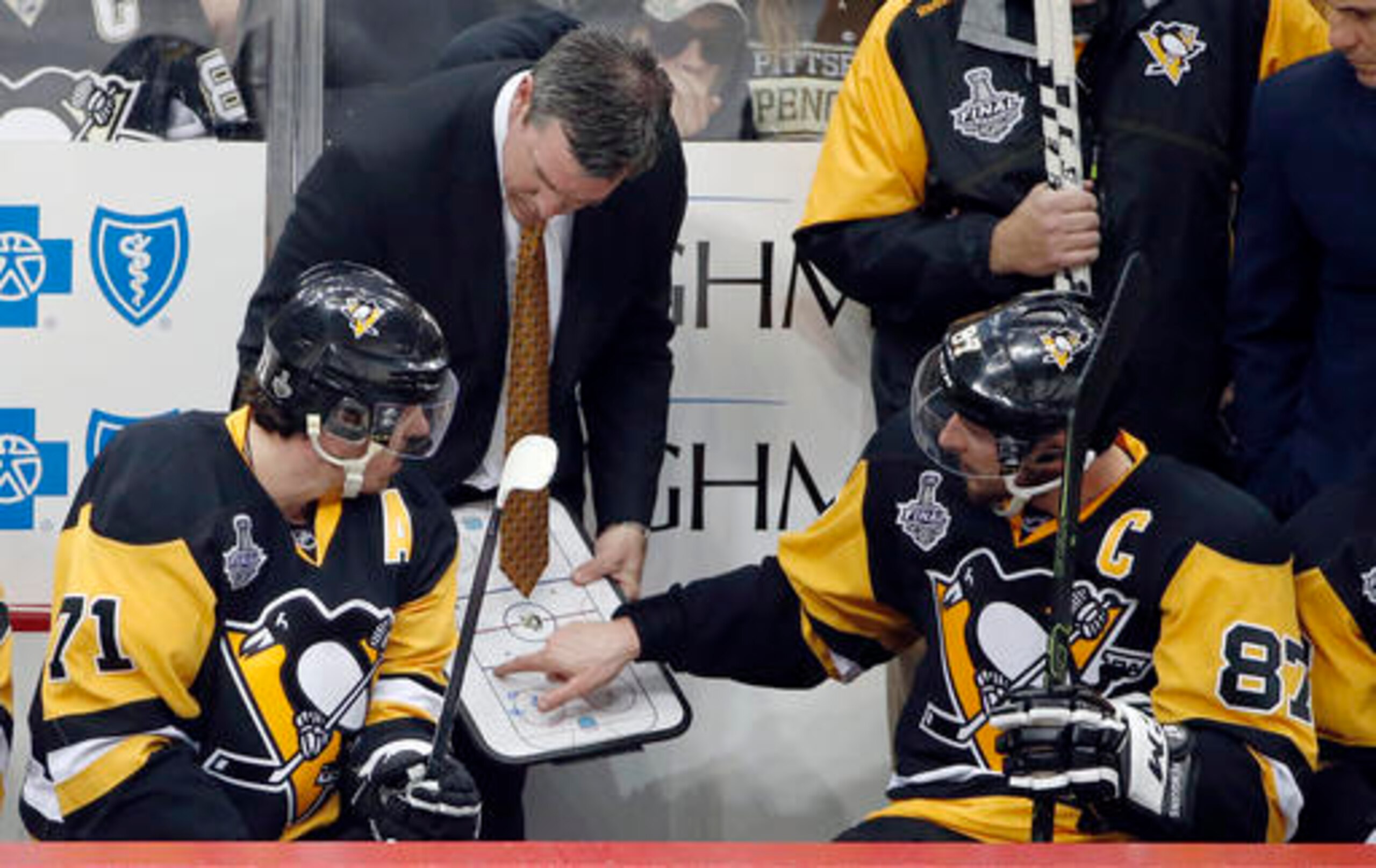
By the numbers
Sidney Crosby had a pair of assists in the Stanley Cup-clinching game, bringing his totals to six goals, 13 assists and 19 points in 24 games to finish sixth in scoring. He averaged more than 20 minutes a night and spent at least the same amount of time on the bench drawing up plays and acting like an assistant coach.
The Penguins captain was dominant at both ends. He was out there in every important situation.
Why he's here
Crosby was the best overall player in these playoffs, and he earned the Conn Smythe Trophy after bringing home his second Stanley Cup as captain of the Pens.
There were a couple of plays that summed up his determination and dedication. One was an incredible goal he scored on an individual rush through three Tampa Bay Lightning defenders in the Eastern Conference Final. The way he brushed each of them off in succession to score the winning goal in the third period was inspiring.
In the final game of the series against the San Jose Sharks, Crosby showed his defensive prowess with a key shot block in the dying minutes of the Cup clincher and then sent a pass to linemate Patric Hornqvist for the empty-netter that sealed the victory in Game 6.
1st-Team Winger: Phil Kessel, Pittsburgh Penguins
11 of 14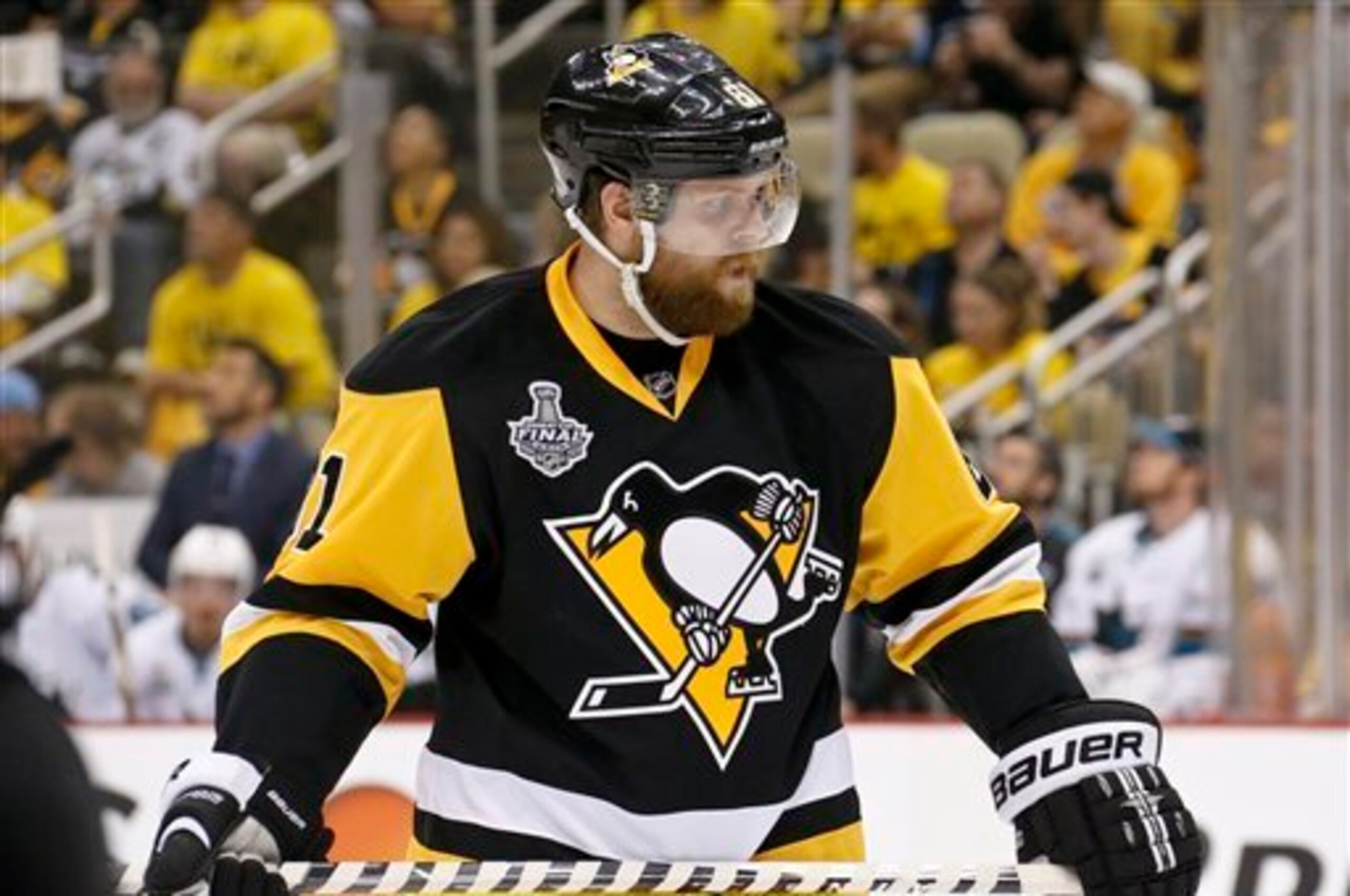
By the numbers
Phil Kessel was the Pittsburgh Penguins' leading scorer with 10 goals and 22 points through 24 games and helped the Pens' so-called third line rise to prominence as one of the most dangerous in these playoffs. Kessel, Nick Bonino and Carl Hagelin were consistent as the HBK line.
Kessel led all players with 98 shots and helped the Pens control the puck more often than not. His 10 goals were good for third in the postseason, and half of them came on the power play—an area the Penguins used to take control of playoff games thanks to Kessel's 11 points in those situations.
Why he's here
Shaking off his underwhelming regular season (by his standards and capabilities), Kessel was the league's most fear-inducing sniper in these playoffs. If not for a few crossbars and posts along the way, Kessel might have run away with the lead in goals.
As it stands, he landed third behind Joe Pavelski and Nikita Kucherov. That might make you wonder why Kessel is on a first-team list given that a player (Kucherov) produced more in fewer games. The answer is simple: Without Kessel, the Penguins don't make it past Kucherov and the Tampa Bay Lightning in the Eastern Conference Final.
Penguins reserve goalie Jeff Zatkoff agreed, according to the Associated Press (via the Chippewa Herald). "We're not here if it's not for him," Zatkoff said. "He's [risen] to the occasion. It's just something you've grown to expect from him now. These types of games, you know he's going to deliver."
Kessel scored one goal and had four points in the final series.
1st-Team Defenseman: Brent Burns, San Jose Sharks
12 of 14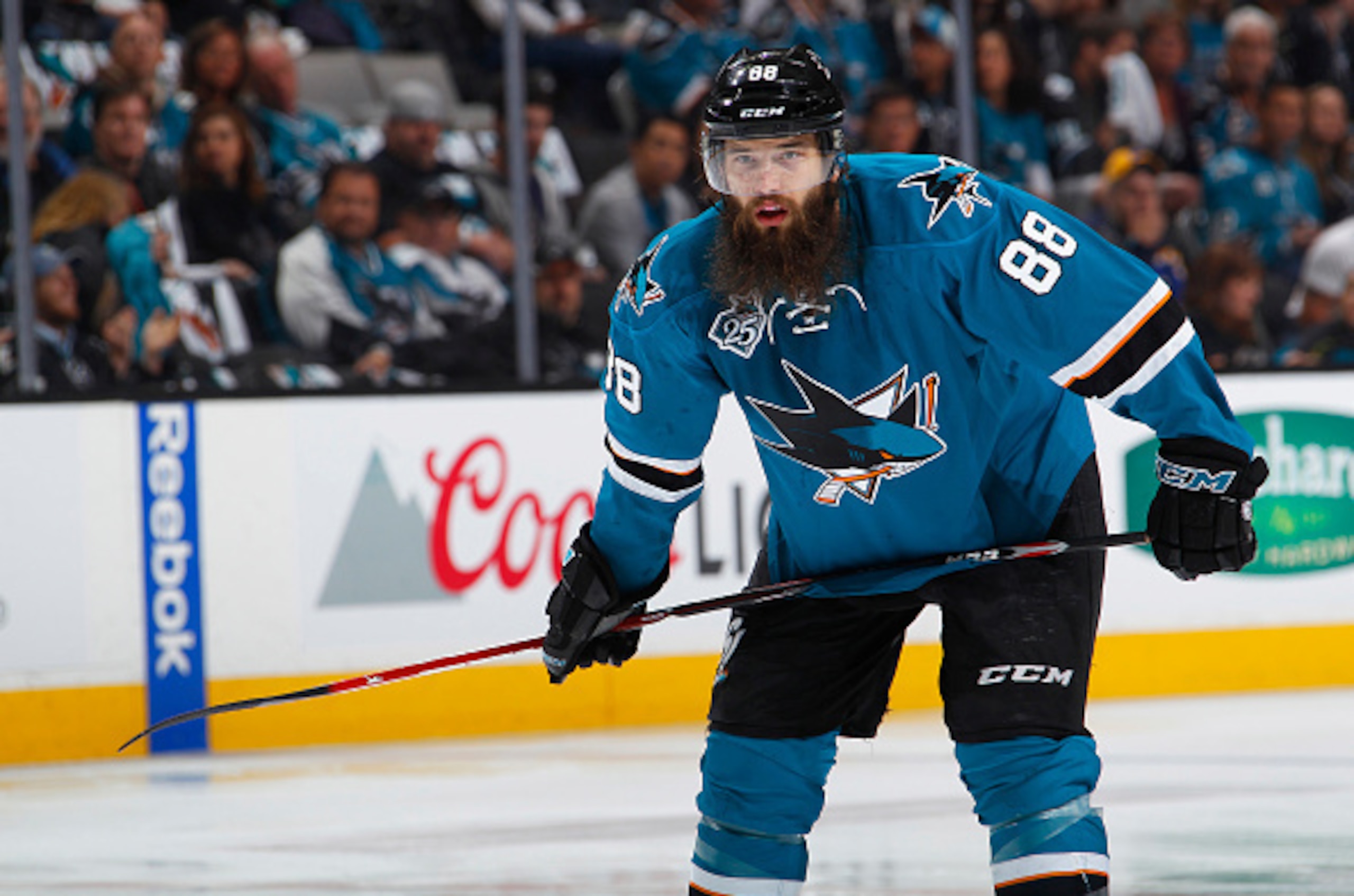
By the numbers
Brent Burns didn't play the most minutes, but he hit the ice in every situation and played a very meaningful average of more than 25 a night. Fewer than 20 of those were at even strength, and his impact on special teams was evident—Burns had the second-highest totals with four power-play goals and six assists on the man advantage.
He dominated all other defensemen with seven goals, 17 assists and 24 points in 24 games but didn't allow his point production to interfere with his play in the defensive zone. Burns was third among all players in the postseason with a plus-11 rating and was second on the Sharks behind Marc-Edouard Vlasic.
Why he's here
Beyond the obvious effect of his offensive contributions are the things that inspired his team throughout the playoffs. Burns' physical play created an energy that trickled through the Sharks lineup. They may not have the speed of the Pittsburgh Penguins, but as Burns proved in Game 5, his ability to get under the skin of a guy such as Sidney Crosby and slow opponents down with his body made a difference.
When he joins the rush from the back end, the Sharks are as dangerous offensively as any team in the league. His massive shot creates all kinds of opportunities, and he proved worthy of the Norris Trophy nomination by following up a stellar regular season with an incredible playoff performance.
1st-Team Defenseman: Kris Letang, Pittsburgh Penguins
13 of 14
By the numbers
The slick-skating and puck-moving Kris Letang finished second in playoff scoring among defensemen with three goals and 12 assists for 15 points.
Many of those came in key situations—including the first assist on Nick Bonino's game-winning third-period goal in Game 1 of the Stanley Cup Final series. On that play, Letang battled Brent Burns in the corner and fed Bonino with a perfect pass in front of the net late in the third period to help the Penguins get off to a winning start to the series.
Letang also finished the series with the Cup-clinching goal in the second period of Game 6 in San Jose.
He averaged nearly 29 minutes per game, leading all players in the postseason while suiting up for both special teams units and finding himself on the ice in the opening minutes and dying seconds.
Why he's here
When it comes to the Pittsburgh Penguins defense, the drop-off in talent, experience and reliability is steep behind the one star on the blue line. That leader and game-changing player is Letang. His responsibility on the back end increased significantly when Trevor Daley broke his ankle during the Eastern Conference Final.
Letang racked up massive minutes, and although his offensive numbers aren't as high as those he posted in the regular season (finishing third in scoring among defensemen despite playing just 71 games), he was the key shutdown defender in every series. That culminated against Joe Thornton and Joe Pavelski in the Stanley Cup Final, and Letang helped limit the Sharks' dynamic duo in a big way.
Penguins head coach Mike Sullivan summed up Letang's importance before Game 6 of the Final:
"Tanger is invaluable. He just plays so many important minutes for us and in so many situations. He's an elite defenceman. I think he’s one of the top defencemen in the league. ...
His offensive play I think speaks for itself. You can see it in his numbers, in his performance. His play away from the puck, how he helps us defend in our end zone, kill penalties, play those kind of minutes for us, those are underrated by a lot of people — (but) certainly not by his coaching staff.
"
1st-Team Goaltender: Matt Murray, Pittsburgh Penguins
14 of 14
By the numbers
Matt Murray was among the top goaltenders statistically regardless of the number of games played. Of course, he did end up playing the second-most of any in the league in the playoffs with 21 from the 22-year-old.
His .923 save percentage was third-best, as was his 2.08 GAA.
He played all but three games for the Penguins this spring. He missed two while recovering from a late-season concussion and was on the bench for just one the rest of the way once he returned.
Why he's here
Incredibly poised for such a young player with almost no NHL experience before the playoffs began, Murray kept his cool the entire way through the process and finished with 15 wins to tie the rookie record among goaltenders.
That puts him in Ron Hextall and Patrick Roy's company, which says a lot about what kind of player he could become if this sample size translates into a long career with the Penguins.
His ability to bounce back from a bad goal or performance was impressive, and Penguins coach Mike Sullivan predicted a rebound after a Game 5 loss to the Sharks:
"If one goes in that he thinks he should have had, he has the ability to stay in the moment, try to make the next save. For him to show that type of an attribute at such a young age, it usually takes players a few years to acquire that type of mental toughness where your confidence doesn't get shaken or your performance doesn't get influenced by some of the adversity that you go through throughout the course of a game or from game to game.
"
.jpg?w=2560 "Rams Seahawks Football")

.jpg?w=2560 "Bears to Give All-Pro OT $116M")

.jpg?w=2560 "Falcons LB May Have Torn ACL")
.jpg?w=2560 "Punch Thrown at Titans Camp")