

Ultimate Guide to NHL Free Agency 2015
Let the Matt Beleskey sweepstakes begin!
No, wait, that’s not going to inspire enthusiasm. Let’s try this again.
Enter now for your chance to win Johnny Oduya!
TOP NEWS
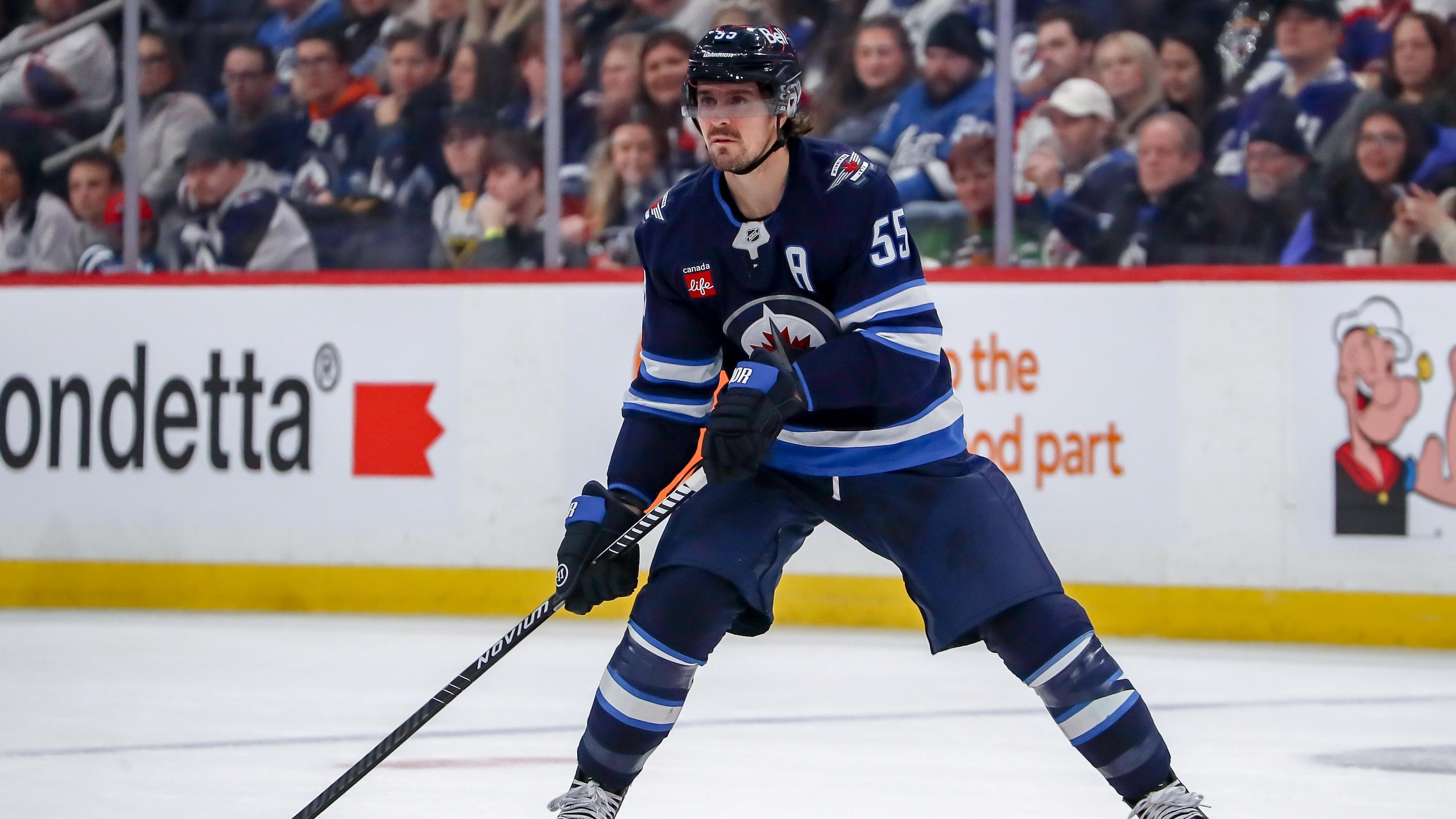
Mark Scheifele Landing Spots 📍
Ranking Top 10 NCAA Men's Hockey Players for 2026-27 Season

Trade Block Big Board for October
Boy, this isn’t all that exciting.
Well, no matter how you look at it, when the NHL’s free-agency period opens Wednesday, there will be zero names available that are worthy of “star” status. Thanks to teams signing their best players to long-term deals before they ever reach the open market, we are left with second- and third-tier players looking for new contracts.
This year’s crop of unrestricted free agents might be the least impressive since the NHL moved to a salary-cap system a decade ago.

Goaltender Devan Dubnyk, arguably the top UFA, agreed to a six-year contract Saturday to remain with the Minnesota Wild.
Two pending UFAs—center Carl Soderberg and goaltender Antti Niemi—had their rights traded before the start of free agency. Soderberg agreed to a five-year deal with the Avalanche and Niemi signed for three years with the Stars.
Now that the air has been thoroughly drained from your tires, prepare to have them inflated by the excitement provided by restricted free agents and trades, the sometimes-forgotten part of July 1.
Offer sheets are about as rare as Edmonton Oilers playoff appearances, but just their threat can create havoc in the form of big deals and trades.
Throw in the fact that some cap-strapped teams need to trade expensive players to become cap-compliant, and July 1 can be one of the crazier days on the NHL calendar.
Allow us to guide you through the ins and outs of free agency with a look at the (relatively) big names on the market, the RFAs who could expect sizable contracts or offer sheets, and the high-priced players who may be cap casualties.
Who Are the 5 Best Available Unrestricted Free Agents?
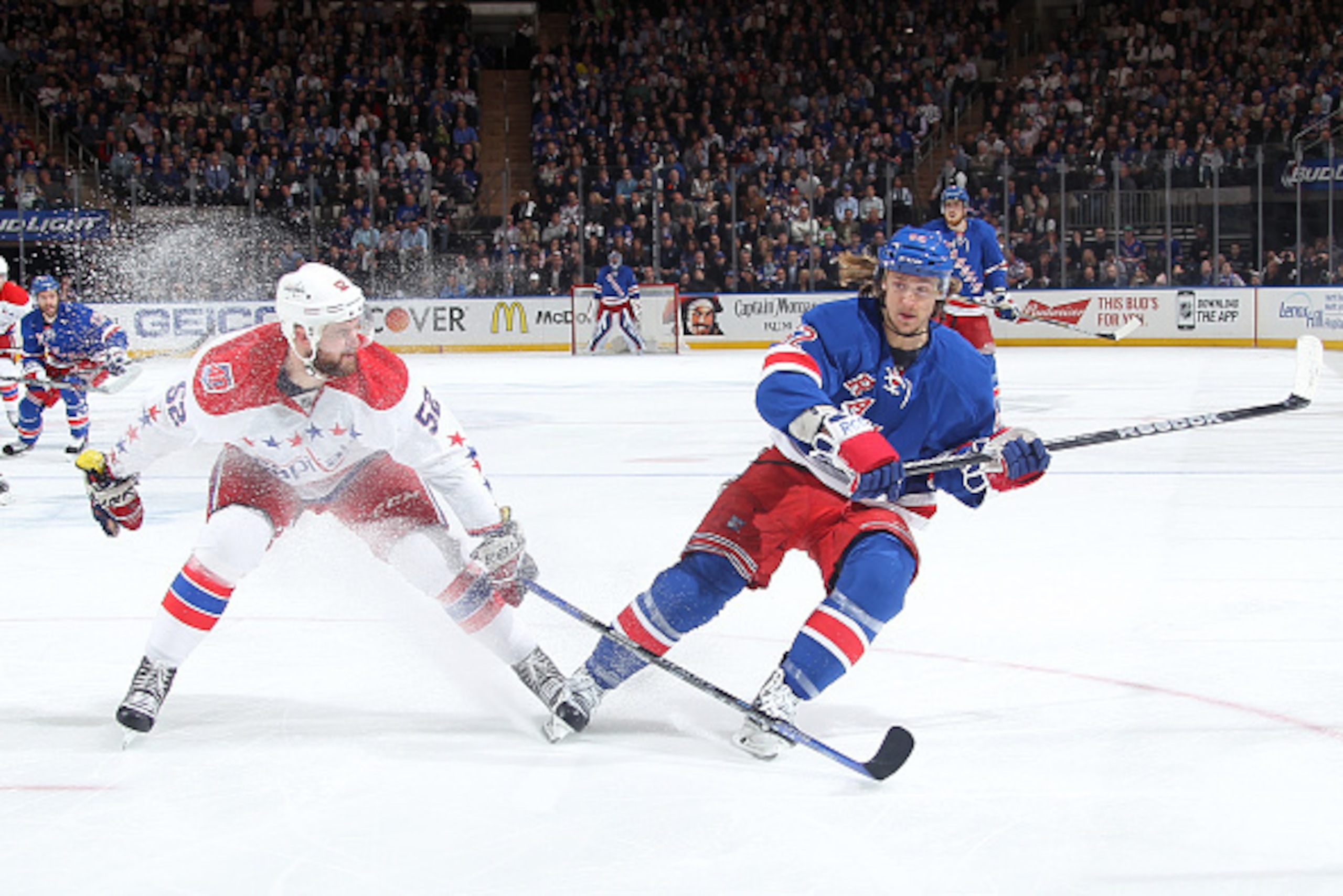
If you’re looking for a broader list, we have the top 30 available UFAs for your perusal here. If you want to know about the best of the bunch, these are the five players likely to receive the biggest paydays:
1. Mike Green, defenseman: The 29-year-old is the highest-scoring defenseman available, as he had 10 goals and 45 points last season. Chances are Green will go to sleep on the night of July 1 as the newly signed player with the biggest contract among free agents. And good for him, because gas for his Vespa isn’t cheap.
2. Cody Franson, defenseman: If there’s one player with a chance of earning a bigger deal than Green's, it’s Franson. Green amassed most of his points while playing on a bottom pairing. Franson played mostly top-pairing minutes with Toronto as he gathered six goals and 32 points in 55 games. But he wasn’t the same after a trade to Nashville with just one goal in 23 games, and that could hurt his value.
3. Andrej Sekera, defenseman: Yes, another defenseman. Only two free-agent forwards scored at least 20 goals last season, so blueliners should see the most action. According to Stats.HockeyAnalysis.com, Sekera has been a solid puck-possession player, and he was worth a first-round pick at the trade deadline in February. At 29, he’s probably going to get a five-year deal from a team looking for a top-four defenseman.
4. Justin Williams, right winger: It will be interesting to see what three Stanley Cups and a Conn Smythe Trophy are worth in free agency. Williams’ game slipped a bit last year at age 33, but a full offseason after 11 playoff rounds in three years should do wonders for his performance. He could sign a big deal or opt for something smaller if it puts him with a Cup contender.
5. Matt Beleskey, left winger: Only Beleskey (22 goals) and Martin St. Louis (21) cracked 20 goals among this year’s free agents. Beleskey is 27 years old and had eight goals in 16 postseason games, which should do wonders for his value. It’s likely that Beleskey, who had 21 total goals in his previous three seasons, will be free agency’s highest-paid forward.
Can Free Agency Really Make a Difference?

Sort of. Yes and no.
The last four Stanley Cup champions—the Blackhawks and Kings twice each—won their titles based largely on great drafting with a slick trade-deadline acquisition to put the team over the top.
Dating back to 2010, here are each Stanley Cup champs' key additions in the previous offseason:
| 2010 | Chicago | Marian Hossa, Tomas Kopecky, John Madden |
| 2011 | Boston | *Nathan Horton, *Gregory Campbell |
| 2012 | Los Angeles | *Mike Richards, Simon Gagne, Colin Fraser |
| 2013 | Chicago | Michal Rozsival |
| 2014 | Los Angeles | *Dan Carcillo (later traded to NYR) |
| 2015 | Chicago | Brad Richards |
The asterisks indicate players acquired in an offseason trade. Michal Rozsival played half the regular season before getting a regular back-end role on defense. Brad Richards proved quite useful after signing a one-year, $2 million deal. Colin Fraser added to the Kings' depth while Simon Gagne had his season derailed by a concussion. John Madden and Tomas Kopecky were also instrumental role players in 2009-10.
Hossa (12 years, $63.3 million) is the last massive free-agent signing to lead to a championship the following season.
Sometimes free agency is simply an elaborate magic trick that’s very entertaining. But when it’s over, all you feel is duped. Considering the free-agent crop, next year’s champion is probably already built.
That doesn’t mean that one of these players—or maybe someone acquired in a deal already—can’t be the final small piece of the Stanley Cup puzzle.
Can You Tell Me About These Restricted Free Agents?
Only in sports can you place the labels of “restricted” and “free” on the same person.
A restricted free agent is usually a young player who has just finished his entry-level contract and has not reached the age or service time to be an unrestricted free agent.
Essentially, an RFA’s team controls him completely. The only way that player can join another franchise is if he signs an offer sheet and his current club doesn’t match it.
This is why restricted free agents are more restricted than free. Only three RFAs (Niklas Hjalmarsson, Ryan O’Reilly, Shea Weber) have signed offer sheets since 2008, and the original team matched each of them. Dustin Penner in 2007 is the only player in the past 18 years to sign an offer sheet and not have it matched.
When an RFA is allowed to leave via offer sheet, the league compensates his former team with draft picks, which depend on the value of the contract:
| $1,205,377 and below | No compensation |
| $1,205,377 to $1,826,328 | Third-round pick |
| $1,826,328 to $3,652,659 | Second-round pick |
| $3,652,659 to $5,478,986 | First- and third-round pick |
| $5,478,986 to $7,305,316 | First-, second- and third-round pick |
| $7,305,316 to $9,131,645 | Two first-round picks and a second- and third-round pick |
| $9,131,645 and above | Four first-round picks |
Offer sheets are rare because general managers are BFFs in a lot of cases, and no one wants unnecessary tension on the golf course or awkwardness at the country club’s annual grand cotillion.
There’s also a fear of offer-sheet retribution. It’s sort of amazing that the NHL is a real league sometimes. One of those times is during free agency, when people hired to put their teams in the best possible position avoid doing that with an offer sheet.
Dougie Hamilton, 22, was an RFA for the Boston Bruins before the franchise traded him to the Calgary Flames for approximately 11 cents on the dollar.
Maybe general manager Don Sweeney was afraid of an offer sheet or felt Hamilton’s contract demands were too great. But the combination of the Bruins being near the cap and Sweeney's seeming unwillingness to play offer-sheet chicken led to the Flames stealing a top young defenseman.
Who are some of the best RFAs and ones who could be susceptible to an offer sheet—or just the threat of one?
Here's a look:
| Braden Holtby | Washington | 41-20-10, 2.22 GAA, .923 SV% |
| Vladimir Tarasenko | St. Louis | 37 goals, 73 points |
| Derek Stepan | N.Y. Rangers | 16 goals, 55 points |
| Gustav Nyquist | Detroit | 27 goals, 54 points |
| Jonathan Bernier | Toronto | 21-28-7, 2.87 GAA, .912 SV% |
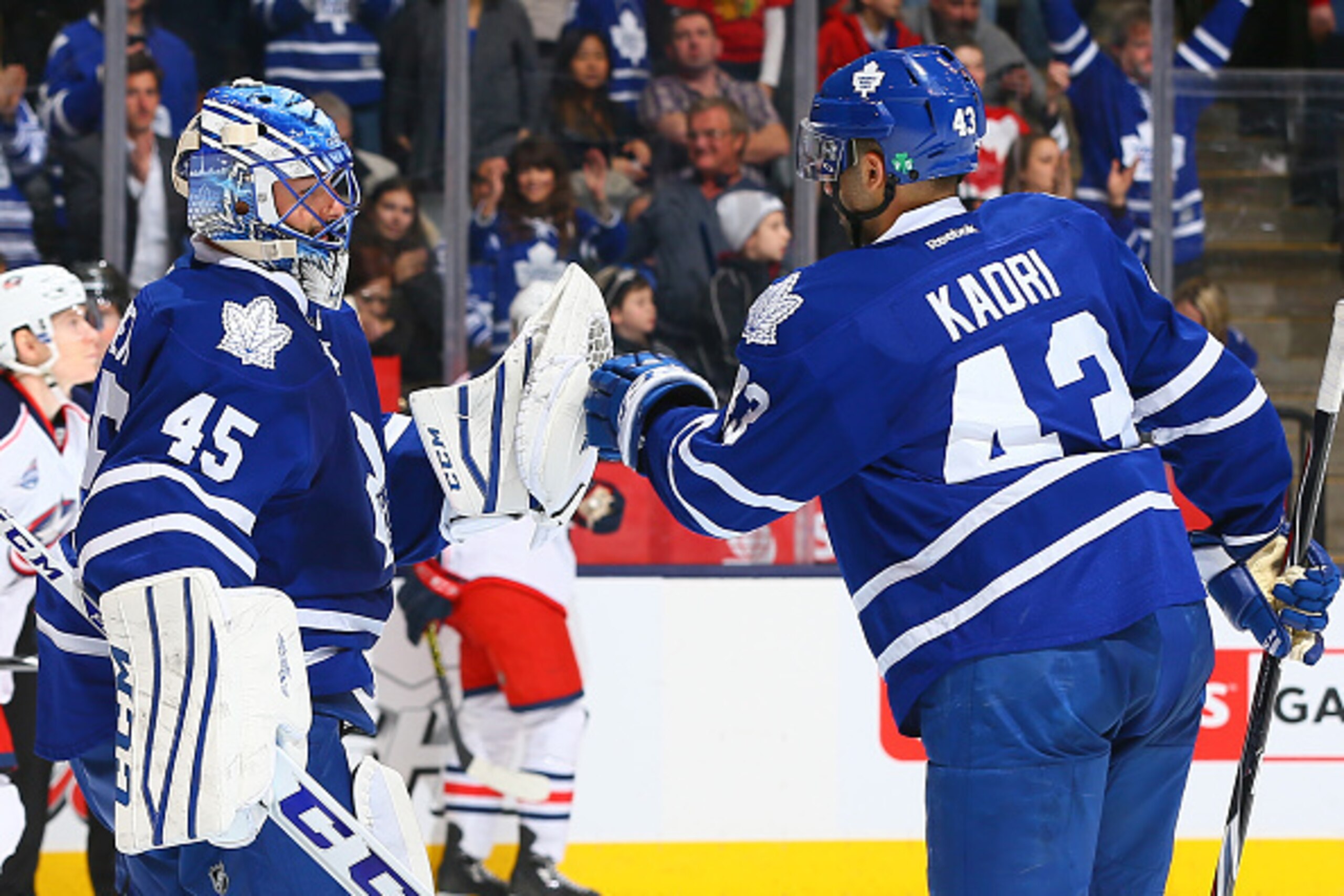
| Nazem Kadri | Toronto | 18 goals, 39 points |
| Brandon Saad | Chicago | 23 goals, 52 points |
It’s doubtful that any of them will be susceptible to an offer sheet. Maybe Toronto will deal Jonathan Bernier and/or Nazem Kadri, because who knows what the Leafs will do in terms of a rebuild? Toronto could trade Brendan Shanahan on July 1, and it shouldn’t shock anyone.
One RFA who could be an issue is Chicago’s Brandon Saad.
The Blackhawks have just 13 players under contract for next season and about $7.3 million in cap space. Saad is 22 years old and probably going to command a deal worth about $5 million per season, which means the Blackhawks will have to trade someone off their roster—hello, Patrick Sharp—in order to create space.
Of course, the one side of the RFA quandary people forget is the player has to want to sign an offer sheet.
As much as Penguins GM Jim Rutherford would like to re-enact the scene in Ocean’s Thirteen when Al Pacino forces Elliott Gould to sign over his casino to him, Saad has to want out of Chicago. He doesn’t.
To the original point, RFAs are far more restricted than they are free.
So Where Will These UFAs Sign?
Where's the fun in this time of year if we don't make predictions that can later be mocked when they are all proven incorrect?
So at the risk of having my Twitter mentions filled with "LOL idiot" and "0-for-10 Bozo," here are my predictions for where the top 10 UFAs will sign:
| Mike Green | Defenseman | Washington | Edmonton |
| Cody Franson | Defenseman | Toronto | Detroit |
| Matt Beleskey | Left wing | Anaheim | Montreal |
| Justin Williams | Right wing | Los Angeles | Nashville |
| Andrej Sekera | Defenseman | Los Angeles | Dallas |
| Mike Ribeiro | Center | Nashville | Nashville |
| Brad Richards | Center | Chicago | Chicago |
| Antoine Vermette | Center | Chicago | Ottawa |
| Martin St. Louis | Right wing | N.Y. Rangers | Pittsburgh |
| Drew Stafford | Right wing | Winnipeg | Winnipeg |
When those are all wrong, you know where to find me.
Dave Lozo covers the NHL for Bleacher Report. You can follow him on Twitter @DaveLozo.
-(2).jpg?w=2560 "Bleacher Report")


.jpg?w=2560 "NFL investigating 2 referees for separate viral exchanges")

.jpg?w=2560 "Report: Chiefs Contact Hill's Agent")
.jpg?w=2560 "OBJ Calls Out Giants After Release")
.jpg?w=2560 "Tyreek makes another cryptic post amid Chiefs rumors")


.jpg?w=2560 "Greenlaw Talks Payton Exchange")
