
Rick Nash Doing More to Lead New York Rangers Than Stat Sheet Shows
NEW YORK — Barry Trotz said he didn’t notice Rick Nash on Saturday afternoon.
It wasn’t a salvo fired against the overly scrutinized star of the New York Rangers; he was simply stating that his focus was on his Washington Capitals during Game 2 of this second-round series, which the Rangers won 3-2 at Madison Square Garden to even the series at 1-1.
Yet that’s been the overall knock against Nash over the past two postseasons; invisibility is a desirable trait if you’re a character in one of the 300 superhero movies due out this summer but not one you’d want from a 40-goal forward with a salary-cap hit approaching $8 million.
TOP NEWS
3-Way Trade Ideas for Connor Hellebuyck and Alexander Nikishin Amid NHL Rumors
Mark Scheifele Landing Spots 📍

Every Team's Odds to Win the Cup 🏆
Although if you didn’t see Nash on Saturday or even in this postseason, he’s not invisible—you’re just not looking close enough.
Let’s examine the two prevailing narratives around Nash through seven postseason games in 2015.
The first one revolves around Nash having one goal, which was scored in the dying seconds of the Rangers’ 4-3 loss in Game 2 against the Penguins in the first round. It was meaningless and came when the game’s outcome was no longer in doubt, so in a way, Nash has zero goals this postseason.
It’s a criticism that unfairly piggybacks on his 2014 postseason, when he had zero goals the first two rounds and found himself rightfully booed on home ice during the second round. There was a myriad of reasons to get on Nash at this point last season, but his goal output in the 2015 playoffs isn’t reflective of what he's been doing on the ice.
“I thought Rick was really good today,” Derek Stepan said. “He had a lot of scoring chances. He just wasn’t able to find the back of the net. He’ll score goals. Don’t worry about that. He just continues to do the right things without the puck and sometimes that goes unnoticed.”
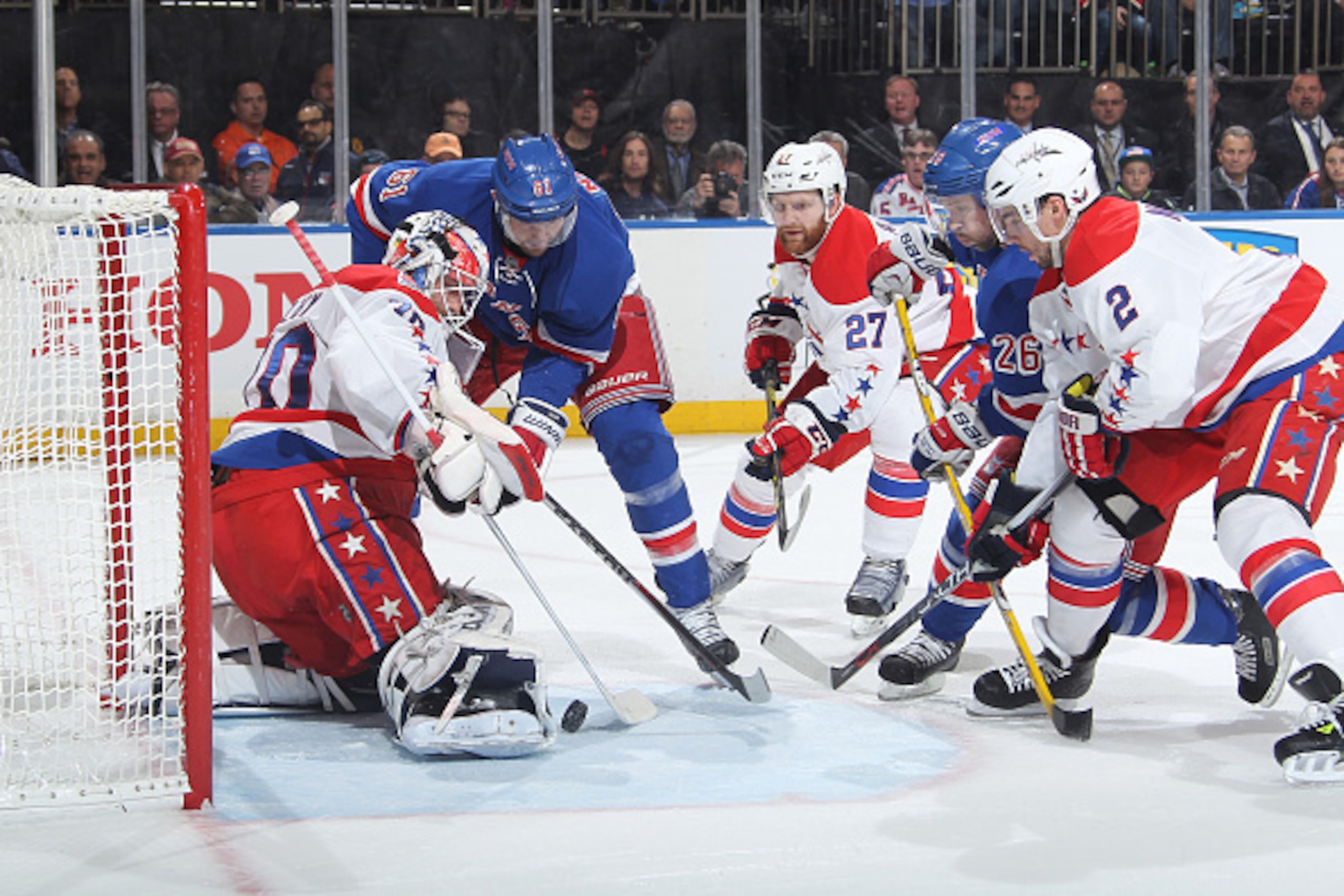
Nash had just one assist in Game 2, a secondary one at that, but it was an important one that triggered what turned out to be Derick Brassard’s winning goal. Nash made the play in the neutral zone, banking a pass ahead to Martin St. Louis, whose pass to Brassard deflected off the stick of Jay Beagle before Brassard squeezed a shot through Braden Holtby’s legs to put the Rangers ahead 3-1.
Nash had a team-high four shots on net in Game 2 and has 25 total in seven postseason games. A secondary assist will never be enough to quell the detractors, but with five points, he’s already halfway to the 10 he amassed in 25 playoff games a year ago.
This is not the same Nash that needed to be carried in last year’s playoffs.
“He’s playing great right now,” Dan Girardi said. “He’s using the body. He’s taking pucks to the net. He’s taking ‘D’ with him to the net. Someone has to occupy him every time he goes in front of the net.”
That brings us to the second narrative around Nash, that he’s afraid of contact and lacks a willingness to bring his 6’4”, 220-pound body to high-traffic areas.
Again, this was a fair point in 2014. After suffering an early-season concussion, Nash never looked to be the same player. Instead of driving to the net with force, he developed an utterly useless move in which he’d cut to the middle of the ice off the rush, spin his back to the play and backhand a harmless shot that was either stopped or missed the net.
Nash was going to the net with all the enthusiasm of a five-year-old finishing vegetables at dinner.
That player and that move hasn’t been around this year. This year’s version of Nash was the catalyst on a first-period power-play goal by Dan Boyle that gave the Rangers a 2-0 lead.
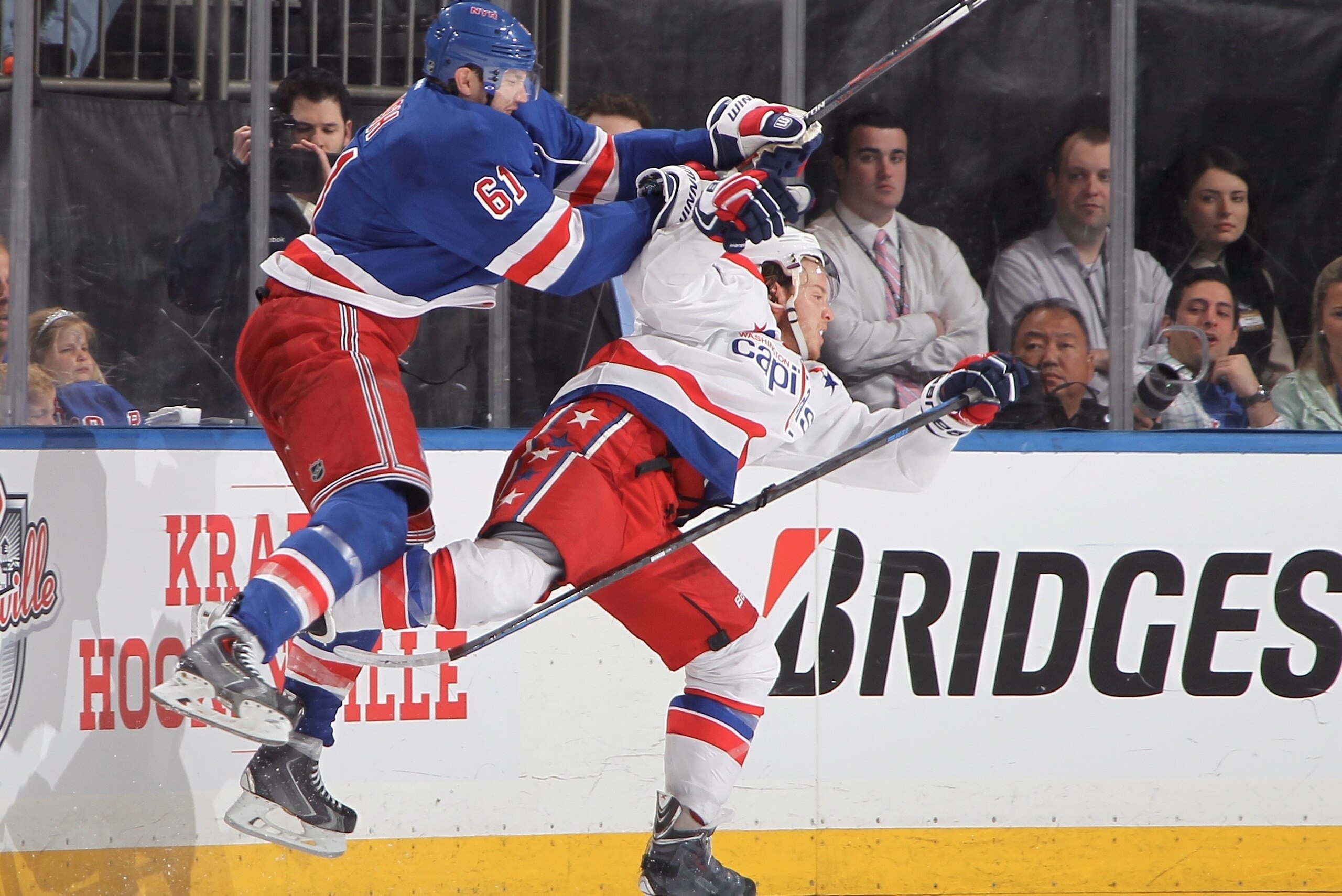
Nash, parked at the side of the net, took a pass from Brassard and, without hesitation, stepped to the crease for a stuff attempt that was denied by Holtby. A clearing attempt off the scramble didn’t make it out of the zone, which allowed Boyle to score a goal from just inside the blue line that eluded Holtby thanks largely to Nash providing the screen.
Who would’ve thought it? An invisible player obstructing someone's view.
“That puck doesn’t go in without him occupying the goalie’s eyes,” Boyle said. “That’s what you have to do to score goals at this level at this time of year. He deserves most of the credit.”
Since the Capitals gained possession of the puck before Boyle’s shot, Nash’s reward was simply a pounding by Capitals defenseman Karl Alzner and some kind words from the guy who scored the goal.
“When your back is against the wall, you need your best players to step up,” Brassard said. “That’s what he did.”
At least someone noticed what Nash did in Game 2. If he continues to play that way in this series, the Capitals will have to take notice, or they will be wishing him luck in the conference finals in the handshake line.
All statistics via NHL.com.
Dave Lozo covers the NHL for Bleacher Report. You can follow him on Twitter: @DaveLozo.



.jpg?w=2560 "NFL investigating 2 referees for separate viral exchanges")
.jpg?w=2560 "Report: Chiefs Contact Hill's Agent")
.jpg?w=2560 "OBJ Calls Out Giants 😳")


.jpg?w=2560 "Tyreek makes another cryptic post amid Chiefs rumors")