Most Thankless Positions in Professional Sports
As a child watching the game with your dad, you often see him yelling at the TV, saying names you've never heard of and wishing the team would get somebody in there to do a better job.
As an adult, you often find yourself doing the same, screaming at the top of your lungs until the loser on the court, field or diamond finds his way to the bench.
Thanksgiving is officially over, and most people will spend the next several months griping about the offseason fates of their favorite NBA and MLB teams and wishing their NFL team knew what the heck they were doing on Sunday.
In the spirit of those we have no problem banishing to the pine, here's a list of the most thankless positions in professional sports. In other words, the guys we expect the most out of in good times—and especially in bad.
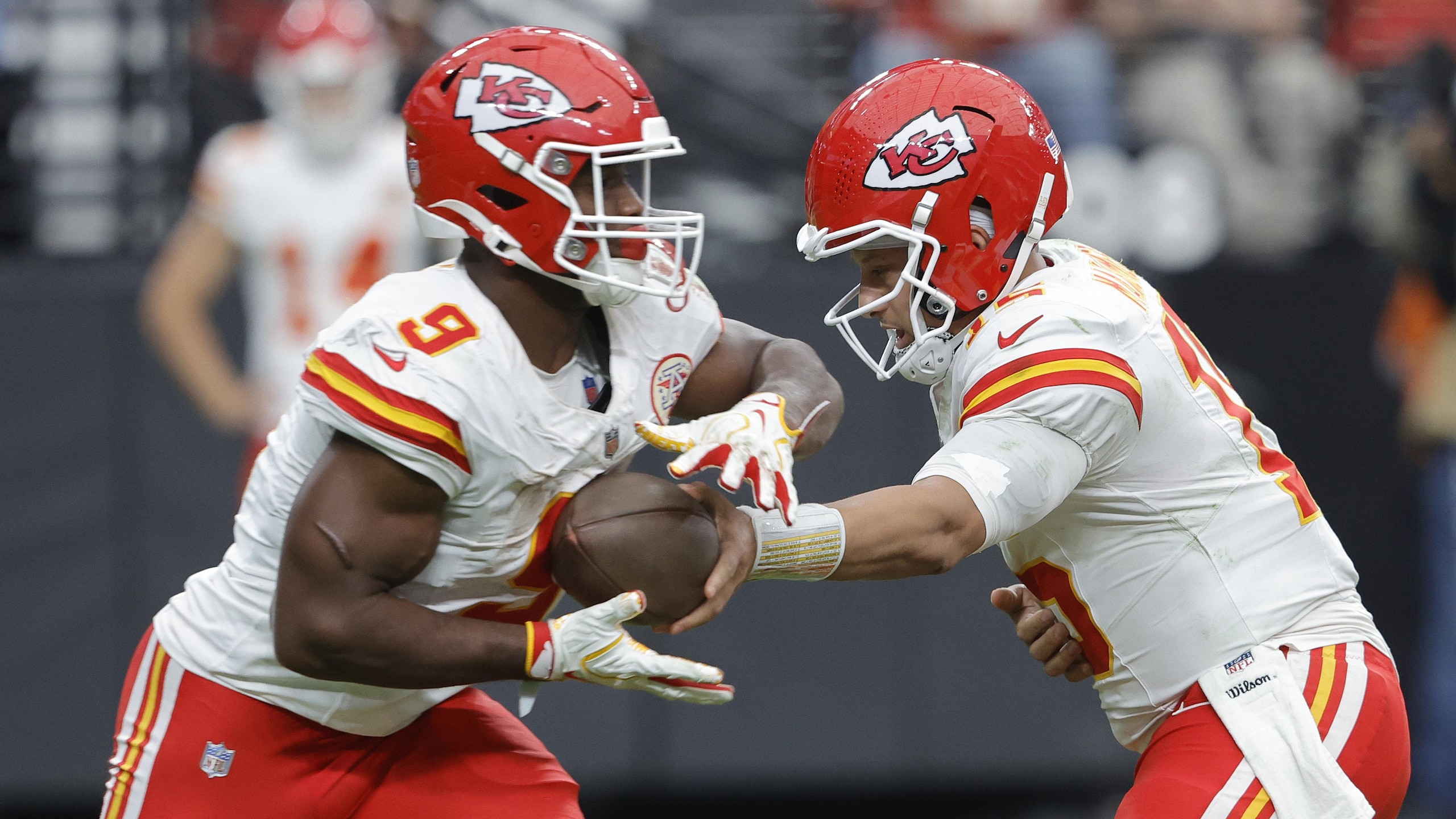
Running Back
1 of 7Long gone are the days of Walter Payton, Jim Brown and Emmitt Smith, running backs who could carry the ball 30 times a game on Sunday for 16 consecutive weeks.
These are the days of Brandon Jacobs and Marion Barber, who dominate fantasy leagues for two to three years and then become backups for shiftier guys who are more injury-prone but also fit the NFL typecast more than the ground-and-pound backs of years past.
The average NFL life for a running back is 2.57 years—the shortest of any position in the league.
If that stat wasn't alarming enough if running back is your career choice, consider all of the different types of running backs the league employs. Scat back, power back, third-down back, short-yardage back. The list goes on.
Running backs in the NFL come and go, and if a guy like Adrian Peterson (above) gets hurt or his skills decrease, don't be surprised to hear him enter the conversation for a guy with immense skills but not the resume to be considered an all-time great. So goes the life of a running back.
Backup Point Guard
2 of 7How many backup point guards can you really name, without Googling the best ones or digging deep into the recesses of your mind that are only accessible through inception?
My guess is not very many, and when you watch your favorite NBA team this season, stop and ask yourself how many times you wish they'd get the starter back on the court while the backup's minutes let him get some rest.
Consider Mavericks point guard J.J. Barea, who is due a sizable raise when free agency opens Dec. 9th. He played his way into the minds and hearts of Maverick faithful, who don't consider him just a guy to waste minutes.
But for every Barea or Kyle Lowry, there's a Marcus Banks, Chris Duhon, DaJuan Wagner or Steve Blake, who's ascension to starting point guard hasn't been anything to write home about.
Point guard can be a position of longevity in the NBA, but it's also one that comes with the brunt of extreme criticism and higher expectations, especially in the minds of the fans at home. You won't see many backup point guards grace the walls of the Hall of Fame.
Catcher
3 of 7Squat down, check the sign, signal the sign in to the pitcher, adjust based on where he throws it and then direct the defense when the ball is put into play. Then repeat. So goes the duties of a catcher at even the lowest levels of baseball.
Catchers are some of the biggest iron men in pro sports. They take their punishment for nine innings in a position most hunters only assume when they have to stop for a break in the woods.
If a past ball or errant throw happens, the catcher is usually the first one the camera pans to. And when the injury bug hits a catcher, it hits hard.
Buster Posey lost his entire season due to a broken ankle on a play at the plate. Many remember Pete Rose running over Ray Fosse in the 1970 All-Star game; many claim Fosse was never the same.
Catchers will continue to run out and be the pitcher's best friend when guys are missing bats and base stealers are getting caught. But at the first sign of trouble, see if you don't often catch yourself holding catchers to a higher standard.
.jpg?w=2560 "Cardinals Giants Football")
.jpg?w=2560 "Titans Giants Football")
.jpg?w=2560 "Dolphins Bills Football")
Goalie/Goaltender
4 of 7Goalies and goaltenders make up the most important section of two sports that aren't really defined as high scoring. Hockey and soccer rely on maximizing the minimal amount of chances you have to put the puck/ball in the goal.
And there to maximize the chances that the offense is already trying to maximize (think about that for a second) is the player in front of the net, bound and determined to squash the crowd from bursting into a mighty chorus or a bell from going off in arenas around the NHL.
A great goalie makes it easy to attack. As a coach, you have confidence that your aggressiveness will pay off in case your opponent catches a break and gets out on the run. Without that confidence you see a lot of 1-0 games in both sports.
But when it rains, it usually pours, and the men/women in front of the net have a short leash when it comes to the minds of fans watching them play. Coaches don't play to let them work out the kinks either, which is why you'll see a change before you see someone play their way out of a slump.
Kicker
5 of 7Kickers can make 47 minutes and 55 seconds of stellar play meaningless. Their impact on a game might not be felt until that last kick as time expires, but when it does, the effect can have fans reaching for the ceiling or pulling their hair out.
Mike Vanderjagt went from being one of the most feared guys to step foot on the field for the Indianapolis Colts to a huge disappointment for the Dallas Cowboys to unemployed. His epic decline is the embodiment of how fans see kickers—either do your job, or you're fired.
That attitude is something that kickers have to feel in the back of their mind every time they are about to attempt a field goal to tie or win the game. The difference in the great kickers and the ones we don't remember is the ability to put that aside and make a kick.
Funny thing is, we remember the ones who made the big kick for the team, but often remember the ones who missed it more (Ray Finkle, anyone?) Either way, it's hard to be a kicker at any level, and you don't see anyone lining up to thank the guy who missed the game winner.
Closer
6 of 7When you put the fate of the game in one man's hand, the results can vary. Just look at kickers. But closers are paid an obscene amount of money to pitch one inning every three days or so, so why shouldn't their position be the most demanding of them all.
Would we all love Brian Wilson's beard as much if he was an average closer with an average fastball? Maybe, but he wouldn't be all black ops in those Taco Bell commercials if he wasn't dang near untouchable when he entered the game.
Take Neftali Feliz, who's Game 6 meltdown with two strikes and two outs left his manager thinking he had been "shaken."
Feliz isn't even the closer for the Texas Rangers anymore, who went out to get Joe Nathan so he could enter the starting rotation. Now, they've wanted to do this for some time, but if you don't think Game 6 factored in Jon Daniels' mind when Nathan was signing the dotted line, think again.
Closers live for the big moment. Fans, owners, managers and other players alike know this, and no one is expected to get the job done in crunch time more than a guy who just has to get three outs. Sounds pretty easy on paper, but every time a manager comes out to pull his closer with out getting a win, fans will ask: How many more games are we going to let him blow?
Head Coach
7 of 7My old head coach had a saying, "You guys get credit for the wins, and I'll take the losses." It's simple, but I think it represents the way in which coaches are treated across the league.
The pressure to win grows high in franchises that haven't tasted glory and even higher in those who have tasted it before.
The life of a head coach is one that is filled with countless hours of preparation, dedication and downright commitment to making his team the best it can be. When that doesn't show on the field, however, the call for the ax can be swift and fierce.
But so goes the life of professional athletes and coaches. These guys sign up, get paid big and get the glory when things go the right way. But I wouldn't want to be any of them when their name is called to head to the principal's office.
.jpg?w=2560 "Hill Injury Update Football")